
For generations, the last Neanderthals were portrayed as shaggy, half-human, half-animal beings huddled around a fire in isolated caves. As final members of a dying species, they were destined for extinction as modern humans spread across Europe about 45,000 years ago. New research into Neanderthal behaviors points to a major population shift thousands of years before the species disappeared. Research teams from the Senckenberg Center for Human Evolution and Paleoenvironment at the University of Tübingen recently published Archaeogenetic Insights into the Demographic History of Late Neanderthals, a study showing that late European Neanderthals descended from a single maternal lineage. As a result, archaeologists believe that the lack of genetic diversity reduced the biological variation needed for long-term adaptation, reproduction, and survival. Yet, Neanderthals were able to defy the odds for thousands of years.
Neanderthals in Europe During the Ice Age
Neanderthals spread widely after emerging in southwestern France about 65,000 years ago. Study author Charoula Fotiadou points out that they did not live in isolation as once imagined. Rather, Europe’s last Neanderthals formed a network of connections that stretched hundreds of miles. Their exchange of mates between community groups preserved limited genetic diversity despite a population decline during the harsh Ice Age environment. They displayed more resilience and organization than archaeologists once thought. In fact, evidence shows that their mutual cooperation supported them in meeting the challenges of climate, disease, and starvation for several thousand years. Helene Rougier, a paleoanthropologist on the study team, explained how restricted mobility during the Ice Age pushed Neanderthal groups into a smaller area until climate change allowed migration:
“Before the last glacial period, Neanderthals had diverse maternal lineages. As ice sheets advanced and habitable territory shrank, survivors appear to have concentrated in a climate refugium in southwestern France. When conditions eased, a single lineage expanded back across Europe, carrying with it a reduced pool of mitochondrial DNA diversity.”
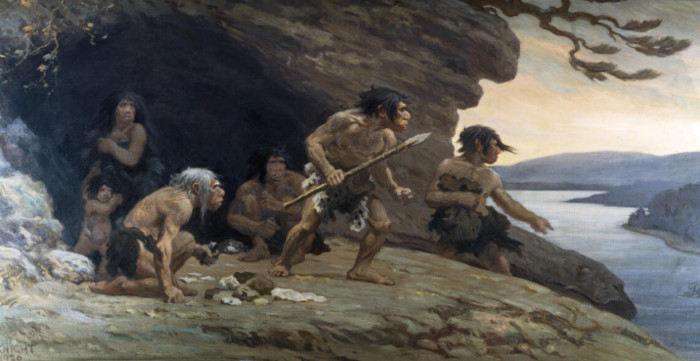
Reconstruction of a Neanderthal family. (Charles R. Knight/Public Domain)
DNA Upheaval Speeds Population Decline
Tübingen Professor Cosimo Posth believes that the Ice Age caused DNA upheaval in the Neanderthal population. Describing the research team’s methods, Posth referred to a statistical program to calculate the genetic changes in mitochondrial DNA diversity over time. They found a huge upheaval in the population. "Genetically speaking, the Late Neanderthals were a very homogeneous group," Posth said, "So it may be that the low genetic diversity contributed to the disappearance of the Neanderthals."
Genetic analysis can distinguish Neanderthals from the modern humans, Homo sapiens, who replaced them. According to Posth:
"In spite of evidence that Neanderthals inhabited Europe continuously between 400,000 and 40,000 years ago, we have only fragmentary details of their population history.”
The research team was particularly interested in the Late Neanderthals, who lived between about 60,000 and 40,000 years ago. By about 42,000 years ago, their population had reached its lowest point, only a short time before Neanderthals disappeared from the fossil record.
Study Contributes to an Expansive Neanderthal DNA Database
Charoula Fotiadou explained how focusing on the mitochondria in Neanderthal teeth and bones found in caves and rockshelters increased the number of samples included in the study’s database. Mitochondria are tiny organs within the cell, with their own DNA unique from the cell nucleus."Mitochondrial DNA does not contain nearly as much genetic information as the entire genome of a human being, but usually survives longer and is easier to obtain," she says. After selecting ten Neanderthal individuals from archaeological sites in Belgium, France, Germany, and Serbia, the team sequenced their mitochondrial DNA. The data was combined with the results from 49 other previously published samples of Neanderthal mitochondrial DNA. All of the samples were added to the large-scale database, ROAD, developed by a project of the Heidelberg Academy of Sciences, the Natural History Museum in Frankfurt, the Senckenberg Center, and the University of Tübingen.
- Geneticists Show How Neanderthals Never Really Went Extinct
- Neanderthals Cared for Each Other and Survived into Old Age – New Research
The Impact of Neanderthal Social Networking
Why did Neanderthals disappear, since they had survived the Ice Age? A key factor in their decline was the fragility of their social network. Prior to the Ice Age, Neanderthal relationships included genetic connection, individuals moving among groups, exchange of mates, and multi-generational family relationships. The Ice Age forced them to radically restrict migration, meetings with other groups, and cooperative projects.
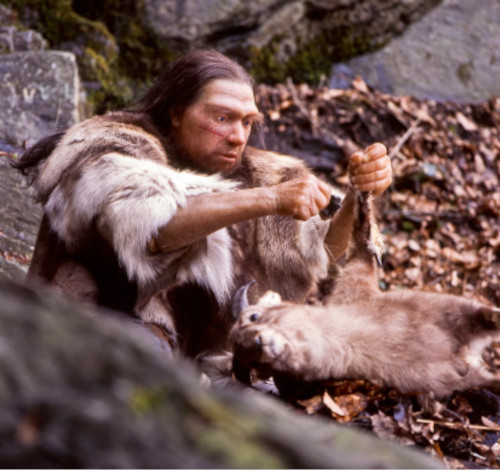
Neanderthal processing an animal hide. (Neanderthal-Museum, Mettmann CC BY-SA 4.0)
Archaeological Evidence Demonstrates the Importance of Community
Archaeological evidence shows the impact of cooperation among community members who combined skills in hunting, tool-making, and growing crops. Over time, mobility decreased, and sedentary lifestyles increased. Groups worked together to move raw materials over long distances to construct burial mounds or sacred sites. Burial rituals for families were held in traditional spaces and used similar objects. Homo sapiens’ strong cultural bonds and traditions built an extended, supportive community that avoided inbreeding, shared knowledge, and assisted recovery during periods of climatic instability.
A New View of the Last Neanderthals
The final Neanderthals were not simply waiting for extinction. Ancient DNA reveals communities that remained connected across Ice Age Europe through social relationships. Rather than an isolated environment, they cooperated for survival in an increasingly difficult world. Their networks demonstrate that Neanderthals possessed sophisticated social behaviors similar to those of modern humans.
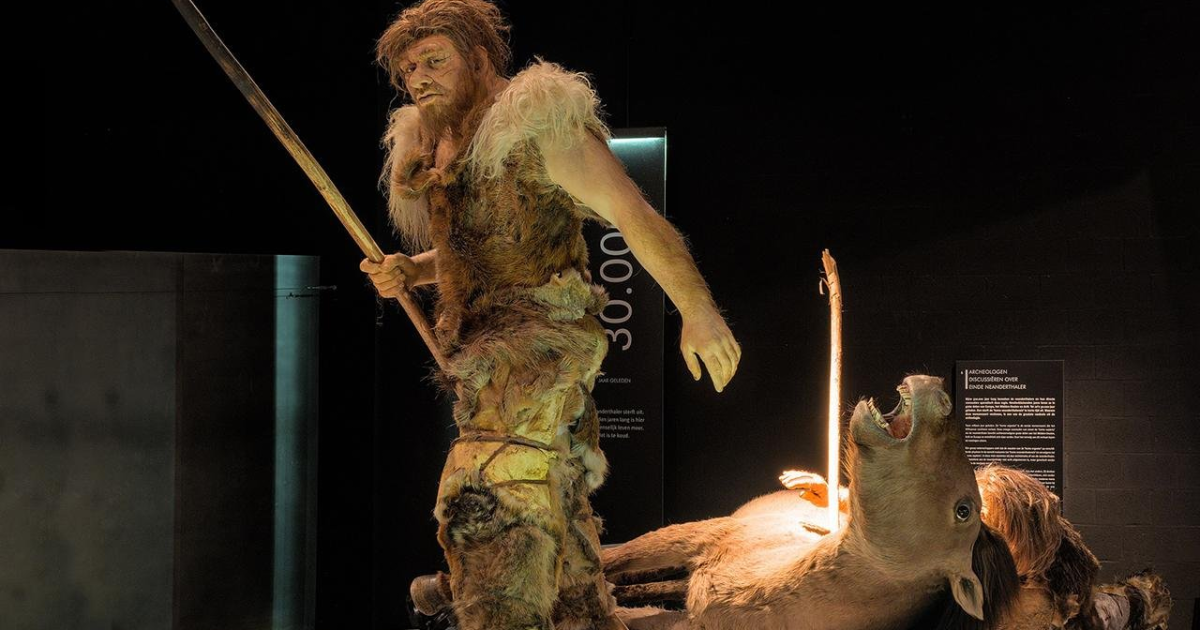
Top Image: Neanderthal hunters depicted in the Gallo-Roman Museum, Tongeren (Belgium). Source: Benoit Brummer/CC BY 4.0
By Ramsey Hardin
References
Blizovsky, Avi. 2026. “Ancient social networks helped Homo sapiens survive where Neanderthals weakened.” Hayadan, (May). https://en.hayadan.org.il/neanderthal-disappearance-social-networks-homo-sapiens
Bossoms Mesa, A., Essel, E., Peyrégne, S. et al. Genetic diversity of late Neanderthals in northwestern Europe. Nature (2026). https://doi.org/10.1038/s41586-026-10625-1
Choi, Charles Q. 2026. “Some of the last surviving Neanderthals were remarkably diverse — suggesting inbreeding didn't doom them.” LiveScience. https://www.livescience.com/archaeology/neanderthals/some-of-the-last-surviving-neanderthals-were-remarkably-diverse-suggesting-inbreeding-didnt-doom-them
Fotiadou, Charoula M., Jesper B. Pedersen, Hélène Rougier, Mirjana Roksandic, Maria A. Spyrou, Kathrin Nägele, Ella Reiter et al. "Archaeogenetic Insights into the Demographic History of Late Neanderthals." Proceedings of the National Academy of Sciences 123, no. 13 (2026): e2520565123. Accessed June 26, 2026. https://doi.org/10.1073/pnas.2520565123
“Study Tracks Genetic Lineages of Europe’s Last Neanderthals.” 2026. Archaeology Magazine, (March). https://archaeology.org/news/2026/03/30/study-tracks-genetic-lineages-of-europes-last-neanderthals/