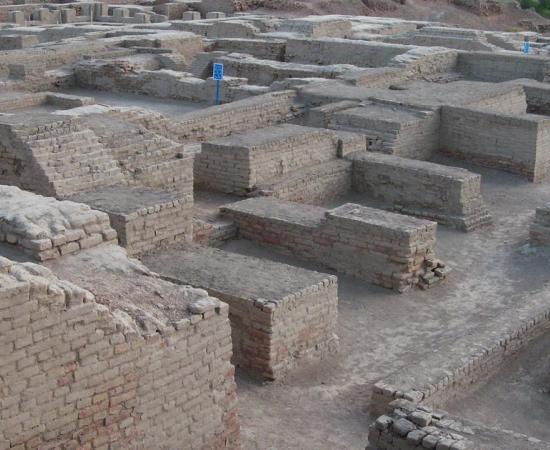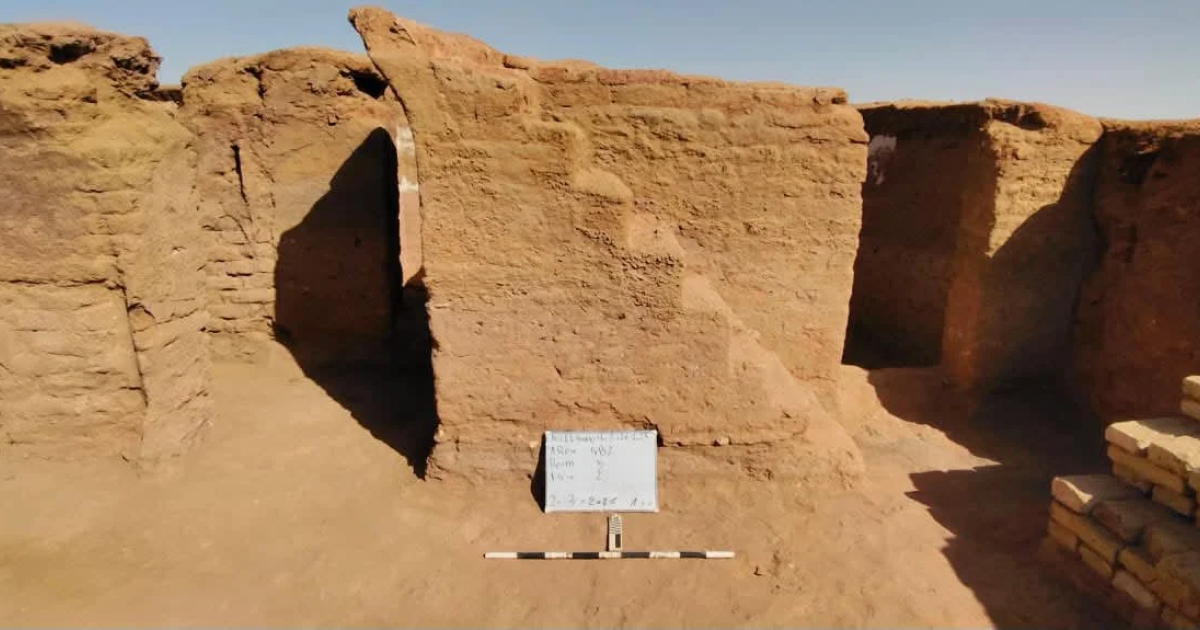

For 1,600 years, a once-thriving frontier settlement lay buried beneath Egypt's western desert. Once governed by Byzantine officials, the city was covered by drifting sand that covered the streets and markets. Now, archaeologists have uncovered fourth-century workshops, a basilica-style church in the Dakhla Oasis, and well-preserved stone homes. Scattered coins and pottery fragments tell a story of everyday life during the Byzantine Empire’s struggles to maintain power in Egypt.
A Byzantine Settlement Emerges from the Sand
Mahmoud Massoud, Director General of Dakhla Antiquities and head of the excavation mission, expressed surprise at the “rich assemblage of artifacts and the components of a fully functioning community.” Discovered in Egypt's New Valley Governorate in the Western Desert during ongoing excavations at the Ain Al-Sabil archaeological site, the settlement is now on UNESCO's Tentative List, just a step away from being added to the World Heritage List.
- How Byzantine Art and Architecture Captivated the Known World
- The Fantastic Basilica San Vitale is the Last Entirely Intact Byzantine Church
According to Dr. Zahran Mahdi, director of the Excavations Department at the Islamic and Coptic Antiquities Sector, it is rare to find an intact Byzantine urban settlement. Islamic, Mamluk, and Ottoman building initiatives expanded over or reused earlier Byzantine layers. Urban construction projects used unfired mud bricks, so older layers were eroded or demolished. Intact settlements are usually discovered in remote arid regions where unsuccessful settlements were abandoned.
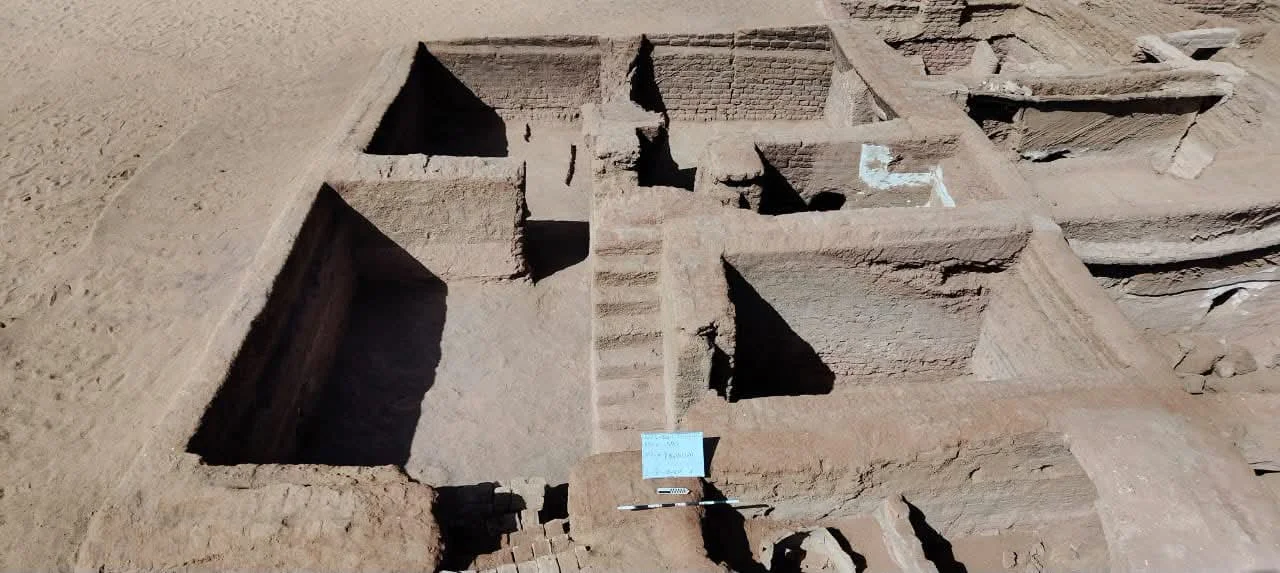
Excavated mudbrick residential buildings at the Byzantine city of Ain al-Sabil, Dakhla Oasis, Egypt. (Supreme Council of Antiquities/Egyptian Ministry of Tourism and Antiquities)
Egypt Under Byzantine Rule
The Byzantine period in Egypt began in 395 AD, after the death of Emperor Theodosius I. The Roman Empire was divided into eastern and western regions, and Egypt became part of the Eastern Roman, or Byzantine, Empire, though the capital, Constantinople, was hundreds of miles away. The recently discovered settlement offers a glimpse of life at a time when Roman traditions, Christian beliefs, and Egyptian culture overlapped.
- Excavating Subeita, a Byzantine City In The Negev Desert
- Adapting to Survive: How Byzantium Survived the Arab Invasions
Egypt was both a wealthy and strategically important province because of its thriving agriculture and grain exports. It was known as the Breadbasket of the Byzantine Empire. During the Byzantine era, Christianity changed Egypt's religious and cultural practices. Christians built churches and monasteries in urban areas. Across Egypt, towns expanded under imperial rule. Unfortunately, religious disputes between the Byzantine authorities and the Coptic Christian congregations over differing beliefs about the nature of Christ created problems. The Byzantine Empire controlled Egypt until 641 AD, when Arab Muslim forces conquered the country. Many settlements built before 620-640 AD were abandoned or buried by the desert.
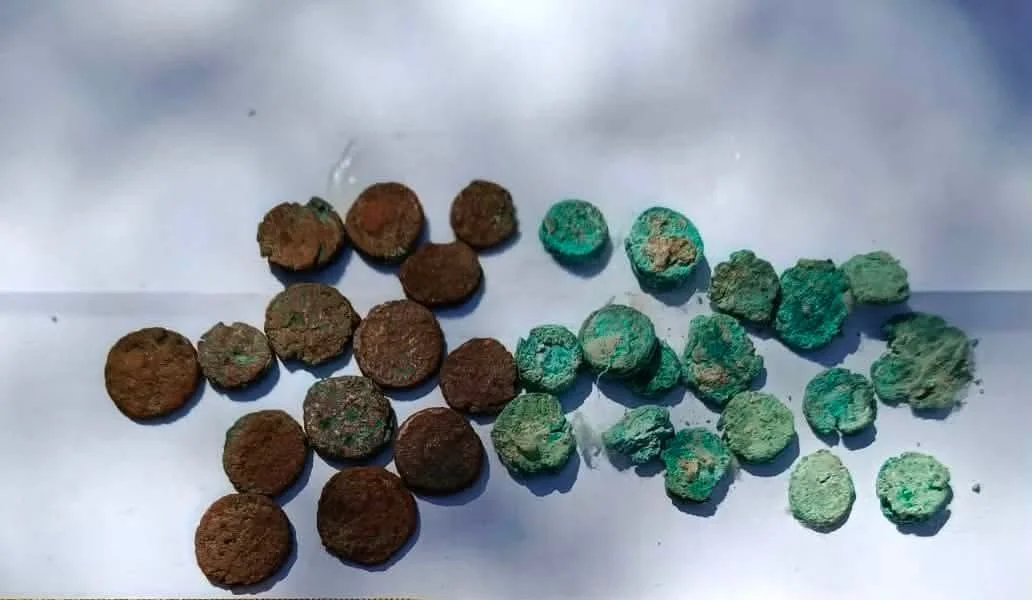
Bronze Byzantine coins excavated from the Ain al-Sabil settlement, Dakhla Oasis, Egypt. (Supreme Council of Antiquities/Egyptian Ministry of Tourism and Antiquities)
Unearthing the Lost City
The mission from Egypt’s Supreme Council of Antiquities discovered the Byzantine city at the Dakhla Oasis and began excavations at the Ain Al-Sabil site. Dr. Hisham El-Leithy, secretary-general of the Supreme Council of Antiquities, believes the discoveries have helped researchers better understand the settlement’s urban design, social organization, and economic activities. They discovered a planned urban city, with intersecting streets, a central church, and substantial fortifications. There are open squares and courtyards throughout the settlement. The defensive structures include thick walls and two watchtowers.
- The Red Monastery: Will the Last Byzantine Monument in Egypt Survive Local Development?
- The Realities of Daily Life for Common People in Ancient Egypt versus Ancient Rome
Dr. Mamoud pointed out that the residential district contained many spacious homes with large halls and vaulted ceilings. Residents had bread ovens and kitchens with food storage. There were special areas with stone tools for grinding grain. One of the most impressive buildings, the home of a church deacon, Tisus, dates to the second half of the fourth century AD. Archaeologists also uncovered the house of Tapibos that served as a house-church before the construction of the basilica.
Artifacts Reveal Commercial Transactions
According to Dr. Mahdi, the most informative discovery was a collection of about 200 ostraca, or inscribed pottery fragments, written in both Coptic and Greek. They provide a record of commercial transactions, personal correspondence, and other aspects of daily life.
“One of the excavation’s most significant discoveries is a collection of nearly 200 inscribed ostraca (pottery fragments used as writing material) bearing texts in both Coptic and Greek,” Mahdi said.
The inscriptions record commercial transactions, correspondence, and other details of daily life. The discovery of a set of bronze coins featuring portraits of Byzantine emperors, Latin inscriptions, and Christian symbols, along with a group of gold coins dated to the reign of Roman Emperor Constantius II (337-361 AD), shows the changing circumstances and the residents’ connections during the Byzantine era.
- Christian Church Ruins Unearthed in Alexandria May Be Oldest Ever Found in Egypt
- Emperor Theodosius I: Religious Intolerance in Ancient Rome and The End of the Olympics
The Importance of the Lost Byzantine Settlement
The Byzantine settlement under the desert sands is quite different from Egypt’s temples and pyramids. The town was not constructed to honor kings. Rather, it was part of the lives of ordinary people. The discoveries at the Dukhla Oasis provide the information that historians need to reconstruct life in the centuries between the ancient and medieval worlds.
Top Image: Excavated mudbrick residential quarter at the former Byzantine city known today as Ain al-Sabil, Dakhla Oasis, Egypt. Official excavation photograph released July 2026. Source: Supreme Council of Antiquities/Egyptian Ministry of Tourism and Antiquities
By Ramsey Hardin
References
Arkeonews. “Egypt Uncovers a Complete Byzantine City in the Dakhla Oasis, Preserving Streets, Homes, Church and Daily Records.” July 2026.https://arkeonews.net/egypt-uncovers-a-complete-byzantine-city-in-the-dakhla-oasis-preserving-streets-homes-church-and-daily-records/.
Associated Press. “Egypt Uncovers Lost Byzantine-Era City in the Western Desert.” AP News, July 4, 2026. https://apnews.com/article/3fe1e9fbea2261e372db5ca4e90ea619.
HeritageDaily. “Lost Byzantine City Rediscovered in Egypt’s Dakhla Oasis.” July 2026.https://www.heritagedaily.com/2026/07/lost-byzantine-city-rediscovered-in-egypts-dakhla-oasis/158514.
Magdy, Samy. “Egypt Uncovers Lost Byzantine-Era City in the Western Desert.” ABC News, July 4, 2026. https://abcnews.go.com/International/wireStory/egypt-uncovers-lost-byzantine-era-city-western-desert-134472408.
Ministry of Tourism and Antiquities. Discover Egypt’s Monuments. Accessed July 6, 2026.https://egymonuments.gov.eg/.
Radley, Dario. “Byzantine City with 200 Written Records Uncovered in Egypt’s Dakhla Oasis.” Archaeology Magazine, July 5, 2026.https://archaeologymag.com/2026/07/byzantine-city-with-written-records-in-dakhla-oasis/.
The Guardian. “Archaeologists Uncover Ancient Byzantine City in Egypt’s Western Desert.” July 4, 2026.https://www.theguardian.com/world/2026/jul/04/archaeologists-uncover-ancient-byzantine-city-in-egypts-western-desert.