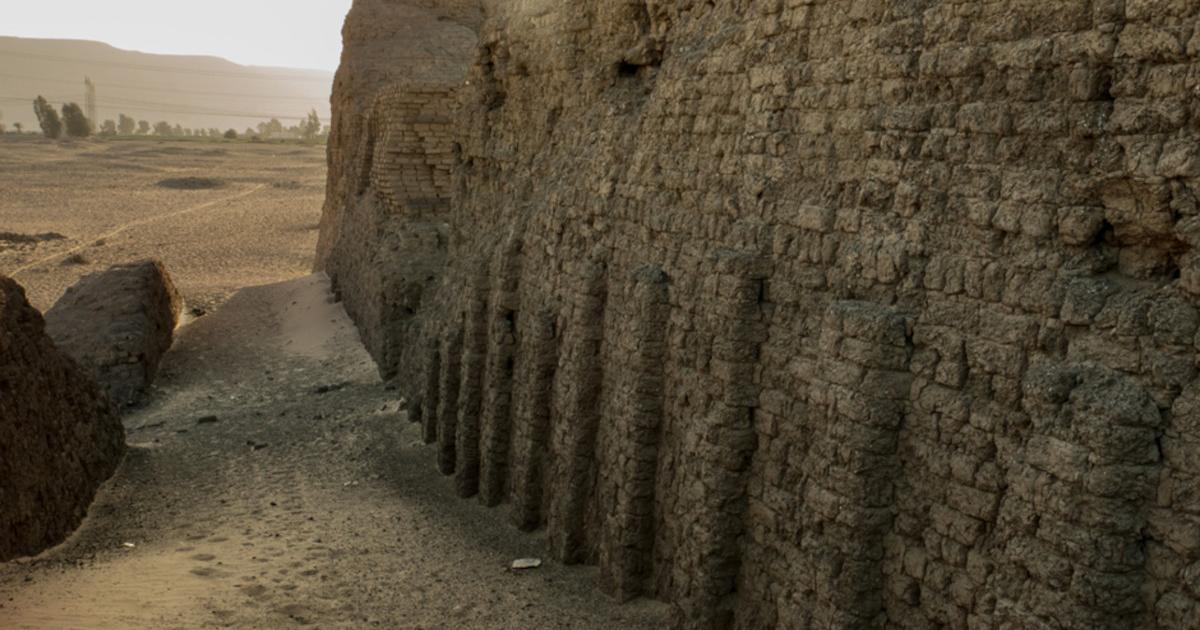

Situated in the city of Abydos over 5,000 years ago, the original Pharaohs were buried within enormous burial structures that were surrounded by thousands of smaller burials, representing the first group of kings to have been interred in the area. Newly-completed research examining cranial injuries found in these burial grounds indicates significant evidence for the concept of 'sacrificed' individuals, with nearly 40% of the individuals in these burial sites having sustained head trauma near the time of their death in order to serve their deceased rulers in the afterlife.
Dr. Roselyn Campbell of Purdue University, in her newly-published article in the journal Frontiers in Environmental Archaeology, critiques a more than 100-year-old remains taken from Abydos that have been retained in the collections of a Cambridge museum store. Using forensic methods, Dr. Campbell has changed the long-standing discussion of whether or not ancient Egyptian deaths were related to sacrifice into a question of fact that researchers can now answer using scientific methods. In the study of the 46 skulls examined, Dr. Campbell found that 18 skulls (39%) show evidence of trauma that occurred shortly before death.
The Graves That Ringed Egypt's Earliest Kings
The extent of burial grounds can be found at Umm el-Qaab, the royal burial ground adjacent to Abydos, in southern Egypt, where rulers of the First Dynasty built tombs and constructed ceremonial structures in what can be estimated to be between 3078 and 2900 BC. Researchers found a multitude of primitive burial chambers — thus confirming existence of numerous graves of seal-bearers, overseers, craftsmen and healers surrounding the monumental tombs.
The location was first discovered by the British Egyptologist William Flinders Petrie who took initial observations in the process of excavation. Petrie believed that there is no way so many people might have died naturally at one time, so he came up with a theory that those were servants killed when their king passed away. The first king of the dynasty Aha had only a limited number of subordinate burials unlike his successors who were buried with hundreds of servants, Campbell notes in the study.
However, Petrie found no signs of trauma on the skulls that was a significant drawback in his explanation of the discovery. Some scholars suggested that the servants died naturally and had been buried near there king at a later date. Others wondered whether they had been buried alive with their dead master — an idea Petrie raised after seeing bodies in strange positions. Beliefs about serving a ruler beyond death shaped Egyptian funerary practice for millennia afterwards.
- 3,600-Year-Old Royal Tomb of Mysterious Abydos Dynasty Found in Egypt
- The Abydos King List Safeguards the Identities of 76 Egyptian Kings
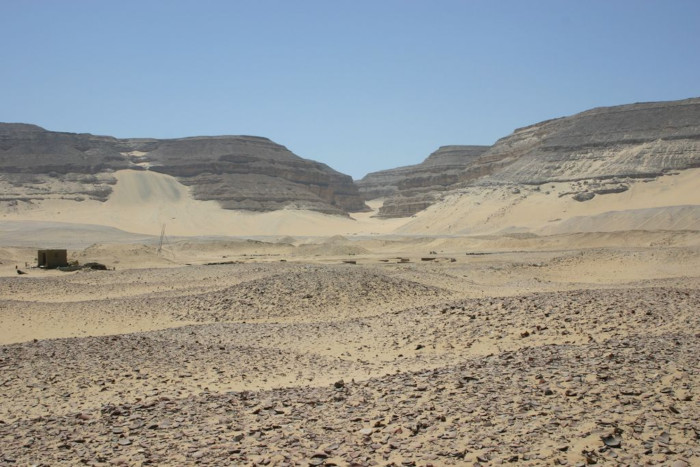
The Umm el-Qaab necropolis at Abydos, where rows of subsidiary graves were cut into the desert around the tombs of the first kings. (Markh/Public domain)
Reading the Bones with Modern Forensics
In the Duckworth Collection at the University of Cambridge, Campbell has located 46 skulls belonging to the Petrie collection. Forensics can now distinguish injuries inflicted while bone was still fresh from damage that happened long after burial, and can read a fracture's pattern to work out what caused it.
Most of the Abydos injuries are long linear fractures running across the skull — wounds that, in Campbell's words, "would likely cause rapid unconsciousness, internal bleeding, and death." Some evidence is more compelling. One skull has a blow to the side of the head, another a chop near the eye. Petrie seems to have recognized some form of damage, putting paraffin wax over the fracture but interpreting it as the result of natural breakage.
The patterns also complicate the obvious explanation. Egyptian art repeatedly shows a triumphant king smiting enemies with a mace, a motif reaching back to the reign of Narmer, yet a mace blow leaves crushed, dented bone rather than the clean breaks found here. Flat, wide objects — perhaps of wood or antler — fit far better. A heavy fall could cause similar damage, but it would probably have broken other bones, and Petrie's records show none.
- The Abydos Boats: Transporting the Pharaohs Through the Afterlife
- The Stunning Temple of Seti I in Abydos, Egypt
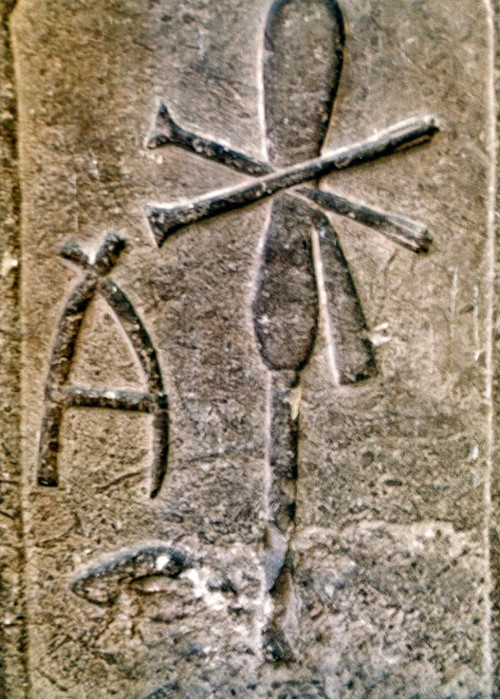
The tomb stela of Queen Merneith from Umm el-Qaab, one of three royal funerary complexes whose subsidiary burials were re-examined in the study. ( Juan R. Lazaro / CC BY 2.0)
What the Injuries Can and Cannot Prove
Campbell is careful about her sample's limits. The 46 skulls represent only about 5 to 15 percent of those originally buried around the monuments, and most of the rest of their skeletons were reburied and are missing.
"For the crania without trauma, we cannot be certain they were sacrificed," she told The Guardian. "It's quite possible that some of the retainers were sacrificed, while others were not."
She notes that others may have died naturally, or in ways that leave no skull mark, such as suffocation.
Other information suggests a diverse population rather than a single class. Cemeteries housed both men and women, although the presence of minors and the elderly in the sample of excavated tombs is rare. Furthermore, the burial artifacts were made of copper tools, flint knives, and ivory combs inscribed with royal names.
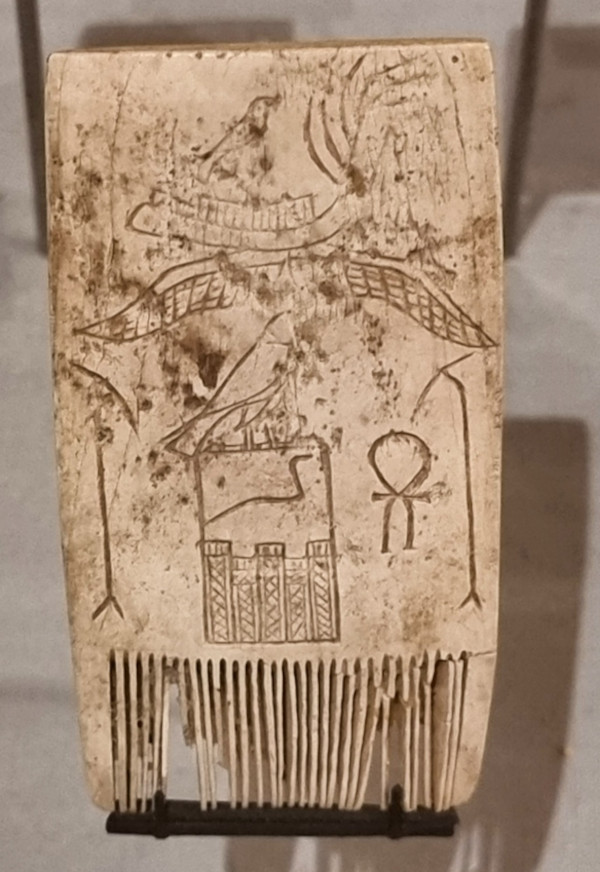
An ivory comb inscribed with the name of King Djet, one of the First Dynasty rulers whose funerary complex was studied. Grave goods like this suggest the dead belonged to the royal court. (Prof. Mortel / CC BY 2.0)
A Debate That Refuses to Close
This practice appears to have disappeared rapidly. External consultants were pleased with the paper but pointed out that it only addresses a part of the puzzle. Salima Ikram from the American University in Cairo told The Guardian that the paper is, “one of the few times that rigorous current methodologies are being used to evaluate these remains.” She added that this practice was not long-lasting, and that actual attendants were eventually by statuettes.
Campbell's wider point is about method. Early digs rarely included specialists trained to read human remains, and collections they produced have gone unstudied for generations.
"This study shows how much new information about the past can be revealed when we revisit previous data armed with updated methods and knowledge, even for datasets that are incomplete and imperfect like this one," she said.
Top image: The niched mudbrick funerary enclosure at Abydos, part of the royal cult complex at Umm el-Qaab where Egypt's first kings were buried. Source: Soutekh67, CC BY-SA 4.0
By Gary Manners
References
Bassi, M. 2026. Skulls Reveal Evidence of Human Sacrifice in Egypt 5,000 Years Ago. Available at: https://gizmodo.com/skulls-reveal-evidence-of-human-sacrifice-in-egypt-5000-years-ago-2000820833
Brewer Gillham, A. 2026. Modern forensic methods reveal human sacrifice in ancient Egypt. Frontiers. Available at: https://www.frontiersin.org/news/2026/10/05/modern-forensic-methods-human-sacrifice-ancient-egypt-frontiers-environmental-archaeology
Campbell, R. 2026. New data from old bones: using bioarchaeology and forensics to reassess legacy data from ancient Abydos, Egypt. Frontiers in Environmental Archaeology. Available at: https://www.frontiersin.org/journals/environmental-archaeology/articles/10.3389/fearc.2026.1858940/full
Davis, N. 2026. Skull fractures suggest servants of Egypt's ancient kings were sacrificed. Available at: https://www.theguardian.com/science/2026/oct/05/skull-fractures-suggest-servants-of-egypts-ancient-kings-were-sacrificed
Radley, D. 2026. Violent deaths found among people buried beside Egypt's first royal tombs. Available at: https://archaeologymag.com/2026/10/violent-deaths-among-people-buried-beside-egypts-first-royal-tombs/
Scott, A. 2026. What 46 Ancient Egyptian Skulls Reveal About Human Sacrifice In Royal Tombs. Available at: https://www.discovermagazine.com/what-46-ancient-egyptian-skulls-reveal-about-human-sacrifice-in-royal-tombs-49767