
A small object can be easily overlooked, but sometimes the smallest objects have the largest stories. Buried deep within the hills of California’s interior, far away from any ocean breeze, archaeologists have found a small, round bead carved from a giant rock scallop shell. The tiny bead is having a big impact on the history of ancient California trade.
How did an ancient shell bead travel 42 miles inland?
Archaeologists discovered the bead in the Turkey Flat archaeological site in southeastern Monterey County, more than 42 miles from the nearest coastline. That distance raises many questions about its inland location. Carved from the shell of the giant rock scallop, Crassadoma gigantea, the bead came from a species that doesn’t live in rivers or lakes: it clings to rocky substrates along the Pacific coast of North America. How did this piece travel so far inland?
A second bead, found at the nearby Lichtenstein site, was much younger, dating to around 3,674 years old. Together, the two beads indicate a tradition of shell ornament making and trade that has lasted for almost five thousand years. Dating these two beads was only the first part of a greater puzzle. The more significant mystery was determining the shells' origin and how they had moved so far from the sea.
- The Chumash: The Seashell First People Of North America
- Hidden Gems: The Use of Pearls Throughout History
California’s 8,500-year-old Bead
Researchers Barry A. Price, Simone M. Schinsing, and Jasmine B Kidwell report the findings in their study recently published in the journal California Archaeology. Their hypothesis confirms the deep antiquity of giant rock scallop ornaments and extends their known geographic range into California’s interior while emphasizing the connections among ancient California communities. Radiocarbon dating produced a median calibrated age of 8,508 years before present for the Turkey Flat bead, making it the earliest known example of the giant rock scallop globular bead. The younger Lichtenstein specimen produced a median date of 3,674 years before present. More importantly, their discovery in southeastern Monterey County extends the known geographic distribution of these marine-shell ornaments far into California's interior, raising intriguing questions about how people and valued objects moved between coastal and inland communities thousands of years ago.
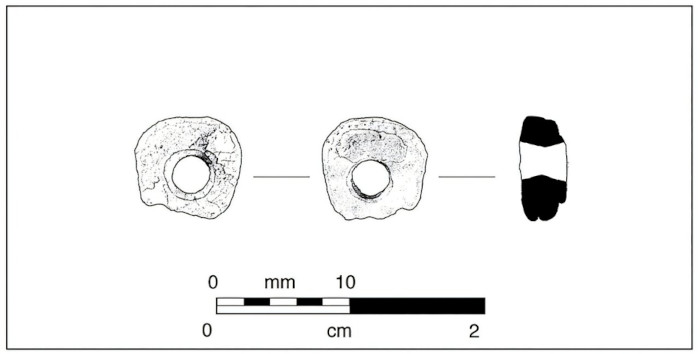
The approximately 8,500-year-old Turkey Flat bead from southeastern Monterey County, California. Fashioned from giant rock scallop (Crassadoma gigantea) shell, the ornament is the earliest known example of its type and provides evidence that marine shell objects were moving far into California's interior during the Early Holocene. (Price, B. A., Schinsing, S. M., and Kidwell, J. B./California Archaeology)
Tracing an 8,500-Year-Old Bead to the Channel Islands
To examine the problem, the researchers analyzed the chemical composition of the shells. Different stretches of coastline have left subtly different chemical signatures in shellfish, shaped by the specific water conditions where the mollusk grows. The chemical signature is a geological fingerprint. For the older Turkey Flat bead, the results indicate it may have originated in Southern California, near the Channel Islands or the Santa Barbara region, and may even be farther from its discovery site than the nearest shoreline. According to Price, this suggests the bead was made on the Channel Islands and then passed northward through extensive trade networks spanning hundreds of miles, possibly carried by people from the Channel Islands or Santa Barbara coast as personal ornamentation.
- Glass Beads Drove Transatlantic Trade in Early 17th Century North America
- Chumash Cash: The Saucers That Formed America’s First Economy
More Than Decoration: The Value of Ancient Shell Beads
Crafting a bead from a giant rock scallop shell requires skill. These mollusks live below the tide line, making them hard to harvest, and their thick, tough shells require time to shape and drill. These difficulties explain why the beads became so valuable. In later periods of California history of indigenous communities, shell beads served as symbols of social status, sacred objects used in ceremonies, personal adornments, grave offerings, and even a form of currency. Researchers cannot confirm whether the newly dated bead held the same value 8,500 years ago, but its inland presence suggests it was already a special object.
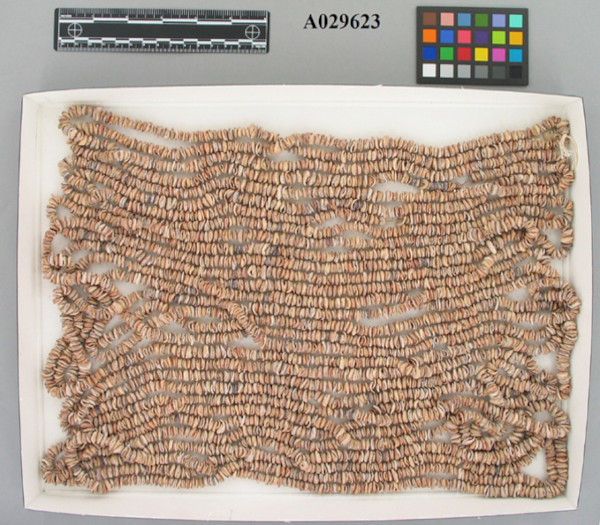
Prehistoric shell beads from San Miguel Island in California's Channel Islands. Archaeological research has established a shell-ornament tradition on San Miguel extending back approximately 8,000 years. (Rev. Dr. Stephen Bowers/Smithsonian Institution, National Museum of Natural History)
A Tiny Bead Reveals a Vast Early California Network
Until the recent discovery, similar beads found on San Miguel Island that date back more than 8,000 years were considered the earliest evidence of this craft. The Turkey Flat bead is older than the previously dated San Miguel Island examples, but is unique for its inland location. Since the bead was not from an island where shellfish are common, researchers maintain that early Holocene California wasn’t just a patchwork of disconnected island settlements. Instead, people, objects, and ideas were already moving over significant distances as far back as 8,500 years ago.
- Ancient Bronze Artifacts in Alaska Reveals Trade with Asia Before Columbus Arrival
- Evolution of a Native American Society: A Journey Through Ancient History
The research team cautions that proof of an organized trade route cannot be confirmed at present. It is not possible to know whether the bead was sold, given as a gift, or passed down through generations before reaching its inland destination. However, the bead’s age and location are evidence of ancient connections between coastal and inland communities. According to Barry Price, the significance extends beyond the artifact itself. Even a small object can increase understanding of how people lived, adapted, and connected, opening a window into the ancient world of Indigenous Californian communities
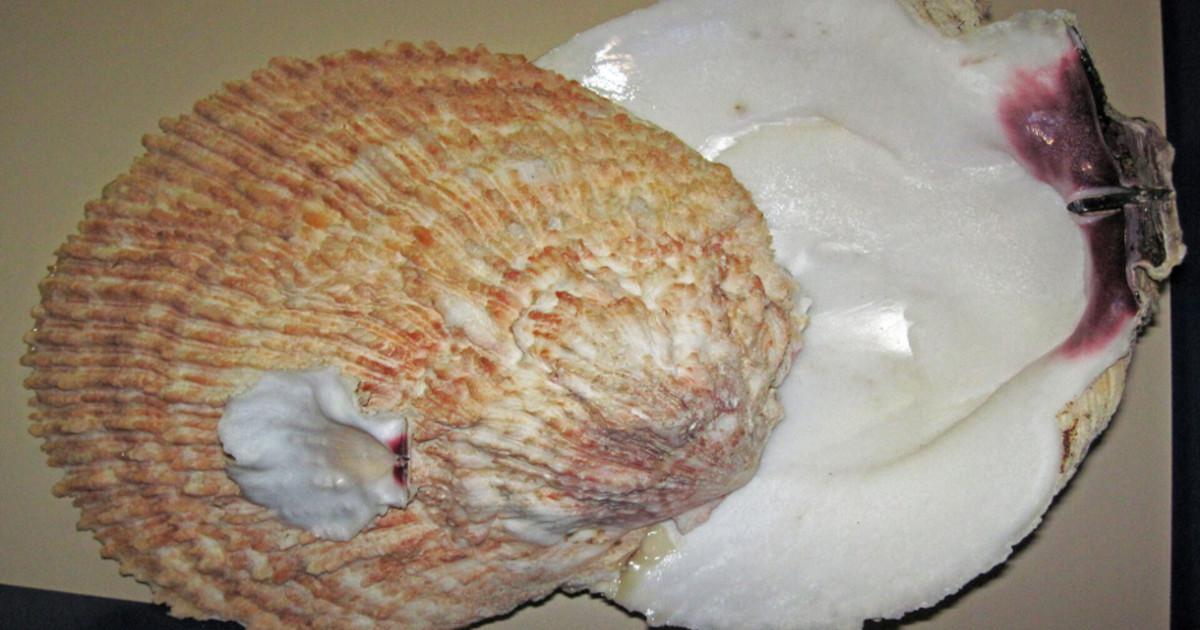
Top Image: A giant rock scallop (Crassadoma gigantea), the marine shell species used to create the 8,500-year-old Turkey Flat bead discovered in inland California. Source: James St. John/CC BY 2.0
By Ramsey Hardin
References
Altunas, L. August 11, 2026. 8,500-Year-Old Shell Bead Reveals Ancient California’s Hidden Trade Network. Arkeonews/ Available at: https://arkeonews.net/8500-year-old-shell-bead-reveals-ancient-californias-hidden-trade-network/
Braje, T. J., Rick, T. C., and Erlandson, J. M. 2008. AMS Radiocarbon Dating of Giant Rock Scallop (Hinnites Multirugosus) Artifacts from San Miguel Island, California, USA. Radiocarbon 50 (2): 223–231. Cambridge University Press. Available at:
Oster, S. August 9, 2026. Oldest known giant rock scallop bead suggests California coastal trade began millennia earlier. Phys.org. Available at: https://phys.org/news/2026-08-oldest-giant-scallop-bead-california.html
Price, B. A., Schinsing, S. M., and Kidwell, J. B. 2026. AMS Radiocarbon Dating of Giant Rock Scallop Beads from the Interior of California’s Southern Coast Range. California Archaeology. Taylor & Francis. Available at: https://www.tandfonline.com/doi/full/10.1080/1947461X.2026.2659482