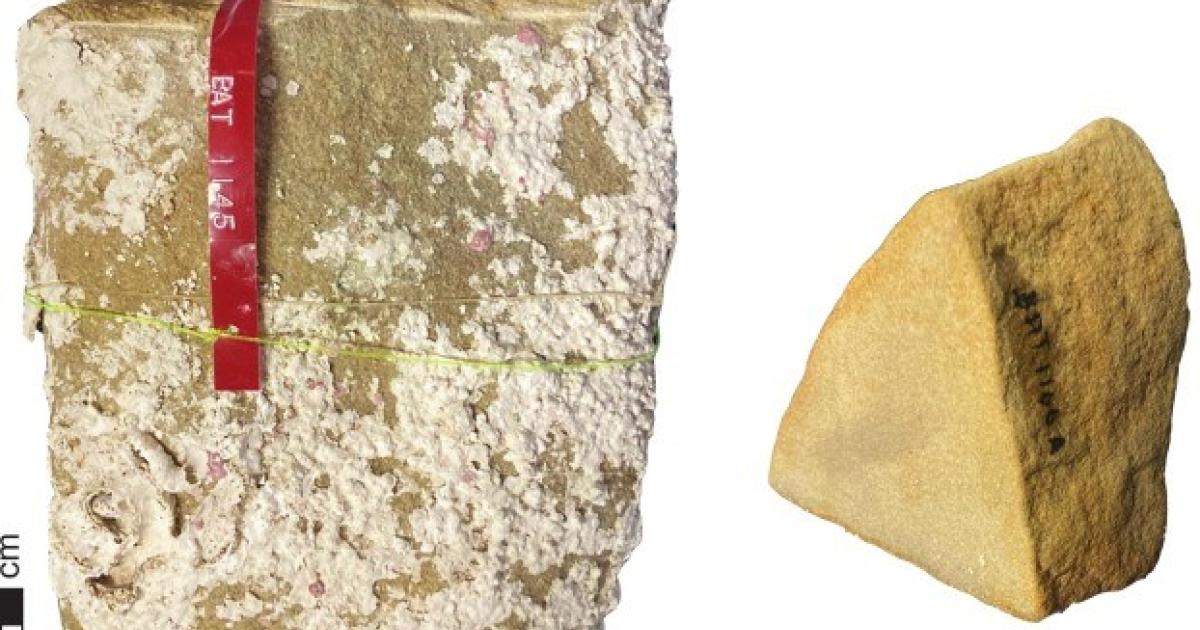

The three-masted sailing ship Batavia began its maiden voyage on October 29th, 1628, as part of a larger fleet from the Netherlands bound for its distant namesake, Batavia, the Dutch colonial capital of modern-day Indonesia. This ship struck a reef at full speed in the early hours of June 4th, 1629. The Batavia sank, pulled down by large, carved sandstone blocks in its hold. These building materials were likely intended for the construction of a gateway or portico in the capital, but instead they sank to the bottom of the sea. After the ship wrecked off Morning Reef, approximately 300 survivors struggled through the waves to nearby islands. Worried about the lack of fresh water, the vessel’s commander, Francisco Pelsaert, left in a longboat with only forty sailors, along with naval officers, to seek aid.
The Batavia’s Doomed Voyage and Deadly Mutiny
Meanwhile, Jeronimus Cornelisz, a junior merchant who had been hatching a mutiny plot before the ship struck the reef, took full advantage of Pelsaert’s absence and seized control of the remaining crew and passengers. For five months, Cornelisz and his co-conspirators terrorized the surviving men, women, and children. He murdered and raped many, chained selected ones into the shackles of slavery, and sent the rest away to surrounding islands. Pelsaert and his crew took a month to return, but they eventually rowed the longboat all the way to their nearby colonial capital. Seven weeks later, a rescue party arrived near Morning Reef and put a stop to Cornelisz’s gruesome mutiny. Cornelisz and six of his followers were hanged on Long Island in October 1629, while other mutineers were taken to Batavia to be executed for their crimes. Two men were abandoned on the Australian mainland.
- Batavia's Graveyard: The True Story of the Mad Heretic Who Led History's Bloodiest Mutiny
- Spice, Spice, Baby: The Dutch East-India Company
Solving a 400-Year-Old Maritime Mystery
Lead researcher Dr. Anthony Clarke, in collaboration with the Timescales of Minerals Group of Curtin’s School of Earth and Planetary Sciences, explains that his team set out to solve a mystery that confused previous researchers: where exactly did the ship’s building stone come from? Did the material come only from one quarry or several? Clarke notes that accurate identification is difficult - “Historical records are incomplete, and after nearly four hundred years underwater, these stones can look very similar, making them difficult to identify.”
- Mauritius: From Conquests to Naval Battles, Piracy and a Long-Awaited Independence
- Tulipmania: When Tulips Cost More than a House!
Tiny Crystals Reveal a Vast Global Supply Chain
Clarke’s team decided to use minerals as a path to identification:
“We wanted to know if tiny mineral grains could give us a reliable fingerprint of where the stone formed, and help reveal how the Dutch East India Company sourced and transported materials across global networks. By analyzing microscopic zircon materials within the stone, we discovered blocks that looked almost identical but actually came from distinct quarry regions in what is now Germany.”
The team had to differentiate among quarry locations. Clarke points out that they had to recreate the supply chain:
“We found these stones were sourced from at least two different quarry areas, then brought together into a single shipment before being sent halfway around the world in a highly organized supply chain more than 400 years ago.”
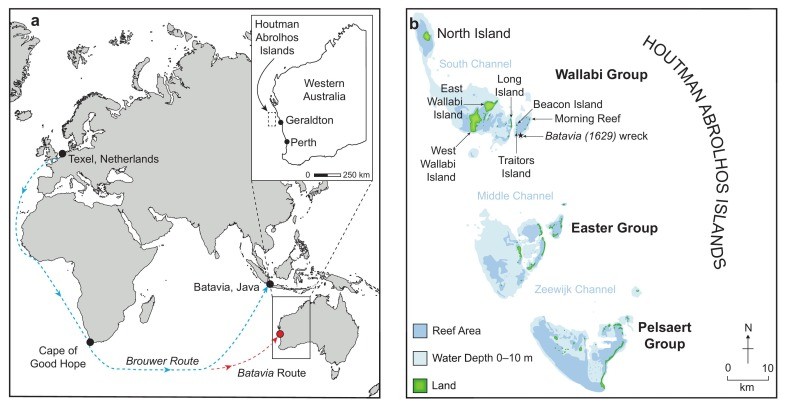
Route of the Dutch East India Company ship Batavia from the Netherlands to the Dutch East Indies and the location of its 1629 wreck at the Houtman Abrolhos Islands off Western Australia. (Anthony J. I. Clarke/Journal of Archaeological Science: Reports)
The Dutch Empire’s Gateway to the Spice Trade
During the early 17th century, a VOC (Dutch East India Company/Vereenigde Oostindische Compagnie) fleet under the command of Admiral Steven Van der Hagen seized the Portuguese fort of Fortaleza Nossa Senhora da Annuciada at Ambon in the Spice Islands. The Dutch renamed it Kasteel Victoria, and it eventually became the principal base and entrepot (trading center of the VOC in Asia until 1619). This strategic necessity secured a direct monopoly on the clove trade because Ambon was a key point on the Eurasian trade routes to Southeast Asia.
- World’s Oldest Clove? Here’s What an Ancient Sri Lankan Discovery Says About the Early Spice Trade
- Jayabaya — The Seer King of Java who Predicted the Dutch and Japanese Occupation of Indonesia
Batavia Became the Heart of a Global Trading Empire
Soldiers were stationed at the fort, and later treaties were signed with local rulers to ensure this lucrative monopoly. Frederick de Houtman was appointed the VOC’s first governor of Ambon, and in 1619, while sailing with his brother Cornelis on the company ship, Dordrecht, they were participants in the accidental discovery off the western coast of Australia. Subsequently, Batavia became the VOC’s main administrative hub and warehouse in 1619, and it remained the capital of the Dutch East Indies until 1942, when the Japanese overthrew the Dutch colonial government and renamed it Djakarta.
- After 30 Years, Mystery of 17th-Century Dutch Ship Carrying 400 Arabic Gold Coins Finally Solved
- Slaves and Sugar: ‘Black Gold’ and ‘White Gold’ of Mauritius’ Economy
Chasing the Batavia’s Cargo Back to Europe
From the evidence gathered, the ship Batavia was carrying prefabricated sandstone blocks bound for the well-fortified capital of the Dutch East India Company known at the time as Batavia. The other materials from the shipwreck were thousands of bricks and other building materials. Using shipwreck samples, supplied in collaboration with the Department of Maritime Archaeology at the Western Australia Museum. Researchers also used advanced geochemical techniques and detrital zircon U-Pb dating to trace the exact origin of the ships’ cargo. This particular method can also uncover hidden details even when the material itself appears, in all respects, identical.
- Wreck Identified As Key Dutch Warship After Centuries Underwater
- How to Rule Peacefully through Trading: The Rise and Fall of the Forgotten Maritime Empire, Srivijaya
Tiny Minerals Unlock Forgotten Chapters of Global Trade
Dr. Clarke wanted to demonstrate that the ship's findings revealed aspects of history once undiscoverable through traditional records and visual analysis. Clarke clarified, “Many shipping records have been lost over time, and the ocean can change how the materials look. By studying these tiny zircon grains, we can uncover hidden details about where the materials came from and how they were moved around the world centuries ago.”
The research also highlights the logistical complexity behind the Dutch East India Company’s expansion, including how building materials were sourced, consolidated, and transported across vast distances to support colonial infrastructure.
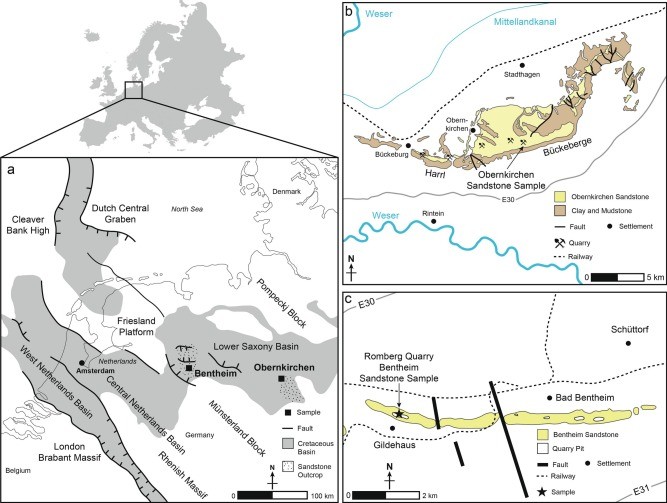
Geological maps identifying the German quarry regions that supplied sandstone carried aboard the Batavia, revealing that the Dutch East India Company sourced construction stone from multiple locations before consolidating shipments for export. (Anthony J. I. Clarke/Journal of Archaeological Science: Reports)
A Shipwreck Still Revealing New Secrets
The shipwreck of the Batavia, initially discovered in 1963, is still one of Australia’s most significant archaeological discoveries and is better known for the dramatic mutiny and massacre that followed the wreck. Research co-author Dr. Corioli Souter, head of Maritime Heritage for the Western Australia Museum, notes that this particular set of research highlights how much more can still be gained from finding and gathering new data from historic shipwreck collections, as well as the integral role of cross-institutional collaboration in this critical pursuit of knowledge.
Dr. Souter believes collaboration is crucial:
“ Nearly four hundred years after the Batavia sank, the famous ship is still revealing new stories. By combining museum collections with advanced scientific techniques, we’re uncovering hidden details about early global trade. Collaborations like these are vital for unlocking new insights from historic shipwrecks and sharing them with the broader community.”
The research team now plans to analyze more stones from the Batavia and other shipwrecks, comparing them with a wider range of European quarry sources to aid in the analysis of historical trade route maps.
Top Image: A sandstone block recovered from the Batavia shipwreck (left) alongside a comparative quarry sample (right). Microscopic mineral analysis allowed researchers to trace the stones to multiple quarry regions in northern Europe. Source: (Anthony J. I. Clarke/Journal of Archaeological Science: Reports)
By Ramsey Hardin
References
Clarke, Anthony J. I., Corioli Souter, and colleagues. "Bricks, Ballast, and the Batavia: Provenancing Dutch East India Company Cargo from a 1629 Shipwreck." Journal of Archaeological Science: Reports 2026. https://doi.org/10.1016/j.jasrep.2026.105958.
Curtin University. "Ancient Shipwreck Cargo Reveals Surprising Global Trade Secrets of the 1600s." Curtin University Media Center, July 29, 2026.https://www.curtin.edu.au/news/media-release/ancient-shipwreck-cargo-reveals-surprising-global-trade-secrets-of-the-1600s/
Phys.org. "Shipwreck Cargo Reveals Surprising Global Trade Secrets of the 1600s." July 29, 2026.https://phys.org/news/2026-07-shipwreck-cargo-reveals-global-secrets.html
Western Australian Museum. "Batavia Shipwreck." Western Australian Museum. https://visit.museum.wa.gov.au/batavia. (Background on the 1629 wreck, excavation history, and recovered cargo.)