
For several centuries, generations of people returned to the same place to prepare food for rituals that bound their community together. According to researchers, the site served as a gathering place for groups traveling between the Kura River basin and the Caucasus Mountains. Now, archaeologists working at the Bronze Age Tava Tepe settlement site in western Azerbaijan near the Georgian and Armenian frontiers have found evidence of a 3,200-year-old ceremonial kitchen that was repeatedly rebuilt and used for several centuries. Multiple generations of people returned to the same place to prepare food for rituals that bound their community together. This remarkable find revises earlier interpretations of the site by explaining a sacred space where communal feasting and ritual traditions supported community life across the Caucasus more than 3,000 years ago.
Each New Kitchen Preserved the One Before It
Archaeologists from the University of Catania, in collaboration with the Azerbaijan National Academy of Sciences, including researchers and students from Catania, Baku and Sapienza University of Rome, first brought the kitchen to light in 2024. Initially, researchers dated the structure to between 1,300 and 1,000 BC. Continuing excavations have revealed a more complex history. Researchers realized that the structure had been rebuilt multiple times in the same place. Each new phase of the construction process sealed earlier ovens, pottery, and food remains beneath later construction.
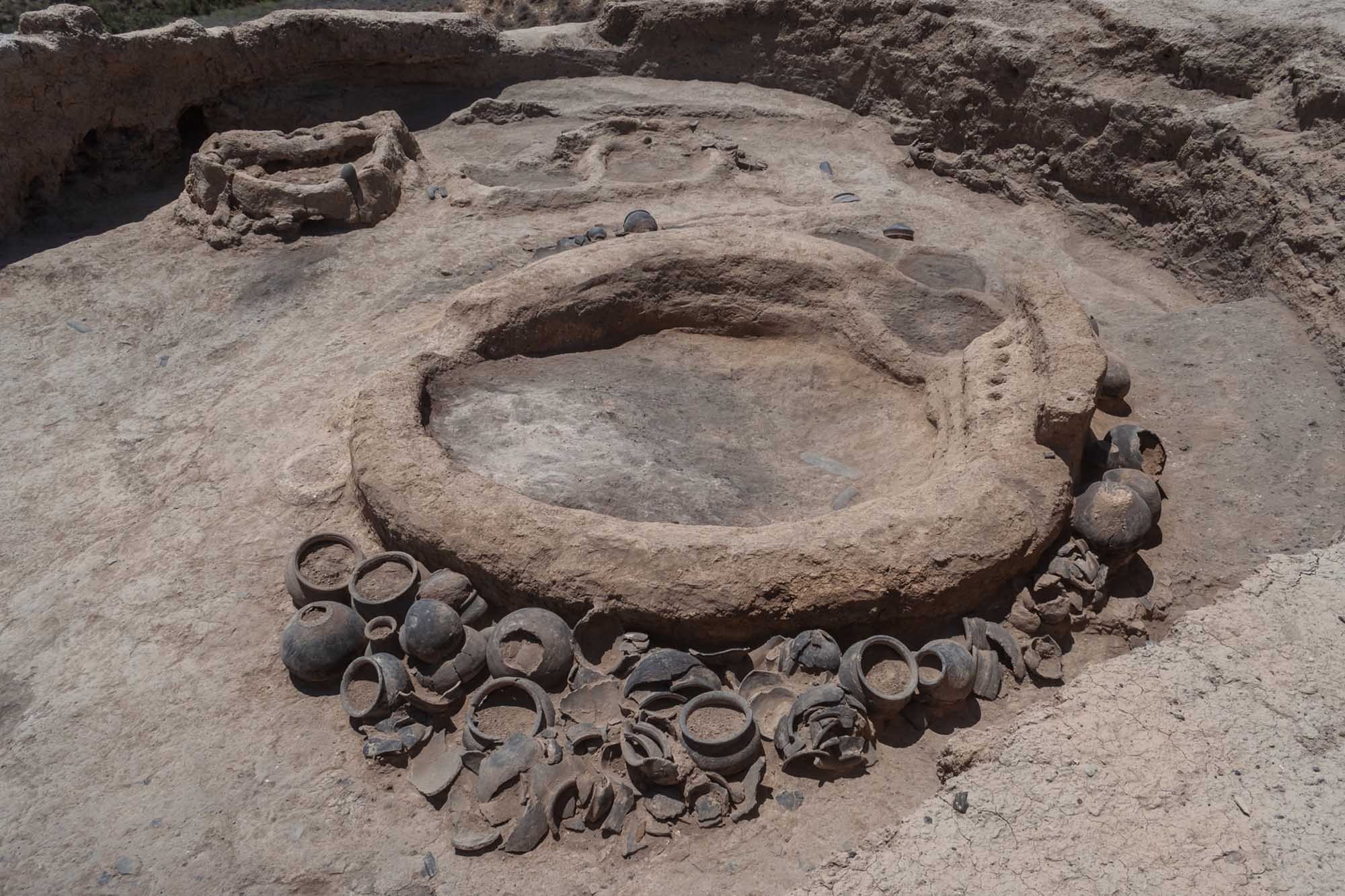
Late Bronze Age ceremonial kitchen with pottery preserved around a circular cooking installation at Tava Tepe in western Azerbaijan. The complex was repeatedly rebuilt over generations and appears to have been associated with communal feasting and ritual gatherings. (Tava Tepe Archaeological Project/University of Catania)
Why the Ancient Kitchen Was Never Cleared
The repeated rebuilding process indicates a long tradition of communal gatherings to share food, suggesting the complex served purposes beyond ordinary daily cooking. People returned to this special space over numerous generations and maintained older ovens and cooking spaces as they constructed each new building. The oldest level contained a raised earthen terrace with a large circular brazier at the center. Several cooking areas were placed around the fire. Cooking pots sat close to the hearth. Archaeologists found numerous ceramic bowls inside an oven filled to the brim with ash. These placements suggest the vessels may have been deliberately left in place after ceremonial use rather than simply clearing the space.
- 3500-Year-Old Ritual Table Unearthed in Azerbaijan's Tava-tepe
- Body of 4,000-year-old teenager near Stonehenge may give clues about Bronze Age lives.
The Kitchen Was Unique in the Caucasus
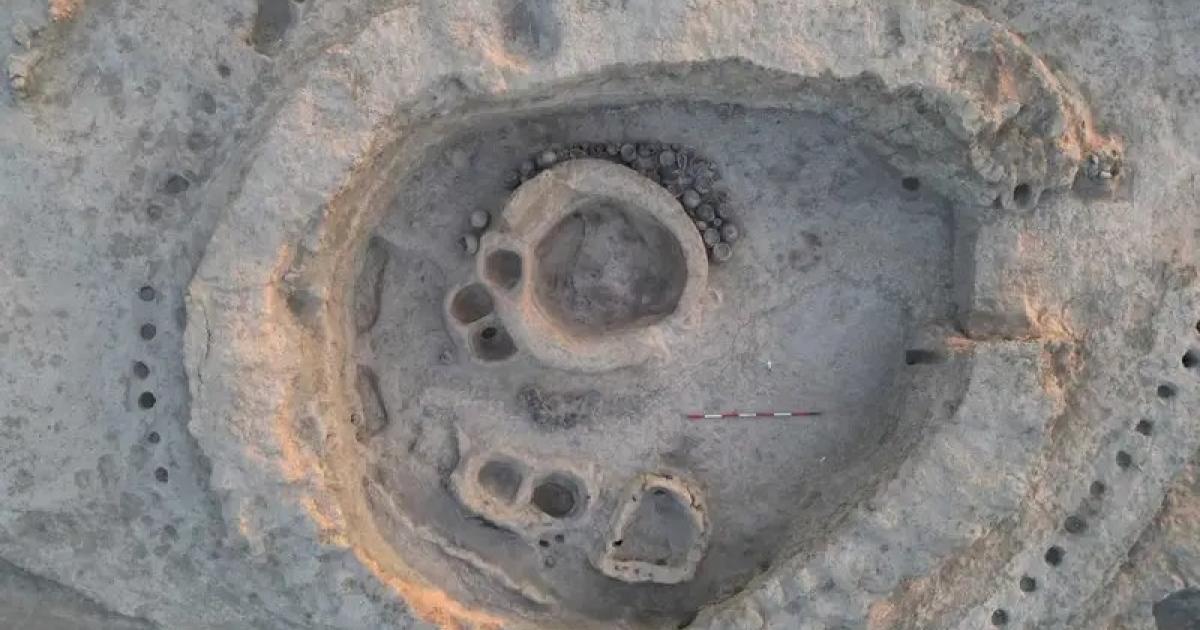
The kitchen is a unique site in the region. According to the researchers: “The structure featured a monumental entrance with wooden columns and a thatched roof, likely covering the entire complex. Numerous post holes, accentuating the circular design, indicate that the structure had a diameter of approximately 15 metres. Builders raised the structure on a packed earth platform. This elevated design would have made the building visually prominent. No similar kitchen has been found anywhere in the Caucasus region. Around the kitchen, the research team uncovered small huts with packed limestone floors, wooden features, and work areas associated with food preparation. Archaeologists also uncovered decorated clay stamps called pintaderas. These selected objects were probably used to decorate bread or other baked goods.
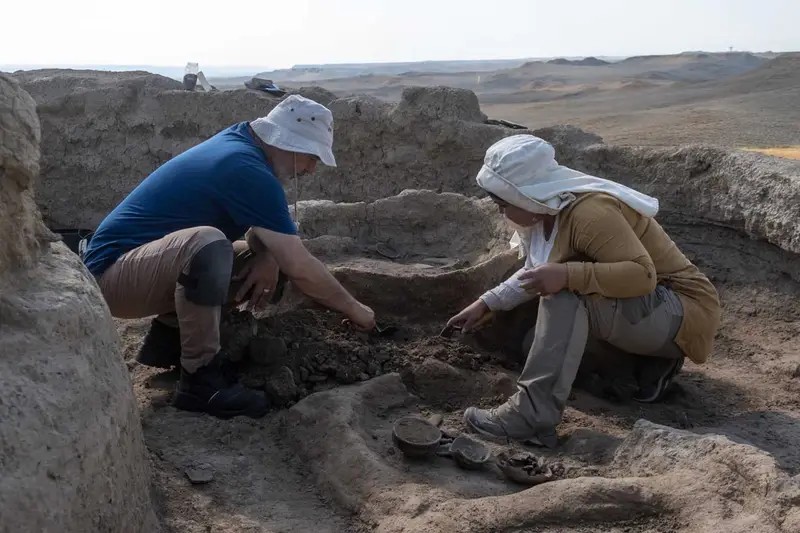
University of Catania archaeologists excavate the 3,200-year-old ceremonial kitchen at Tava Tepe in western Azerbaijan. The circular cooking complex was rebuilt and reused over generations, preserving evidence of communal ritual feasting during the Late Bronze Age. (Tava Tepe Archaeological Project/University of Catania)
The Ancient Meals United a Region
Scientists studying food traces left in the kitchen found remains of a meal consisting of millet mixed with honey, similar to porridge, served with beef. Future studies of animal bones from cattle, sheep, and pigs, plant remains, and food residues will build a more comprehensive understanding of meals shared at the site. These preliminary findings suggest that Tava Tepe served as a meeting place for several groups that were traveling during the Late Bronze Age. Families and communities likely periodically gathered to cook, eat, and strengthen social ties through shared meals. The ritual nature is suggested by the discovery of human figurines placed in votive pits and by the fact that the ceramics appear to have been deliberately sealed beneath later deposits in a thick layer of compacted earth.
- Savoring the Past: Bronze Age Cauldrons' Residues Unveil Caucasus Cuisine
- The Maykop: Lost Bronze Age Culture of the Exotic Caucasus Region
The project leader, Nicola Laneri, points out that repeated rebuilding of the kitchen can show how a tradition endures over several generations. Current studies of animal, plant, and food remains are expected to provide a clearer picture of the traditional foods served during these communal gatherings. Professor Laneri believes that “Tava Tepe may have been a point of convergence where several communities met repeatedly to cook, eat, and, through that shared act, strengthen their social bonds and reaffirm their collective identity.” He noted that the persistence of this constructive ritual over time, through successive reconstructions, is the strongest evidence of its deep roots and importance within the social fabric of the Late Bronze Age. This research offers a new perspective on Bronze Age life in the Caucasus. Rather than a rudimentary cooking area, Tava Tepe has been a ceremonial communal space where food, ritual, and people have come together over hundreds of years.
Top Image: Aerial view of the 3,200-year-old ceremonial kitchen at Tava Tepe, western Azerbaijan. Excavations revealed a circular cooking complex with a central hearth that served as a communal and ritual gathering place during the Late Bronze Age. Source:(Tava Tepe Archaeological Project/University of Catania)
By Ramsey Hardin
References
Azerbaijan State News Agency. July 11, 2024. 3500-year-old Ritual Table Found in Azerbaijan's Tava-Tepe. Official News Documents. Available at:https://azertag.az/en/xeber/3500_year_old_ritual_table_found_in_azerbaijans_tava_tepe-3093326
Garcia, A. July 5, 2026. A Large 3,200-Year-Old Ceremonial Kitchen Found at the Tava Tepe Site in Azerbaijan Where Communal Banquets Were Held. LBV Magazine. Available at:https://www.labrujulaverde.com/en/2026/08/a-large-3200-year-old-ceremonial-kitchen-found-at-the-tava-tepe-site-in-azerbaijan-where-communal-banquets-were-held/
Italian Ministry of Foreign Affairs and International Cooperation. July 24, 2024. A Cooking Facility for the Ancient Communities of the Caucasus at Tava Tepe, Azerbaijan. News and Press Release: Cultural Diplomacy. Available at:https://www.esteri.it/en/sala_stampa/archivionotizie/diplomazia-culturale/2024/07/una-cucina-per-le-antiche-popolazioni-del-caucaso-a-tava-tepe-azerbaijan/
Kayra, O. August 5, 2026. Archaeologists Discover a 3,200-Year-Old Ceremonial Kitchen in Azerbaijan, Unique in the Caucasus. Arkeonews. Available at:https://arkeonews.net/archaeologists-discover-a-3200-year-old-ceremonial-kitchen-in-azerbaijan-unique-in-the-caucasus/
Laneri, N. and Jalilov, B. July 11, 2024. Tava Tepe Archaeological Project. Center for Ancient Mediterranean and Near Eastern Studies (CAMNES), n.d. Available at:https://camnes.org/tava-tepe-archaeological-project
Milligan, M. July 10, 2024. 3500-year-old Ritual Table Found in Azerbaijan. Heritage Daily. Available at:https://www.heritagedaily.com/2024/07/3500-year-old-ritual-table-found-in-azerbaijan/152586
Radley, D. August 5, 2026. 3,200-year-old ceremonial kitchen rebuilt over centuries, found at Tava Tepe in Azerbaijan. Archaeology News Online Magazine: Available at:https://archaeologymag.com/2026/08/ceremonial-kitchen-at-tava-tepe-in-azerbaijan/