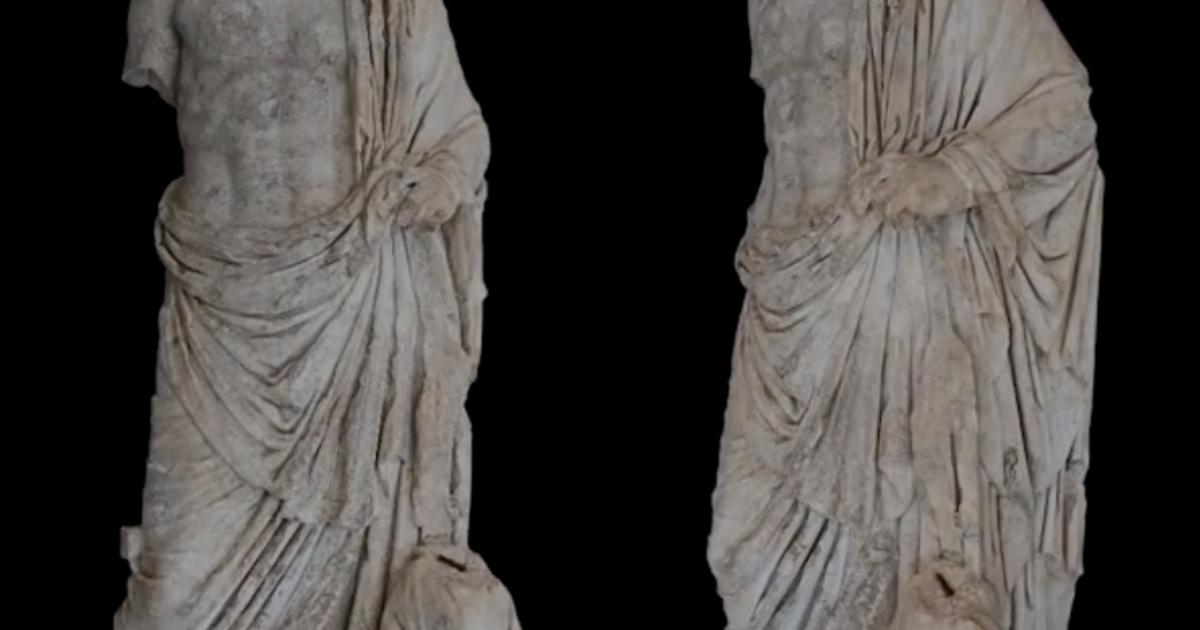

After nearly 1,800 years buried beneath the ruins of one of the ancient Mediterranean’s most impressive cities, a symbol of healing has emerged from the rubble of a collapsed gateway into the light. Archaeologists excavating Aspendos in southern Turkey have uncovered a well-preserved group of marble statues depicting Asklepios, the Greek god of medicine and healing, alongside his son and assistant, Telesphoros. Standing approximately seven feet tall and dating to the late second century AD, the Roman-era sculpture offers new evidence for the importance of healing beliefs in the everyday religious and civic life of ancient Aspendos.
An Ancient Symbol of Healing Returns to Light
The discovery, recently announced by Turkey’s Ministry of Culture and Tourism, was eagerly shared by Mehmet Nuri Ersoy on his social media account. Ersoy described the discovery as an exciting event that highlighted the importance of Aspendos and the archaeological work there.
- Asklepion and the use of Dreams for curing diseases with the help of the Gods
- Ancient Mall Found in Famous Theater City of Aspendos Shows Commerce and Entertainment Went Hand-in-Hand
Researchers unearthed the statue among the remains of the collapsed northern wing of the Monumental Gate, where Aspendos’ East Plaza opens into Theatre Street, one of the busiest and most visible corners of this ancient city.
The God of Medicine Was Meant to be Seen
The location of the statue is significant. Asklepios’ statue was not placed in a hidden shrine tucked away for private worship. Rather, it occupied a prominent central location in a public space where ordinary people passed on their way to the theater or the agora. Placing the god of healing at this site indicates that health and medicine were important concerns in Roman Aspendos. The area surrounding the excavation site dates to the 2nd century AD, the same general time period of the construction and completion of Aspendos’ famous theatre. This excavation is part of Turkey’s “Heritage for the Future” project, a nationwide effort to coordinate and fund archaeological work at numerous historic sites.
- Roman Pool in Turkey Revealed as Part of Ancient Healing Sanctuary
- Marble Statue of Athena Discovered at Ancient Laodicea
How Romans Envisioned the God of Healing
Asklepius held particular significance in the Roman world wherever illness and physical injury were constant concerns. There was a special devotion to Asklepius in the Roman military, as inscriptions and archaeological discoveries show soldiers, officers, and military physicians appealing to the healing god. At the legionary fortress of Novae near the Danube River in modern-day Bulgaria, archaeologists have even identified a sanctuary to Asklepius and his daughter, Hygia, the Greek goddess of health and cleanliness, within the military hospital itself.
The Roman-era statue depicts the god of medicine as the ancient sculptures of his time once imagined him. He is standing upright, a mature man with a full head of hair and a finely detailed beard. His weight is settled on his left leg as he gently bends his right leg to step forward. His upper body is left bare with only a himation carefully draped over the left shoulder. His himation falls in deep, deliberate folds around his waist and legs. According to the Ministry of Culture and Tourism, specific, detailed factors such as the stance, drapery, and treatment of the face and hair indicate that the statue was created in a Roman-era sculptural workshop rather than as a later imitation.
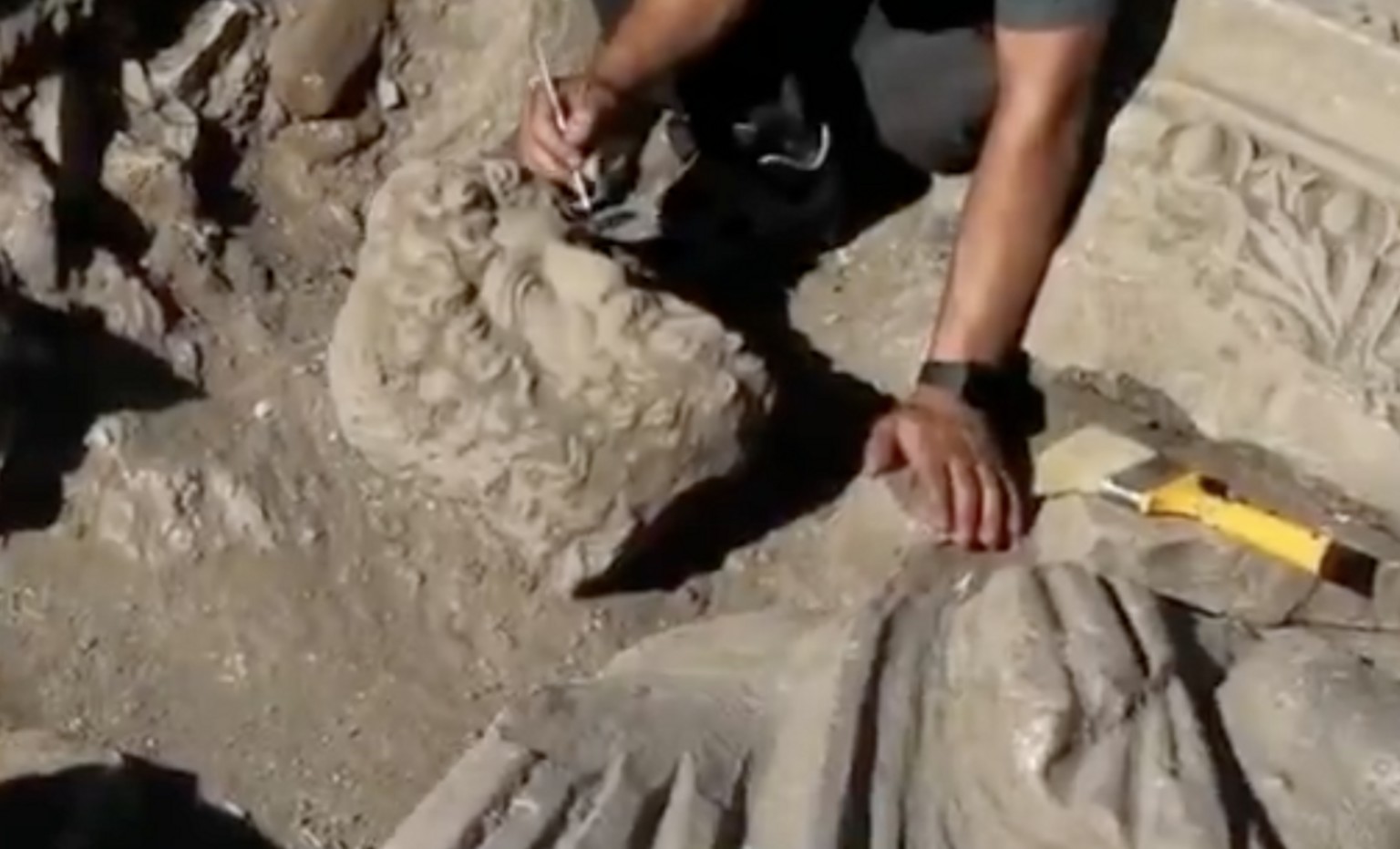
Archaeologists excavate and clean the marble statue of Asclepius immediately after its discovery at Aspendos. Republic of Türkiye Ministry of Culture and Tourism / Heritage to the Future Project (published via the official X account of Minister Mehmet Nuri Ersoy)
The Two Faces of Divine Healing
At Asklepios’ feet stands his son Telesphoros. Here the sculptor takes a completely different approach. Rather than an idealized adult body, Telesphoros appears as a small, childlike figure wrapped from head to his toes in a long hooded garment that hides almost every anatomical detail and gives him a column-like silhouette. The visual contrast is deliberate. Within the ancient imagination, Asklepios represented medicine itself–diagnosis, treatment, and the ongoing fight with illness. His son, Telesphoros, represented recovery, convalescence, and the slow return to good health. The two deities presented a complete visual story of illness and future recovery during the Roman Empire.
- Five of the Most Powerful and Influential Empires of the Ancient World
- The Black Sheep of the Empire: Actors and Actresses in Ancient Rome
First Clear Evidence of the Healing Cult at Aspendos
Archaeologists consider the statue’s recovery one of their most exciting finds, as it provides direct physical evidence of the Asklepios cult in Aspendos. Worship of Asklepios was common throughout the Greek and Roman world; the great healing sanctuaries at Epidaurus and Pergamon remain the most famous examples. However, connecting that broader tradition to Aspendos relied on inference rather than hard evidence until the statue’s discovery.
Healing at the Heart of an Ancient City
The location of Aspendos also adds another layer of evidence. Because the piece itself was found near a monumental civic gate rather than a secluded temple, it actually suggests healing imagery wasn’t confined to quiet sacred spaces; it was an integral part of the city’s public life, presented alongside its theatre, its agora, and its other grand architecture. According to the research team, it is rare to find both stone figures largely intact. Asklepios and Telesphoros are often found separately, damaged, or even missing entirely from the archaeological record, forcing scholars to reconstruct the pair from fragments and written sources. Having both of these figures in one location gives researchers a chance to study the full symbolic arc of ancient healing beliefs exactly as an ancient audience would have seen it.
- Were Asclepian Centers Powered By Magical Ritual or Holistic Healthcare?
- 2,500-Year-Old Reliefs Found in Turkey Portray Greco-Persian Wars
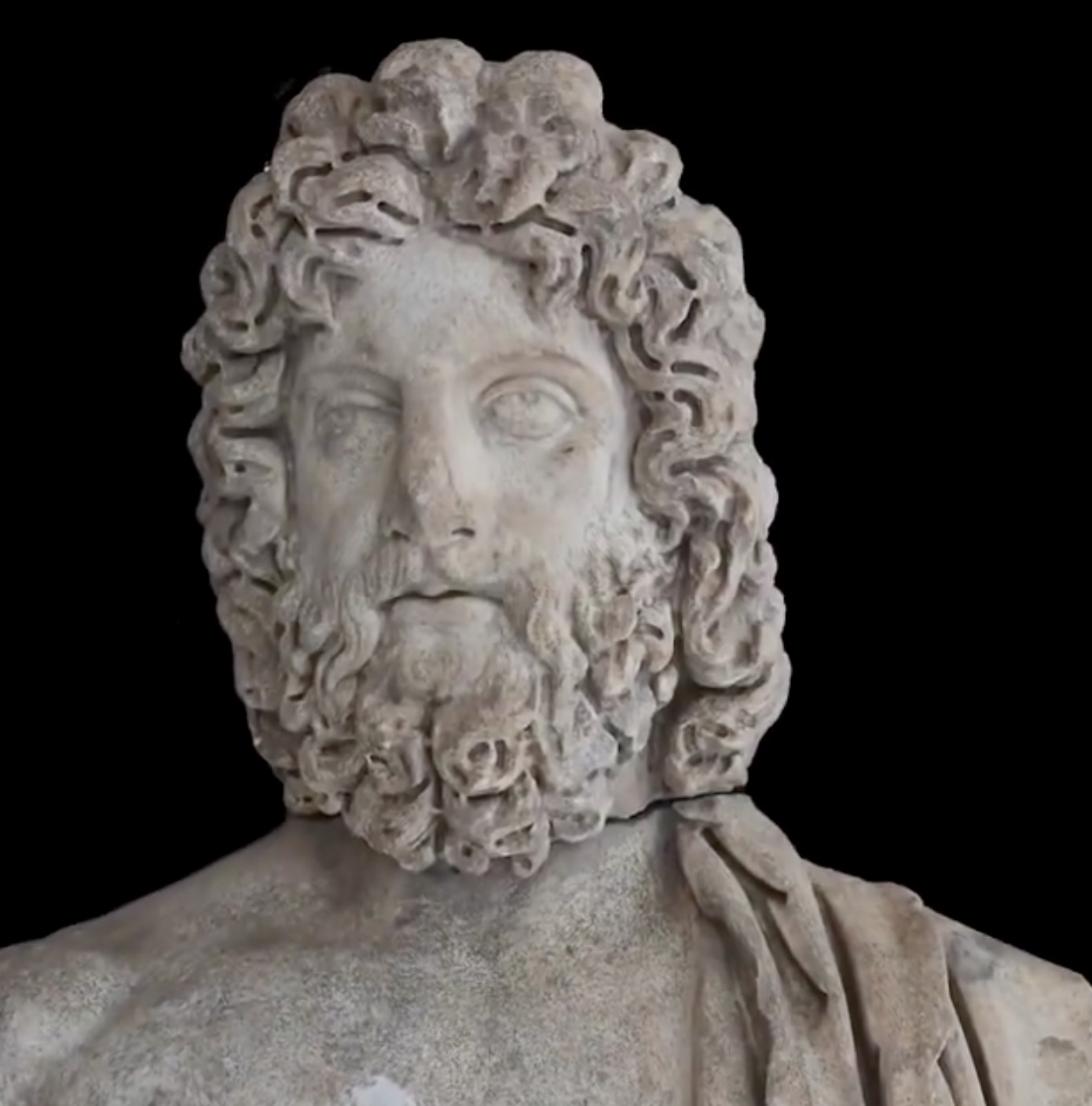
Close-up of the restored head of the Roman-era marble statue depicting Asclepius, the Greek god of healing, unearthed at Aspendos. Republic of Türkiye Ministry of Culture and Tourism / Heritage to the Future Project (published via the official X account of Minister Mehmet Nuri Ersoy)
The statue’s dating is similar to the theatre’s own construction under the Roman Emperor Marcus Aurelius, suggesting that it belongs to the same wave of ambitious public building that reshaped Aspendos in the late 2nd century AD, a period when the city was investing heavily in its own image.
The discovery has received enormous public interest from news and media outlets. Government authorities and cultural organizations have been equally supportive. Now, scholars await academic studies examining its historical value.
Top Image: A reconstructed marble statue of Asclepius (Asklepios), the Greek god of healing, discovered during excavations at the ancient city of Aspendos. The Roman Imperial-period sculpture stands approximately 2.2 meters (7.2 ft) tall. It depicts the deity draped in a himation with Telesphoros, the hooded healing figure associated with Asclepius, standing beside his leg. Source: Republic of Turkey Ministry of Culture and Tourism / Heritage to the Future Project,published via the official X account of Minister Mehmet Nuri Ersoy.
By Ramsey Hardin
References
Archaeology Wiki Staff. 2026. Asklepios and Telesphoros Statues Found at Aspendos. Available at:https://www.archaeology.wiki/blog/2026/08/07/asklepios-and-telesphoros-statues-found-at-aspendos/
Büyükyıldırım, O. 2026. 1,800-Year-Old Sculpture Group of Asclepius and Telesphorus Found at Aspendos. Anatolian Archaeology. Available at:https://www.anatolianarchaeology.net/1800-year-old-sculpture-group-of-asclepius-and-telesphorus-found-at-aspendos/
Ersoy, M. N. 2026. 1,800-Year-Old Symbol of Healing Unearthed at Aspendos. Republic of Türkiye Ministry of Culture and Tourism. Available at:https://turkishmuseums.com/
Milligan, M. 2026. Rare Sculptures of Asklepios and Telesphoros Unearthed in Turkey. HeritageDaily. Available at:https://www.heritagedaily.com/2026/08/rare-sculptures-of-asklepios-and-telesphoros-unearthed-in-turkey/158858
Republic of Türkiye Ministry of Culture and Tourism. 2026. Legacy for the Future Project: Discovery of the Asclepius and Telesphoros Statue Group at Aspendos. Republic of Türkiye Ministry of Culture and Tourism. Available at:https://turkishmuseums.com/
Solmaz, F. Z. 2026. Türkiye Hails Discovery of 1,800-Year-Old Asclepius Statue at Aspendos. Anadolu Agency. Available at:https://www.aa.com.tr/en/culture/turkiye-hails-discovery-of-1-800-year-old-asclepius-statue-at-aspendos/4021038