‘It was mining, smelting and de-forestation on a large scale however that identify the scale and impact of the Romanisation of Gallia Narbonensis as a real and substantial contributor to the start of global warming and climate change.’
When Pliny the Elder sat composing his Naturalis Historia - at some point in the second half of the first century AD - he very likely considered the range and even the impact of the rural and urban industrialisation he had seen throughout the then empire. By the publication of his first volume in 77AD, it would not have been possible to travel and view any Roman town, colony or city without noticing the distinct smell of smoke, possibly hanging in low lying mists, that grew ever stronger and more widespread as one closed in on the gates of the community.
With Roman imperial expansion came economic growth and, with growth, came increased demand for goods to improve standards of living, materials to build more homes, a need for skilled and unskilled workers – both freemen and slaves – and an ever-increasing desire for minerals. Put all of this together and we can see the Roman Empire from at least 150 BC onwards, contributing to localised and regional levels of pollution on a scale that had never been seen before – eclipsing the small scale Celtic industries and impacting on climate change.
Gallia Narbonensis
Before his death in the eruption at Vesuvius in 79 AD ended the life of one of Rome’s greatest commentators, Pliny the Elder was a widely travelled commentator on the history and development of Rome. One of the numerous provinces that we know Pliny visited was Gallia Narbonensis – what we would refer to as the South of France today. The administrative centre of this great province was modern day Narbonne which, in the Roman period, was an expanding military and commercial crossroads between Italy to the east, further Gaul to the north and Hispania to the west.Pliny described Gallia Narbonensis in this way in his Nauralis Historia:
‘In the cultivation of the soil, the manners and civilisation of the inhabitants, and the extent of its wealth, it is surpassed by none of the provinces, and, in short, might be more truthfully described as a part of Italy than as a province.’
Because of its similarities to Italy, Gallia Narbonensis grew into a Roman province at an alarmingly fast rate – partly because it was already known to be an attractive area in which to live or work and partly because one had to travel through it in order to reach Hispania or move north into central and northern Gaul. But it was also well known for the widespread and cultured Celtic population that post-dated the Phoenician and Greek merchants’ communities along the coast that had preceded the arrival of the Romans. Most of all, it was the climate, rivers, mountains and rivers that made this part of France as attractive then as it is now – and hidden beneath the surface, its rich abundance of minerals.
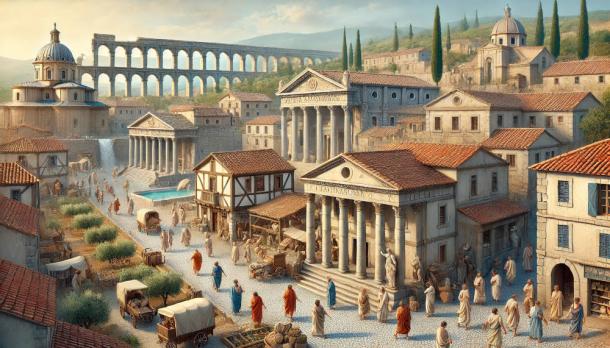
Image of a growing settlement in Gallia Narbonensis during Roman times. (Author-generated)
The gradual annexation and control over the tribes of southern Gaul took time – between 120 BC and the accession of Augustus, there was a constant influx and increase in investment, administrative control and growth that enabled Roman industrial development to spread. In addition, there were no real wars that disrupted life in this province – the Gaul’s, once they accepted that they had no alternative, seemed to have tried to make the most of new found economic opportunity as much as anyone.
Economic expansion saw a growth in house building – numerous new towns were established and with them came demands for housing, triumphal arches, theatres, temples, baths, vast aqueducts and of course roads. All of these projects needed investment, labour and stone hence the rapid and widescale spread of stone mining throughout southern France.
But it was not just mining for stone that saw huge swathes of forest cut and burned - building sites and quarries for all sorts of materials such as clay, iron ore and silver were opened up across the region. Local families vied with merchants from Rome to buy up land, invest in road building and housing companies and skilled engineers, draftsmen, stone masons and potters flooded into the region – profits were huge as the number of luxurious villas and towns such as Glanum testify.
Glanum is one of the best examples of Roman colonisation and magnificence that can still be viewed. Preserved in silt for over fifteen-hundred years, the town displays all the hallmarks of fast and luxurious growth in the Augustan period.
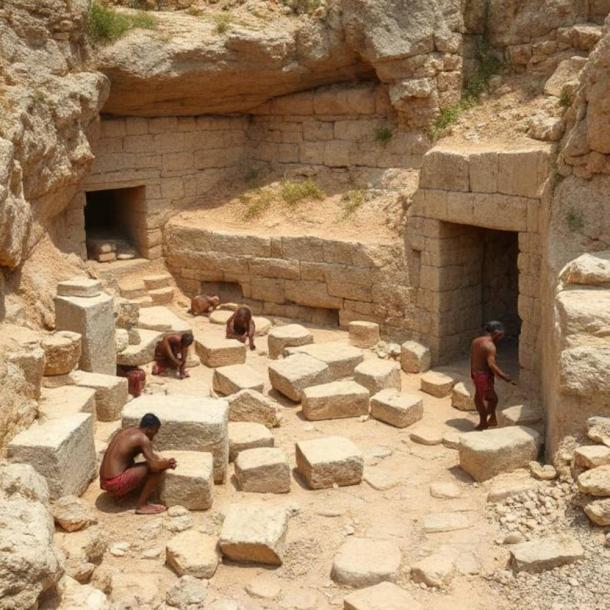
Image of stone cutting at a Roman quarry. (Author generated)
But it was not just domestic consumption of these materials within Narbonensis that was impressive – Rome too was growing and had a voracious demand for bricks from the hundreds of kilns established alongside the River Rhone to be transported to Aix - millions of them - granite for large scale projects around the forum also came from the Pyrenees and was moved by barges to Marseilles to transport to Rome, mussels came from mussel farms in Aiges-Mortes, wheat from the huge granaries at Barbegal, wines from all over the region were transported in huge amounts to Rome and especially from Arelate (modern day Arles). The production of Garum or fish sauce was another huge domestic product that was able to build on existing Celtic production to satisfy consumption across the Roman empire.
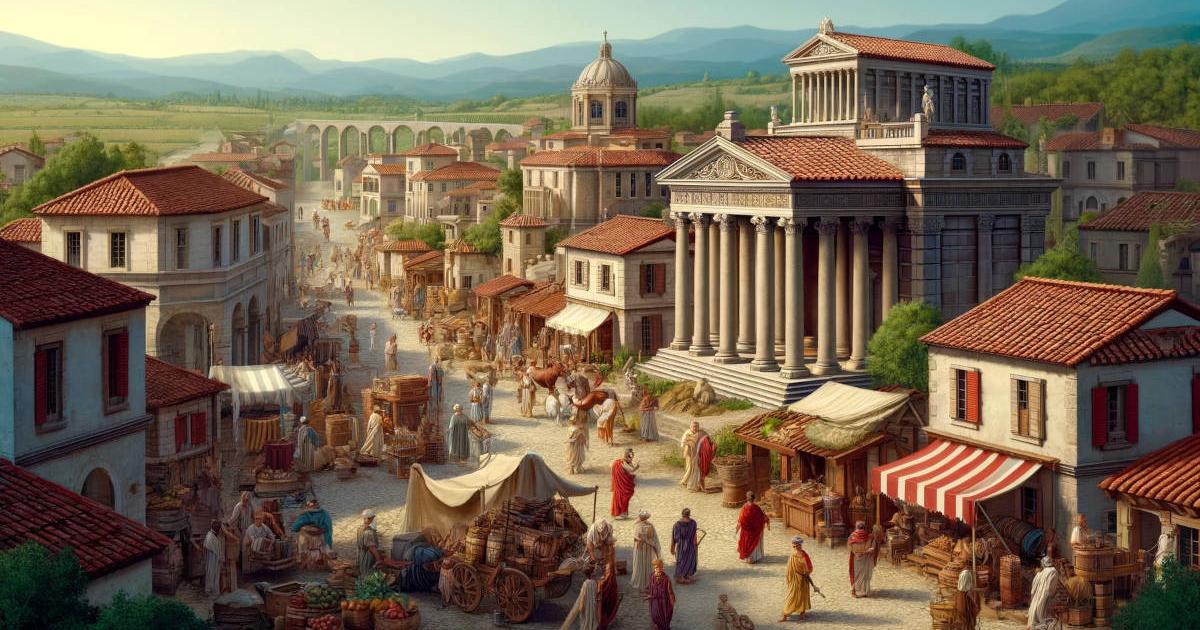
Top image: Image of rapid Roman development during the Empire period.
Source: Author-generated.
Philip Kay-Bujak is a retired former teacher of history and classics and now author of numerous books on the history of the Roman Republic. His new biography of Marcus Tullius Cicero, entitled ‘The Life of Cicero,’ was published by Pen & Sword Books in 2023 and his latest book ‘The Roman Province of Gallia Narbonensis’ by the same in 2024. His new book on the Roman occupation of Palestine will be published in 2026.