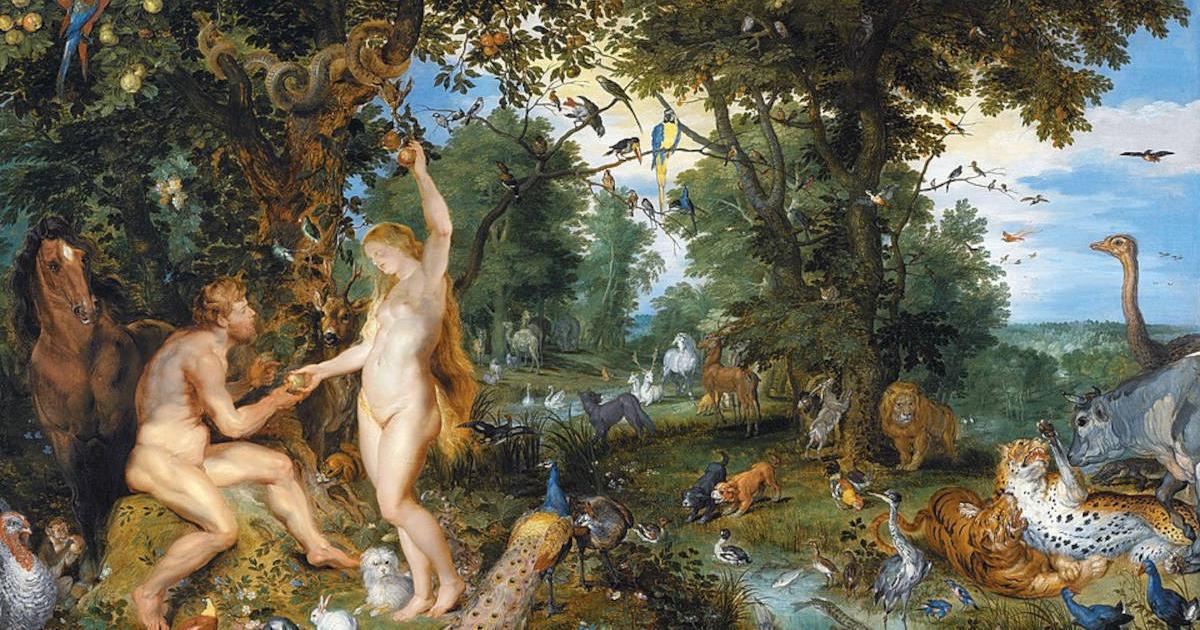
The story of the Garden of Eden has fascinated people for millennia, with countless scholars and amateur enthusiasts trying to pinpoint its true location. It has traditionally been thought to lie in Mesopotamia, where the Tigris and Euphrates rivers meet in modern-day Iraq, but a new theory challenges this view, suggesting a surprising alternative truth. Dr. Konstantin Borisov, a computer engineer, suggests that Eden may have been located not in Iraq, but beneath Egypt's Great Pyramid on the Giza Plateau.
In a recent paper published in Archaeological Discovery, Borisov presents a provocative reinterpretation of ancient texts, maps, and geographical features to support his claim, which is bold and different but surprisingly in synch with what is known.
The Evidence for Eden in Egypt
In Genesis 2:8–14, the Garden of Eden is described as being nourished by a river that divides into four streams: Pishon, Gihon, Tigris (Hiddekel), and Euphrates. Historically, this has led many to assume Eden was somewhere in Mesopotamia. However, Borisov points out that while the Tigris and Euphrates are identifiable, the Pishon and Gihon have remained elusive. He argues that by reexamining ancient sources, a more accurate understanding of these rivers emerges, and that it points toward Egypt.
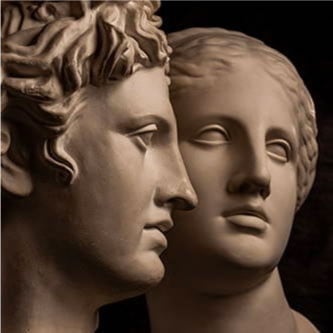
- Garden of Eden Depicted in Ancient Greek Religious Art
- Hereford Mappa Mundi: Legendary Cities, Monstrous Races, and Curious Medieval Beasts
Central to Borisov’s theory is the Hereford Mappa Mundi, a medieval European map that depicts the world surrounded by the mythical river Oceanus. At the top of this map lies "Paradise," situated adjacent to Oceanus.
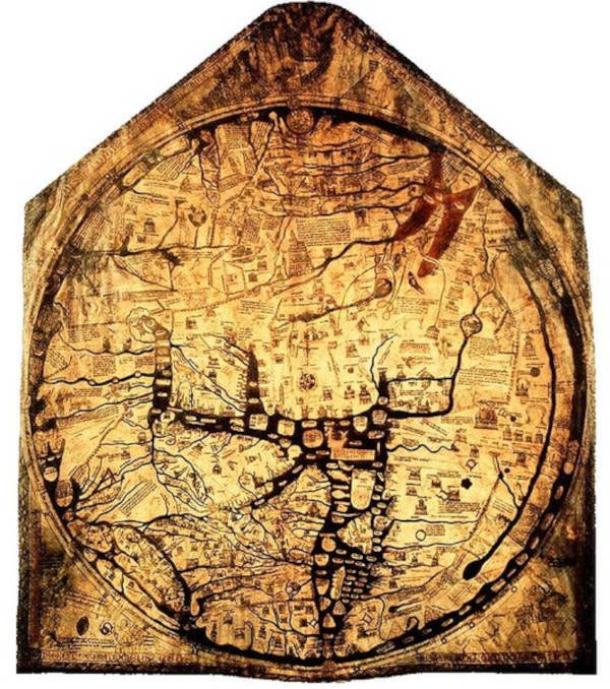
The Hereford Mappa Mundi. (Public Domain).
"By examining a map from around 500 BC, it becomes apparent that the only four rivers emerging from the encircling Oceanus are the Nile, Tigris, Euphrates and Indus," Borisov wrote. He emphasizes that these features "cannot be overlooked," suggesting that the Gihon corresponds to the Nile and the Pishon aligns with the Indus.
To bolster his biblical and cartographic research, Borisov also relies on the writings of early historians who weighed in on the subject. He refererences a quote by Titus Flavius Josephus, a Romano-Jewish scholar, who stated the following:
"Now the garden was watered by one river, which ran round about the whole earth, and was parted into four parts. And Phison, which denotes a multitude, running into India, makes its exit into the sea, and is by the Greeks called Ganges. Euphrates also, as well as Tigris, goes down into the Red Sea. Now the name Euphrates, or Phrath, denotes either a dispersion, or a flower: by Tigris, or Diglath, is signified what is swift, with narrowness; and Geon runs through Egypt, and denotes what arises from the east, which the Greeks call Nile."
This direct link between the Gihon and the Nile, Borisov argues, has often been overlooked. Incorporating mythological symbolism as well, he points to the ancient belief that the world was encircled by a river known as Oceanus, aligning with medieval maps and suggesting a different geographic center for Eden.
The Eden-Great Pyramid Connection
Borisov’s theory takes an even more intriguing turn when he connects Eden to the Great Pyramid of Giza. He suggests that the pyramid itself may symbolize the sacred Tree of Life described in Genesis. According to Borisov, light phenomena inside the King’s Chamber mirror the form of a tree.
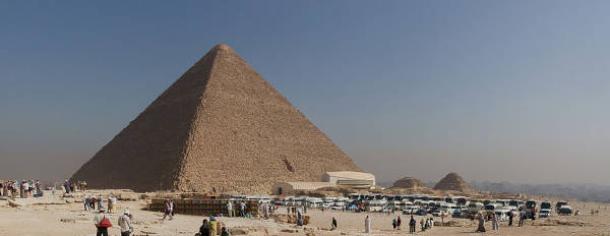
The Great Pyramid of Egypt. (Kallerna/CC BY-SA 3.0).
"It cannot be overlooked, the charged particles in this simulation are arranged in a way that creates several parallel branches extending outward from the center line, creating a tree-like representation," he explained in an interview with the Mirror, referring to a 2012 computer simulation that studied electromagnetic fields within the pyramid.
Standing 455 feet tall and spanning approximately 756 feet across at its foundation, the Great Pyramid has long been associated with mysteries and legends. Borisov proposes that its unique internal structure and physical properties might not be coincidental, but rather remnants of the ancient Edenic tradition. He suggests that the light phenomena inside could represent the Tree of Life's radiance, offering a tangible link between the biblical narrative and a real-world monument.
A Source of Historical Fascination
Konstantin Borisov acknowledges that more research is needed to determine "the precise course of Oceanus," which would be vital to the verification of his theory. Nevertheless, he maintains that his multidisciplinary approach — incorporating ancient texts, cartography, mythology, and modern simulations — is the best way to study the question of Eden, and firmly believes it has provided compelling evidence for relocating Eden to Egypt.
"At this point, all the rivers of the Bible have been identified, and it seems that all that is needed is to follow the course of Oceanus around the globe to locate the position of Eden," he stated.
Although this theory diverges sharply from traditional interpretations, it contributes to a rich history of debate that remains ongoing, and includes a diverse array of suggestions for the true location of the Garden of Eden. English archaeologist David Rohl, for example, has proposed that Eden was located near Tabriz in northern Iran. Many others have speculated it was in Israel, with the Jordan River as a central feature. According to the Mormon tradition, Eden was actually located near Jackson County, Missouri, linking the legendary place to the Americas. Other theories have suggested Florida and Mongolia as the true locations, and have offered what they consider strong evidence in support of their claims.
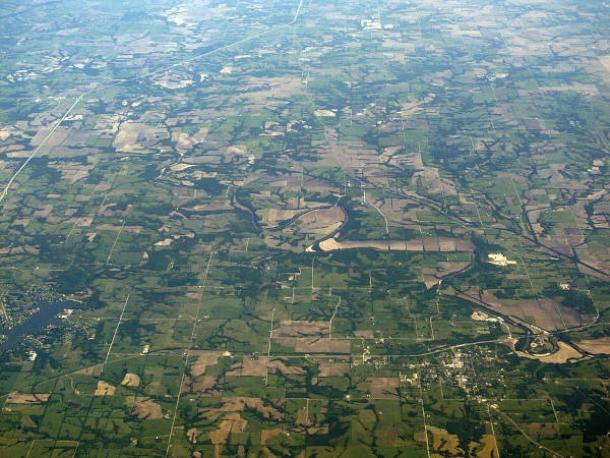
Aerial view of Daviess County in Missouri, near the location where the Mormons believe the Garden of Eden was located. (Ken Lund/CC BY-SA 2.0).
What remains consistent is the enduring allure of the Garden of Eden myth. Regardless of its actual location (assuming it has one and is not just mythological), the quest to discover humanity’s original paradise will continue to inspire new explorations into our ancient past.
Top image: Jan Brueghel the Elder and Peter Paul Rubens (1615): ‘The Garden of Eden with the Fall of Man,’ in Mauritshuis, The Hague.
Source: Public Domain.