
The Calusa people, an ancient Native American population that occupied the lands of modern-day Florida in pre-Columbian times, engaged in a most unusual practice. It seems they harvested enormous quantities of a fish that couldn’t be eaten because it produced a toxic compound that was deadly to humans. So, the question is, what exactly were they doing with this poisonous fish?
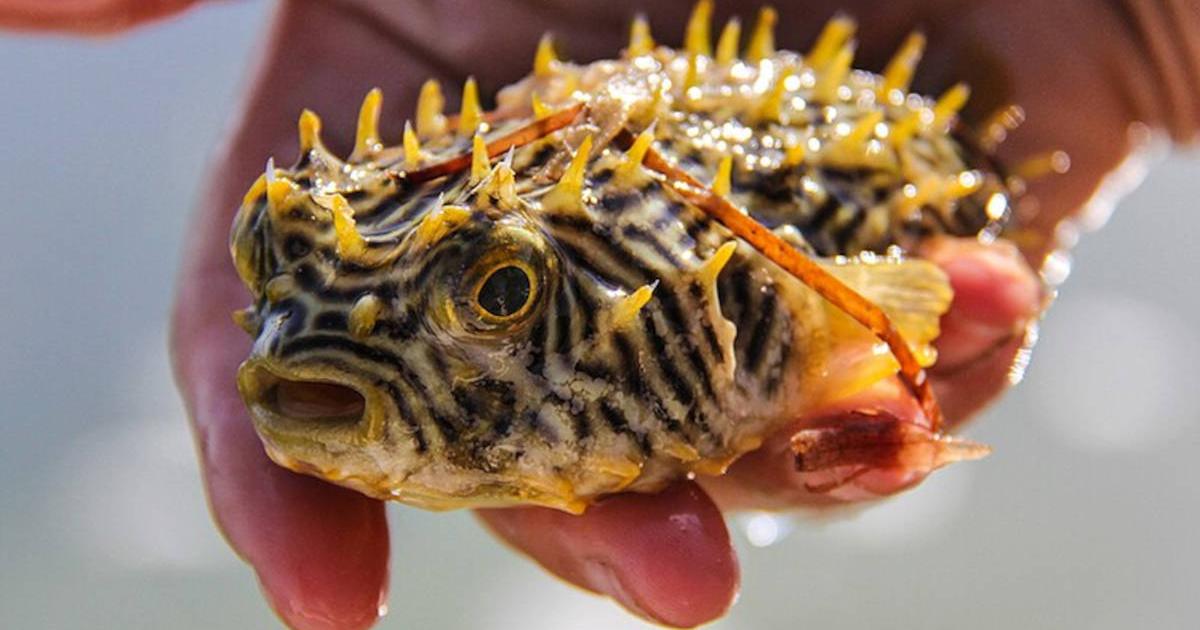
Recent excavations at the Mound Key archaeological site in southwestern Florida have unearthed extensive deposits of the bones of burrfish, a species that survives to this day but has never been used as a source of food. Burrfish produce a poison known as tetrodoxin, which can kill a person within an hour of consumption, causing gastrointestinal distress, paralysis, and respiratory failure.
Species of burrfish have been identified in archaeological deposits throughout the Americas and in the Caribbean. But only on Mound Key have their remains been found in large quantities, making it clear that they were desirable to the Calusa, for reasons that remain obscure.
In an article just published in the Journal of Anthropological Archaeology, a researcher who specializes in the study of the Calusa culture proposes that these industrious people found a way to make use of these fish for non-food purposes. Penn State University anthropologist Isabelle Holland-Lulewicz admits that she does not know what those purposes might have been, at least not yet (she plans to investigate this question thoroughly in the upcoming years). But they are undoubtedly grounded in the cultural practices of a people that came to rely on aquatic resources of all types to ensure their survival.
- Ancient People Consumed Highly Toxic Blowfish as an Aphrodisiac
- Romans Are Said to Have Ingested Fish Brains That Caused Hallucinations
Introducing the Industrious Calusa
The Calusa people lived in southwestern Florida in pre-Columbian times, emerging as a distinct group around 500 AD. Choosing a non-agricultural pathway that was highly unusual at the time, they built a thriving culture and economy that was organized around the exploitation of marine resources harvested from the sea and from Florida’s Charlotte Harbor estuarine system.
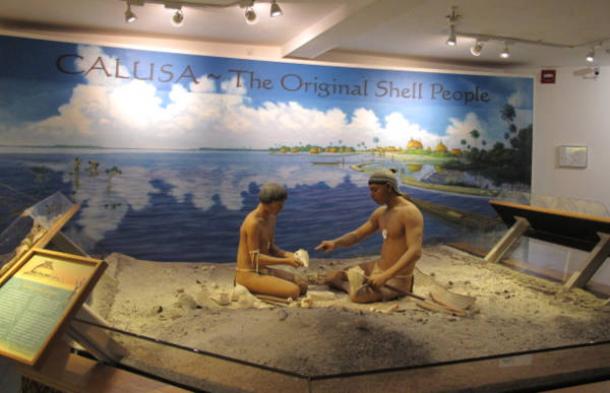
Exhibit highlighting the shell harvesting practices of the Calusa people at the Bailey-Matthews National Shell Museum in Sanibel, Florida. (Invertzoo/CC BY-SA 4.0).
Reaching the peak of their sophistication and societal development between the ninth and 15th centuries AD, the Calusa built a series of settlements that provided homes for as many as 5,000 to 10,000 people, which made them the most populous indigenous group living in pre-Columbian Florida. They built an extensive network of canals that connected their various settlements in the area around the Charlotte Harbor estuarine system, the outlines of which are still visible in many places.
- Ingeniously Engineered ‘Watercourts’ Fueled Florida’s Calusa Kingdom
- The Calusa People: A Lost Tribe of Florida that Early Explorers Wrote Home About
Like many ancient indigenous people in the Americas, the Calusa ultimately did not survive their encounters with the Spanish, and by the 18th century disease and assimilation had essentially wiped out their culture. But up until their disastrous contact with Europeans they were a dominant force in their region, and it was their creative and relentless approach to using the marine resources surrounding them that allowed them to thrive.
Mound Key Island, which is located in the Estero Bay just south of the city of Fort Myers, is a true engineering marvel, and a testament to the ingenuity of the Calusa people. This 126-acre- (51-hectare-) island is entirely man-made, having been created by the Calusa through the systematic deposit of shells, fish bones, rocks, and other recycled materials over the course of many centuries.
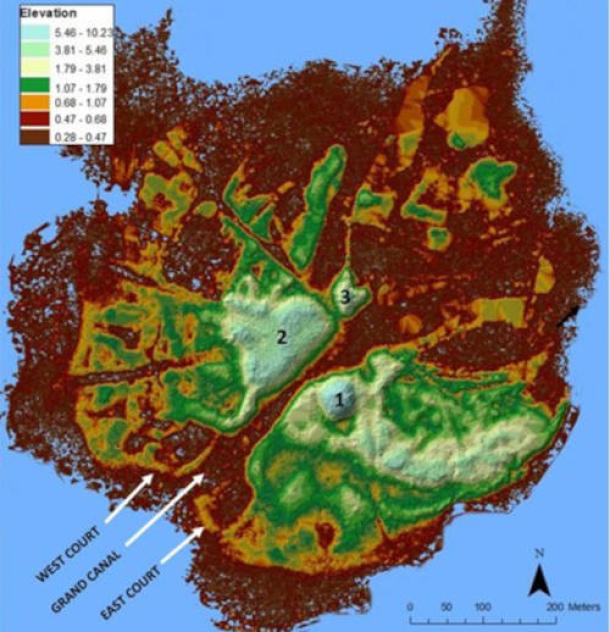
LIDAR map of Mound Key Island, showing major features such as watercourts, mounds, and its largest canal. (Florida Museum of Natural History).
Once the Calusa had built the island to rise well above sea level, they built a settlement there, turning it into their political capital and ceremonial center. It was also on Mound Key Island that they apparently perfected the art of large-scale burrfish harvesting, as the recent discoveries there reveals.
The Calusa were known for the mass harvesting and mass consumption of many different species of fish and shellfish. But when archaeologists began to uncover vast collections of the buried remains of burrfish, this was considered a major surprise, as these toxic creatures could not be eaten.
Solving the Calusa Burrfish Mystery
On Mound Key Island the Calusa constructed a complex settlement interspersed with canals, causeways, burial mounds, refuse mounds, and small blocked-off reservoirs known as watercourts, helped them direct and control the movements of the fish and other sea creatures. Then and now burrfish were common in the brackish waters of the Gulf of Mexico, and the Calusa would have had no difficulty collecting them.
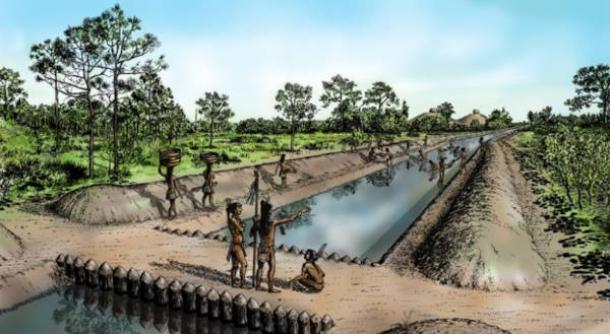
Painting of Calusa people working around the Pine Island Canal, which was 2.5 miles long and connected Pine Island Sound with the Matlacha Pass in modern-day southwest Florida.(Florida Museum of Natural History).
But unlike the captains of modern fishing boats, the Calusa didn’t throw these toxic fish back into the sea. They collected as many burrfish as they could instead, using them for … something.
But what was that something? This is not an easy question to answer.
"While the global ethnographic record contains references to conspicuous uses of burrfishes, like the Melanesian war helmets, such highly visible uses would have likely been included in Spanish descriptions of the Calusa, but none have been identified to date," Isabelle Holland-Lulewicz noted in her study. She wrote that other researchers “have suggested use of spines for bloodletting practices, though they could have also been used in tattoo kits, as arrow or spear points, or for any number of other uses. The Calusa could have utilized the properties of the tetrodotoxin in medicinal, ritual, or even military contexts, but again evidence for such use has not been identified."
Holland-Lulewicz proposes that the Calusa used these fish for the mass production of some kind of non-food product, made from some combination of the fish’s sharp exterior spines, skins, bones, and innards. This product could have been used for construction, or ceremonial purposes, or for making some type of collectible.
As of now the actual reason why the Calusa coveted the burrfish remains a mystery. But it is a mystery that should eventually be solved, once the experts have had more time to examine the context within which the remains of these fish were found, to determine how their body parts might have been integrated into Calusa economic and cultural practices.
Top image: The striped burrfish, a fish with toxic compounds inside that can kill humans if it is ingested.
Source: Atlantic Oceanographic Meteorological Laboratory/Public Domain.
By Nathan Falde