
For decades, archaeologists have suspected that human settlement in the Amazon basin was more expansive, ancient, and sophisticated than previously recorded. However, direct evidence remained scarce—artefacts were dispersed, and the dense forestcanopy concealed what lay beneath. Traditional excavation methods proved time-consuming and impractical for such vast terrain, where researchers often had no idea where to start looking.
Everything changed, however with the arrival of lidar technology. Lidar (light detection and ranging) employs laser pulses to scan terrain and create detailed 3D maps. Unlike ground surveys, which can take years, lidar can unveil hidden structures beneath the thick forest cover in a fraction of the time, detecting irregularities in shapes that would otherwise remain obscured.
From the perspective of archaeologists, lidar represents a vital breakthrough that among other things has allowed them to examine the Amazon for signs of ancient settlements in virtually every part of it huge expanse – and what they’ve discovered is astonishing and remarkable.
- LiDAR Reveals Massive Mobilization of Labor Needed to Build Maya Site
- LiDAR Reveals Medieval Fortress in Spain, Rewriting History
Lidar Discoveries: Tracing Hidden Civilizations
One of the key figures in harnessing lidar’s capabilities to explore the Amazon is Vinícius Peripato, an analyst at the Brazilian National Institute for Space Research.
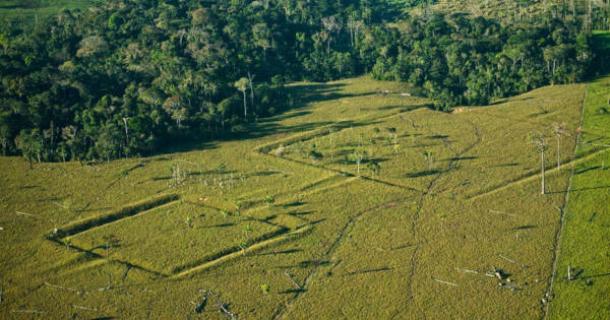
Amazon earthworks discovered on the edge of the forest canopy. (Mauricio de Paiva/ Max Planck Institute).
By scutinizing lidar data, his team has uncovered evidence suggesting that somewhere between 10,000 and 24,000 pre-Columbian earthworks exist throughout the Amazon basin. These findings indicate that ancient Amazonians built and resided in surprisingly large urban centers, shaping their environment through advanced agricultural practices, fisheries, and forest management.
While the results of the lidar scans will require on-site verification, their implications are profound. These discoveries challenge the traditional notion of the Amazon as an untouched wilderness incapable of sustaining large populations.
“It’s really incredible. Our research ended up guiding the course of several others, and not just in archaeology,” Peripato told the Guardian.
His work is now helping ecologists differentiate between domesticated forests and untouched wilderness, adding more depth of knowledge about the activities of the people who’ve been living in the Amazon for thousands of years.
Historical Records Confirm a Spectacular Lost World
European explorers in the 16th century encountered more than just scattered tribes in the Amazon.
Spanish friar Gaspar de Carvajal, who traveled with Francisco de Orellana in 1541, recorded descriptions of large, organized settlements along riverbanks. He wrote of densely populated cities where “were a pin to drop from the sky, it would land on the head of an ‘Indian’, never falling to the ground.”
These reports were largely dismissed as exaggeration, but recent lidar studies suggest Carvajal’s accounts can in fact be trusted.
- Armchair Indiana Joneses Find Ancient Sites Using LiDAR During Lockdown
- Lost City of Khmer Empire Finally Found in Cambodia!
The arrival of European colonists brought devastating consequences to the region. Waves of conquest, disease, and forced assimilation led to the collapse of many Indigenous populations, leaving their urban centers abandoned and eventually consumed by the rainforest, quickly disappearing beneath trees and undergrowth. But modern archaeology is now rediscovering the incredible accomplishments of thes lost civilizations, using remote sensing, radiocarbon dating, and soil analysis to piece together their amazing histories.
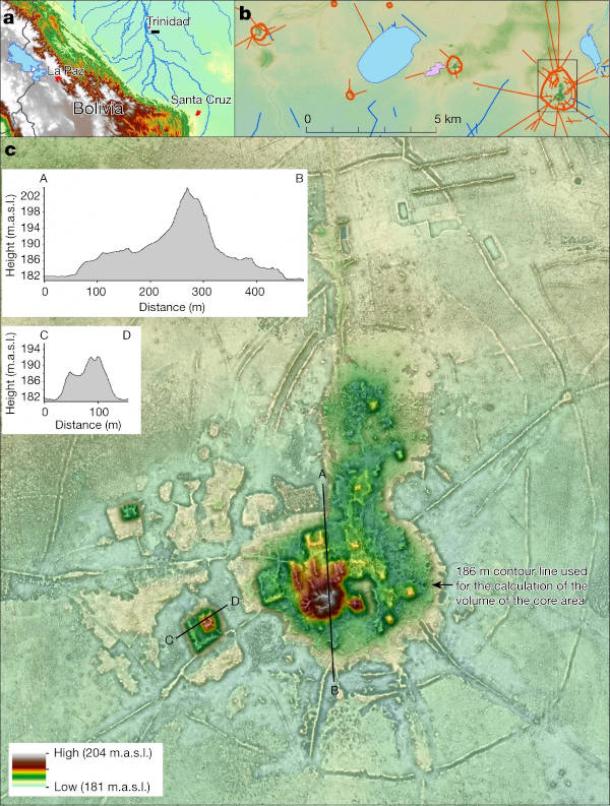
Lidar image of Llanos de Mojos in the southwestern Bolivian Amazon, where many large, ancient settlements have been identified. (Prumers, Betancourt, et.al/Nature).
Lidar’s Role in Unearthing Ancient Metropolises
Lidar has been instrumental in revealing Amazonian cities that had been completely lost beneath dense vegetation. Mounted on aircraft or drones, this technology sends out millions of laser pulses per second, mapping terrain with remarkable accuracy and precision. Lidar allows researchers to digitally remove layers of forest and expose structures buried beneath the canopy, letting them know for the first time what truly lies beneath. This technology has been used to map ancient Maya cities in Central America, and most of the attention it has received has come about because of this work.
In the Amazon, where stone structures are rare, settlements were built from materials such as clay, wood, and thatch—substances that deteriorate over time, making them difficult to detect through traditional excavation methods.
However, recent excavations have revealed that the urban systems of the Amazon are comparable to the well-documented Maya cities of Mexico and Guatemala. Unlike the latter, where limestone structures have endured, the Amazon’s ancient earthworks have mostly vanished, leaving only imprints behind, detectable traces that are much harder to identify – which is where lidar technology has made all the difference.
“The Amazon forest is continental in scale. Even if we had generous budgets, it would take years and an extensive workforce to survey the river basin from the ground up,” he explained. “With remote-sensing tools, you can scan vast areas and see structures hidden below the trees and soil.”
By applying statistical models, researchers suggest that anywhere from 10,000 to as many as 24,000 undiscovered earthworks could still be concealed beneath the dense foliage of the Amazon rainforest.
A significant portion of the early 21st century’s excavation work was conducted by Michael Heckenberger, an anthropologist at the University of Florida. Over three decades, he focused on Kuhikugu, an ancient fortified settlement along Brazil’s Upper Xingu River. His findings revealed an elaborate system of “low-density garden cities” dating back at least 1,500 years. These settlements featured homes, gardens, wide roads, central plazas, an opulent chief’s residence fortified with a log palisade and defensive ditches, as well as surrounding orchards and managed forests. Each city may have supported thousands of inhabitants.
Further discoveries emerged from Llanos de Mojos in the southwestern Bolivian Amazon. In 2022, with the assistance of lidar, archaeologist Carla Jaimes Betancourt from Bonn University and her team uncovered monumental settlements over 1,400 years old. The site featured intricate geometric layouts, radiating roads, concentric moats and ramparts, terraced areas, and towering pyramid-like structures reaching nearly 70 feet (21 meters) in height.
More recently, in Ecuador’s Upano Valley, an extraordinary find was announced by researchers led by Stéphen Rostain of the French National Centre for Scientific Research (CNRS). Once again with the aid of lidar, they identified remnants of a 2,000-year-old urbanized landscape containing over 6,000 earthen platforms arranged in a geometric pattern, interconnected by public plazas and a vast network of roads linking 15 distinct urban centers. These settlements may have supported tens of thousands of people.
“The Upano Valley was home to genuine urban settlements in the middle of the tropical forest that were densely populated and laid out in a grid pattern,” Rostain said. He was particularly fascinated by the “incredibly complex network of streets, paths leading to rivers,” and the structured layout of primary and secondary roads.
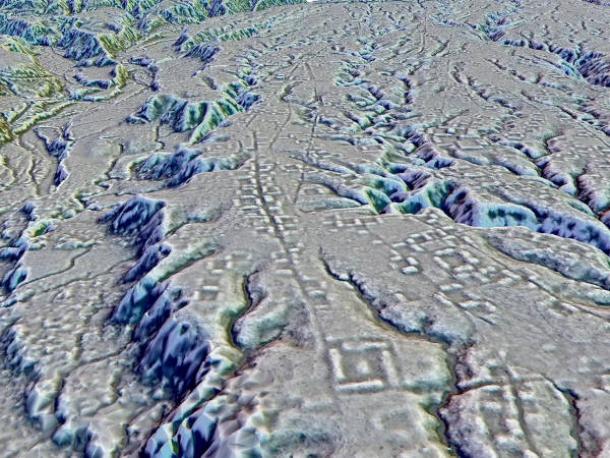
Lidar images of Upano Valley in Ecuador, responsible for the discovery of a complex, ancient urban landscape. (Antoine Dorison, Stéphen Rostain/Science).
“A network of this kind requires real planning,” he notes, highlighting that the valley’s various settlements existed simultaneously, reflecting an advanced and organized society.
Sustainable Practices of the Ancient Amazonians
While these ancient cities might seem vastly different from modern metropolises, their sustainability practices hold important lessons for today’s urban development. Ancient Amazonians pioneered advanced agricultural techniques, including composted gardens and terra preta, or “dark earth.”
Terra preta is a highly fertile, human-enhanced soil created through composting food scraps and organic waste. Covering an estimated 154,000 square kilometers—nearly twice the size of Ireland—terra preta allowed civilizations to thrive in nutrient-poor rainforest soils.
Recent studies have identified similar dark earth sites in Bolivia near the Brazilian border. Archaeologists have found traces of anthrosols, or human-enhanced soil, which supported large populations in otherwise unsuitable agricultural land. This method of soil engineering was so effective that modern bioeconomy companies are now replicating the technique, using biochar—a mix of partially burned wood, charcoal, and ash—to improve soil fertility and store carbon.
Eduardo Neves, an archaeologist at the University of São Paulo, argues that these ancient practices could inform contemporary environmental policies.
“It’s not that archaeology will save the planet—but we need to learn from, and incorporate, historical knowledge and practices developed by Amazonians millennia ago,” Neves stated.
Lessons in Climate Resilience
In addition to their pioneering efforts in agricultural sustainability, ancient Amazonian civilizations learned how to be resilient in the face of climate disruptions and natural disasters. Archaeologists have found evidence that these cities were designed with wide roads, ditches, and firebreaks to mitigate damage from extreme weather events.
Following the wildfires that swept through the Amazon in the late 2010s, Brazilian officials sought guidance from Australian firefighters. The Australians not only assessed the modern crisis but also studied archaeological records. They found that, in the 13th century, the Amazon experienced one of its worst droughts in 5,000 years. To protect their cities, ancient Amazonians had built defensive perimeters and fire-resistant infrastructure.
“The Australians told us they’d do today exactly as the ancient Amazonians did millennia ago,” says Heckenberger.
Neves reinforces the significance of these findings: “We can safely say that biodiversity in the Amazon only exists because, and not in spite, of its inhabitants, who safeguarded their environment by transforming it. The future of the Amazon lies in understanding its past.”
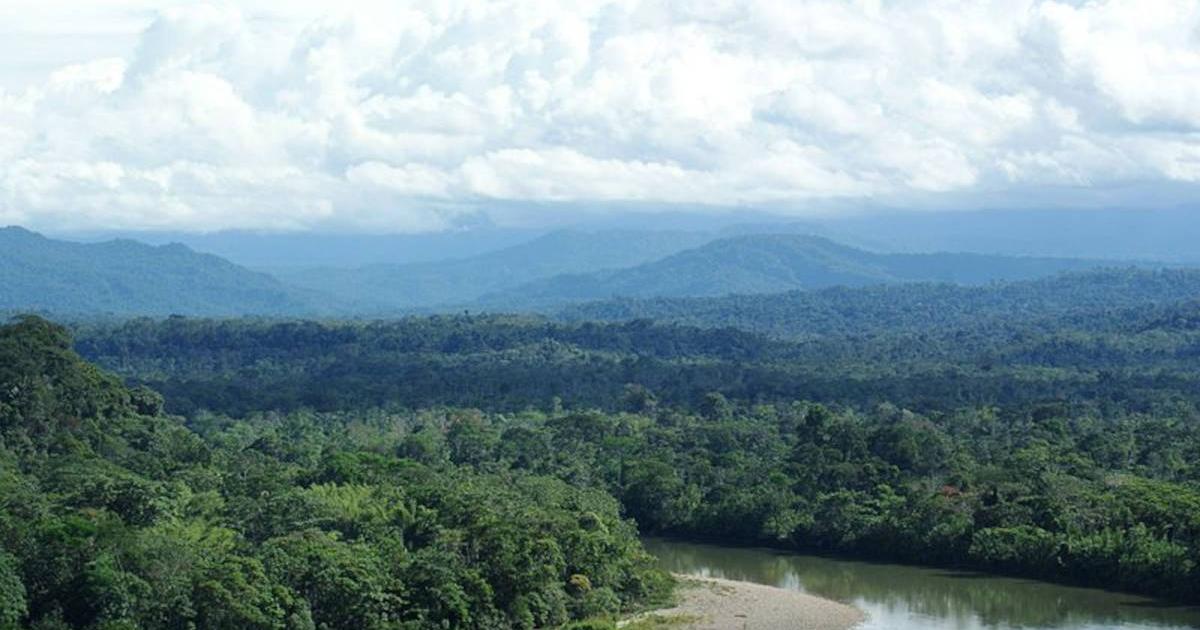
Top image:Ecuadorian Amazon rainforest, with the Andes visible in the background.
Source:Dallas Krentzel/CC BY-SA 2.0.
By Nathan Falde