
New archaeological discoveries at Tell Abu Saifi in Egypt’s northern Sinai are reshaping interpretations of a site long associated with the country’s eastern defenses. New excavations and reassessments of earlier discoveries are reshaping interpretations of the site's architectural remains and material evidence of its complex role in military activity, daily life, and Egypt’s strategic connections with lands beyond its northeastern frontier.
Horus Road Excavations Augment Egypt’s Eastern Frontier History
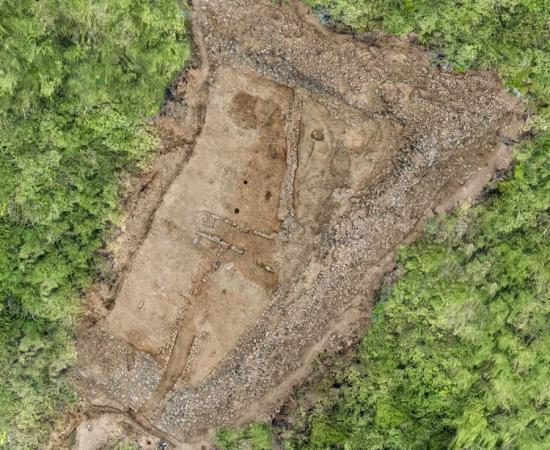
Minister of Tourism and Antiquities Sherif Fathy stressed that these new findings represent a critical addition to the Ministry’s efforts to uncover the history of archaeological sites in North Sinai and the Qantara region. Excavations have revealed housing units, kilns, and a defensive trench. Most importantly, they uncovered features of the historic Horus Military Road, including a wide, limestone-paved section once lined with trees. The new evidence strengthens researchers’ hypothesis that the site may be linked to the lost ancient Egyptian city of Mesen. Fathy noted the strategic role this region has played in shielding Egypt’s eastern borders throughout historical eras.
- Massive New Kingdom Fortress Discovered on Ancient Horus Military Road
- The Awe-Inspiring Karnak Temple Complex and Vatican of Ancient Egypt
Massive Mud-Brick Wall Reveals a More Accurate Layout of Tell Abu Saifi
Dr. Hisham El-Leithy, Secretary General of the Supreme Council of Antiquities, explained that the recent mission completed a decades-long series of excavations and improved understanding of the site’s original plan and chronology. One key feature is a large mud-brick wall with gateways, interior rooms, and various construction layers that served as the outer wall surrounding the temple, rather than the temple itself. This new analysis corrects a prior interpretation of the site.
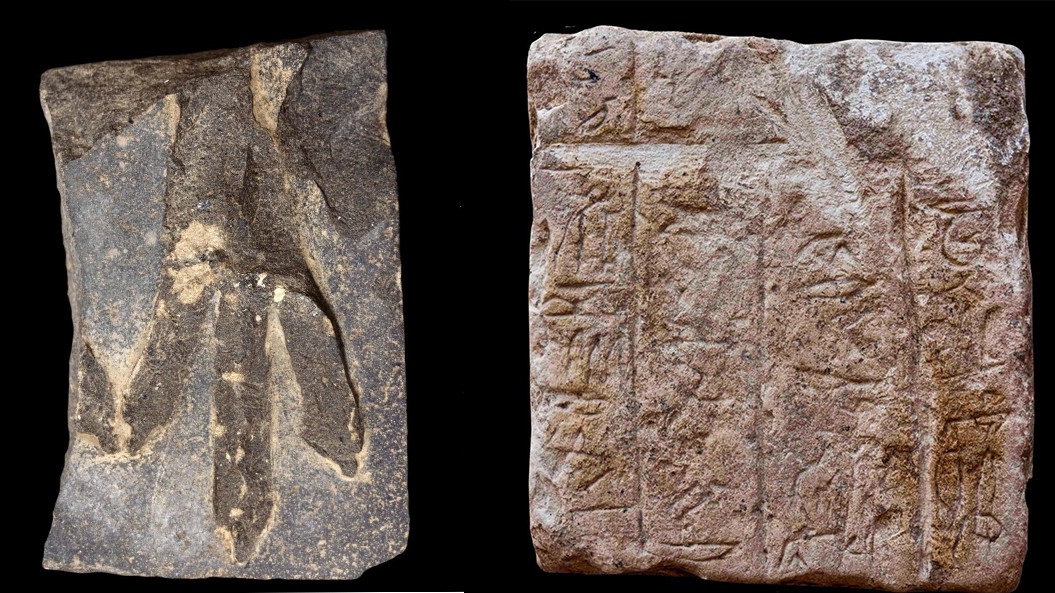
Falcon imagery and an inscribed relief recovered during excavations at Tell Abu Saifi. Archaeologists have uncovered fragments of basalt and limestone falcon statues among finds pointing to the site's religious importance and its association with Horus. (Egyptian Ministry of Tourism and Antiquities/Supreme Council of Antiquities)
Ramses II Inscriptions Offer a Connection to the City of Mesen
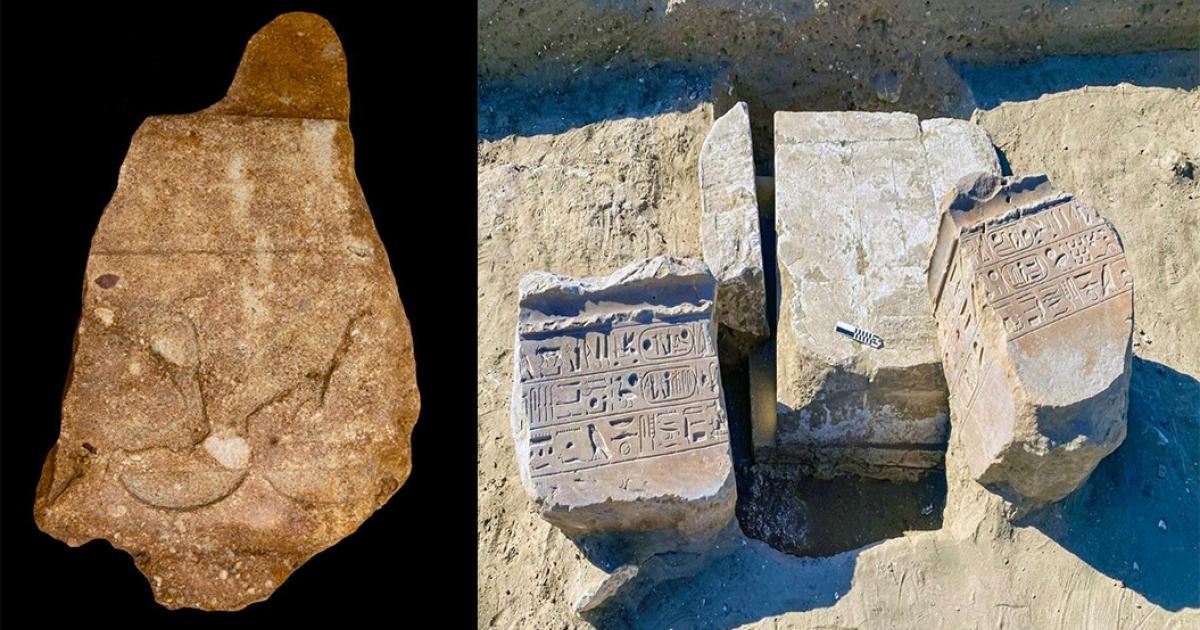
The remains of the temple were also discovered inside the mudbrick wall, with successive storage rooms on the northern side and even wider service rooms on the southern side, lining a passage to the temple sanctuary. This area was demolished during quarrying efforts in the Late Roman era. The mission also found half of a massive sandstone upper lintel, broken into two pieces and inscribed on three sides with titles of Ramesses II and a text referring to restoration work on a statue of ‘Horus, Lord of Mesen’. Mohamed Abdel Badie, Head of the Egyptian Antiquities Sector, said the remains of two stone roads led from outside the fortification area to the temple, the first dating to the Ptolemaic era and topped by a narrower road that stretches back to the Roman period. The successive roads show that access to the temple precinct was maintained and modified across both the Ptolemaic and Roman periods.
- The Life and Death of Ramesses II, Ramesses the Great
- Last of the Kings of Egypt: The Ptolemaic Dynasty
Army Scribe and Falcon Statues Reveal Tell Abu Saifi’s Military Past
Mahmoud Galal, Director of the Mission, highlighted a group of archaeological finds with administrative and military significance, including a fragment of a schist statue dating to the 26th Dynasty that depicts an army scribe carrying a broken naos. Excavations also revealed a headless statue from the final era of native Egyptian rule, a basalt royal statue, and fragments of falcon statues made of basalt and limestone. This series of excavations documents multiple phases of development and transformation: the temple reached its architectural peak during the Ptolemaic era, after which parts of the site were later reused as a Roman military castrum in the third century AD, a period of crisis for the Roman Empire.
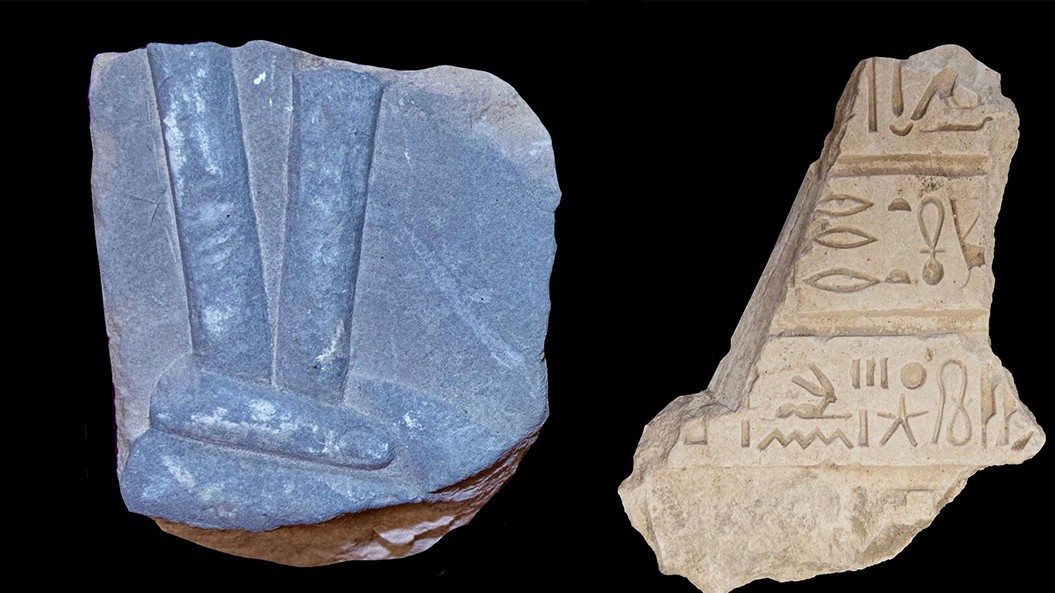
Fragments of Egyptian sculpture and hieroglyphic inscriptions recovered at Tell Abu Saifi. Among the discoveries from the site is part of a 26th-Dynasty schist statue of an army scribe carrying a naos, providing further evidence of the settlement's military and administrative importance. (Egyptian Ministry of Tourism and Antiquities/Supreme Council of Antiquities)
From Temple Sanctuary to Roman Lime Quarry
During the late Roman period, the site became a lime quarry, where the 2026 archaeological mission uncovered two huge circular kilns at the corners of the temple’s most sacred section, the sanctuary. The site also contained limestone remains that had been burned to turn raw stone into quicklime through calcination. The remains indicate that limestone was heated to produce quicklime, showing that the ruined sanctuary was later exploited for lime production.
- Barbarians versus Romans: Violence and Urban Life in Late Antiquity
- The Grand Architect: The Sacred Link Between Architecture and the Divine Across Ancient Cultures
Tell Abu Saifi Emerges as a Key Station on the Horus Military Road
The mission will continue critical excavation work and archaeological study at the site to complete the discovery of the remaining architectural elements and gather further evidence. Tell Abu Saifi represents an important site along the Horus Military Road and demonstrates a succession of military, religious, and economic functions at the location. The site is historically significant for its role in protecting Egypt’s eastern borders and its sacred religious significance during the Pharaonic, Ptolemaic, and Roman periods.
Top Image: Falcon relief and inscribed sandstone architectural blocks discovered at Tell Abu Saifi in eastern Egypt. Among the site's most important finds is a monumental lintel bearing titles of Ramesses II and a text referring to the restoration of a statue of “Horus, Lord of Mesen,” strengthening the proposed identification of the site with ancient Mesen. Source: Egyptian Ministry of Tourism and Antiquities
By Ramsey Hardin
References
Anderson, S. 2025. Archaeologists Uncover Evidence of Ancient Tree-Lined Road in Egyptian Military Fortress. Available at: https://www.smithsonianmag.com/smart-news/archaeologists-uncover-evidence-of-ancient-tree-lined-road-in-egyptian-military-fortress-180986594/
Daily News Egypt. 2026. New archaeological discovery at Tell Abu Saifi sheds light on ancient Horus Military Road. Available at: https://www.dailynewsegypt.com/2026/08/15/new-archaeological-discovery-at-tell-abu-saifi-sheds-light-on-ancient-horus-military-road/
Egyptian State Information Service. 2025. Découverte: Le Sinaï livre de nouveaux secrets sur les forteresses d’Orient, remontant aux époques romaines et ptolémaïques. Available at: https://sis.gov.eg/fr/egypte/tourisme/tourisme-culturel/monuments/d%C3%A9couverte-le-sina%C3%AF-livre-de-nouveaux-secrets-sur-les-forteresses-d-orient-remontant-aux-%C3%A9poques-romaines-et-ptol%C3%A9ma%C3%AFque/
El-Aref, N. 2025. New archaeological discovery in Sinai reveals Egypt’s ancient eastern fortifications. Available at: New archaeological discovery in Sinai reveals Egypt’s ancient eastern fortifications - Ancient Egypt - Antiquities - Ahram Online
Griffiths, S. 2025. Fortress of the East.Ancient Egypt, Issue 149. Available at: The Past — Fortress of the East
Loukes, T. 2026. The Recently Discovered Fortress of Zarw and the North-Eastern Frontier. Available at: https://www.egyptiansociety.co.za/the-recently-discovered-fortress-of-zarw-and-the-north-eastern-frontier/
Ministry of Tourism and Antiquities. 2025. New archaeological discoveries in Sinai. Available at: https://egymonuments.gov.eg/news/new-archaeological-discoveries-in-sinai/