
The Egyptian archaeological mission, a collaboration between the Supreme Council of Antiquities and the Zahi Hawass Foundation for Archaeology and Heritage, has just announced their discovery of the tomb of Prince Waser-If-Re, who was the son of the very first ruler of the Fifth Dynasty of the Old Kingdom, King Userkaf. This remarkable find took place in Saqqara, where the prince’s tomb was discovered alongside many significant artefacts dating from the Old Kingdom to the Late Period.
It is currently believed that King Userkaf reigned as Pharaoh for approximately seven years, from 2494 to 2487 BC. This means the tomb of his son, who did not succeed him as Egypt’s ruler, is nearly 4,500 years old, making this one of the most ancient tombs to be found in Egypt in recent years.
Fabulous Tomb, Fascinating Surprises
In a statement to the media, Egypt's Minister of Tourism and Antiquities, Sherif Fathy, praised this rare and exciting discovery, which was made entirely by an Egyptian archaeological team. He described the find as "a milestone in uncovering new layers of Egypt's rich and ancient history," and was thrilled that Egyptian experts earned total credit for it.
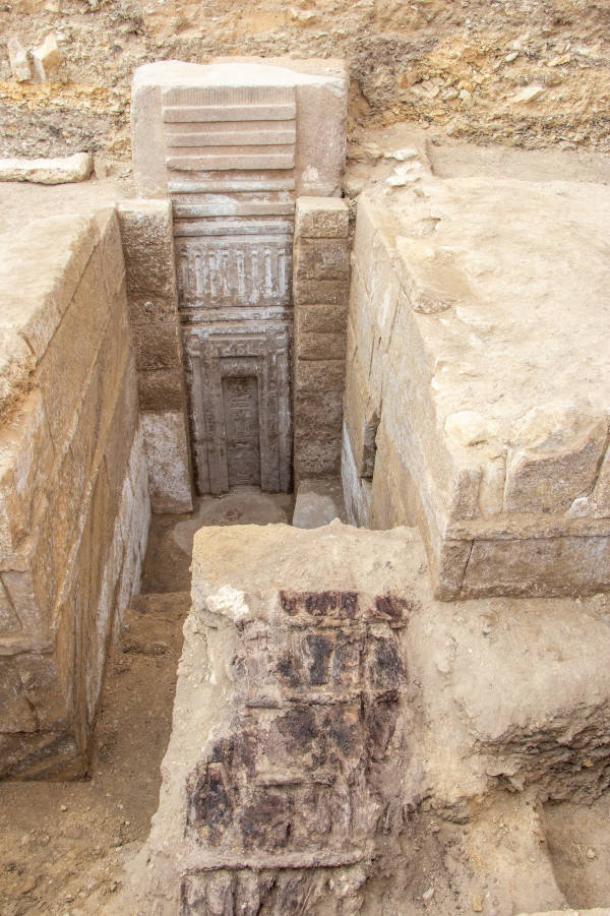
Entrance to the tomb of Prince Waser-If-Re, with false pink granite door at bottom. (Egyptian Ministry of Tourism and Antiquities).
One of the most remarkable elements of the discovery was found right at the entrance to Prince Waser-If-Re’s tomb. This was a huge and massively heavy false door made of pink granite, the first of its kind to be found anywhere in Egypt. Standing approximately 14 feet (4.5 meters) tall and four feet (1.15 meters) wide, the door is inscribed with hieroglyphic texts listing the the prince's many royal titles, which included "Hereditary Prince," "Governor of Buto and Nekheb," "Royal Scribe," "Vizier," "Judge," and "Chanting Priest." Clearly the Prince was considered an important individual, despite his failure to ascend to the throne.
Egypt’s Fifth Dynasty was one of the more successful ruling sects in ancient Egypt, as they were renowned for the stability and prosperity they brought to the country while ruling from their capital of Memphis. The circumstances under which Userkaf founded this Old Kingdom dynasty remain unknown, but the Fifth Dynasty lasted from 2494 to 2345 BC and featured nine pharaohs.
- Impressive Tomb of Royal Scribe Unveiled at Saqqara Necropolis
- The Old Kingdom of Egypt – Dynasties That Changed the World
King Djoser Statues and a Whole Lot More
In addition to the discovery of the ancient princely tomb, the archaeological mission also unearthed an astonishingly rich collection of statues that depicted the legendary King Djoser along with his wife and 10 daughters. Early analysis suggests these statues were initially housed in a chamber near Djoser's Step Pyramid before being relocated to Prince Waser-If-Re's tomb during the Late Period, for reasons that at this time remain unknown.
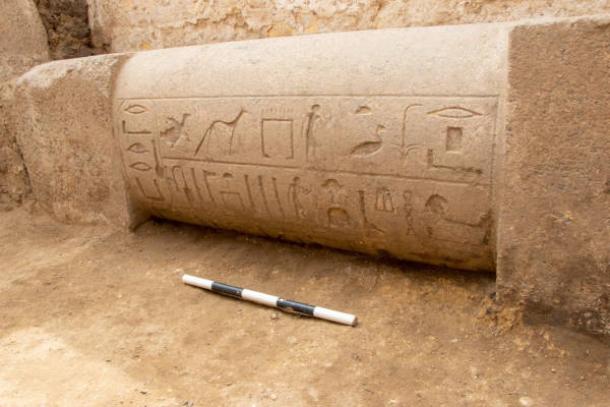
Inscriptions found at the site of Prince Waser-If-Re tomb, on an offering table. (Egyptian Ministry of Tourism and Antiquities).
“This is the first time we find a statue group of King Djoser’s family,” Zahi Hawass stated on Friday, referring to this as “a rare and important discovery.”
Among the other important finds during the latest round of excavations at Saqqara are a red granite offering table measuring almost exactly three feet (92 cm) in diameter, which was inscribed with a long list of ritual offerings, and a black granite statue of a male figure who measured just under four feet (1.17 meters) tall, into which his name and titles were carved. This statue is believed to date back to Egypt's 26th Dynasty, further suggesting that the prince’s ancient tomb was repurposed during later periods.
- Burial Statues Add to Death Treasures Unearthed in Saqqara Necropolis
- King Sahure and His Beautiful Pyramid: A Rare Peaceful Pharaoh?
The Egyptian archaeologists found a secondary granite entrance on the eastern side of the tomb. It included inscriptions identifying the tomb owner and a cartouche of King Neferirkare, who served as the third pharaoh of the Fifth Dynasty. Adding even more artifacts to this remarkably successful mission, the archaeologists found a group of 13 statues carved from pink granite in the tomb—the first of their kind in Saqqara—which had been placed on high-backed chairs. Among them are statue heads believed to represent the tomb owner's wives, and the group also includes two headless figures and a tipped-over black granite statue measuring four feet, five inches (1.35 meters) in length.
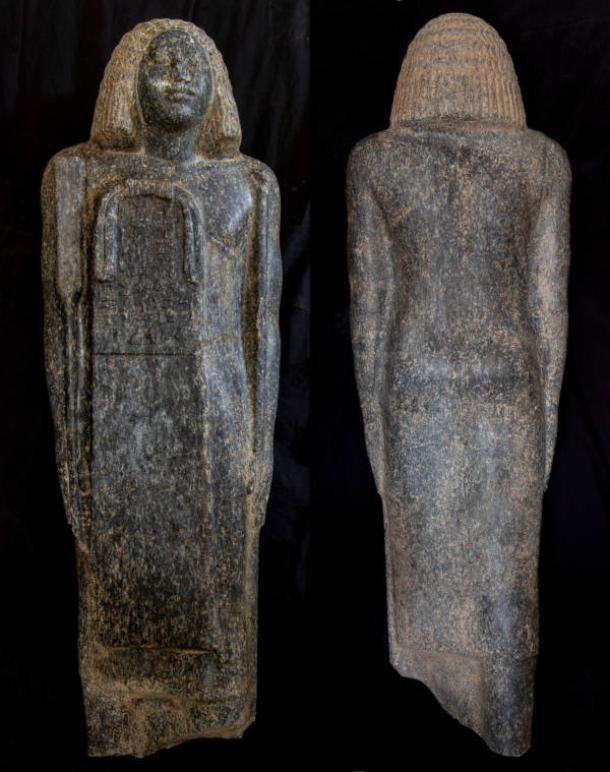
Black granite statue found during the excavations. (Egyptian Ministry of Tourism and Antiquities).
Appreciating the Marvels of Saqqara
Excavations are continuing, in what the archaeological team believes is one of the most distinctive tombs uncovered in the Saqqara region, an area that played a crucial role in Egypt's dynastic and cultural evolution.
“Saqqara is one of the most important archaeological sites in the world,” Hawass stated. “Every discovery here brings us closer to understanding the complexity of our ancient civilization.”
Saqqara is truly one of Egypt’s most impressive ancient sites. It acted as the necropolis of ancient Egypt’s capital, Memphis, and includes a number of impressive pyramids and royal tombs. Located roughly 18 miles (30 kilometers) south of modern Cairo, it covers an area of 4.3 miles (7 kilometers) by on mile (1.5 kilometers). Today, many of the pyramids are in a poor state of preservation, meaning the site isn’t as well-known or oft-visited as sites like the Valley of the Kings and Giza.
More than sixteen Egyptian kings built pyramids at Saqqara. Over time, the site became less popular for royal burials but remained an important site for important non-royal burials and cult ceremonies for over 3,000 years.
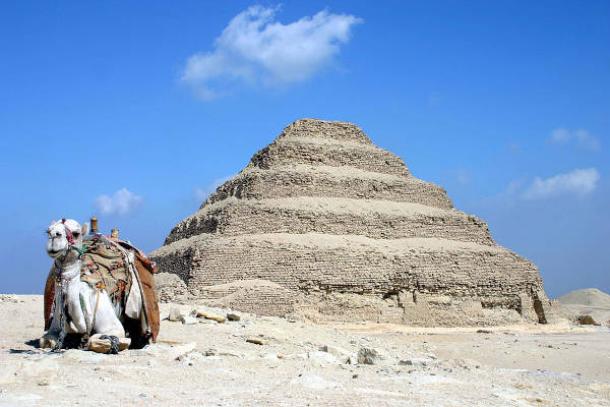
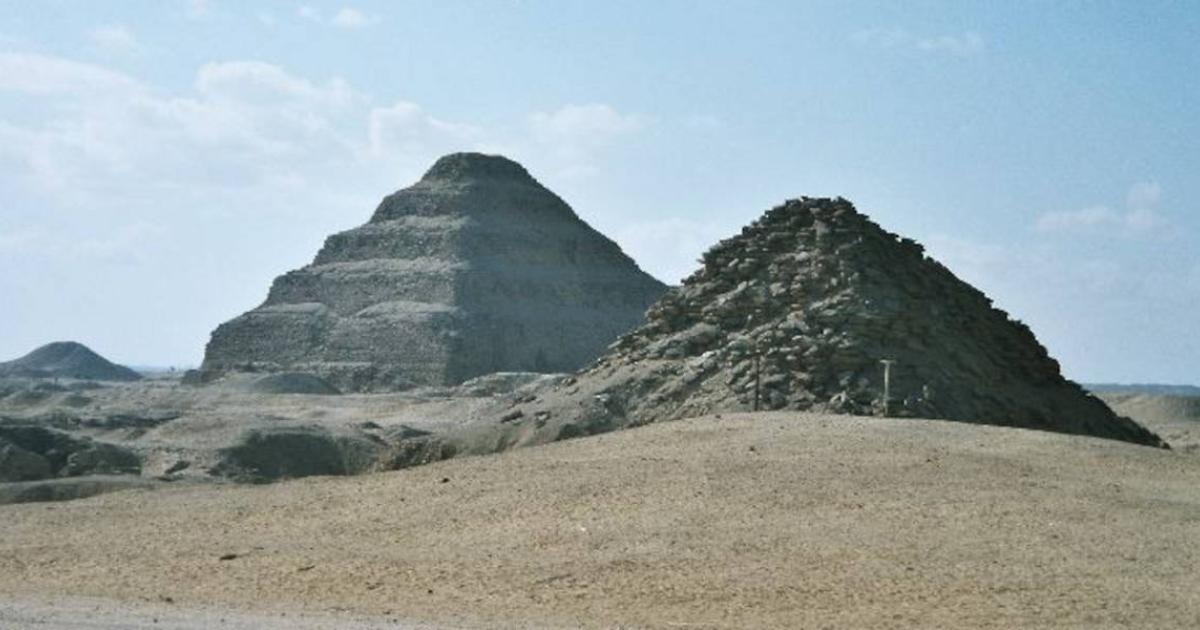
Pyramid of Djoser in Saqqara. (Charles J. Sharpe/CC BY-SA 3.0).
Today, the site is most famous for the Pyramid of Djoser, the oldest known complete stone building complex in Egypt, dating back nearly 4,700 years. Saqqara is listed as a UNESCO World Heritage Site, which is a reflection of the value of the ruins and artifacts that have been discovered there over the past two centuries.
Top image: View of Saqqara necropolis, including Djoser's step pyramid (center), the Pyramid of Unas (left) and the Pyramid of Userkaf (right).
Source: Hajor/CC BY-SA 3.0.
By Nathan Falde