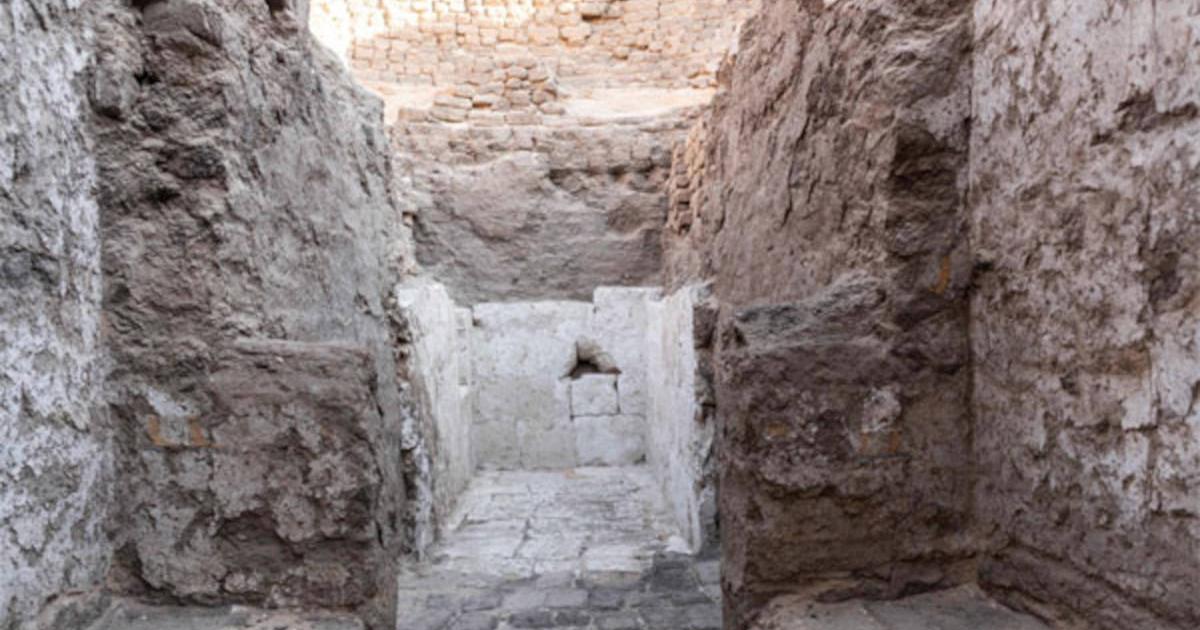

A collaborative archaeological effort between Egyptian experts and a team from the University of Pennsylvania has led to a groundbreaking discovery in the Gebel Anubis necropolis at Abydos, located in the Sohag Governorate of southern Egypt. The excavation has unearthed a royal tomb dating back to the Second Intermediate Period, a time of political fragmentation in ancient Egypt. This significant find offers fresh insights into the so-called "Abydos Dynasty," a largely mysterious ruling faction that governed Upper Egypt between 1700 and 1600 BC, separately from the traditional pharaonic line.
For years, scholars debated the actual existence of the Abydos Dynasty, as historical records were scarce and inconclusive. However, increasing archaeological evidence—like the freshly discovered royal tomb—has strengthened the case for its legitimacy.
Mohamed Ismail Khaled, Secretary-General of the Supreme Council of Antiquities (SCA), emphasized that the tomb provides crucial data on royal burials in Abydos and contributes to a broader understanding of Egypt’s political landscape during the Second Intermediate Period (1700–1550 BCE). This was a time when the Abydos Dynasty coexisted with the 15th and 16th Dynasties, who were the “officially sanctioned” rulers of Egypt based on their lineage.
- Egyptian Chambers of Mystery Found Near Abydos
- Helicopter Hieroglyphs? Debunking the “Mystery” of the Abydos Carvings
A Predecessor to King Senebkay?
Archaeologists believe the newly discovered tomb may belong to an earlier ruler of the Abydos Dynasty, possibly the predecessor of King Senebkay. Senebkay’s tomb, discovered in Abydos in 2014, has been considered the most definitive piece of evidence confirming the existence of this dynasty. Identifying the burial of a ruler who reigned before him would provide further validation of the Abydos Dynasty’s place in history.
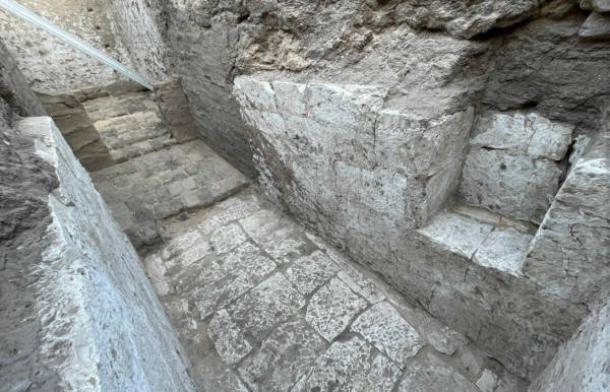
Overhead photo of newly unearthed royal tomb in Abydos. (Egyptian Ministry of Tourism and Antiquities).
The excavation team had to dig 23 feet (seven meters) below ground level to reach the burial site. The tomb itself consists of a limestone burial chamber topped with mudbrick vaults that originally stood 16 feet (five meters) in height. Within the chamber, engravings of the goddesses Isis and Nephthys flank the entrance, while remnants of hieroglyphic inscriptions bear the name of the interred king.
Joseph Wegner, head of the excavation mission, noted that while the precise identity of the tomb’s owner remains uncertain, ongoing analysis will aim to establish a clearer chronological context, which could ultimately reveal the ruler’s name.
Excavating the Endless Wonders of Abydos
Located in southern Egypt seven miles (11 kilometers) west of the Nile, Abydos is one of Egypt’s most ancient cities, and was revered as a religious and burial site for thousands of years. It was the chosen burial place of pharaohs dating all the way back to the 1st Dynasty, which means it was in use for this purpose 5,000 years ago. The city remained a significant location for royal tombs throughout Egyptian history.
One of the most notable features of Abydos is the royal necropolis known as Umm el-Qa'ab. Many early pharaohs were buried there, and as time passed, the site gained religious importance. The association with divine rulers made Abydos an attractive burial location for subsequent generations, solidifying its role as a major cult center in ancient Egypt.
- Sacrificed Bulls of Ramses II Excavated in Abydos Temple
- Cartouche of the Last Pharaoh of Egypt Found at Illegal Dig Under Home in Abydos
Today, Abydos is most famous for its spectacular memorial temple built to honor the pharaoh Seti I. This temple contains the renowned Abydos King List, a chronological record displaying the cartouches of most Egyptian rulers from Menes to Seti I’s father, Ramesses I. The temple walls also feature ancient Phoenician and Aramaic inscriptions, known as the Abydos graffiti, offering valuable insights into cultural interactions in antiquity.
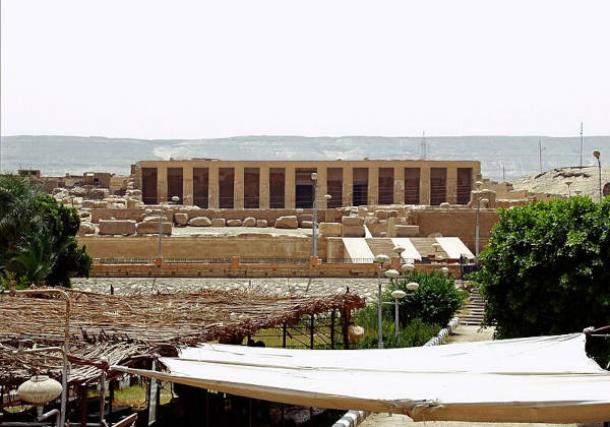
Ruins of Abydos, with the temple of Seti I in the middle. (Roweromaniak/CC BY-SA 3.0).
The Gebel Anubis necropolis, where the newly discovered tomb was found, is a site of particular historical significance. It is distinguished by a naturally pyramid-shaped mountain, which inspired King Senusret III (who ruled between 1874 and 1855 BC) to construct his massive tomb beneath its peak. The tradition of royal burials in this area persisted into the 13th Dynasty, with Abydos Dynasty rulers also choosing to be buried deep in the desert near this sacred mountain.
Unfortunately, much of ancient Abydos now lies beneath modern buildings, making many original structures and artifacts inaccessible. Some may have even been lost entirely due to urban development. Despite these challenges, archaeological efforts in the region continue to uncover remarkable finds, which is a testament to the dedication and professionalism of the archaeologists involved in the ongoing excavations.
A Parallel Discovery: A Roman Pottery Workshop
While archaeologists worked at Abydos, another important excavation was taking place in the nearby village of Banaweet in Sohag. Here, an Egyptian team from the Supreme Council of Antiquities uncovered the remains of a Roman-era pottery workshop. This site appears to have been a major center for pottery production, featuring kilns, expansive storage facilities, and 32 ostraca—inscribed pottery shards—written in both Demotic and Greek. These texts offer rare insights into the economic structures of the time, particularly in relation to trade and tax collection.
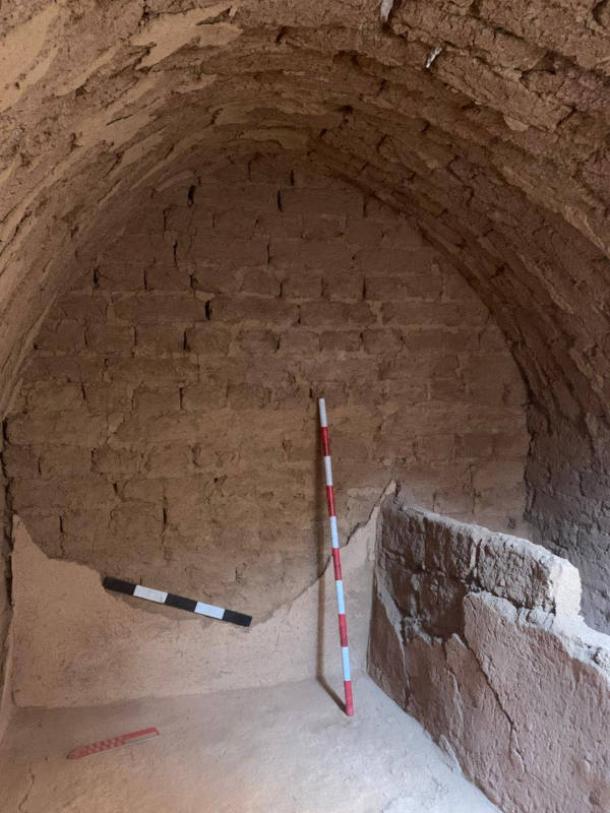
Roman pottery workshop discovered during latest Abydos excavations. (Egyptian Ministry of Tourism and Antiquities).
Mohamed Abdel-Badi, Head of the Egyptian Antiquities Sector, revealed that the site underwent a transformation in later centuries. By the seventh century, it had been repurposed as a burial ground, with evidence suggesting it remained in use until at least the 14th century. Among the most intriguing discoveries were mudbrick tombs, human remains, and family burials, the latter of which included one mummified child. The child was found lying in a sleeping position, wearing a skillfully woven cap.
Additional discoveries at the site included the skull of a woman believed to have been in her thirties at the time of her death. Botanical remains, such as wheat roots, barley seeds, and doum palm fruit, were also found, offering valuable data about the agricultural history of the area and the diets of its ancient inhabitants.
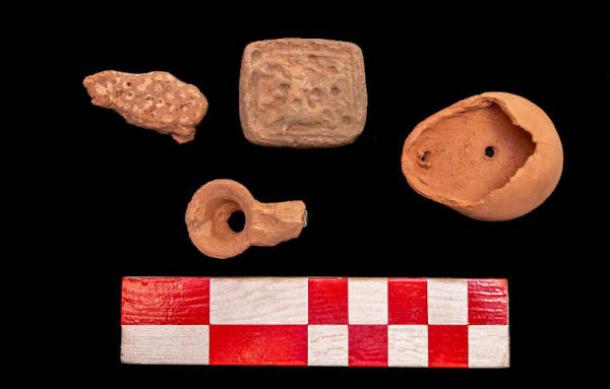
Some of the pottery pieces recovered from the excavation of the Roman pottery workshop. (Egyptian Ministry of Tourism and Antiquities).
Revealing Egypt’s Incredibly Rich Heritage
Sherif Fathy, Egypt’s Minister of Tourism and Antiquities, praised these recent discoveries, emphasizing their importance in promoting Egypt’s cultural heritage and supporting academic research. He highlighted the government’s commitment to both Egyptian and foreign excavation missions, noting that such findings enrich historical understanding and contribute to the broader global appreciation of Egypt’s ancient past.
The discovery of the royal tomb in Abydos, alongside the uncovering of the Roman pottery workshop, provides a fascinating glimpse into Egypt’s long and complex history. As research continues, these sites promise to reveal even more about the rulers, artisans, and everyday people who kept ancient Egyptian society functioning for thousands of years.
Top image: Newly discovered royal tomb unearthed at Abydos, Egypt.
Source: Egyptian Ministry of Tourism and Antiquities.
By Nathan Falde