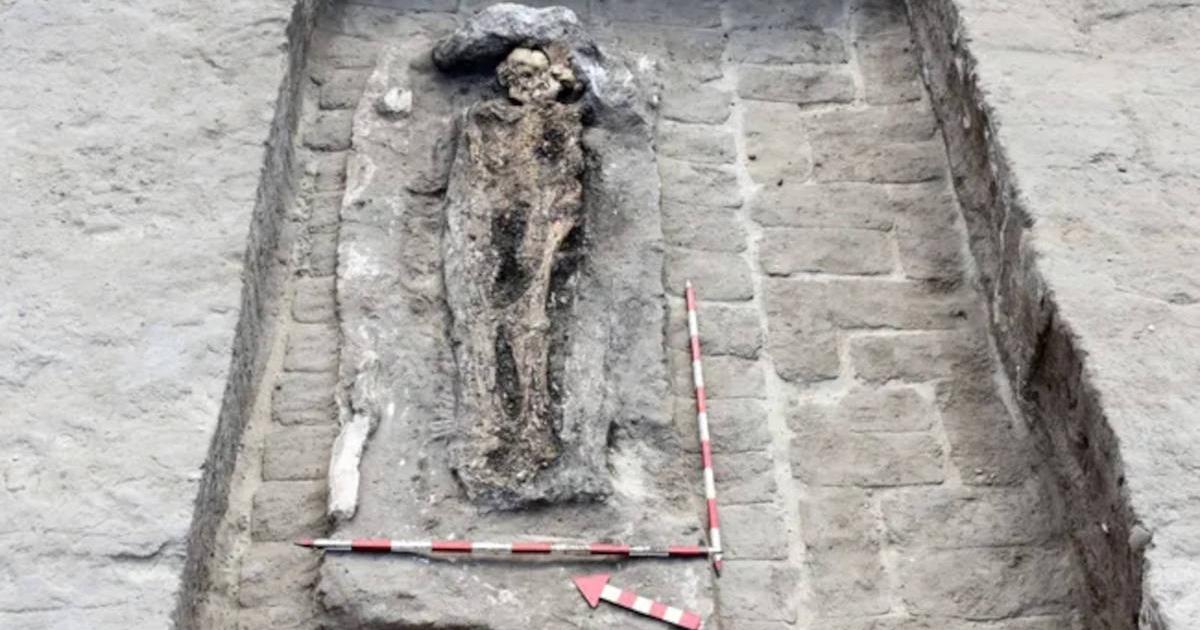

In what is being described as a rare and exciting find, archaeologists in Egypt have uncovered a 3,200-year-old tomb that belonged to a military commander who served under the famous New Kingdom pharaoh Ramesses III, who is often called the last great pharaoh of ancient Egypt. Inside the structure, the researchers found a gold ring inscribed with the name of Ramesses III, along with a set of bronze arrowheads, which was enough for them to conclude that this person was connected to that pharaoh and had held an important position in his military hierarchy.
The tomb was found at Tell el-Maschuta (also spelled Tell el-Maskhuta) in northeastern Egypt, according to the Egyptian Ministry of Tourism and Antiquities. Constructed from mud bricks, the tomb features a central burial chamber and three additional adjoining rooms, making it clear it was built to hold the body of an important person.
- The Majestic Medinet Habu and the Mortuary Temple of Ramesses III
- The Life and Death of Ramesses II, Ramesses the Great
More Artifacts From Different Times
Alongside the ring and arrowheads, archaeologists discovered a small ivory box and pottery vessels bearing inscriptions. Some of these inscriptions mention Horemheb, the pharaoh who reigned from around 1323 to 1295 B.C. and was a military leader before ascending to the throne. This is more than a century before Ramesses III ascended to the throne, meaning the tomb may have initially been used by someone else before being repurposed to hold the body of another important person later on.
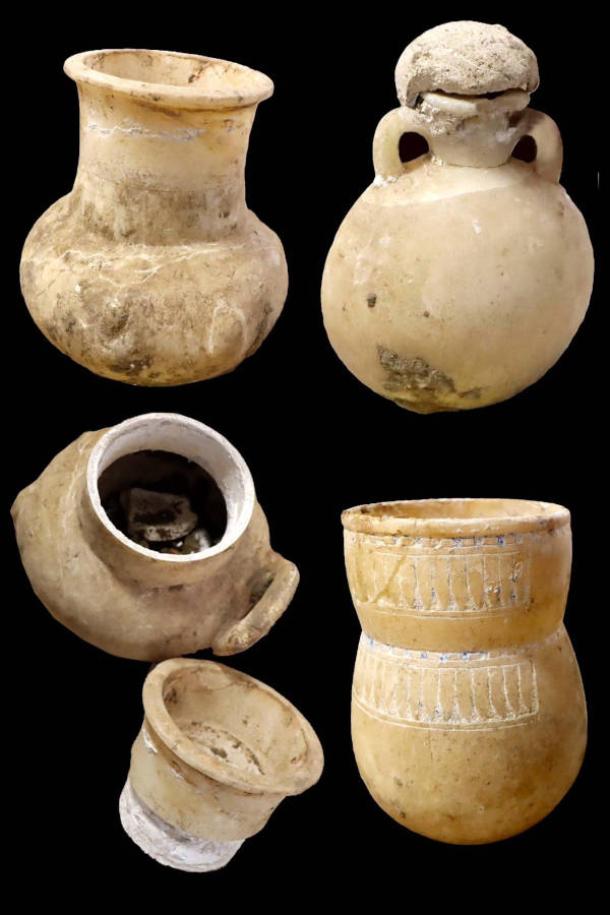
Pottery vessels from time of pharaoh Horemheb. (Egyptian Ministry of Tourism and Antiquities).
Taken in total, the tomb’s discoverers believe what they’ve found can best be explained if this was the burial place of a celebrated military commander who had served honorably under a pharaoh who had enjoyed success on the battlefield.
The Reign of Ramesses III
Ramesses III, who ruled from around 1184 to 1153 BC during Egypt's 20th Dynasty, is best remembered for his crucial victory over the Sea Peoples. These invaders, a mysterious group of seafaring raiders from across the Mediterranean, are believed to have posed one of Egypt's greatest threats. The Sea Peoples included groups such as the Peleset (Philistines), Tjekker (from Crete), Shekelesh (from Sicily), Shardana/Sherden (Sardinians), and Lukka (potential ancestors of the Lycians).
The collapse of several Mediterranean civilizations around 1175 B.C. — including the Hittites, Mycenaeans, and Mitanni — is often attributed to the Sea Peoples. Egyptian sources, particularly the inscription in the mortuary temple of Ramesses II at Medinet Habu, describe the ferocity of these raiders, who seemed more than capable of destroying any civilization that got in their way. The text claims that “Not one stood before their hands,” detailing widespread destruction. Egypt soon became a target for these invaders, which was hardly surprising given the wealth and power of ancient Egyptian society.
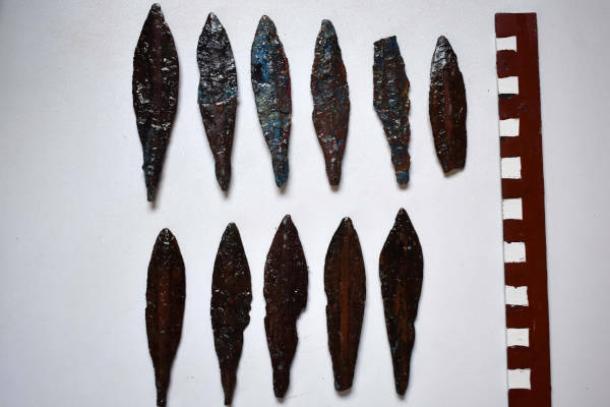
Arrowheads found inside the tomb of the unknown military commander from the time of Ramesses III. (Egyptian Ministry of Tourism and Antiquities).
- Harem Conspiracy Proof: Multiple Assailants Killed Ramses III
- The Ramessid Dynasty: A Golden Era in Ancient Egypt
Before the decisive Battle of the Delta in 1175 B.C., Ramesses III had already defeated a faction of the Sea Peoples at the Battle of Djahy, which took place on Egypt's eastern frontier (modern-day southern Lebanon). There, Ramesses III successfully repelled an invading army of Sea Peoples trying to breach his empire by land.
The Battle of the Delta (1175 BC): Egypt is Saved from Destruction
The Sea Peoples also attempted to invade Egypt via the sea. Although the Egyptians’ naval technology was less advanced compared to the Sea Peoples, Ramesses III used clever tactics to turn the tide.
Instead of meeting the Sea Peoples in open waters, he allowed them to sail into the Nile Delta unchallenged. Once there, the Egyptians had the advantage, as their ships were more maneuverable in the narrow, river-based terrain. Bowmen stationed along the banks of the Nile and on the Egyptian ships rained arrows on the invaders, preventing them from landing. The Egyptians also used grappling hooks to capsize enemy vessels.
Thanks to this decisive victory, Ramesses III ensured that Egypt would not become the latest empire to fall to the Sea Peoples, who would have caused devastation had they succeeded. If the person buried in this newly discovered tomb was indeed a military commander under Ramesses III, he may have played a significant role in the battle that helped secure Egypt's future, explaining why he was buried in such a prominent tomb.
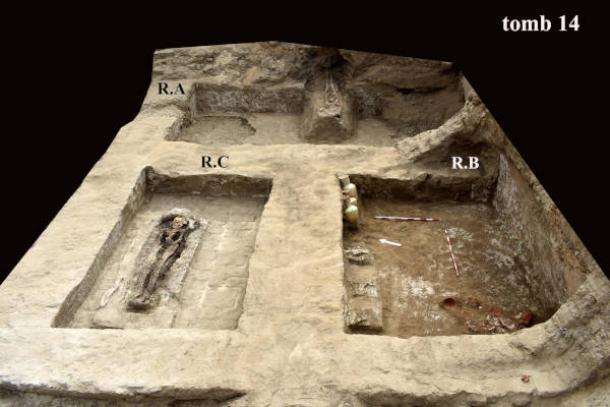
Tomb complex unearthed at site of grave of Ramesses III’s military commander. (Egyptian Ministry of Tourism and Antiquities).
But Was This Really the Tomb of an Egyptian Military Commander?
Despite the initial excitement surrounding the discovery, some experts remain cautious about the identification of the tomb's occupant as a military leader. Archaeologists and scholars who were not directly involved in the discovery have expressed skepticism, which they relayed in interviews with Live Science.
Anthony Spalinger, an emeritus professor of classics and ancient history at the University of Auckland, noted that additional information, especially concerning the inscriptions, is necessary. Egyptologist David Warburton of Northeast Normal University in China echoed this sentiment, pointing out that more research is needed before drawing definitive conclusions about the individual who was buried in the tomb. role. He stated that without information about the person's titles, it's difficult to make a definitive judgment about his true identity.
While caution is necessary, the archaeologists who uncovered the tomb remain optimistic that they have indeed uncovered the tomb of a military commander who served at a perilous time in Egyptian history. They plan to continue their investigations, searching for more evidence that will support their claim.
Top image: 3,200-year-old tomb of a man who may have been a military commander in ancient Egypt.
Source: Egyptian Ministry of Tourism and Antiquities
By Nathan Falde