A new large-scale ancient DNA study has found that Rome reshaped the people of Iberia more profoundly than the Suebi, Vandals, Alans and Visigoths who arrived centuries later. The Cell study analyzed 243 ancient genomes from 31 archaeological sites, spanning the first to the eighth centuries AD. Its most striking message is that dramatic political change did not necessarily mean population replacement.
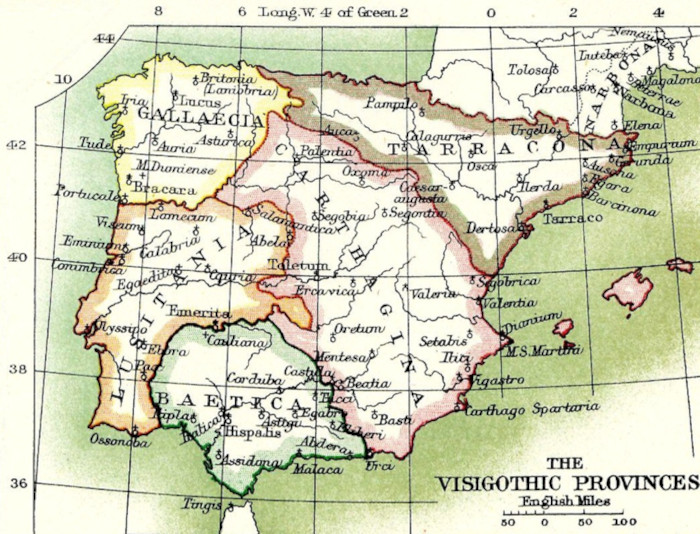
Map of the Iberian Peninsula and Visigothic provinces around 710 AD. (Alexander Keith Johnston/Public domain)
Rome Turned Hispania into a Genetic Mosaic
Before Roman rule, Iron Age Iberian communities were comparatively less genetically diverse. During the Roman period, however, people with eastern Mediterranean and North African ancestry became widespread, creating what researchers describe as a heterogeneous population mosaic. Of 66 Roman-period individuals, 55 carried eastern Mediterranean-related ancestry, a signal especially strong in the Ebro basin and southeastern Iberia.
As Carles Lalueza-Fox of the Institute of Evolutionary Biology explained in the study announcement, “Romanization was not only a political, linguistic and cultural transformation,” but also a major demographic change driven by movements around the Mediterranean. The result helps put Roman Iberia DNA into a wider imperial context, alongside evidence for mobility in Rome, Italy and the Danubian frontier.
- Raiders of Hispania: Unravelling the Secrets of the Suebi
- 1500-year-old Visigoth Sarcophagus Found at Roman Villa Site
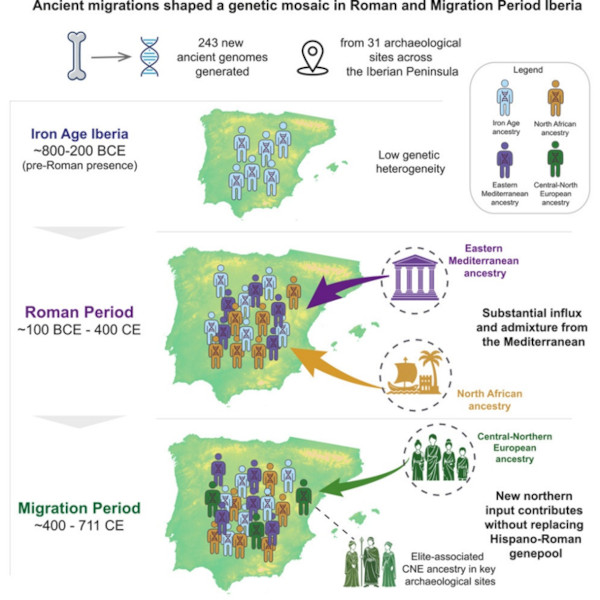
Graphic representation of Roman migrations to Iberian Peninsula. (Carrion et al./Cell)
Migrants, Elites and Two Siblings on Roman Roads
The later migrations still left a visible mark. From the fifth century, some individuals carried central or northern European ancestry, particularly in cemeteries with Germanic-style grave goods, but the estimated contribution was only 12% to 22%, depending on region and social setting. “We find migration and new ancestries, but not population replacement,” David Reich of Harvard University said in the institutional release.
The study also turns broad population patterns into family stories. Two siblings with entirely central European ancestry were buried about 725 kilometers apart, one near Mérida and the other at Ildum beside the Via Augusta, suggesting that first-generation migrants could travel through an infrastructure that remained useful after Roman political power weakened. The so-called Suebian princesses offer a different lesson: one woman had local ancestry despite prestigious northern-style grave goods, pointing to marriage alliances between incoming elites and Hispano-Roman families.
- Italica, Spain: Rome’s First Settlement in Hispania Became a Model Roman City
- DNA Reveals Secrets of Cave-dwelling Medieval Community
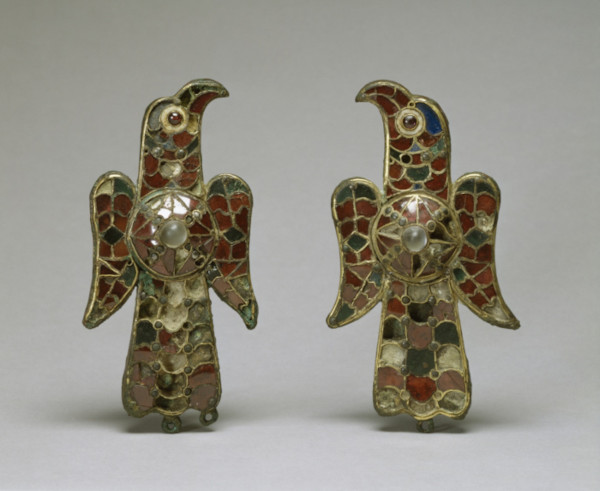
A pair of sixth-century Visigothic eagle fibulae found in southwestern Spain. (Walters Art Museum/CC BY-SA 3.0)
Political Identity Was Not Population Replacement
The researchers caution that the story is not complete. Late Antique Iberians were more genetically heterogeneous than people living on the peninsula today, suggesting further changes during the medieval and post-medieval periods, while northern Iberia and North Africa remain under-sampled. That uncertainty makes future work important, much as the Iberian Peninsula WASN’T Conquered by Invaders in 2200 Years and Deciphering the Truth Behind the Moors in Spain show how new evidence can revise familiar invasion narratives.
The new Roman Iberia DNA study therefore separates ancestry from power. Rome changed the peninsula’s demographic fabric through sustained mobility, while later kingdoms changed its laws, culture and political identity without displacing most of the people who were already there. Its effects were profound, but they worked through movement and mixing rather than wholesale replacement.
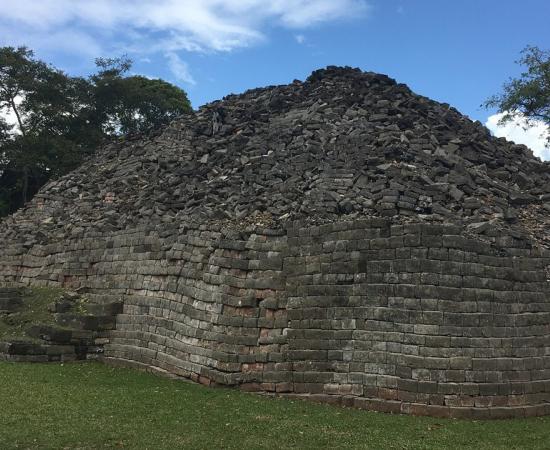
Top image: Roman ruins at Conimbriga, Portugal. Source: Andreas Trepte/CC BY-SA 2.5.
By Gary Manners
References
Carrión, P. et al. 2026. Contrasting demographic impacts of Roman colonization and early medieval migrations in the Iberian Peninsula. Cell. Available at: https://doi.org/10.1016/j.cell.2026.09.052
Harley, S. & Egan, R. 2026. Arrival of the Suebi, Alans and Visigoths did not erase deep genetic legacy of Roman Hispania. Phys.org. Available at: https://phys.org/news/2026-10-suebi-alans-visigoths-erase-deep.html
Institute of Evolutionary Biology. 2026. The arrival of the Suebi, Alans and Visigoths did not erase the deep genetic legacy of Roman Hispania. Available at: https://www.ibe.upf-csic.es/news/-/asset_publisher/PXTgqZXxlocA/content/the-arrival-of-the-suebi-alans-and-visigoths-did-not-erase-the-deep-genetic-legacy-of-roman-hispania/maximized