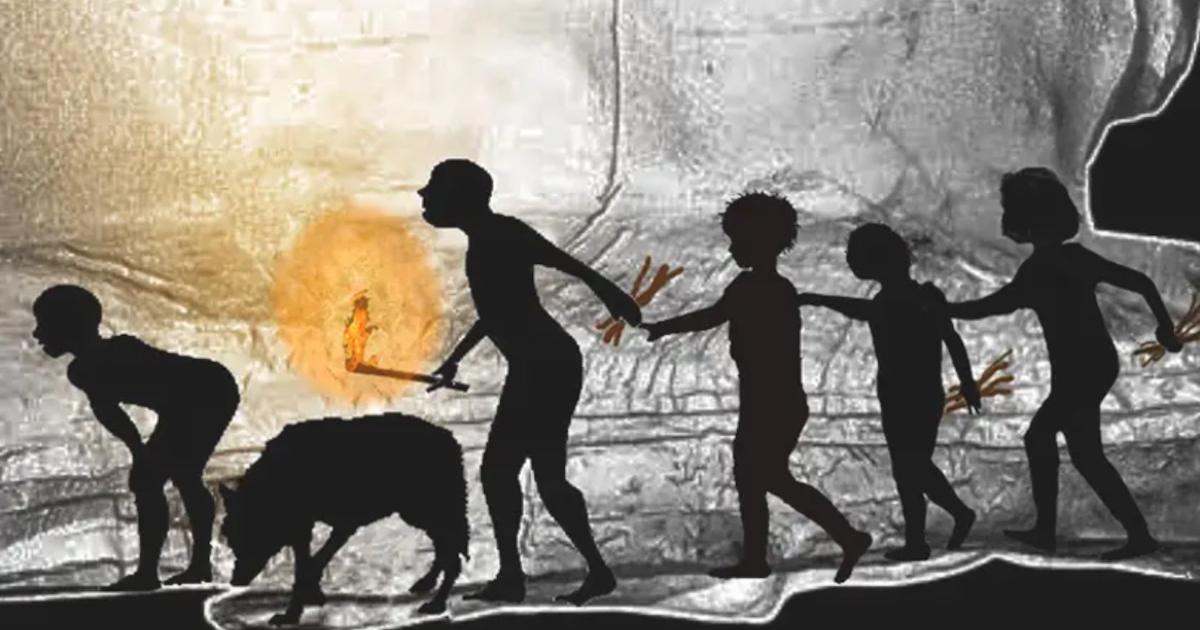

In the deep, dark passages of Bàsura Cave in northwestern Italy, an extraordinary discovery has shed new light on the resourcefulness of our prehistoric ancestors. A recent study published in Quaternary International has revealed that nearly 14,400 years ago, a small group of five Epigravettian hunter-gatherers, accompanied by a canid, ventured deep underground using small pine twigs as their primary source of light. This fascinating finding challenges previous assumptions about Paleolithic cave exploration and provides a vivid glimpse into the daily lives of Ice Age humans.
The research team, part of the multidisciplinary Bàsura Revisited project, combined pollen analysis, charcoal examination, archaeological excavations, and experimental testing to reconstruct the lighting methods used by these ancient explorers. Their findings indicate that rather than carrying large, unwieldy torches, these early humans relied on small, portable bundles of Scots pine twigs to illuminate their path through the cave's treacherous terrain.
- 14000-year-old Footprints in Italian Cave Reveal Ancient Human Behavior
- Finding the Light Behind Paleolithic Cave Art
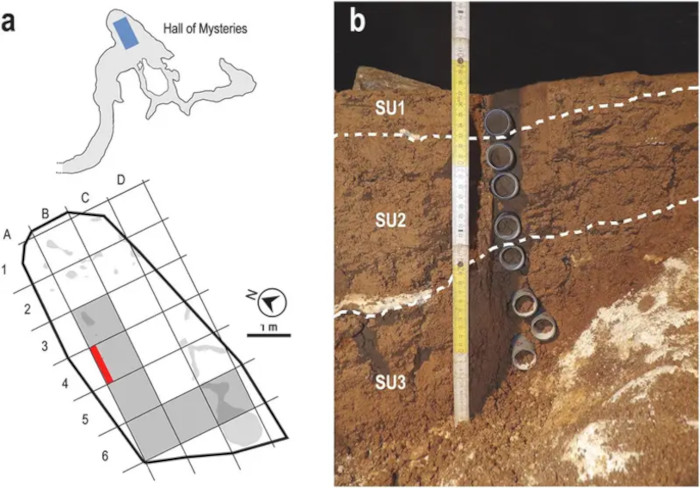
Bàsura Cave: a) map of the 2016 excavation grid in the “Hall of Mysteries”. Excavated squares in dark grey; the red line shows the sampled profile for pollen analysis. b) Stratigraphic profile in square B4 showing the sedimentary units and the location of the palynological samples. (Arobba et al./Quaternary International)
A Journey Through the Hall of Mysteries
Bàsura Cave, located near Toirano in Liguria, is renowned for its well-preserved fossilized footprints, charcoal marks, and extensive deposits of cave bear remains. The recent excavations focused on the "Hall of Mysteries," a deep section of the cave where numerous traces of human activity have been documented. By analyzing 56 charcoal fragments found in this area, the researchers discovered that more than half belonged to Pinus sylvestris (Scots pine) or closely related species.
Crucially, most of these charcoal pieces originated from young branches less than two or three centimeters in diameter. This evidence contradicts the long-held belief that prehistoric cave visitors used large torches made from thick branches. Instead, it suggests a more practical approach: collecting small pine twigs from living trees and bundling them together to create efficient, portable light sources.
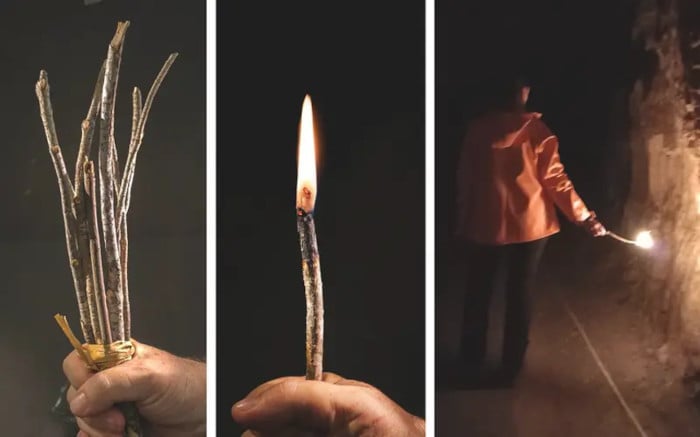
Wood twigs of Pinus sylvestris used in experimental lighting tests conducted in Santa Lucia Inferiore Cave. (D. Arobba/Quaternary International)
Recreating the Ice Age Experience
To test their hypothesis, the researchers conducted a series of experimental trials in a nearby cave with similar environmental conditions. Five participants - mirroring the number of individuals identified from the footprints - navigated the dark passages using bundles of dried Scots pine branches. The results were illuminating.
The experiments demonstrated that just two burning pine twigs provided sufficient light for a group of five traveling in single file. Once their eyes adjusted to the darkness, visibility extended up to ten meters. Furthermore, these small flames produced minimal smoke and glare compared to larger torches, making them ideal for navigating narrow, enclosed spaces. The safest arrangement involved placing one light source at the front of the group and another at the rear, with members maintaining contact by placing a hand on the shoulder of the person ahead.
- Arene Candide: Ice Age Cave Reveals Rituals to Say Goodbye to Our Dead
- Humans A Major Factor In the Extinction of Giant Cave Bears
Efficient Fuel for Deep Exploration
The experimental trials also revealed that fuel consumption was surprisingly low. A burning twig lost approximately four centimeters of length per minute while moving. Based on these measurements, the researchers estimated that the ancient group would have needed about twenty pine twigs, each roughly thirty centimeters long, to complete their two-hour journey from the cave entrance to the Hall of Mysteries and back.
Interestingly, the charcoal marks left on the cave walls during the experiments closely resembled the ancient traces found inside Bàsura Cave. The accumulation of small charcoal fragments beneath these marks also matched the archaeological patterns observed during the excavations. This compelling evidence not only confirms the use of pine twigs for lighting but also highlights the sophisticated understanding these Epigravettian people had of their environment and resources.
This remarkable study provides a rare and intimate look into the lives of Ice Age hunter-gatherers. It reveals a level of planning, resourcefulness, and adaptability that allowed them to explore the deepest, darkest corners of their world, leaving behind a legacy that continues to illuminate our understanding of human history.
Top image: Reconstruction of the human group’s journey through Bàsura Cave. Source: D. Arobba and E. Starnini, in Arobba et al./Quaternary International
By Gary Manners
References
Arobba, D., et al. 2026. Pollen and charcoal evidence of the Late Upper Paleolithic lighting systems in the Bàsura Cave (Toirano, Liguria, Italy). Quaternary International. Available at: https://doi.org/10.1016/j.quaint.2026.110335
Radley, D. 2026. 14,400 years ago, five people and a canid entered an Italian cave using pine twigs for light. Archaeology News Online Magazine. Available at: https://archaeologymag.com/2026/06/hunter-gatherers-used-pine-twigs-for-light/