

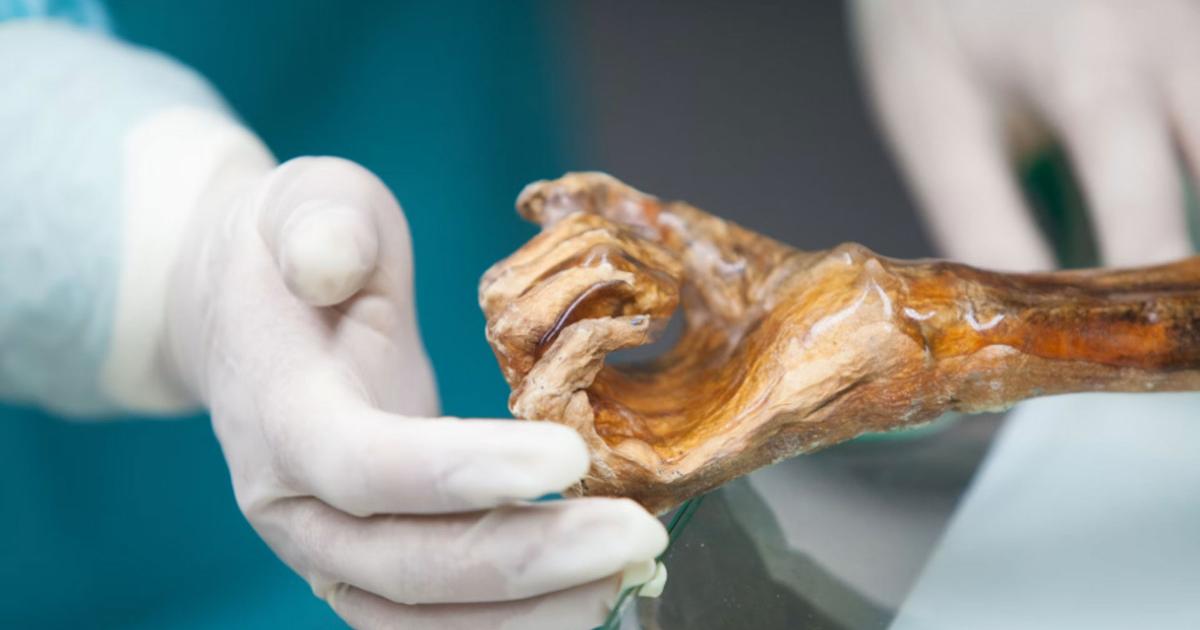

In an astonishing blend of archaeology and baking, scientists have successfully cultivated ancient, cold-adapted yeast found on the body of Ötzi the Iceman to bake sourdough bread. This remarkable achievement not only offers a tantalizing taste of the past but also reveals that the famous 5,300-year-old mummy is a dynamic biological system, still hosting active microorganisms millennia after his death in the freezing Alps.
Ötzi, discovered by hikers in 1991 in the Ötztal Alps on the border of Austria and Italy, is perhaps the most intensely studied human mummy in history. Since his discovery, researchers have learned about his health, his tattoos, and his last meal of ibex, red deer, and einkorn wheat. Now, a recent study published in the journal Microbiome by researchers from the Eurac Research Institute for Mummy Studies in Italy has unveiled a complex microbial ecosystem living on and inside the Iceman.
By analyzing swabs from Ötzi’s skin, thawed water from his remains, and soil from the discovery site, the team distinguished between ancient microbes that colonized him shortly after his death and modern ones introduced during conservation. To their surprise, they discovered four strains of cold-loving yeasts, including Glaciozyma, which are typically found in extreme environments like Antarctica.
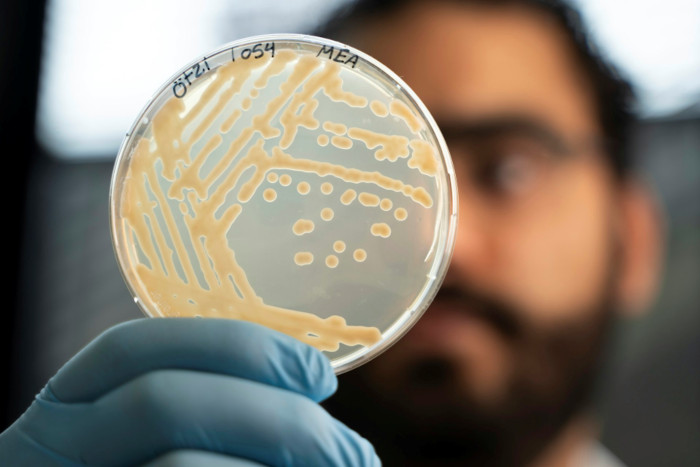
Detail of colonies of yeast taken from a sample of Ötzi’s stomach in a petri dish. (Andrea De Giovanni /Eurac Research)
Baking with Copper Age Microbes
The discovery of these cold-adapted yeasts, which showed signs of ancient DNA damage indicating they had been with Ötzi for over 5,000 years, prompted an intriguing experiment. Lead study author Mohamed Sarhan and his team decided to see if the ancient yeast could still perform its traditional culinary role.
After months of careful cultivation in a refrigerated environment, the researchers used the yeast to leaven dough. “Initially it didn’t work,” Sarhan admitted, but eventually, they succeeded. “As a dough, it was very, very good,” he noted, proving that the ancient microbes were still metabolically capable. The team even plans to use the yeast to brew beer in the future, tapping into ancient fermentation techniques.
- The Iceman's Genetic Enigma: How Ötzi Became Europe's Most Mysterious Outlier
- Ötzi the Iceman Took a Posthumous Ride on River of Ice Water
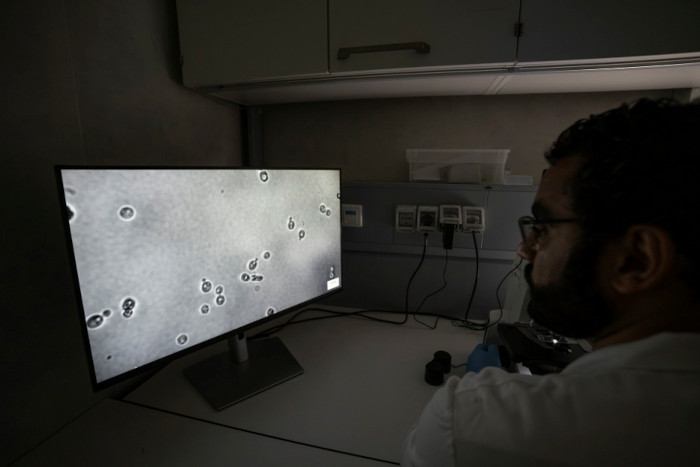
Microbiologist Albert Zink examining samples from Ötzi the Iceman. (Eurac Research)
A Living Biological Interface
The study's findings go beyond culinary curiosities. The research highlights that Ötzi's microbiome is not a frozen time capsule but an actively changing community. By comparing samples taken in 2010 and 2019, scientists observed that the Glaciozyma yeast had proliferated, becoming the dominant strain on his skin.
This ongoing microbial activity raises important questions about the long-term conservation of the mummy. While the current storage conditions at minus 6 degrees Celsius (21 degrees Fahrenheit) and high humidity mimic his glacial tomb, they do not stop cold-adapted organisms from growing.
Furthermore, the researchers found that some of these microbes have the genetic capacity to break down phenol, a chemical previously used to treat the mummy to prevent fungal growth. This suggests that the yeasts may have adapted to consume the very chemicals meant to suppress them.
Preserving the Past for the Future
The revelation that Ötzi is a "living biological interface" underscores the complexities of preserving ancient organic remains. As Frank Maixner, director of the Institute for Mummy Studies, stated, the Iceman is "not a static relic, but a dynamic biological system."
The researchers emphasized that while the mummy's current condition is stable, continuous microbiological monitoring is essential. Understanding the interactions between ancient and modern microbes will be crucial for ensuring that Ötzi, a unique window into the Copper Age, remains intact for future generations to study.
The successful baking of sourdough bread using yeast from a 5,300-year-old mummy is a testament to the resilience of life and the incredible ways in which modern science can connect us, quite literally, to the tastes and environments of our ancient ancestors.
Top image: Ötzi the Iceman mummy preserved in the South Tyrol Museum of Archaeology. Source: Marion Lafogler /South Tyrol Museum of Archaeology/Eurac Research
By Gary Manners
References
Berdugo, S. 2026. 'It was very very good': Ötzi the Iceman's body is covered in ancient yeast — and scientists just used it to make a sourdough. Live Science. Available at: https://www.livescience.com/archaeology/it-was-very-very-good-otzi-the-icemans-body-is-covered-in-ancient-yeast-and-scientists-just-used-it-to-make-a-sourdough
CBS News. 2026. Scientists find yeast in frozen mummy's guts, use it to make sourdough bread. CBS News. Available at: https://www.cbsnews.com/news/oetzi-the-iceman-yeast-mummy-sourdough-bread/
Eurac Research. 2026. Ötzi and his microbiome: A 5,300-year-old relationship. Eurac Research Magazine. Available at: https://www.eurac.edu/en/magazine/otzi-and-his-microbiome-a-detailed-picture-of-the-microbial-community-associated-with-otzi
Sarhan, M. S., et al. 2026. The Iceman’s microbiome: unveiling millennia of microbial diversity and continuity. Microbiome. Available at: https://microbiomejournal.biomedcentral.com/
South Tyrol Museum of Archaeology. 2026. Ötzi and his microbiome: roommates from 5,300 years ago. Iceman.it. Available at: https://www.iceman.it/en/news/otzi-and-his-microbiome-roommates-from-5-300-years-ago_23217
ZME Science. 2026. Scientists Baked Bread Using Yeast from Ötzi the Iceman’s Mummy. ZME Science. Available at: https://www.zmescience.com/science/news-science/otzi-iceman-yeast-bread/






















