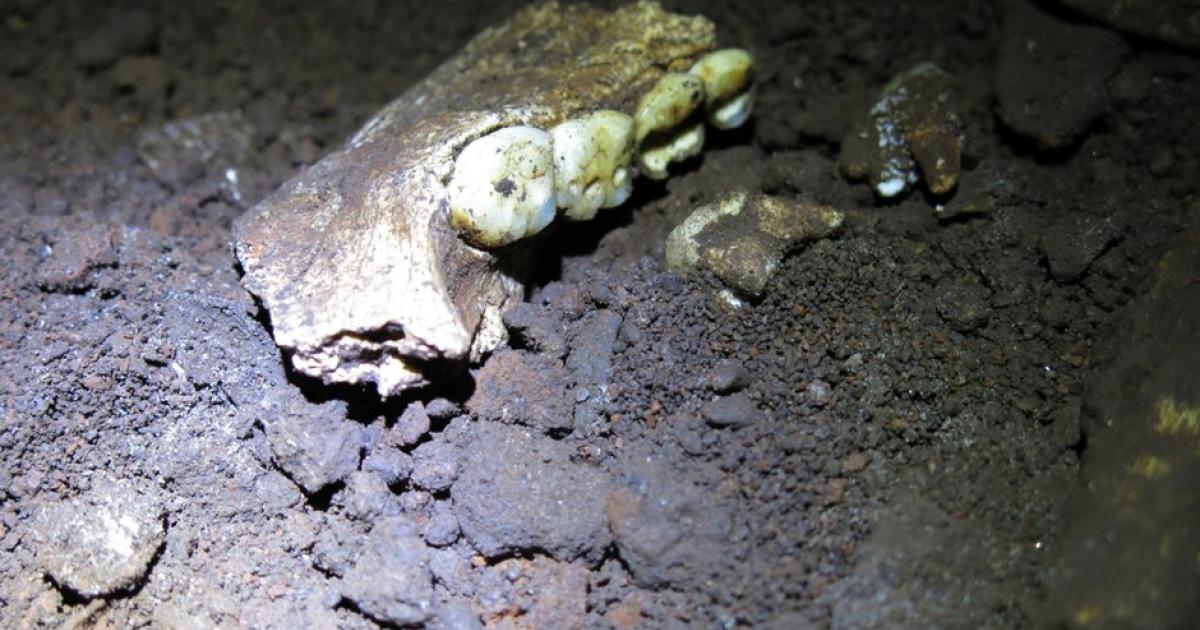

Scientists from an international research team used a minimally-invasive acid-etching method on enamel from 23 fossilized teeth belonging to 20 individuals found within the Dinaledi Chamber in the Rising Star cave system of South Africa to examine ancient 'Homo naledi' proteins. They searched for Amelogenin-Y, a protein encoded by the AMELY gene on the Y chromosome, which is normally present only in biological males. Remarkably, no Amelogenin-Y was detected in any of the teeth tested.
- Skeleton of an Archaic Homo naledi Child Found in Rising Star Cave
- Scientists Reject Claim that Homo Naledi Buried Their Dead in Rising Star Cave
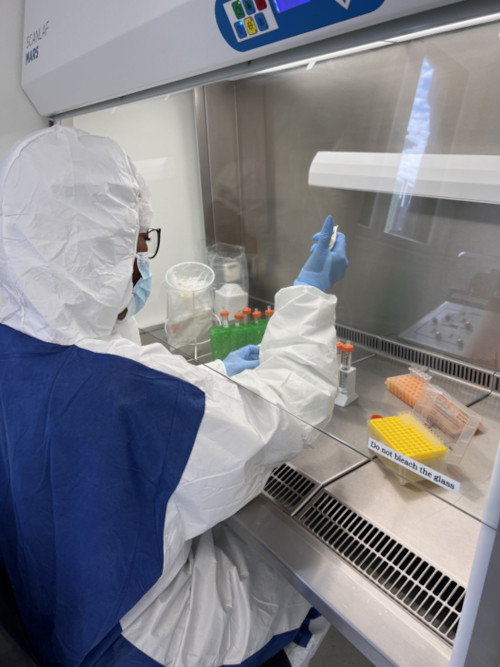
Lead study author Palesa Madupe extracting ancient proteins. (© Keane Wanza/MPG)
Preserving Deep Time in Tooth Enamel
Tooth enamel (the hardest tissue in the human body) can preserve proteins for many millions of years. According to senior author Palesa Madupe from the Max Planck Institute for Evolutionary Anthropology:
“Dental enamel – the hardest tissue in the human body – shields proteins from environmental contamination even for millions of years. This makes them ideal carriers of genetic information from deep time.”
This new palaeoproteomic method provides a sustainable and minimally invasive way to study the biology of ancient hominins. Evidence that the assemblage might represent an all-female population can potentially solve a longstanding mystery, the adults of Homo naledi have always shown.
The discovery that the assemblage may consist entirely of females offers a potential explanation for a long-standing puzzle. Adult Homo naledi fossils from the Dinaledi Chamber have always shown unusually little physical variation, which is typically expected between males and females in primate populations. If all the remains belong to one sex, this lack of variation makes perfect sense.
- Astonishing new species of ancient human ancestor found in burial chamber
- Controversial Claims About Homo Naledi Are Stirring Up Evolution Debate
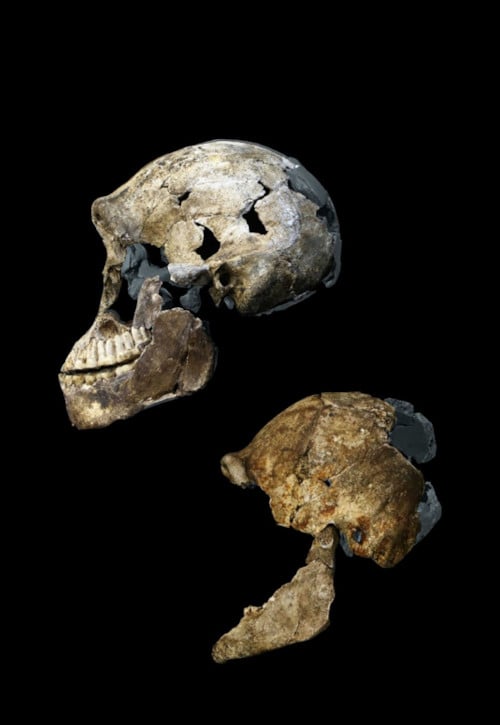
Two female skulls of Homo naledi, the “Neo” skull from the Lesedi Chamber (top left) and the DH3 skull from the Dinaledi Chamber (below right). These represent the largest and smallest known Homo naledi skulls. (© Rising Star program/MPG)
A Cultural Practice or a Genetic Quirk?
The implications of an all-female fossil assemblage deep within a nearly inaccessible cave are staggering. If the individuals were intentionally placed there, it suggests a highly complex, sex-specific mortuary practice. Such deliberate burial behaviors were previously thought to be the exclusive domain of large-brained species like Homo sapiens and Neanderthals. “It should give you almost goosebumps,” remarked Lee Berger, a paleoanthropologist and co-author of the study.
“You're looking at a non-human species with a brain the size of a chimpanzee that is saying females have a separate place in this world and an important place, in that this place belongs to them in death.”
However, researchers acknowledge an alternative biological explanation. It is possible that Homo naledi experienced a genetic mutation or systematic deletion of the AMELY gene, perhaps due to population isolation. If so, biologically male individuals would simply lack the genetic marker, appearing female in the protein analysis.
“Either scenario... is fascinating and would have deep implications for a better understanding of the biology and evolution of this species,” noted Professor Cappellini.
Rewriting the Dawn of Human Society
Living approximately 335,000 to 241,000 years ago, Homo naledi continues to challenge our understanding of human evolution. The Rising Star cave system, first excavated in 2013, has yielded over 1,500 fossils, representing one of the largest collections of an extinct human relative ever found. Whether the result of unique cultural rituals or isolated genetic traits, this latest discovery underscores the immense value of ancient protein analysis in unlocking the secrets of our prehistoric past.
Top image: A fossil mandible of Homo naledi. Source: Max Planck Institute for Evolutionary Anthropology
By Gary Manners
References
Berger, L. 2026. Scientists found 20 Homo naledi in a cave. Why are they all female? National Geographic. Available at: https://www.nationalgeographic.com/history/article/homo-naledi-female-proteins-fossils
Cappellini, E. 2026. Ancient teeth suggest Homo naledi fossils in a cave may all be female. Max Planck Institute for Evolutionary Anthropology. Available at: https://www.mpg.de/26838324/ancient-teeth-suggest-homo-naledi-fossils-in-a-cave-may-all-be-female
Dickinson, M. 2026. Ancient proteins hint at all-female Homo naledi burial site in Rising Star cave system. Phys.org. Available at: https://phys.org/news/2026-06-ancient-proteins-hint-female-homo.html
Madupe, P. 2026. Ancient teeth reveal new clues about mysterious Homo naledi cave burials. Heritage Daily. Available at: https://www.heritagedaily.com/2026/06/ancient-teeth-reveal-new-clues-about-mysterious-homo-naledi-cave-burials/158447