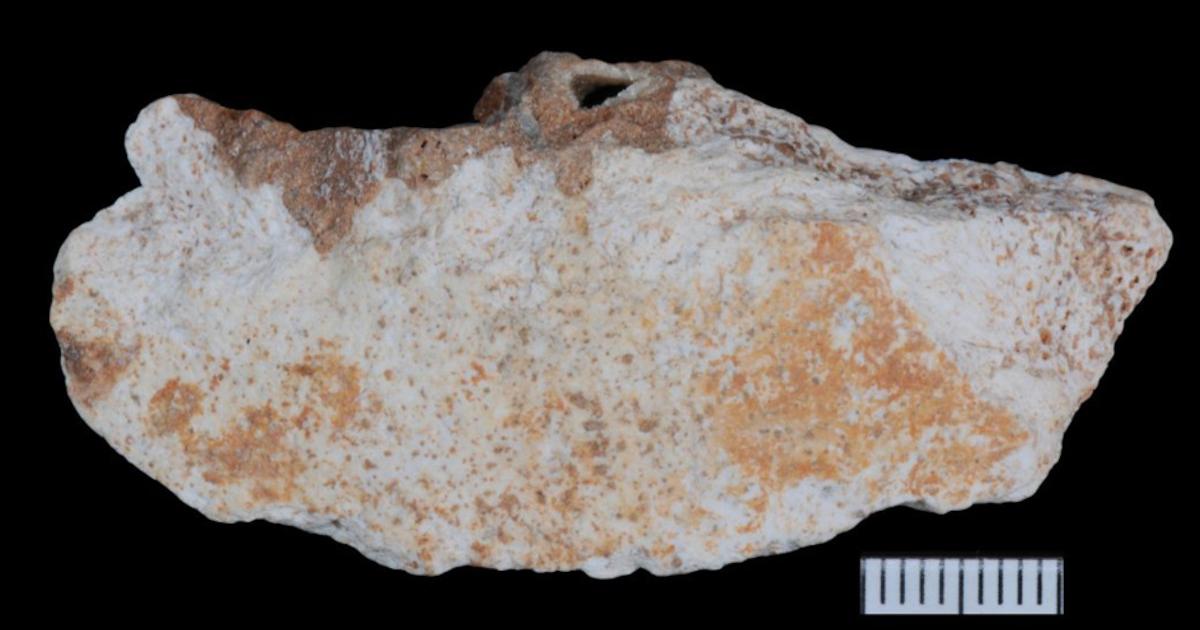

Seven Denisovan fossils from Bianfu Cave in southwest China have opened an unusually detailed window onto a vanished archaic human population. Dating from about 167,000 to 134,000 years ago, the finds comprise teeth, bits of skulls, and part of an arm bone that suggest the fossilized remains belonged to a population of early humans engaged in hunting, butchery and tool use. The discovery extends our knowledge of Denisovans beyond genetic analysis, providing clues to how these ancient people were built and how they survived.
Proteins Identify Bianfu’s Ancient Occupants
While the first knowledge of Denisovans came from the DNA found in the bone of a finger found in Siberia, the fossil record has been scant. The jaw from Xiahe, as well as findings in Tibetan cave deposits, suggested the geographical distribution of Denisovans; however, the south-west of China had remained empty of evidence. Bianfu Cave was discovered in Heqing County, Yunnan Province, and now fills some of that gap.
In the first of two new Nature studies, Huiyun Rao and his team carried out research that led to the filtering of over 60,000 bones to find the most viable candidates for the protein study. Eventually, three hominin relics were collected, which consisted of four teeth, two skull pieces from the parietal region, and a fragment of the radius bone. Proteins enabled the identification of five of the specimens as Denisovans because of a specific type of collagen, while dental information helped place the wider collection. Protein from a Y chromosome also indicated that two of the specimens were males.
- First Ever Skull Fragments of Denisovans Have Been Confirmed Found in Russia
- Finger Bone Points the Way to Revealing Denisovan DNA Secrets
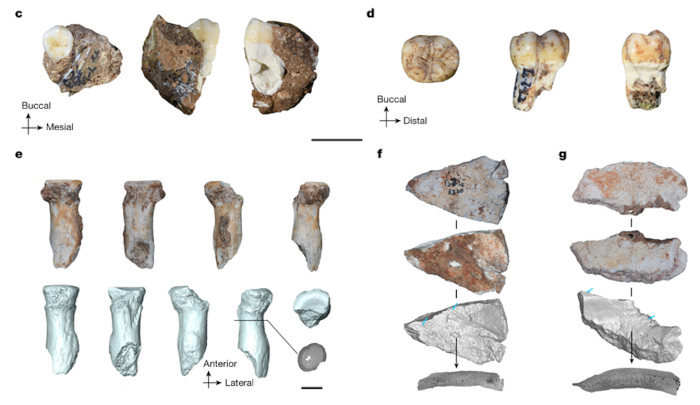
Teeth and tool evidence found at the Bianfu Cave, China. (Rau et al./Nature)
A Forearm with a Mosaic of Features
The radius is the earliest securely identified Denisovan specimen of this bone, providing the scientists with an insight into what this individual may have looked like before he died. The Chinese Academy of Sciences observes that its large proximal end and likely inward-facing muscle attachment are similar to those of Neanderthal radii, but its overall outer shape and mid-shaft shape belong closer to modern humans. Such a mixture warns against viewing Denisovans as merely eastern duplicates of Neanderthals.
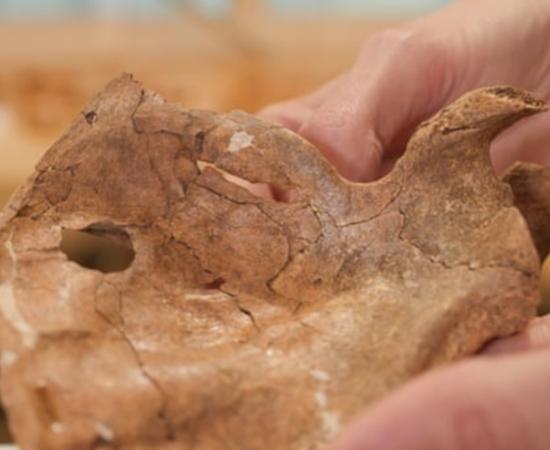
The two cranial pieces help in defining a body known mainly from teeth and biochemical evidence. Their pattern of vault thickness closely resembles that of Homo heidelbergensis and late Middle Pleistocene archaic humans from East Asia, although individual elements of the skull by themselves cannot provide a full view of the characteristics of the face. As is the case with the previous finds of Denisovan skulls, every new find counts, because the number of samples is still rather low.
- Denisovan Jaw: The First Physical Evidence for the Mysterious Hominins Outside Their Original Cave!
- Neanderthal Mother, Denisovan Father! Concrete Proof that Hybrid Hominin Families Did Exist
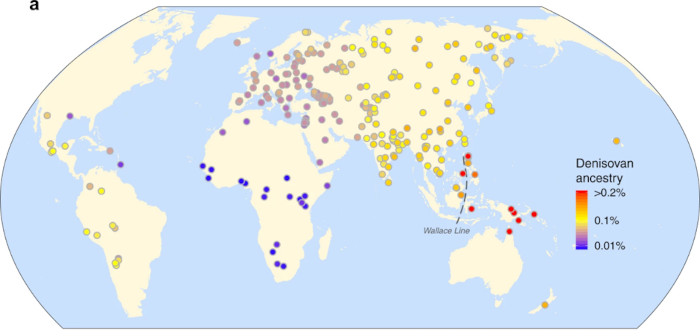
Map showing patterns of Denisovan ancestry in present-day populations, showing strongest influence in the East. (Kai Yuan et al./Nature/CC BY 4.0)
Hunters Using Stone and Bone
As reported in a related study published in Nature, a team led by Qijun Ruan has placed the Denisovan fossils into cultural periods that date from about 190,000 to 70,000 years ago. Excavators recovered 1,366 stone artifacts, together with more than 64,000 mammal bones, of which 1,600 were identified more precisely, mainly from deer and bovid animals. Cut marks indicate that large and medium-size mammals were hunted for their flesh, marrow, and skins.
The process of making tools has been viewed as simple and effective, as the makers were engaged in hitting simple core rocks to obtaining useful flakes, and they often used animal bones that could be utilized without or with very little modification. The study compares this case of extensive use of minimally modified animal bones to the practices of Neanderthals, however, the similarity does not indicate either contact or imitation. It also aids debates about technology attributed to Denisovans, as the tools found in this case are much closer linked to the remains than at other sites.
A Southern Refuge and a Wider Legacy
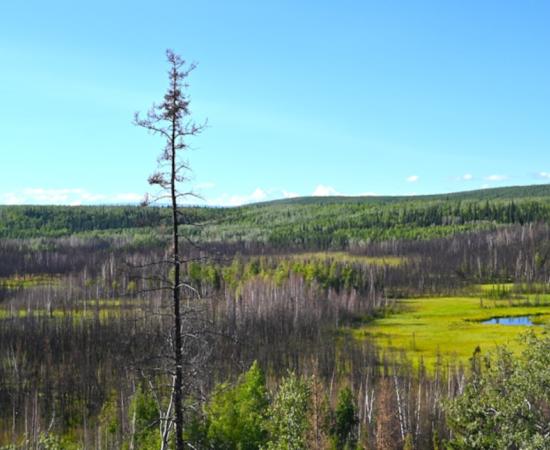
Through the analysis of pollen and animal evidence, it is demonstrated that a conifer forest or forest-grassland prevailed in this area during climatic changes. In the cold periods of Marine Isotope Stage 6, the rather warm temperature of the Yunnan-Guizhou Plateau could have ensured that prehistoric humans reliably found food and shelter in this region. Although the complete archaeologic sequence extends beyond the fossil remains dated accurately, the authors indicate that attributing the findings to the Denisovans is the most logical explanation rather than a certain fact.
Bianfu nevertheless provides a badly needed geographic bridge between northern finds and the strong Denisovan genetic legacy in Asia and Oceania. It adds physical support to genetic models of southern dispersal and helps explain where interbreeding with modern humans could have occurred. Most importantly, these Denisovan fossils replace a blank space on the map with a population that hunted selectively, adapted to forest country and used whatever stone or bone worked best.
Top image: A Denisovan skull fragment from the Bianfu Cave, southwestern China. Source: Song Xing/ Nature/CC BY 4.0
By Gary Manners
References
Chinese Academy of Sciences. 2026. Denisovan Radius Discovered for First Time in Southwest China. Available at: https://english.cas.cn/newsroom/research-news/202609/t20260906_1192641.shtml
Kreier, F. 2026. Newfound Fossils Are Spilling Denisovan Secrets. Available at: https://www.sciencenews.org/article/new-fossils-denisovan-secrets-china
Rao, H. et al. 2026. Ancient Proteins Identify Various Denisovan Remains from Southwest China. Nature. Springer Nature. Available at: https://www.nature.com/articles/s41586-026-10976-9
Ruan, Q. et al. 2026. Denisovans from Southwestern China and Their Subsistence Strategies. Nature. Springer Nature. Available at: https://www.nature.com/articles/s41586-026-10997-4
SciShow. 2019. Another Species of Human? The Truth About Denisovans. Available at: https://www.youtube.com/watch?v=ytktpNIN3OM