
When British archaeologists completed radiocarbon analysis of a skeleton that came to be known as Cheddar Man, they estimated his age at 10,000 years. They paused, amazed, and repeated the dating procedure. The almost complete skeleton was the oldest Homo sapiens skeleton ever found in Britain. Extensive research into ancient DNA extracted from the skeleton has been integral for scientists who are building a DNA portrait of Cheddar Man to describe his life in Mesolithic Britain. One of their biggest surprises was the appearance of the earliest modern human inhabitants of Britain. Cheddar Man was quite different from the traditional image of the British people.
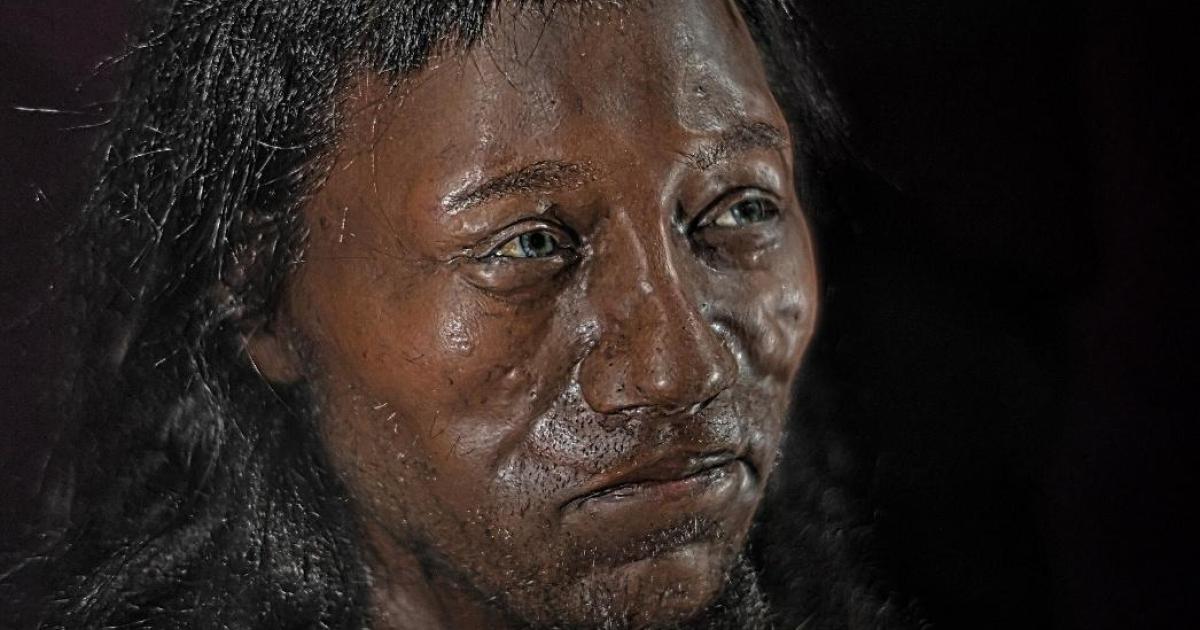
Cheddar Man’s DNA contained genetic markers for skin pigmentation that are usually associated with sub-Saharan Africa. Since sub-Saharan Africa is a significant distance from the British Isles, scientists wondered how the skin pigmentation of Cheddar Man could be so different from that of future generations living within this remote part of the world.
Distance and skin color concerned the researchers, but the discovery of this particular skin pigmentation was still consistent with other Mesolithic human remains found throughout Europe. According to analysis by Dr. Tom Booth, humans with pale eyes entered the European continent long before pale skin or blond hair became common genetic variations in Britain. In fact, they appeared after the arrival of sedentary farming in combination with domesticated crops and livestock.
Cheddar Man’s appearance serves as a warning against assuming that appearance has remained unchanged for thousands of years. Those who believe that fair skin, light hair, and blue eyes of modern Britain predict past appearances are mistaken. The pairing of certain features that are normal today doesn’t indicate their dominance throughout the whole course of time.
- Prehistoric Humans Shaped Europe Long Before Farming
- Humans Took Pleasant Detours on the Prehistoric Route to Europe
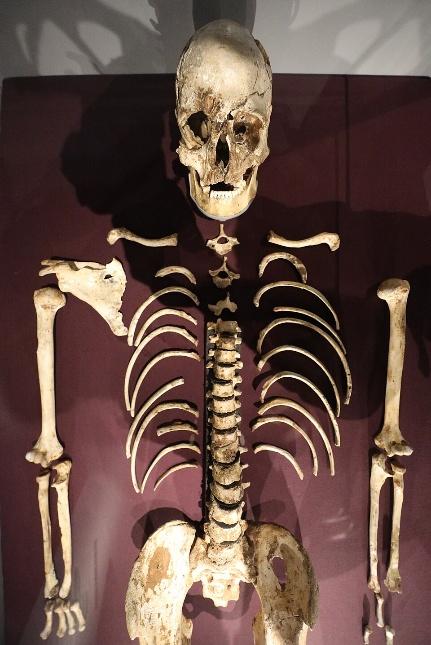
Upper Body of Cheddar Man (Geni/CC-BY-SA 2.0)
Who Was Cheddar Man?
Now, who was this enigmatic individual known as Cheddar Man? Archival research and careful data collection can construct a generalized biography for the skeletal visitor in the DNA lab. Using a range of data, scientists describe him as a Mesolithic hunter-gatherer with dark skin and blue eyes. He was approximately 166 centimeters tall. He died in his twenties. His skeleton was uncovered in 1903 during drainage renovations at Gough's Cave, a popular tourist attraction at the time.
When Cheddar Man was initially found, many researchers claimed that he was the long-sought earliest Englishman. At the time, scholars estimated his remains to be between 40,000 and 80,000 years old. However, intensive radiocarbon dating from the 1970s onwards actually suggests he lived around 10,000 years ago.
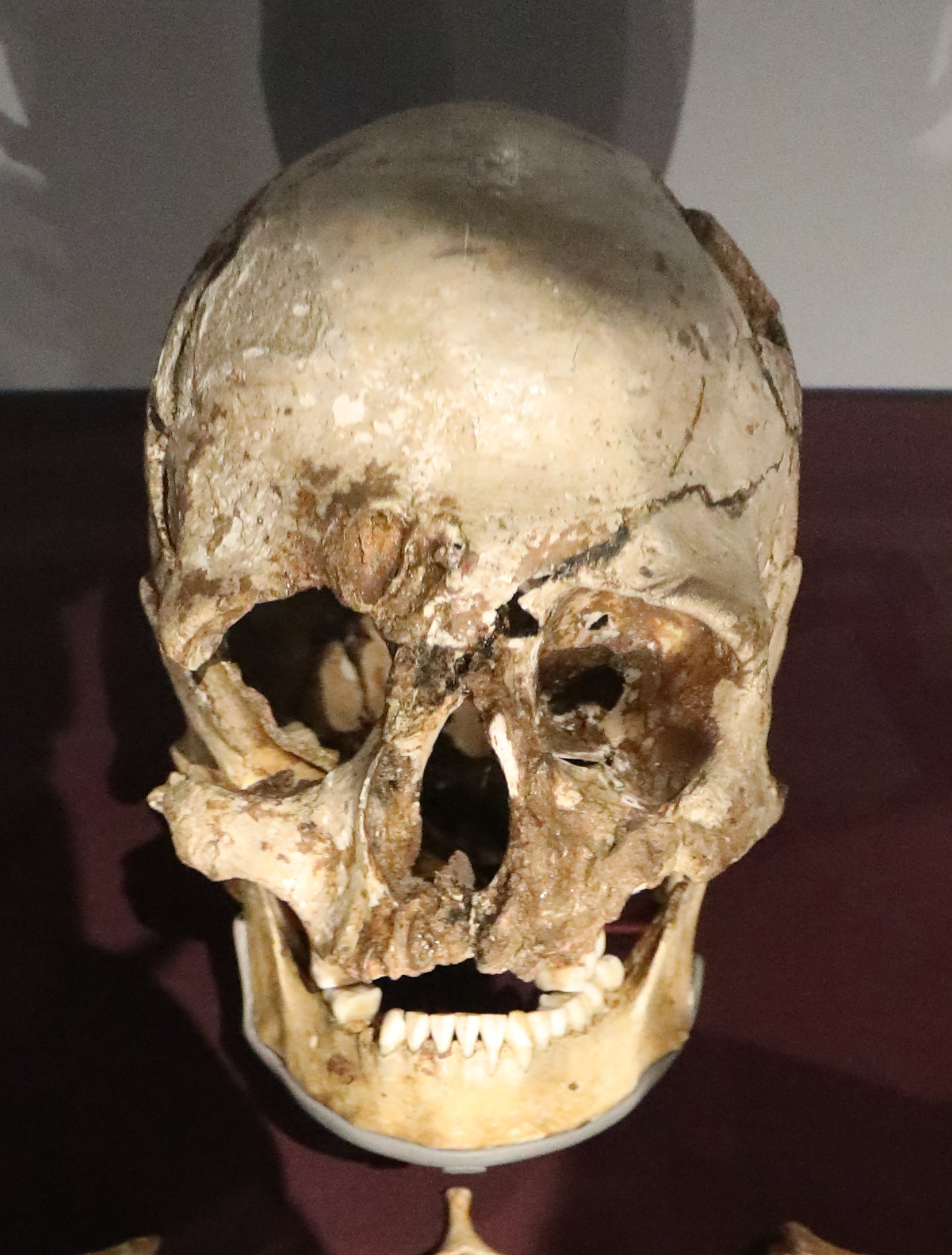
His skeleton shows a uniquely narrow pelvis shape. Scientists are uncertain about the cause of a hole in his forehead. They wonder if it was caused by an infection or by damage during the drainage renovations in the cave. Like all Homo sapiens across Europe at the time, Cheddar Man was lactose intolerant, so he was unable to digest milk as an adult. His diet was plant-based with large portions of seeds and nuts. According to geological research, at the time Cheddar Man was alive, Britain was still attached to continental Europe. The landscape was densely forested,
Cheddar Man’s life was controlled by the need to find adequate food. His diet was typical of most hunter-gatherers. Meat choices included red deer, large wild cattle, and some freshwater fish. The skill to hunt large wild cattle, known as aurochs, was, at one time, far easier due to being able to roam freely throughout Britain, especially during warm periods. But unfortunately, these same cattle became extinct since the seventeenth century. Their descendants are now domestic cattle bred for meat and milk.
- Was Humanity More Advanced in Prehistoric Times Than We Think?
- Europe’s Oldest Blue Pigment Repaints Prehistoric Art History
An Unusual Cave Burial
Most of the Mesolithic human remains that date to this particular historical period were discovered in caves. Cave burials were an established tradition during Cheddar Man’s life. Archaeologists have already been able to find the remains of about 50 individuals throughout Britain; all deposited over a short period of 100-200 years in caves during the Mesolithic time period, otherwise known as the Middle Stone Age.
What makes Cheddar Man's case unusual is that, at a time when communal burials were common, he was found buried alone. Dr. Booth suggests that since the skeleton was recovered from sediment, Cheddar Man could have been buried in it or just covered up over time. He could have simply curled up and passed away in that particular location.
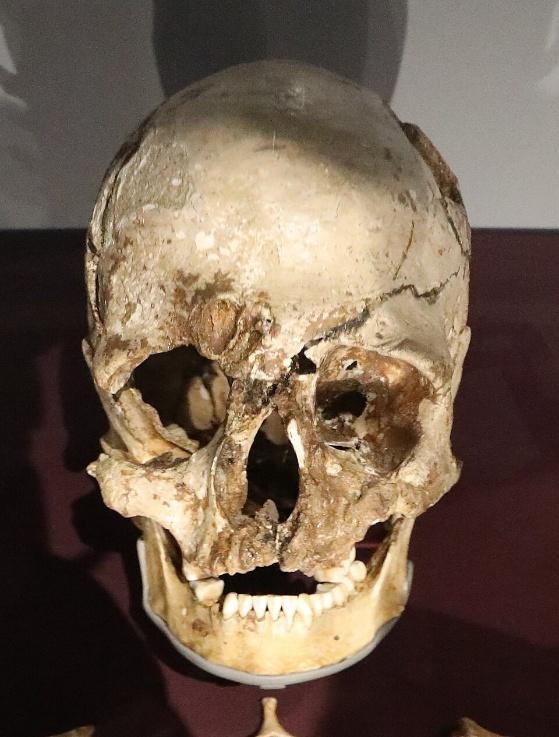
Skull of Cheddar Man (Geni/CC- BY-SA 3.0)
The Collection of Ancient DNA
After taking a portion of the DNA left from the skull. Dr. Selina Bruce and her team were able to use next-generation shotgun sequencing, which involves defining millions of fragments of DNA distributed randomly across the genome. This ability to break down DNA that is thousands of years old allows researchers to create a library of Cheddar Man's DNA and map what they found against a modern human genome.
The team itself, led by Dr. Bruce, had been able to gather a lot of genetic data, but according to her, observation and experience are the keys to successful analysis: “You have to kind of know what you're looking for.” Her remarks came after using a\ DNA test on the skeleton to check specific physical traits, and the analysis listed the markers that had been most helpful. The most useful elements were the conditions in which the bones were held. A consistently cool temperature within the cave and layers of natural mineral deposits prevented the DNA from degrading rapidly over time. Instead, the DNA was preserved, creating the potential for scientific and archaeological discoveries that help scientists to understand the era in which Cheddar Man lived.
Top image: Facial Reconstruction of Cheddar Man. Source: Werner Ustorf, National History Museum/CC-BY-SA
By Ramsey Hardin
References
“Face of Cheddar Man Revealed.” Face of Cheddar Man Revealed, July 16, 2024. https://www.ucl.ac.uk/made-at-ucl/stories/face-cheddar-man-revealed.
Lotzof, Kerry. “Cheddar Man: Mesolithic Britain’s Blue-Eyed Boy.” Natural History Museum, April 25, 2018. https://www.nhm.ac.uk/discover/cheddar-man-mesolithic-britain-blue-eyed-boy.html
“Mesolithic Skeleton Known as ‘Cheddar Man’ Shares the Same DNA with an English/History Teacher!” The Archaeologist, August 13, 2023. https://www.thearchaeologist.org/blog/mesolithic-skeleton-known-as-cheddar-man-shares-the-same-dna-with-english-teacher-of-history.
Radley, Dario. “Most Ancient Europeans Had Dark Skin until 3,000 Years Ago, Study Finds.” Archaeology News Online Magazine, March 22, 2025. https://archaeologymag.com/2025/03/most-ancient-europeans-had-dark-skin/