

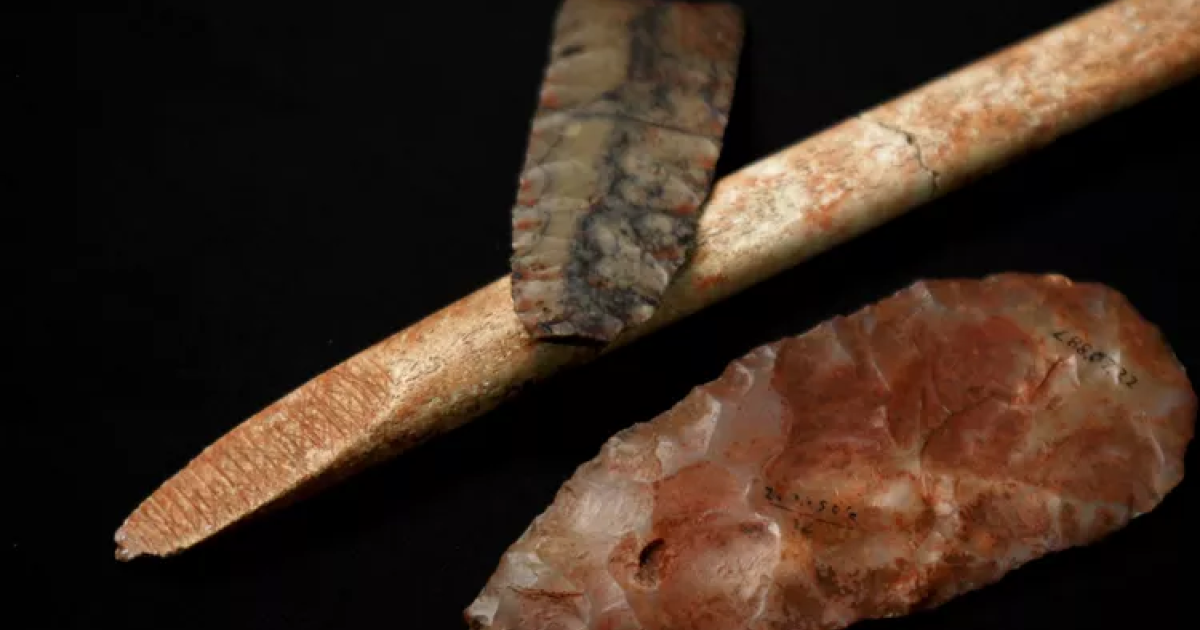

The summer of 1968 produced an incredible discovery for archaeologists. Just beneath the soil lay the human remains of a small child buried more than 12,600 years ago. This grave was unlike anything that the archaeologists had encountered before. The tiny skeleton had been covered in red ochre, a mineral pigment commonly associated with ritual burials. Surrounding the tiny child were more than 125 artifacts, including stone spear points that had been finely crafted and other useful tools. Whoever buried this child had done so with great care and purpose.
The archaeologists excavating the site took extreme care with such a unique find. The child apparently belonged to the Clovis culture, a people who lived near the end of the last Ice Age. They were known for distinctive fluted stone spear points that distinguished them from other prehistoric cultures.
The Anzick burial remains the only known human burial directly associated with Clovis culture. The discovery raised questions that have lingered for well over half a century. Why had this child been buried? Why had he been buried with a rich collection of tools? What did the placing of the red ochre mean? For over forty-six years, the answers remained unknown. Then advances in ancient DNA revealed a story of this child, buried over ten thousand years ago. It was a story far greater than anyone could have guessed.
- Short-lived Clovis Tools May Have Killed Off North American Megafauna
- Oldest Weapons Ever Discovered in North America Predate Clovis
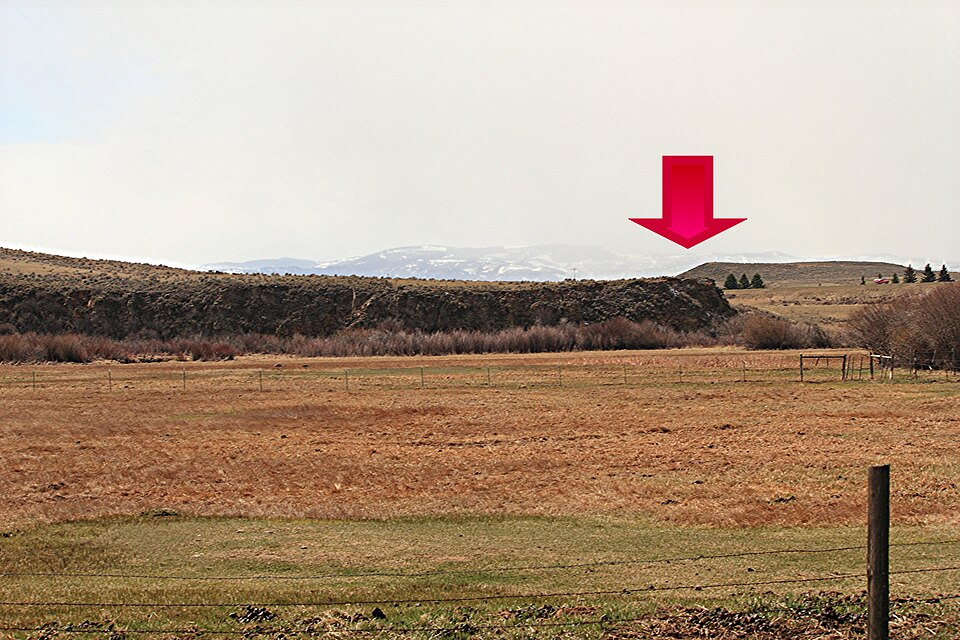
The Anzick Site, approximate location indicated by the arrow here, is the only known burial site for the Clovis culture, and has been estimated to be within the interval: 12,707–12,556 years Before Present. (Ronald L. Shimek, Ph.D./CC BY-SA 4.0)
The Only Known Clovis Burial Ever Discovered
The child known to archaeologists as the Anzick Boy took his name from the Montana family who owned the land where he was found. Radiocarbon dating showed that the boy’s remains were at least 12,600 years old, placing the child well within the Clovis period.
The Clovis culture flourished across North America for about 300 years. For many decades, archaeologists had considered the Clovis people as the earliest inhabitants of the Americas. Still, little was actually known about the Clovis people that could be linked to a specific archaeological find.
- New Mexico Mammoth Bones from 37,000 years ago “Upend” Clovis Theory
- Clovis Burial Site Finally Gets Accurate Dating from Amino Acid Test
The child was buried with artifacts that are a part of the Clovis cultural tradition. While archaeologists have recovered stone tools, hunting weapons, and campsite artifacts, direct evidence tied to the Clovis is rare. Therefore, the grave itself offered a unique window into the little-known lives and spiritual beliefs of a culture associated with the earliest events of American history.
The burial was deliberately ceremonial. Placing 125 stone and antler tools with such a young child suggests the burial held special significance within the community. Most important for the archaeological community is that the grave preserved the last link to the Clovis beliefs and practices, a connection that transformed the understanding of the first Americans.
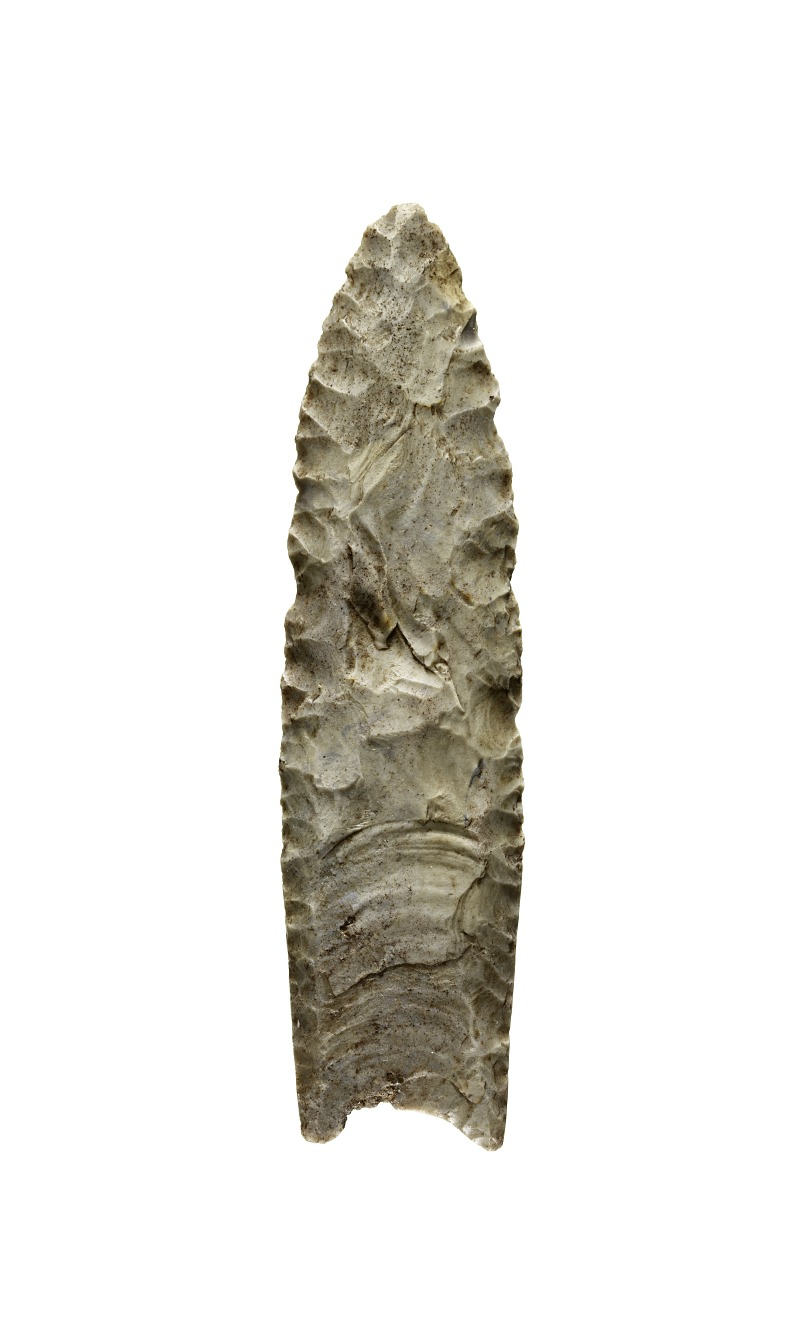
Clovis projectile points that resemble those recovered from the Anzick burial. (Smithsonian Open Access/CC0)
Took 46 Years to Unlock the Anzick Child's Secrets
The burial attracted media interest after its initial discovery in 1968, but the existing technology could not answer key questions about the Clovis culture. Archaeologists could still examine artifacts, analyze burial goods, and estimate the child’s age, but there was no definitive way to tie the child’s genetic profile to the Clovis people.
By the early 21st century, advancements in DNA analysis changed the study of human origins. New techniques enabled scientists to recover and sequence genetic material from skeletons, even if they were thousands of years old. DNA data, site analysis, and artifact evaluation reshaped the story of the first Americans and opened up ancestral connections across an entire hemisphere.
The Genome That Changed Everything
In 2014, scientists unlocked the secrets of ancient DNA, resolving one of the longest-running debates in archaeological history. Using advanced sequencing techniques, researchers recovered and reconstructed the oldest complete human genome from the Americas. The data contained a genetic record that stretched back thousands of years. Scientists could trace the baby’s ancestry and its links to other populations and people.
The genetic analysis demonstrated that the child belonged to a maternal line known as haplogroup D4h3a, a direct genetic line passed from mother to child. The significance of the scientific name is profound. This same lineage belonged to one of several founding maternal lines that contributed to Native American ancestry. The boy’s DNA revealed a close relationship to modern Indigenous people in North and South America. Rather than representing a genetically distinct population that disappeared, the Anzick boy belonged to the same broad group of people that could be traced to the origin of the Native American populations across the hemisphere.
- Ancient Ancestors Walking All Over Clovis First Academics
- Ancient Footprints Reveal Peopling of the Americas Did Occur 23,000 Years Ago
These remarkable DNA findings changed earlier theories that later migrants had replaced the Clovis people. Instead, the genome taken from the child’s bones revealed a rich web of genetic continuity between the continent’s earliest inhabitants and Indigenous communities living today. Scientists concluded that the ancestors of Native Americans spread rapidly throughout the Americas, carrying genetic signatures that remain visible thousands of years later.
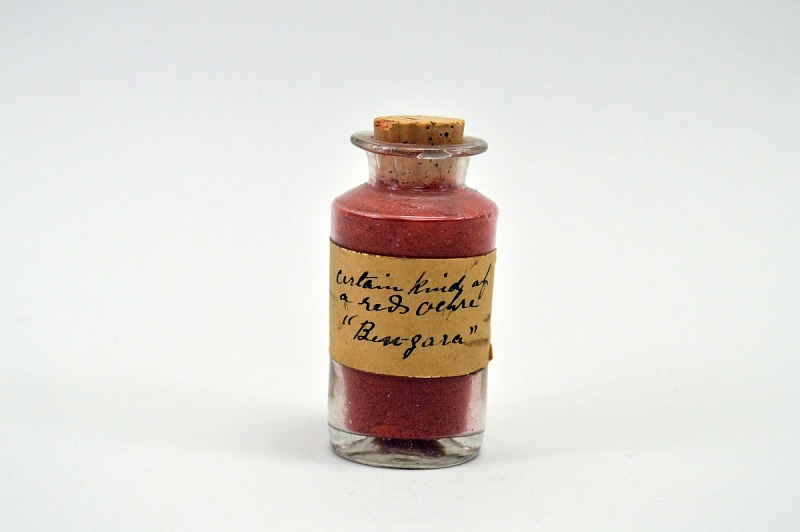
Red ochre pigment similar to that used in the Anzick burial. Credit: Smithsonian Open Access (nmah_1323748/CC0)
Ancient Woman Whose Bloodline Crossed Two Continents
The most interesting element behind this story is that the boy’s maternal lineage has something to say about a woman who lived thousands of years before this small boy. Scientists were able to trace his mitochondrial DNA - a small package of DNA that is almost exclusively passed from mothers to their children. Unlike most DNA sequences, mitochondrial DNA changes very slowly over the course of time. This allows researchers to follow the maternal line of ancestry across numerous generations.
While details about the woman’s life are unknown, she was part of the original population that migrated from northeast Asia into the Americas around the time the last Ice Age was ending. She may have lived in Beringia, a vast land bridge that once connected the Siberian landmass to Alaska. Perhaps she lived with earlier generations that eventually ventured south into the new continent. Wherever she lived, the ability to analyze this new DNA testing reveals that her descendants spread across the Americas, carrying genetic signatures inherited through the maternal line.
- The Great American Origins Debate: Clovis First vs Pre-Clovis
- First Americans May Have Arrived by Sea Ice Highway as Early as 24,000 Years Ago
Thousands of years later, that same maternal line can be confirmed for this Anzick child. The same DNA also survives in Indigenous communities ranging from North America to South America to this very day. In a certain sense, the exact genome associated with the burial of a single prehistoric child can be traced back to an ancestral mother whose own descendants would one day populate two continents. Unfortunately, archaeologists cannot determine her identity, but at least some of her genetic code persisted long enough to be detected in a child, with living descendants spread throughout the Americas.
What the DNA Actually Settled — and What It Didn't
The Anzick Boy’s genome helped settle part of this archaeological debate, but some questions remain open. The child’s DNA didn’t conclusively prove that the Clovis people were the first Americans. In fact, archaeological evidence shows that human populations were present before the Clovis culture originated. What the genome does reveal, however, is that Clovis people were not isolated and were not replaced over time by other migrating groups. Instead, the Clovis actually belonged to the same broad population whose ancestry gave rise to the Indigenous people of the Americas today.
This genetic evidence also showed how rapidly these descendants spread across the new continent. The Anzick child’s DNA shows close genetic ties from both North and South America. Understanding how the ancestral population spread over 12,600 years became far easier. These people were part of a much larger story surrounding migration, adaptation, and expansion that unfolded across two separate continents. The small boy buried with 125 objects provides the clearest evidence yet that the first peoples who came to America and the indigenous peoples today share deep ancestral roots in the New World.
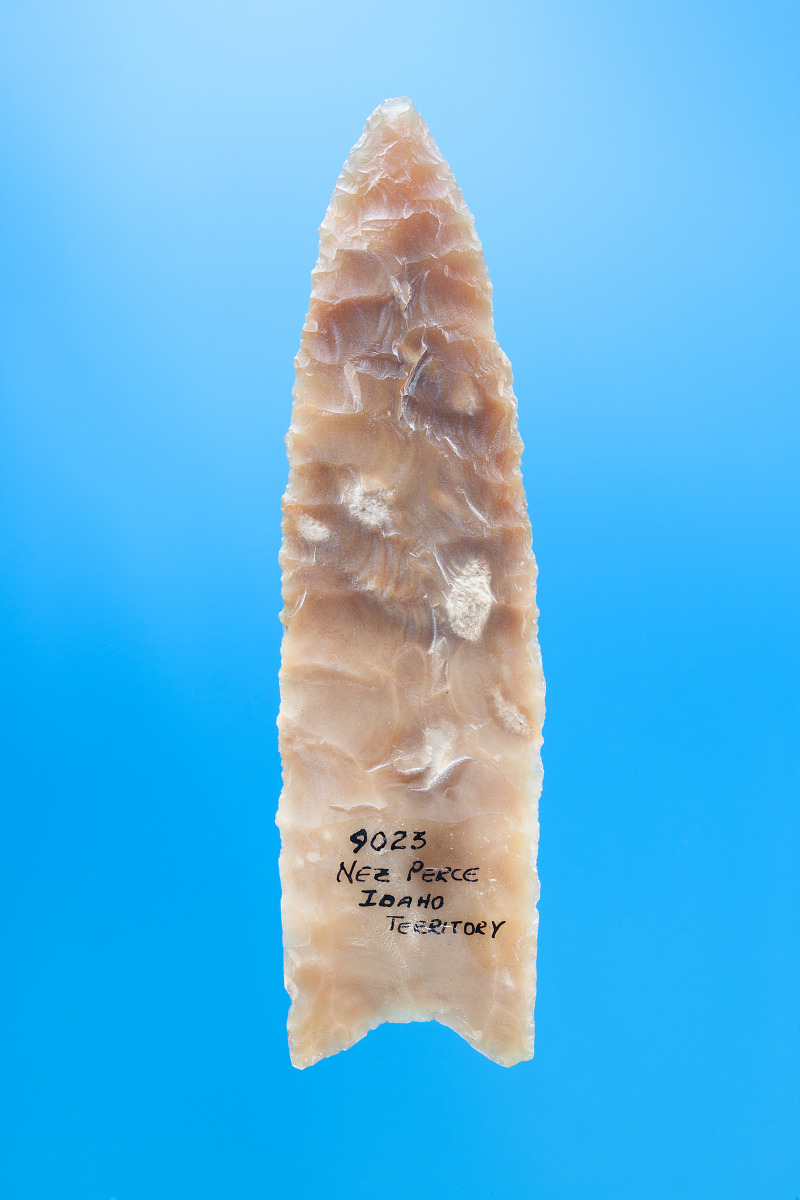
A Clovis fluted projectile point is the signature tool of the Clovis culture. Smithsonian Open Access (nmnhanthropology_8486627/CC0)
Why Was He Buried With 125 Tools?
One of the greatest mysteries surrounding this child is the 125 objects surrounding his burial. Many of these items consist of spear points, stone tools, and antler implements, each showing significant investment of time and expertise. This is quite unusual for such an elaborate burial, especially for a child who died before reaching adulthood within his community. While the reason for the use of the red ochre remains unknown, many researchers believe it may have represented life, rebirth, and ancestry - perhaps even a journey into the afterlife.
- Are These Tools Left by Paleolithic Travelers on the Beringia Land Bridge?
- Swan Point, Alaska’s Unique Stone Tools Are Proof of the Beringia Theory
No written records survive to explain conclusively why the Anzick Child received such extraordinary treatment. Some scholars argue that it was due to belonging to an important family. Others say the tools were offerings intended to accompany him into the afterlife. Whatever the exact reason, the burial reveals that this wasn’t simply a child buried and left to rest. The child was mourned, honored, and remembered. More than 12,600 years later, the red ochre and carefully placed artifacts still tell of a community that could invest tremendous care in saying goodbye to one of its youngest members.
Returning Home
Following the publication of the study’s genome results in 2014, plans were set in motion to return the child to his final resting place. In June of 2014, members of several Native American tribes in Montana’s Shields River Valley participated in the reburial event that brought together tribal leaders, archaeologists, landowners, and local community members in a rare moment of collaboration between Indigenous traditions and scientific advancement. The Anzick child, who had once resided in museums and laboratories, was laid to rest once more.
For the participants in this sacred event, the ceremony was an act of respect and healing between both parties. The DNA study had revealed not only an ancestral connection stretching over thousands of years, but also that the story was about more than ancient migrations or scientific discoveries. The event commemorated living people, traditions, and a child who had been buried with respect and love more than 12,600 years ago.
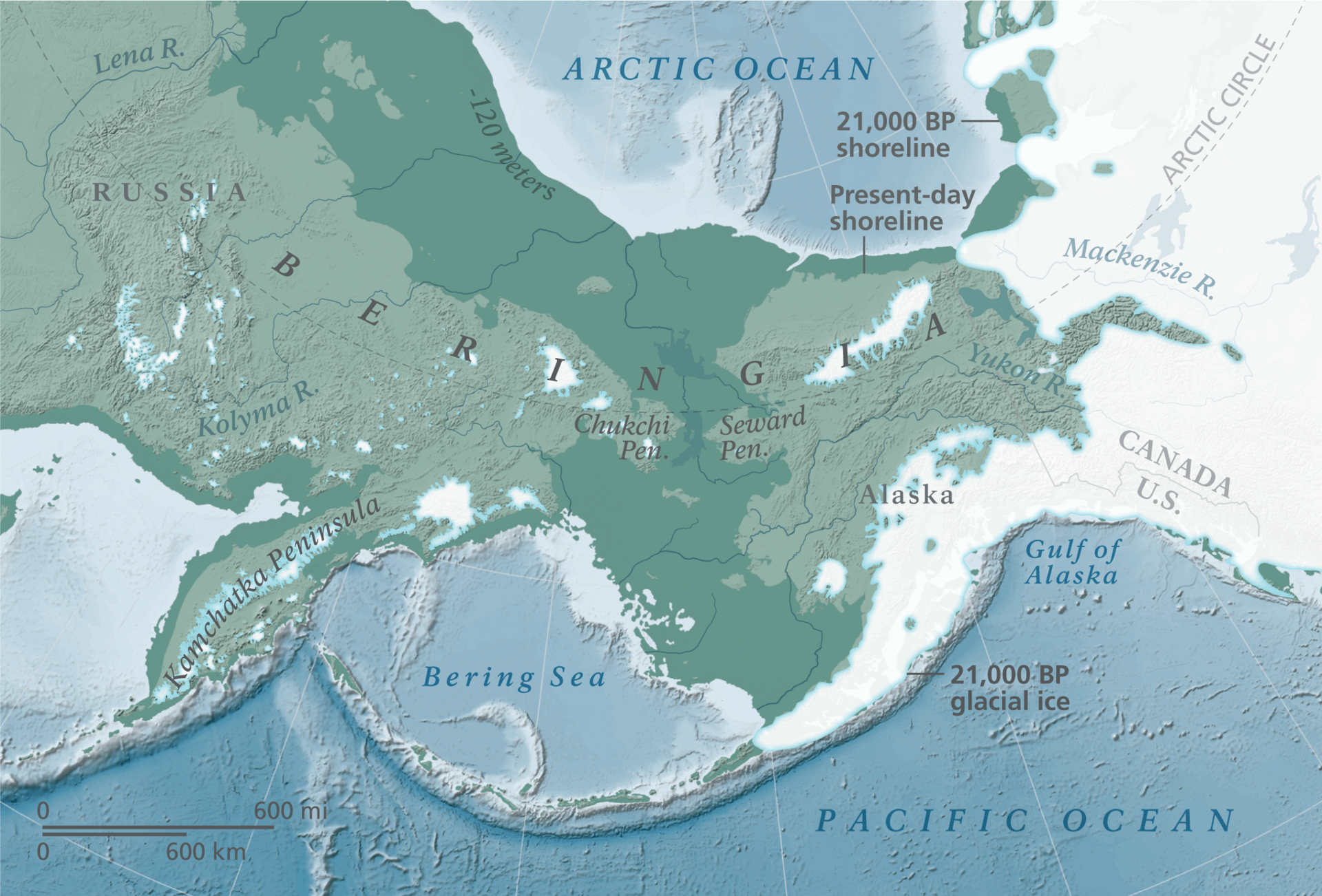
Beringia Land Bridge Reconstruction. (U.S. Federal Government/Public Domain)
The significance of this find extends far beyond mere genetics. The child’s burial reveals a community fully capable of grief, ritual ceremony, and remembrance. The carefully crafted tools, red ochre, and the sheer effort that went into his burial all speak of the sacred value his people placed on his life. His genome has informed archaeologists who are studying migration, adaptation, and the survival of his modern Native American descendants.
- First Americans Arrived by Sea Over 15,000 Years Ago, Surprise Finding Suggests
- First complete genome sequence of an ancient North American offers clues to Native American ancestry.
The child’s DNA provides answers to questions archaeologists have debated for generations. Yet, there is a human story at the core of this child’s life. Thousands of years later, his small skeleton emerged to tell the story of the first Americans. This story isn’t merely about bones, blood, and genome sequencing; it’s about individuals, people, families, and descendants across the millennia. After his discovery reshaped the understanding of Indigenous people, his remains returned to the Montana earth, leaving behind the memory of a woman who reached across the years to touch the future.
Top Image: Clovis artifacts and foreshaft associated with the Anzick burial, Montana. Source: Sarah L. Anzick/Anzick Collection
By Ramsey Hardin
References
Balter, Michael. “Native Americans Descend from Ancient Montana Boy.” Science. February 12, 2014. Accessed June 24, 2026. https://www.science.org/content/article/native-americans-descend-ancient-montana-boy
Barras, Colin, 2022. “What Ancient DNA Reveals About Native American Origins.” SAPIENS. Accessed June 24, 2026. https://www.sapiens.org/archaeology/ancient-dna-native-americans/
Becerra-Valdivia, Lorena, Michael R. Waters, Thomas W. Stafford Jr., Sarah L. Anzick, Daniel Comeskey, and colleagues. “Reassessing the Chronology of the Archaeological Site of Anzick.” Proceedings of the National Academy of Sciences 115, no. 31 (2018): 7882–7887. https://doi.org/10.1073/pnas.1803624115
Callaway, Ewen. February 12, 2014. “Ancient Genome Suggests Native Americans Really Did Descend from the First Americans.” Scientific American. Accessed June 24, 2026. https://www.scientificamerican.com/article/ancient-genome-suggests-native-americans-really-did-descend-from-the-first-americans/
CBS News Staff. February 12, 2014. “12,000-Year-Old Baby DNA Unlocks Clues to Earliest Americans.” CBS News, Accessed June 24, 2026. https://www.cbsnews.com/news/12000-year-old-baby-dna-unlocks-clues-to-earliest-americans/
Greshko, Michael. February 2014. “DNA Reveals Complex Origins of the First Americans.” National Geographic. Accessed June 24, 2026. https://www.nationalgeographic.com/culture/article/140212-anzik-skeleton-dna-montana-clovis-culture-first-americans
Morrow, Juliet E., and Stuart C. Fiedel. “New Radiocarbon Dates for the Clovis Component of the Anzick Site.” In Paleoindian Archaeology: A Hemispheric Perspective, edited by Juliet E. Morrow and Christopher Gnecco. Gainesville: University Press of Florida, 2006.
Owsley, Douglas W., and David Hunt. “Clovis and Early Archaic Crania from the Anzick Site (24PA506), Park County, Montana.” Plains Anthropologist 46, no. 176 (2001): 115–124.
Raghavan, Maanasa, Pontus Skoglund, Kelly Graf, et al. “Upper Paleolithic Siberian Genome Reveals Dual Ancestry of Native Americans.” Nature 505, no. 7481 (2014): 87–91.
Rasmussen, Morten, Sarah L. Anzick, Michael R. Waters, et al. “The Genome of a Late Pleistocene Human from a Clovis Burial Site in Western Montana.” Nature 506 (2014). Open-access version. National Center for Biotechnology Information. https://pmc.ncbi.nlm.nih.gov/articles/PMC4878442/
Reich, David, Nick Patterson, Desmond Campbell, et al. “Reconstructing Native American Population History.” Nature 488, no. 7411 (2012): 370–374.







_at_abount_the_elevation_of_the_bottom_of_the_hillside_below_the_arrow,_is_the_only_known_Clovis_burial_site_in_North_America.jpg)
