

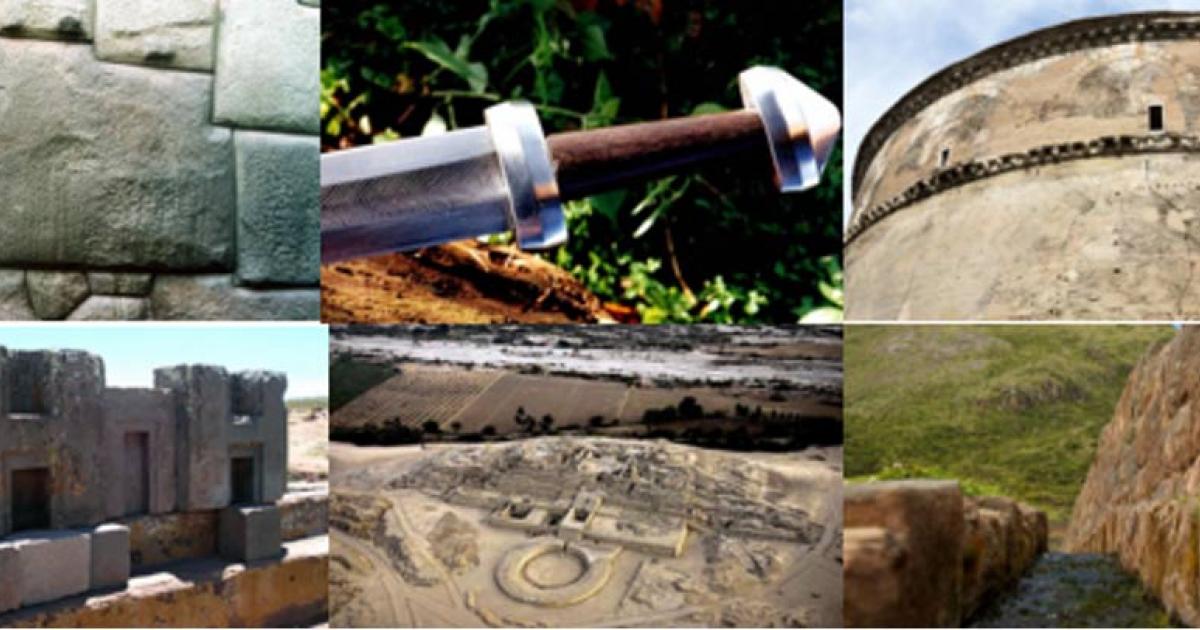

Just a couple of decades ago, the people of ancient civilizations were viewed as simple, primitive people. However, numerous discoveries since then have revealed a number of surprising facts about ancient cultures, namely that many of them possessed advanced knowledge of metallurgy, mathematics, chemistry, astronomy, and more. With this knowledge they forged steel stronger than anything else seen until the Industrial Revolution, created a recipe for concrete so durable that their buildings would endure for millennia longer than the constructions of today, cut stones and assembled walls so precisely that attempts at modern-day replications have failed. Scientists are still scratching their heads over some of the amazing accomplishments of ancient civilizations. Here we feature ten of them.
1. Aqueducts and hydro technology
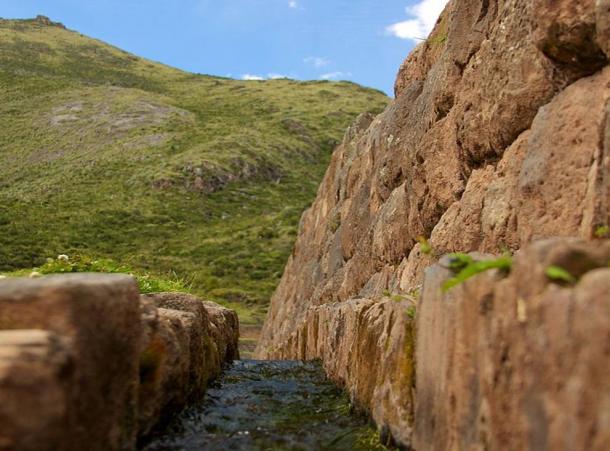
Who would have thought that 21st century governments would be looking to 1,500-year-old technology for guidance on how to solve water access problems? But that is exactly what is happening in Lima, Peru.
Peru has been facing a severe water crisis as chronic problems, such as polluted water supplies, and environmental change combine to undermine the water security of the entire country. However, a new plan has been put forward by Lima’s water utility company, Sedapal, to revive an ancient network of stone canals that were built by the Wari culture as early as 500 AD, in order to supply the population with clean, unpolluted water.
The Wari built an advanced water conservation system that captured mountain water during the rainy season via canals. The canals transported the water to places where it could feed into springs further down the mountain, in order to maintain the flow of the rivers during the dry season.
Many ancient civilizations are known for their advanced construction of cisterns, canals, aqueducts, and water channelling technology, including the Persians, Nabataeans, Romans, Greeks, Harrapans, and many more.
2. Steel

Over 2,000 years ago, ancient people in the Levant were forging swords made of steel so advanced that blacksmiths would not come close to creating anything of equal quality until modern times. The metal was so strong that the swords could slice straight through objects made of other metals.
The steel, known as Damascus steel, was produced out of a raw material, known as Wootz steel, from Asia. Other materials were added during the steel’s production to create chemical reactions at the quantum level. It was first used around 300 BC, but was produced en masse in the Middle East between 1100 and 1700 AD.
The secret of making the Middle East’s Damascus Steel only re-emerged under the inspection of scanning electron microscopes in modern laboratories.
3. Concrete
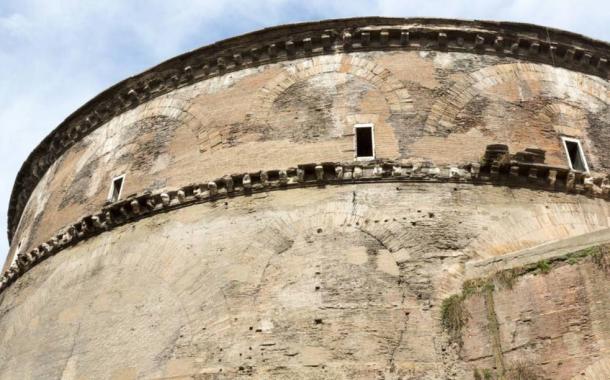
Today’s concrete structures are typically designed to last between 100 and 120 years. However, the Romans built structures from concrete 2,000 years ago that have maintained their structural integrity to this day. So what was their secret?
The Romans made concrete by mixing lime, volcanic rock, and seawater. The combination of the three instantly triggered a chemical reaction in which the lime incorporated molecules into its structure and reacted with the ash to cement the whole mixture together. The ancient seawater concrete contains the ideal crystalline structure of Tobermorite, which has a greater strength and durability than the modern equivalent.
As well as being more durable, Roman concrete was also more environmentally-friendly compared to today’s concrete. Conventional modern cement requires heating a mix of limestone and clay to 1,450 degrees Celsius which releases significant amounts of carbon into the atmosphere. In contrast, Roman cement used much less lime and made it from baking limestone at 900 degrees Celsius, requiring much less fuel.
4. Road-building
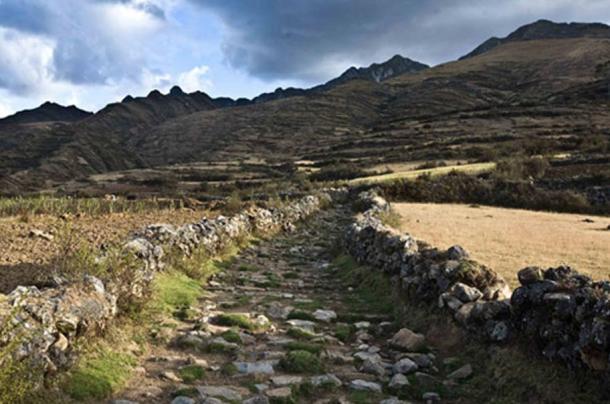
These days, we’d be lucky to get a decent highway built within a year. But it was not always this way. Ancient people recognized the importance of roads and networks linking together cities and settlements across regions and countries… and they built them fast!
Qhapaq Nan, otherwise known as the Main Andean Road, is a huge network of roads once used by the mighty Inca Empire that extends over more than 30,000 kilometres. It was the backbone of the Inca Empire’s political and economic power, connecting production, administrative, and ceremonial centres of pre-Inca Andean culture. The Incas of Cuzco achieved this unique infrastructure on a grand scale in less than a century, extending their vast network across what is now Argentina, Bolivia, Chile, Colombia, Ecuador and Peru.
The Romans too are known as expert road builders. About 1.7 million square miles of territory was covered by the Roman roads, which were made with gravel, dirt, and bricks made from granite and hard lava. Many ancient roads are still used today.
5. Stone Cutting
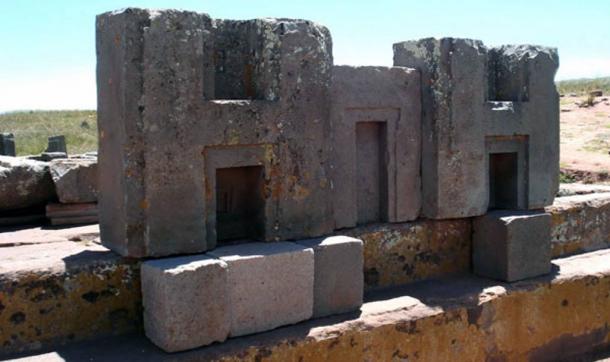
Around the world, we can find numerous examples of ancient stone-cutting so precise that they rival creations of the modern day produced with advanced machinery. One prime example can be found at Puma Punku, an ancient archaeological site in Bolivia – dated by some historians to 15,000-years-old – that contains such incredible stonework that it looks as if the stones were cut using a diamond tool. Enormous blocks weighing up to 800 tons, consist of perfectly straight edges that lock perfectly into each other and contain no chisel marks. Attempts to replicate the precision of the stonework have failed.
6. Agriculture
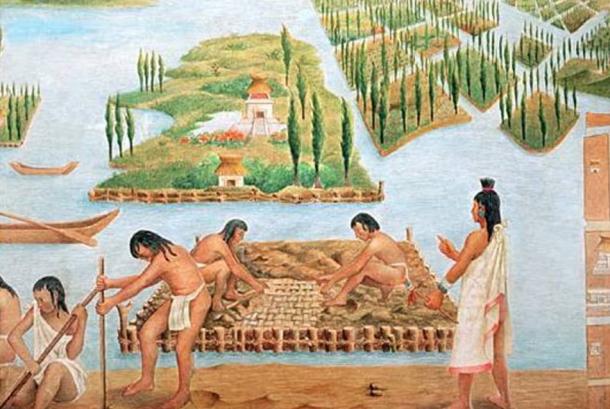
Human sacrifice is typically the first thing that comes to people’s minds when they think about the Aztecs and other Mesoamerican cultures. However, there is much more to these civilizations than this practice. One of their innovations was the chinampa agricultural system, the so-called ‘floating gardens’ which can be found on the shallow lake beds in the Valley of Mexico.
A chinampa plot was constructed by staking out a rectangular enclosure into the marshy lakebed. The enclosure would then be fenced in by joining the stakes with wattle. After that, the fenced in area would be filled with mud and decaying vegetation. In order to prevent the roots from becoming water-logged, it was important that the fill brought the chinampa plot above the lake level. Canals surrounding the chinampa plots formed an illusion that these agricultural lands were floating on water, hence its misattribution as ‘floating gardens’. To further stabilise these plots of land, willows were planted around the perimeter. This is due to the dense root system which, over time, anchored the retaining walls of the structure and reduced the effects of erosion. In order to ensure that the chinampas produced good harvests throughout the year, it was vital that the supply of water was well managed. During the rainy season, flooding would have been a problem. Hence, a sophisticated drainage system, which included dams, sluice gates and canals, were put in place to counter this problem. By using human excrement to fertilise the crops, the Aztecs were also able to create a healthier living environment as the city’s wastewater would have also been treated.
The system of agriculture and waste water treatment seen in the floating gardens of Mexico, was so advanced that there have been attempts (unsuccessfully) to implement it in modern times.
7. Walls
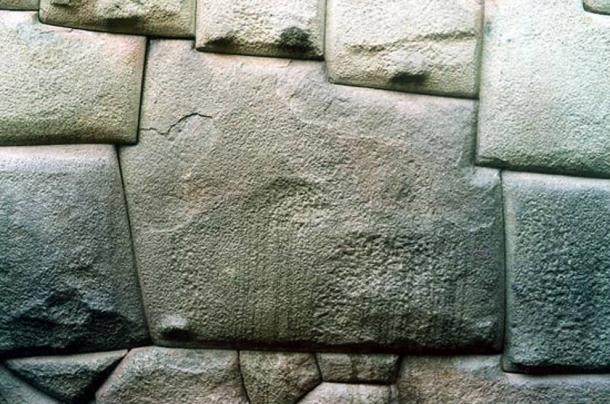
The Inca civilization is well-known for its advanced masonry work, much of which can still be seen today in Machu Picchu and Sacsayhuaman in Peru. Their large dry stone walls display huge blocks that had been carefully cut to fit together tightly without mortar and with levels of precision unmatched anywhere else in the Americas. The stones are so closely spaced that a single piece of paper will not fit between many of the stones. This precision, combined with the rounded corners of the blocks, the variety of their interlocking shapes, and the way the walls lean inward (to prevent damage in the event of an earthquake) have puzzled scientists for decades. The method used to match precisely the shape of a stone with the adjacent stones is still unknown and attempts to recreate the technique have all failed.
8. City planning
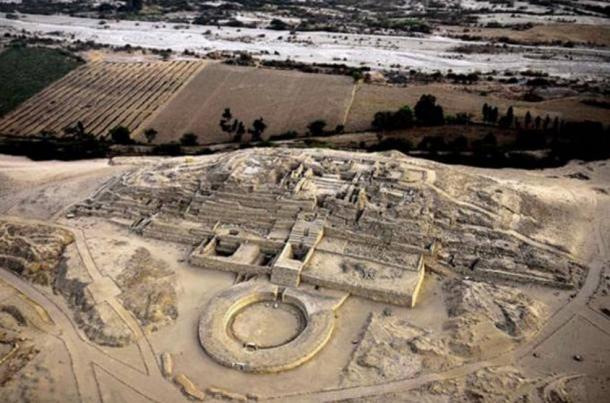
In the last century, numerous ancient cities have been unearthed that have astounded scientists and urban planners alike.
When archaeologists discovered the 5,000-year-old site of Mohenjo Daro in Pakistan, what they found was unprecedented in the region – the city demonstrated an exceptional level of civic planning and amenities. The houses were furnished with brick-built bathrooms and many had toilets. Wastewater from these was led into well-built brick sewers that ran along the centre of the streets, covered with bricks or stone slabs. Cisterns and wells finely constructed of wedge-shaped bricks held public supplies of drinking water. Back in its day, the city would have been home to around 40,000 inhabitants.
In the same era, but on another continent, another great city was being constructed – Caral. Located in the Supe Valley in Peru, Caral is a 5,000-year-old city that consisted of huge monuments, including pyramids, plazas, amphitheatres, temples, and residential areas. They had extensive agriculture, ate a varied diet, developed the use of textiles, used a complex system for calculating and recording, built water supply, and developed an intricate irrigation system.
Architects are currently looking to Caral for inspiration in city planning. Japanese architects intend to incorporate building designs that they implemented to protect their people from earthquakes. The people of Caral suspended their houses in baskets filled with stones that dissipated earth movement and prevented collapse.
9. Astronomy
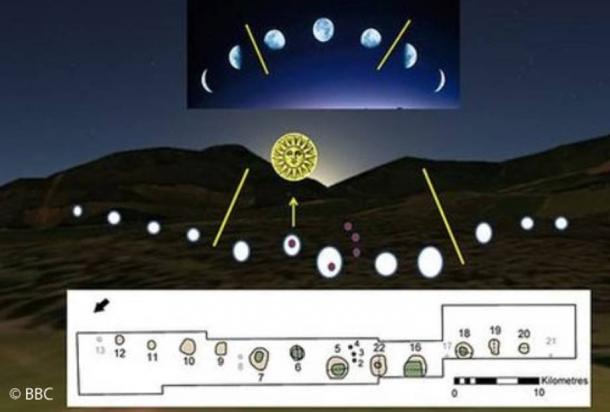
From star constellations painted on ancient Greek ceramics to Native American rock art depicting solstices, star charts in ancient Japanese tombs , Australian Aboriginal dreamtime stories reflecting known astronomical events, and a 10,000-year-old megalithic calendar in Scotland, there is no doubt that ancient civilizations around the world possessed an extraordinary understanding of the cosmos and its movements. But just how they were able to so precisely and accurately record cosmological events without the technology we possess today still eludes scientists in many cases.
What is certain is that recent discoveries have revealed just how advanced ancient cultures were when it came to astronomical knowledge, and that they were far from the primitive people they were once thought to be.
10. Weapons
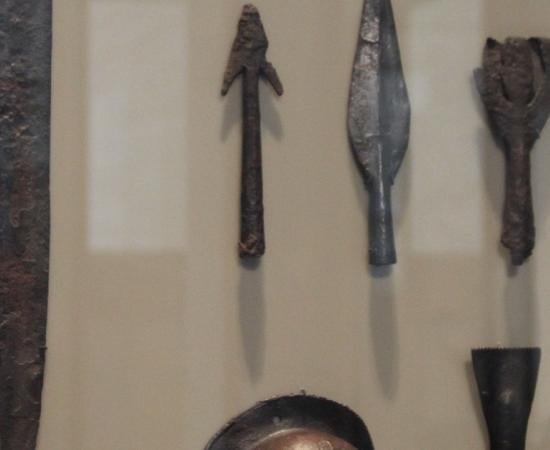
While there is no doubt that modern-day weapons are far more superior to their ancient counterparts in their ability to unleash mass death and destruction, there exist a number of powerful ancient weapons that still elude scientists as to their construction and capabilities.
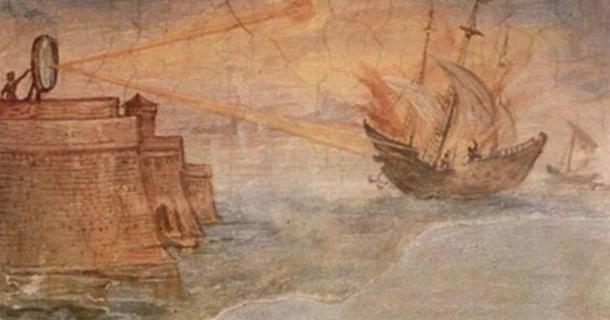
Greek mathematician, engineer, inventor, and astronomer, Archimedes (287 - 212 BC) is reported to have created a heat ray weapon (sometimes called the ‘death ray’) to defend against ships attacking Syracuse, an historic city in Sicily. According to 2nd century AD author Lucian and centuries later, Anthemius of Tralles, the weapon was made of large reflectors (possibly made from polished bronze or copper), which were used to focus sunlight onto approaching ships, causing them to catch fire.
Although its existence has been hotly debated among historians, a number of tests have accurately proven that such a weapon is possible. In 1973, the Greek scientists Ioannis Sakkas set up 70 mirrors with a copper coating, which were pointed at a plywood model of a Roman warship at a distance of 50 meters. When the mirrors were focused accurately, the ship burst into flames within seconds.

















Comments
Ancient knowledge and technology
Permalink
That's what I've been saying.
The reason that we can't understand how ancient people with no technology, machinery or even decent tools could have accomplished what they seem to have been able to do is very simple. They didn't do it. They occupied and used what was available to them from before a near extinction event occurred. Some of what they were able to use had become exposed by time and erosion. I think that long before that time the world population had grown way beyond what we currently think is possible for our planet to support. With the methods in use today there is simply not enough room for all of the housing, industry, and agriculture required to support a population of that size. The most important consideration to be able to support an extremely large population would be the ability to provide enough food. There is no way to work around the fact that agriculture requires sunlight and a reliable source of water. There needed to be a way to have enough room for all of the people and a way to ensure a reliable source for all of the food that was needed. Pyramids are the key to understanding how that problem was solved. In places where erosion has exposed them the visible evidence varies depending on how much has been exposed and eroded. In spite of that fact if you spend a little time comparing them they leave behind very identifiable "footprints" as they erode away. Evidence in this video suggests that a pyramid was an architectural support. The steps of a pyramid supported levels for habitation and industry below the surface. Other functions that appear to have been incorporated into their designs include control of networked irrigation and drainage systems and access to other levels. The methods in use at that time would solve many of the problems that we face today as well as other problems that we have not yet had to deal with. Terrible storms, flooding, droughts, fires, inadequate food production, expensive climate control, and high insurance costs from damages to name a few off the top of my head. If a surplus of water occurred, it would flow into the networked irrigation and drainage systems, be stored in above and below ground reservoirs, and used when needed. The worst damage that could occur would be localized crop damage from some types of storms. There appear to have been both dome shaped and long rows of surface structures that are eroding away, with interior divisions being exposed by wind and water erosion. There are places with erosion occurring by levels that are loaded with the type of "footprints" that pyramids leave behind, as well as fractures in the surface of the higher ground in the surrounding areas that lead to evidence of being artificially supported. Some of the most interesting places to examine are where it seems that one layer is eroding away and exposing another. Especially if the surface that is eroding away has features that do not appear to have been naturally formed.
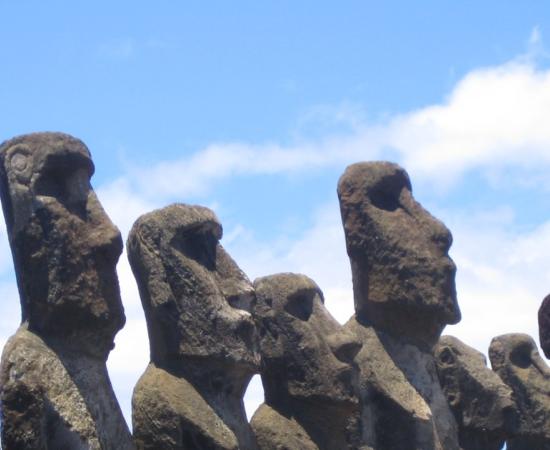
Random thoughts: The longest North/South line at the bottom of the Pacific is 8 to 10 miles wide (So are the intersecting ones) and can be followed for 2,100 miles in a perfect line. The symmetry of some of the underwater mounds is amazing. Pick out a perfect looking 20 mile in diameter mound. If you anchor Google Earth's measuring tool in the right place you can go the same distance in any direction and be at almost exactly the same depth. The similarity of circular formations in different sizes on land is obvious, including the location of possible supports around the outside diameter in predictable locations. Evidence at Easter island and at Train rock (which follows Easter island in the video) appear to support that possibility. What is left at Stonehenge could be the center support structure of an ancient dome shaped building, there is another location that looks very similar to Stonehenge but has not been exposed. The material used for construction was not quarried, finished to size, and set in place, it was poured. Today the binding agents are separating from the sedimentary material and being carried to lower levels by the flow of water. There are similarities between the large statues at Easter island and columns found in ancient ruins that could mean that the natives of Easter island carved existing ruins there to make the statues. It is very likely that Ankor Wat was created out of what was left of an eroding pyramid. There are pyramids in Australia. The evidence of ancient East/West irrigation channels around the Okavango delta in South Africa covers approximately 500 by 700 miles. What can be seen at Gobekli Tepe appears to support the possibility of habitation below the agriculture. Machu Picchu is just a small example of that type of evidence. We've wondered why we can't find evidence of what hit the ground in Crater national park but never wondered how it could blast a square hole in the ground. I suspect our near extinction event may have been similar to what happened at Tunguska in 1908, but on a much larger scale. Large enough to fracture the Earths crust, push part of it down into the molten core, and tilt the Earths axis.
https://vimeo.com/user12206452/videos
In a word the ancients were
Permalink
In a word the ancients were more ADVANCED than we are today. Mainstream archaeology still clings to its linear advancement meme. Civilization and humanity are cyclical; rising to heights and being destroyed by natural cataclysm. Get over it ‘scientists’ you’ll never know how the Inca built those walls until you use the technology they used, and stop all this rubbing and fitting nonsense.
Roman roads
Permalink
Although not reported in Bello Gallico by Caesar, if the Roman army could advance so quickly when invading the Gauls, it simply because the Celts were aware of their importance and had them build on their own.
Making cements with plant extracts.
Permalink
Making cements with plant extracts.
http://www.geopolymer.org/fichiers_pdf/CemPlant.pdf
death ray
Permalink
In reply to weapons, astronomy by average guy (not verified)
The reason the death ray worked in Greece, is because the sun rays are more intense there. Hollywood cameramen have always been baffled why there light readings in the sun there register twice the brightness of California.