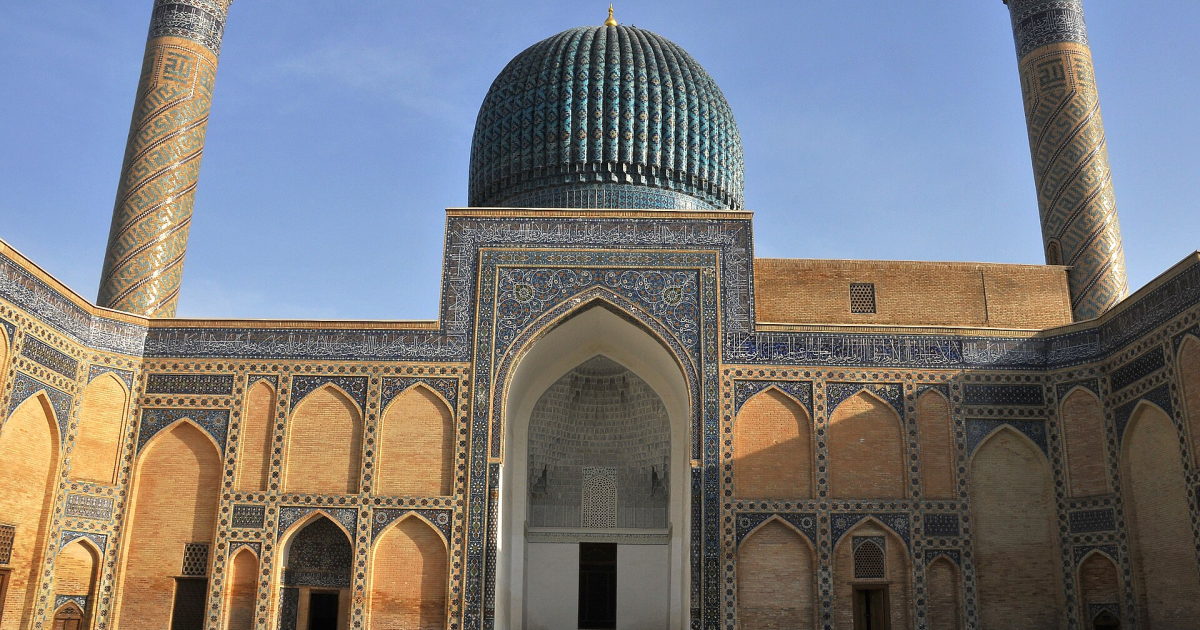

Timur was far more than the stereotypical image of a nomadic conqueror. Although he may not have been fully literate, he valued scholars, architects, artisans, and engineers and actively patronized learning and monumental construction projects to create an earthly paradise in his beloved Samarkand. That didn’t mean he couldn’t show absolute ruthlessness, such as his Chinggisid predecessor. Timur often used terror as a weapon of war, sometimes ordering the construction of towers made from the skulls of defeated enemies.
The Conqueror Beneath the Gur-e-Amir
An individual who carved out a bloody swath of conquest using intelligence, diplomacy, and brutal tactics to create a vast empire stretching from Syria and eastern Anatolia through Persia and Central Asia to Afghanistan and the Indus Valley. Timur was undoubtedly a brilliant military leader in numerous battles, defeating armies and opponents who were either his equal or held significant advantages against him, yet his legacy is often measured by the vast numbers of deaths and destruction left in his wake.
- Did The Curse of Tamerlane Cause One of the Bloodiest Battles in World War II?
- The Timurid Empire’s Arts and Culture Influenced Much of the Known World
Yet while engaging in the Siege of Damascus in 1401, the Damascenes, understanding this interest Timur held in learned men, ironically had as their guest Ibn Khaldun, one of the most gifted scholars in the Islamic world. Ibn Khaldun had originally travelled with his employer, the Mamluk Sultan and his army to protect the city, but once the Sultan realized that a rebellion was forming among certain emirs back in Egypt, he shortly returned, leaving the Damascenes to their fate.
Ibn Khaldun was eventually lowered in a basket over the walls so that he could act as an intermediary in perhaps sparing the city the worst of Timur’s legendary sackings. Not only did Timur willingly hear out this eminent individual despite having no armies and no great power of his own. Later accounts claim the two men discussed strategy and even played a form of chess associated with Timur, although the details of these encounters remain difficult to verify. Unfortunately, this meeting didn’t save Damascus from the wrath of Timur. The meeting between Ibn Khaldun and Timur illustrates his willingness to engage with scholars even while conducting a devastating military campaign.
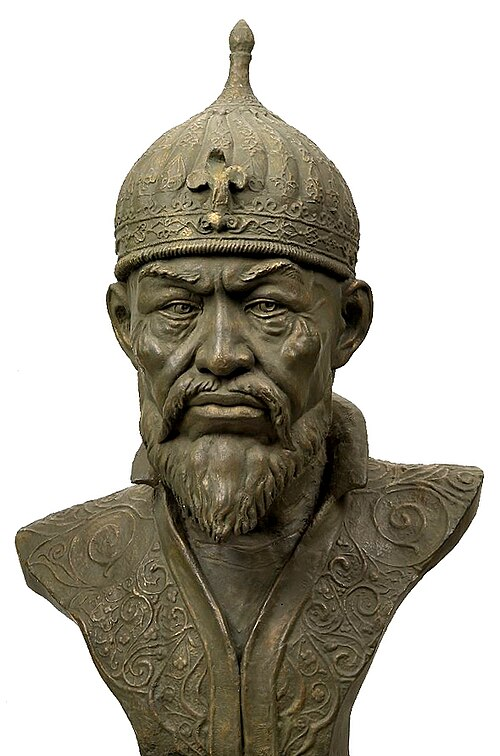 . (Shakko/CC BY-SA 3.0)
The Soviet Expedition to Samarkand
Hundreds of years later, after this legendary meeting in 1401, the vast empire of Timur and those of his descendants had long since fallen to either British control in India, with the previously reigning Mughal Dynasty being toppled almost a century before the first soviet teams entered Samarkand. While with Central Asia and Timur’s original homeland, long conquered by a power to the north, first by the Tsarist Empire and later incorporated into the Soviet Union as part of its Central Asian republics.
- When I rise, the world shall tremble! Tamerlane’s Deadly Drive into India—Part I
- To Plunder, Destroy and Kill: Atrocity and Terror as Tamerlane Sacks Delhi— Part II
The soviet expedition brought together archaeologists, historians, architects, and physical anthropologists, including the pioneering Soviet forensic anthropologist Mikhail Gerasimov. Gerasimov had already developed innovative techniques for reconstructing human faces from skeletal remains and hoped to apply these methods to some of history's most famous figures, not only in military history but also world history. The opening of Timur's tomb offered a rare opportunity to compare historical descriptions with direct physical evidence.
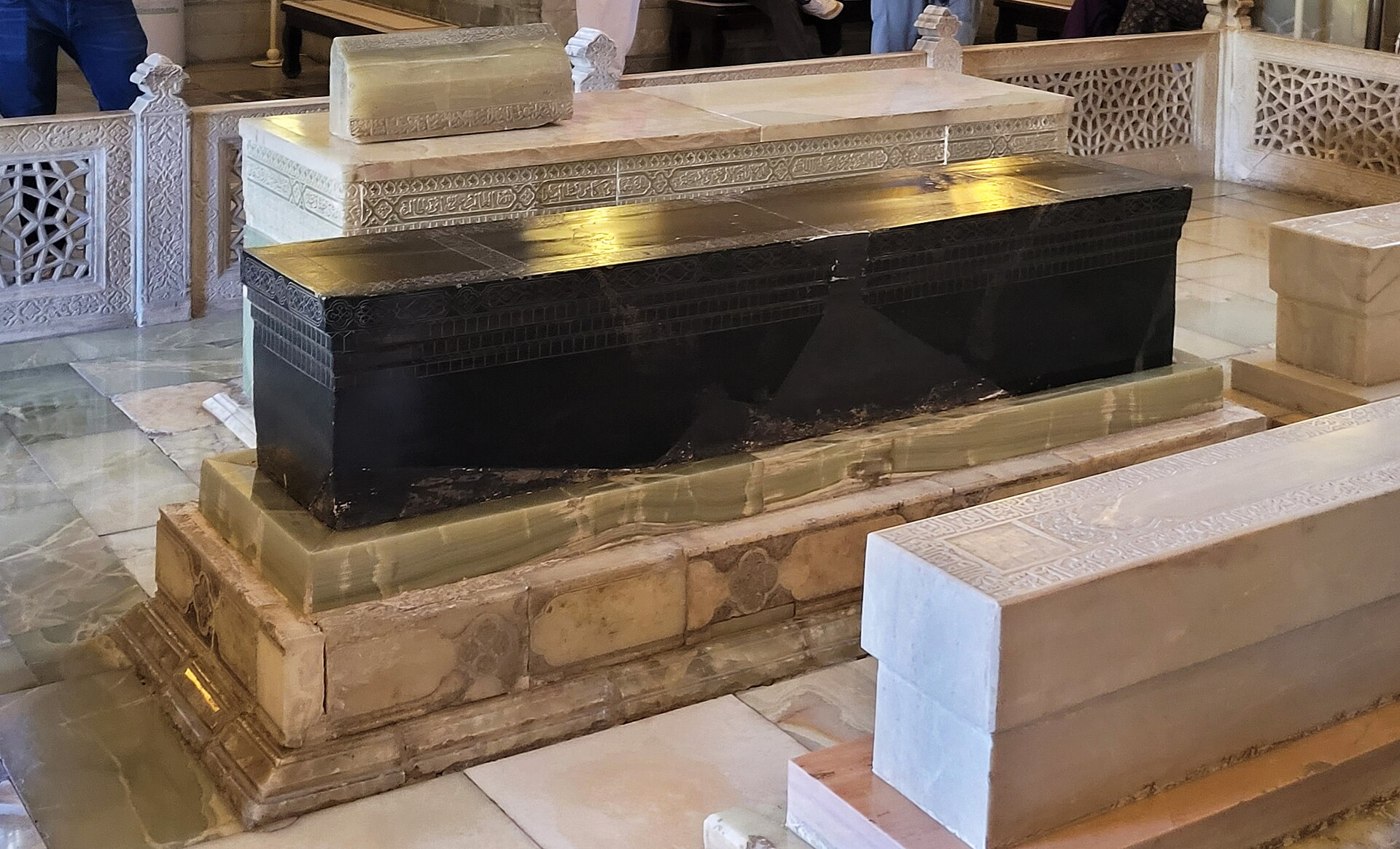
The tomb is traditionally identified as the burial place of Timur inside the Gur-e Amir mausoleum. Public Domain(Bgag/CC0 1.0)
The Warning Inside the Tomb
When the Soviet expedition finally entered the Guir-e-Amir mausoleum in June 1941, members of the local population cautioned the researchers about disturbing the burial of Timur. These warnings reflected centuries of oral tradition passed down through the centuries surrounding Timur's tomb and the widespread belief that powerful rulers should be left undisturbed or face the wrath of their spirit. Whether these same concerns stemmed from religious respect, local folklore, or genuine fear of a curse remains difficult to fully grasp.
- Thunder Clap and Lightning Strike! Conquering the World, and the Battle of Ankara – Part 1
- Empires Clash with Fire and War Elephants! Changing the World, and the Battle of Ankara – Part II
Historical evidence, though, does suggest that inscriptions were indeed present within the mausoleum and on Timur's sarcophagus. Several inscriptions are associated with Timur's tomb, although historians continue to debate the origins and wording of the famous curse narrative that later became attached to the site. However, historians continue to debate whether the dramatic "more terrible conqueror" warning existed in precisely the form later repeated in popular retellings. Many later versions of the story emerged only decades after the excavation had concluded, and may have been embellished as the legend grew with the events that were to follow the opening of Timur’s tomb and his descendants, such as the legendary astronomer Ulugh Beg.
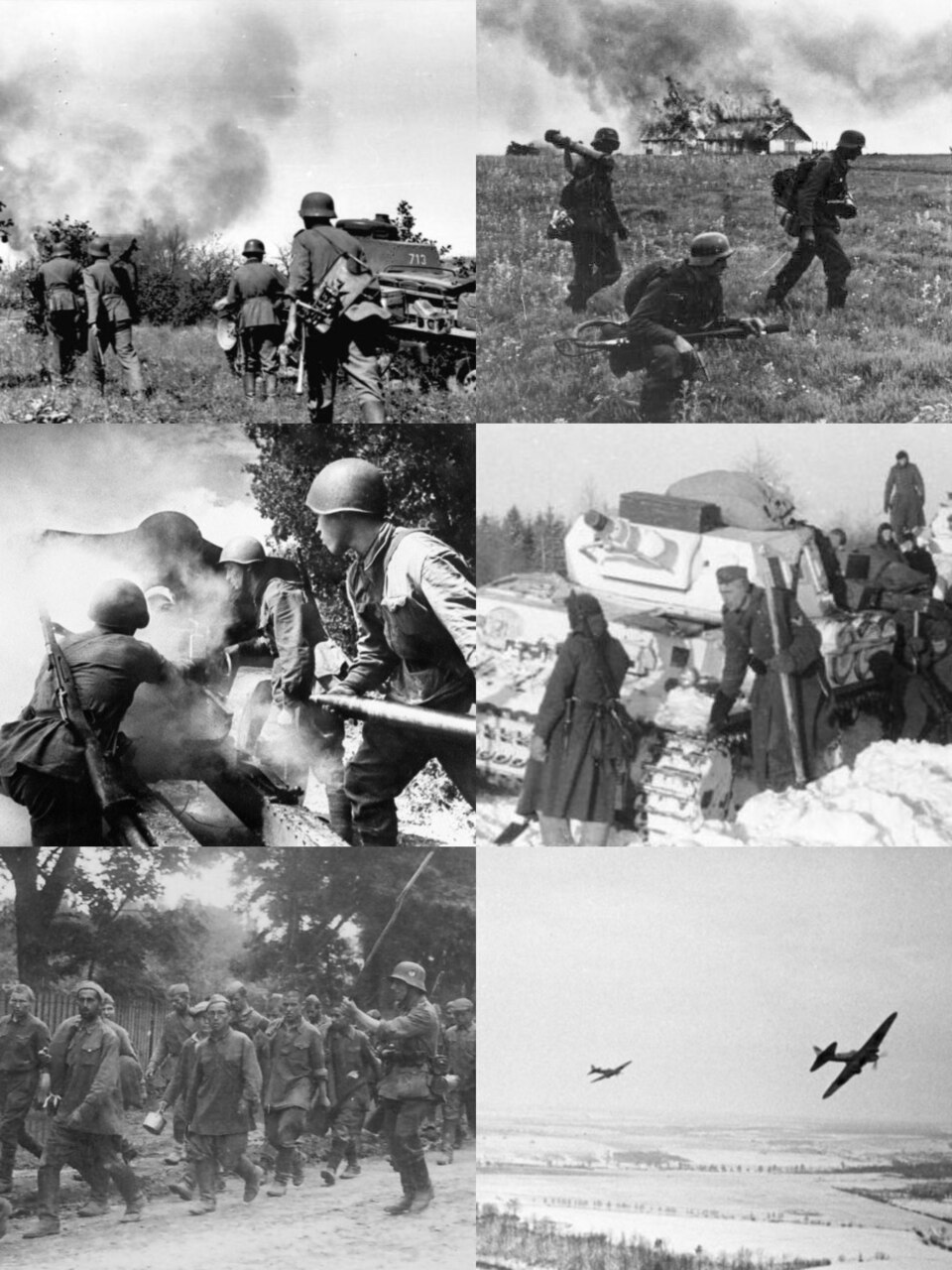
Myriad scenes from the German invasion of the Soviet Union (Operation Barbarossa), June 22nd, 1941 Public Domain (Bild Bundesarchiv, Samaryi Gurayi, Ustinov/CC0 1.0)
Three Days Later: Operation Barbarossa
Just three days after Timur's tomb was opened, on June 22, 1941, German forces crossed the Soviet border. More than three million Axis troops advanced along a front stretching from the Baltic Sea to the Black Sea. The invasion ended the Molotov–Ribbentrop Pact and opened the Eastern Front of the Second World War. Not to mention plunging the Soviet Union into a horrific conflict that would claim tens of millions of lives, both military and civilian. What’s not well known today in the understanding of WWII among Western Europeans and Americans is that the Soviet Union lost vast numbers of its citizens in its total war against Nazi Germany. Entire cities in the immediate western regions of the Soviet Union were destroyed, millions of civilians were left displaced, and the Eastern Front throughout the sheer extent of WWII became the deadliest theater of the war.
The irony of these two events quickly fueled speculation and rumor. According to later retellings, local elders in Samarkand had warned the Soviet expedition not to disturb Timur's remains. When Germany invaded the Soviet Union only days after the tomb was opened, many people interpreted this direct connection as proof that an ancient curse had been unleashed on their country as an extension of the curse. The story quickly spread throughout the Soviet Union and eventually around the world, becoming one of the most famous archaeological legends of the twentieth century, next to King Tut’s curse, which is, of course, one of the best-known archaeological curse legends of the twentieth century.
- Frederick I Barbarossa: A Megalomaniac Roman Emperor On a Crusade for Power
- The Moscow Kremlin – Iconic Fortress of Russia
Historians, however, emphasize that Operation Barbarossa had already been in preparation for months by the German military and it’s axis allies by extension before the invasion ever took place. German military plans, troop movements, logistical preparations, and strategic directives demonstrate that this vast undertaking was already scheduled long before Soviet archaeologists had even entered the mausoleum. From a historical perspective, the connection between the opening of a tomb and the German invasion is an incredible coincidence, but it is just that, rather than direct evidence of a supernatural curse.
Yet the legend continues to endure because it combines two powerful narratives. The scientific investigation of one of history's greatest conquerors and the outbreak of one of history's most devastating invasions. Nazi racial ideology regarded Slavic peoples as inferior and envisioned the large-scale displacement, enslavement, and destruction of populations across Eastern Europe as part of its plans for colonial expansion. The fact that these events seemed to be linked only three days apart transformed a routine archaeological excavation into a story that continues to captivate historians, archaeologists, and the average reader, fascinated by the intersection of history, native folklore, and coincidence all warped together.
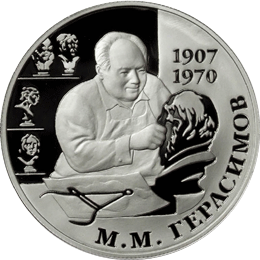
Commemorative Coin Honoring Mikhail Gerasimov. (Bank of Russia/Public Domain)
The Man Who Rebuilt Timur's Face
Among the scientists who participated in the 1941 investigation of Timur's tomb, none would become more famous than the Soviet anthropologist and forensic reconstruction pioneer Mikhail Mikhaylovich Gerasimov. By the time he joined the expedition to the famous city of Samarkand, Gerasimov had already spent many years developing a revolutionary method for reconstructing human faces from skeletal remains. His particular approach combined anatomy, anthropology, archaeology, and forensic science. Gerasimov was instrumental in helping place facial reconstruction on a more scientific footing by grounding the process in anatomy and skeletal analysis.
- The Unfinished Timurid Mausoleum of Khoja Ahmed Yasawi
- The Forgotten History of Beijing’s First Forbidden City
Timur’s skull was eventually given to Mikhail Gerasimov once the tomb of Timur was finally opened. Gerasimov's technique involved measuring the skull in detail, applying tissue-depth markers, reconstructing facial muscles, building soft tissue according to anatomical principles, and producing a realistic facial model. The reconstruction not only challenged many earlier artistic depictions but also crucially offered a more evidence-based representation of Timur's appearance.
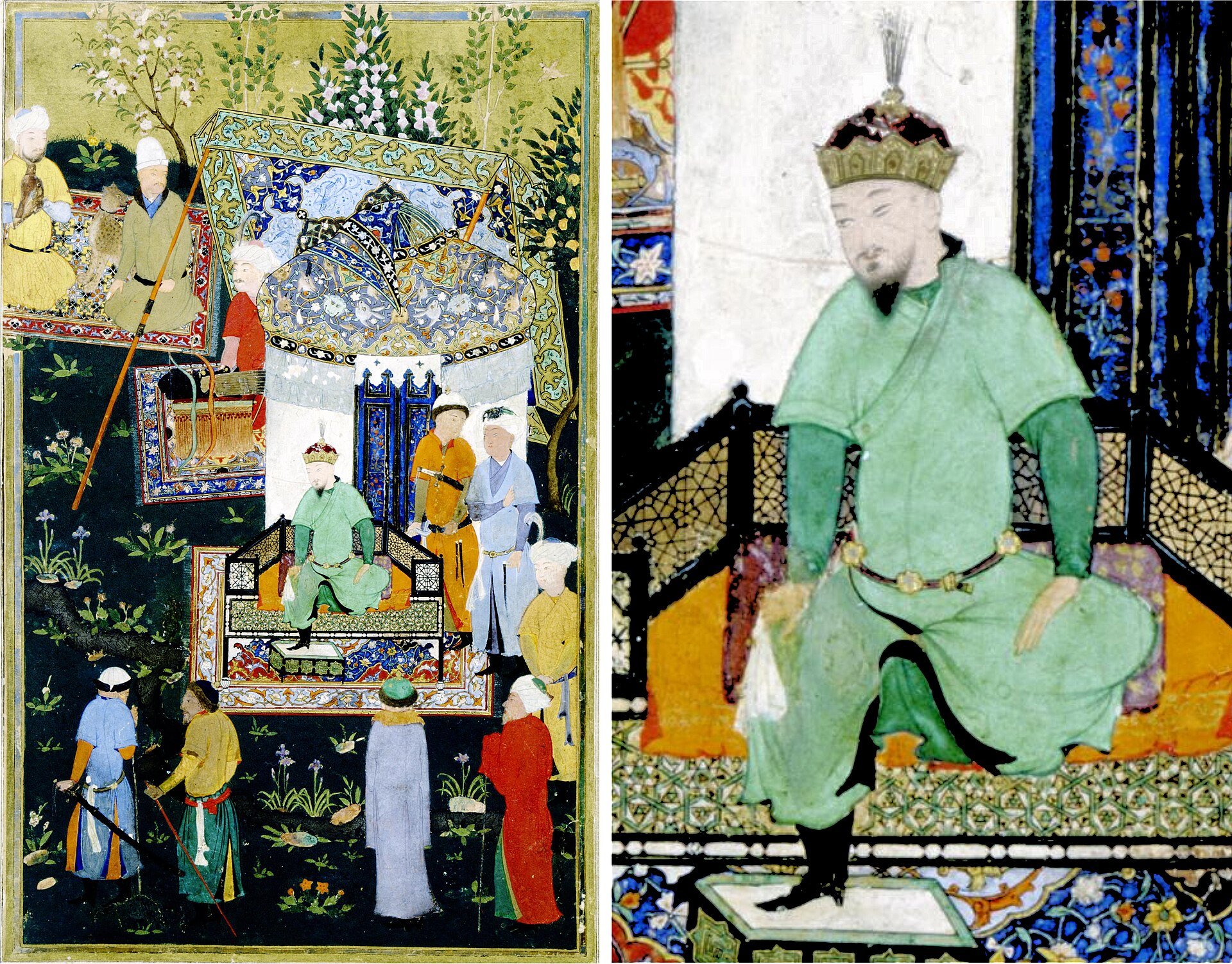
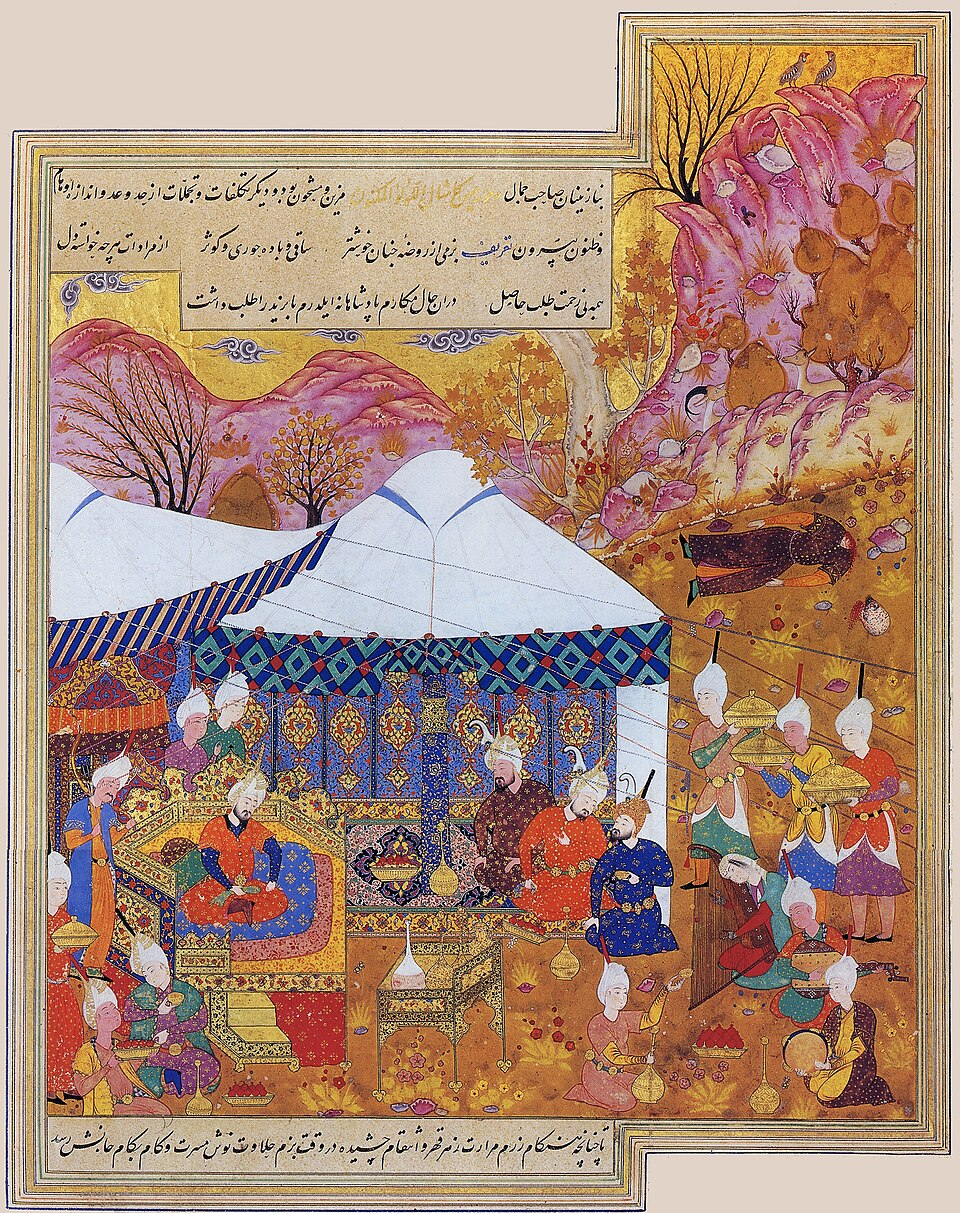
Persian miniature depicting Timur (Tamerlane) holding court. (PD-Old-100 + PD-US)
What the Skeleton Revealed About Timur
The skeleton found in the tomb under Gur-e-Amir, attributed to the great conqueror, was important because the complete study of its structure allowed soviet scientists to compare historical descriptions with physical evidence. Further anthropological analysis revealed that Timur was 68–69 years old at death, and at 1.73–1.77 m (5'8"–5'10"),was tall for his era, strongly built with robust bones, and physically active throughout his life. The skeleton also showed extensive muscle attachments, indicating quite a powerful physique consistent with a lifetime spent campaigning across the breadth of Eurasia.
- Samarkand: An Ancient Link Between East and West | Ancient Origins
- Karakorum: A Silver Tree and Other Unique Elements of a 13th Century Mongol Capital
The excavation undertaken by Gerasimov's team demonstrated how archaeology can test historical narratives. Skeletal evidence taken from Timur's remains supported historical accounts describing him as lame, physically robust, and advanced in age at the time of his death. These findings were broadly consistent with descriptions recorded by contemporary and near-contemporary chroniclers during the Emir’s life or after Timur died, more than five whole centuries before the tomb was able to be scientifically examined by Gerasimov.
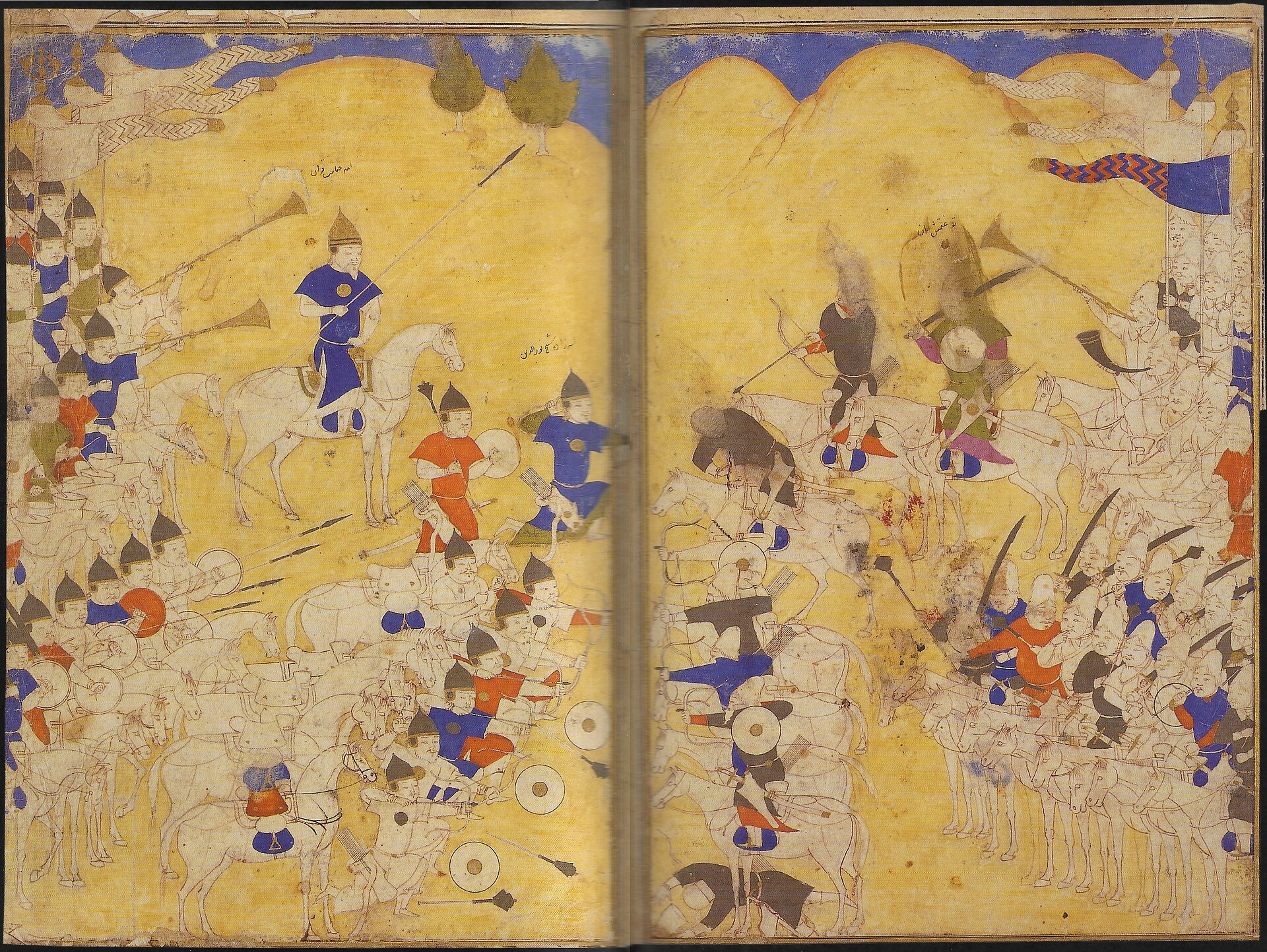
Battle between Timur and Toqtamish Khan (right portion), 1420–1440, possibly Herat (15th-century artist/PD-Old-100 + PD-US)
How the Curse of Tamerlane Was Born
The modern version of the "Curse of Tamerlane" emerged in the twentieth century, although traditions concerning the sanctity of Timur's tomb are much older. In June 1941, a Soviet scientific expedition opened the tomb of Timur (Tamerlane) in the Gur-e-Amir Mausoleum in Samarkand. According to popular accounts, the local elders in Samarkand warned the Soviet researchers that disturbing the conqueror's grave would unleash a grave disaster. Within days of this particular excavation, Nazi Germany launched Operation Barbarossa, the largest military invasion in history, against the Soviet Union.
- On the Trail of the Devil’s Horsemen: The Turks and Mongols of the Eurasian Steppe
- The Golden Horde and the Mongol Mission to Conquer Europe
The timing proved truly irresistible to storytellers. As news of this rumor spread, many people connected the opening of Timur's tomb with the German invasion, transforming a historical coincidence into a supernatural tale. The legend grew even stronger after another critical, decisive military event appeared to reinforce the connection. By late 1942, Timur's remains were reportedly reinterred with Islamic rites, and only weeks later, the Soviet victory at the Battle of Stalingrad marked a major turning point in the war. To believers of this story, the sequence seemed clear enough: disturbing the grave of Timur had clearly unleashed catastrophe, while restoring his human remains had finally reversed the curse.
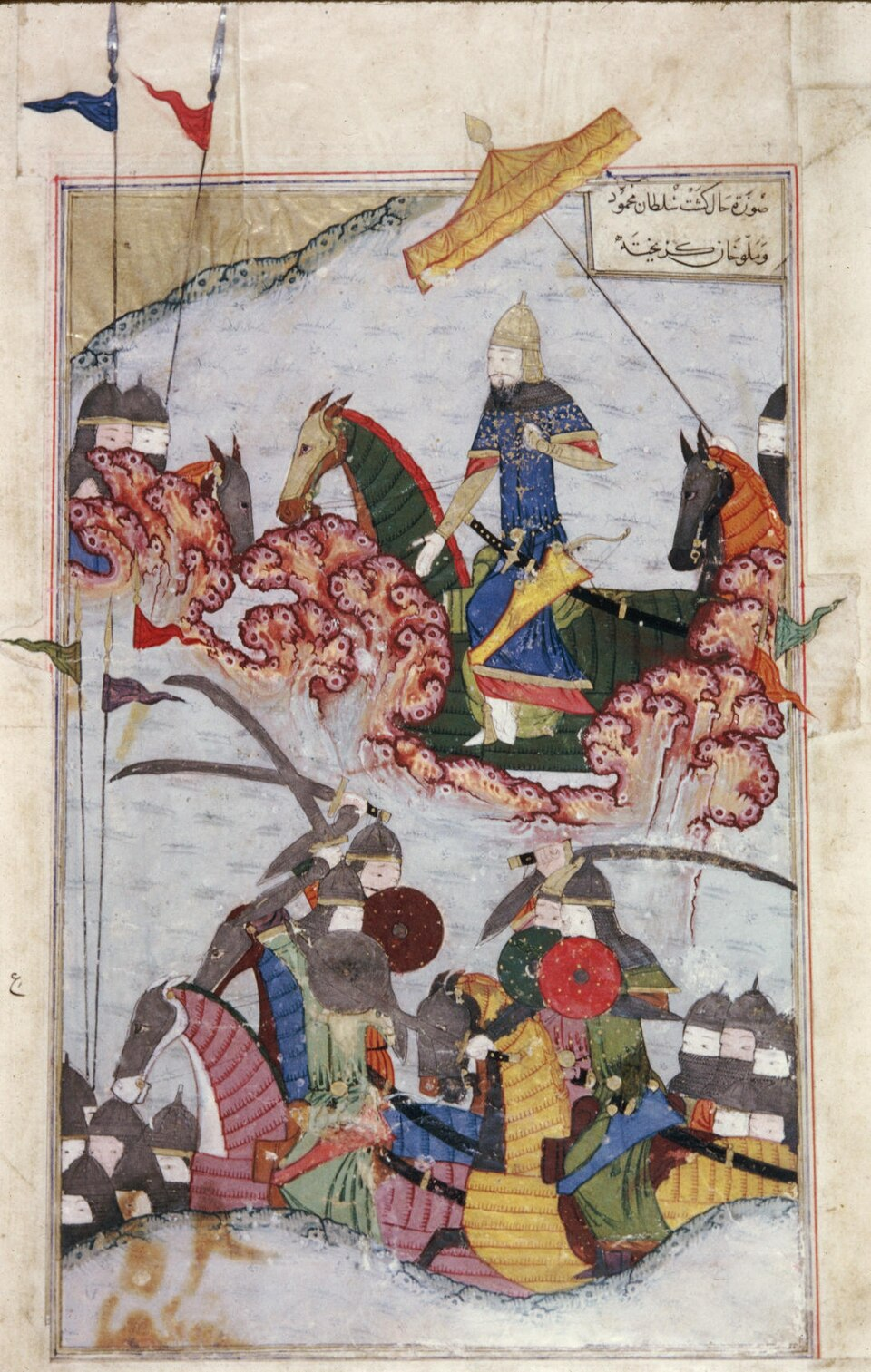
Persian manuscript illustration depicting Timur pursuing the forces of Sultan Mahmud Shah Tughluq during the Timurid invasion of India in 1398. Public Domain (15th-century artist/PD-Old-100 + PD-US).
Did the Soviets Really Fear the Curse?
Historical evidence paints a more complicated picture. The 1941 expedition was organized by the Soviet Academy of Sciences and consisted of professional archaeologists, anthropologists, historians, and filmmakers working under a government that officially promoted scientific materialism and completely rejected supernatural explanations. The Soviet team's primary goal was to study Timur's remains and document the history of the Timurid dynasty. Mikhail Gerasimov, the forensic anthropologist who later reconstructed Timur's face, approached the project as a scientific investigation rather than as a silly search for legends or omens.
- The Mighty Red Fort of New Delhi, a Symbol of Mughal Power and Wealth
- The Mughal Empire: Tolerance, Taxes, Addiction, Art, and Other Acts of Genghis Khan’s Relatives in India
That said, the researchers were operating in a region shrouded in local traditions surrounding Tamerlane remained strong. Several accounts recorded after the excavation was concluded describe warnings from residents who believed disturbing the tomb could bring terrible misfortune. Whether these conversations occurred exactly as later retellings describe remains open to interpretation and quite difficult to verify, but these stories likely contributed to the atmosphere surrounding the excavation. Once Nazi Germany invaded the Soviet Union, just days after the tomb was opened, coincidence simply gave way to mass speculation, and the story of Timur’s curse took on a life of its own.
Timur celebrates the defeat and capture of Ottoman Sultan Bayezid I after the Battle of Ankara (1402), depicted in the Zafarnama manuscript of 1528. Public Domain (PD-Old-100+PD-US-expired)
Why the Legend Still Fascinates Historians
For historians, the story of Timur’s curse serves as an important case study in how legends develop. The opening of this tomb in conjunction with the launch of Operation Barbarossa was a real event separated by only a few days. Yet over time, the coincidence of these two events being linked was transformed into a narrative of prophecy and punishment. The evolution of the tale demonstrates how people will often seek meaningful connections between dramatic events, especially during times of great crisis, such as the losses and chaos incurred by WWII, being brought to the Soviet Union by the summer of 1941. By studying the growth of this legend, historians were able to gain insight into how certain myths emerge from genuine historical circumstances.
- The Star-Gazing Sultan and His Ulugh Beg Observatory | Ancient Origins
- Study Unravels the Mysterious Origins of Nomadic Mongolian Empires
Another reason for the legend of Tamerlane and his tomb’s popularity is in part due to the larger-than-life figure at its center. Emir Timur remains one of the most influential and controversial rulers in world history. His military campaigns reshaped the political landscape of Central Asia, Persia, the Middle East, and parts of India. Timur combined the military traditions of the Mongol world with a strong patronage of Persianate culture, transforming Samarkand into one of the great architectural and artistic centers of Central Asia. The idea that such a powerful conqueror could still continue to influence events centuries after his death hundreds of years later resonates with the human fascination for legendary rulers whose reputations seem to transcend time itself.
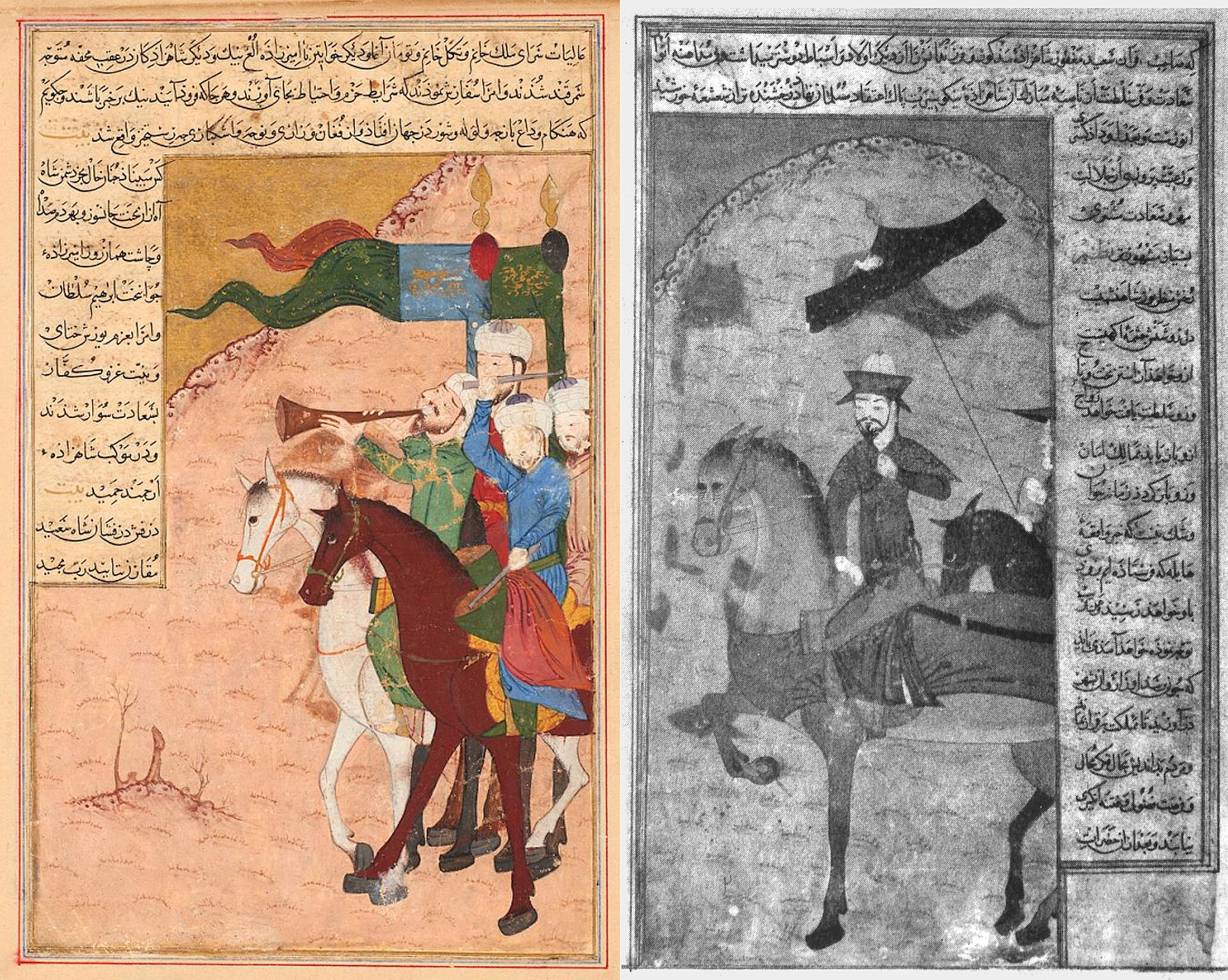
The Campaign Against China: Shah Rukh Leads the Timurid Army Toward China After Timur's Death (1405), Persian manuscript illustration. Public Domain (PD-Old-100+PD-US-expired).
Coincidence, Propaganda, or Historical Memory?
From a historical perspective, coincidence remains the most likely explanation. German military planning for Operation Barbarossa had begun months earlier, and the invasion date had already been determined by strategic and logistical considerations rather than events taking place thousands of miles away in Samarkand. No documentary evidence is conclusively able to link the excavation of Timur’s tomb to the German attack. Historians, therefore, view the connection between the tomb's opening and the outbreak of the Nazi-Soviet war on the Eastern Front as a remarkable but ultimately accidental overlap of two unrelated events.
- The Ottoman Empire: 600 Years of Domination | Ancient Origins
- The Life and Times of Rumi: Sufism and the Golden Age of Islam
At the same time, the legend of Timur’s curse may have been strengthened by the political climate of the Second World War. Stories of curses, omens, and prophetic warnings often flourish during periods of great uncertainty and national crisis. In the Soviet Union, where millions were confronting the effects of a horrific military invasion, destruction, and loss, the tale of a disturbed conqueror's tomb offered quite a dramatic tale for seemingly incomprehensible events. Some later accounts even suggested that Timur's reburial with full Islamic rituals being respected, held in 1942, was one of the crucial factors in helping to bring a desperately needed victory of significant proportions towards the outcome of WWII. While professional historians obviously reject any supernatural connection, such stories were able to provide a sense of meaning and narrative order during an incredibly chaotic period.
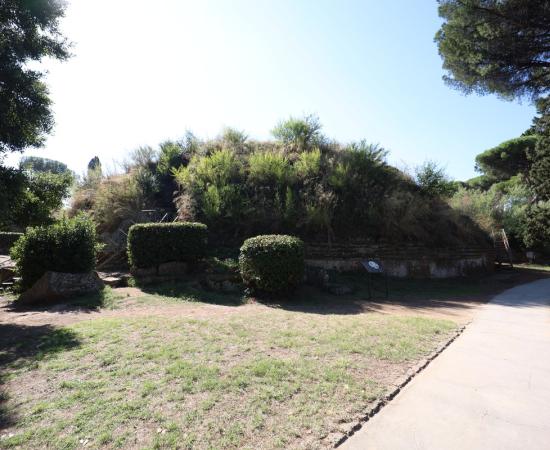
Top Image: Gur-e-Amir, the mausoleum of Emir Timur in Samarkand, Uzbekistan. Source:(LBM1948/CC BY-SA 4.0)
By Ramsey Hardin
References:
Bartlett, W. B. The Mongols: From Genghis Khan to Tamerlane. Stroud, Gloucestershire: Amberley Publishing, 2010.
Manz, Beatrice Forbes. The Rise and Rule of Tamerlane. Cambridge: Cambridge University Press, 1989.
Marozzi, Justin. Tamerlane: Sword of Islam, Conqueror of the World. Cambridge, MA: Da Capo Press, 2004.
May, Timothy. The Mongol Empire. Edinburgh: Edinburgh University Press, 2018.
Overy, Richard. Russia's War: A History of the Soviet Effort, 1941–1945. New York: Penguin Books, 1998.
Stahel, David. Operation Barbarossa and Germany's Defeat in the East. Cambridge: Cambridge University Press, 2009.