
The mysterious final hours of Alexander the Great are famous in ancient history. The surviving accounts were written centuries later but drew, to varying degrees, on earlier sources that may have included eyewitness testimony. Alexander was in the royal palace at Babylon after years of campaigning. Only 32 years old (almost 33), he had recently completed plans for new military expeditions and grand construction projects. Then he fell ill after a banquet, and his condition deteriorated over the next two weeks. The emotional accounts of ancient historians such as Arrian, Plutarch, and Diodorus Siculus attempted to convey the palace scene.
- Alexander the Great: God of Youth and Ambition?
- Battle of Gaugamela: Alexander the Great Thrashes the Achaemenids
At first, he was able to direct military business from his bed, but his fever intensified. He gradually lost his ability to speak. Grief and confusion hung as heavy as the summer heat. Thousands of anxious Macedonian soldiers waited to learn his fate. His senior generals, including Perdiccas and other senior officers such as Ptolemy and Seleucus, surrounded a dying conqueror who could no longer speak. Court officials and secretaries whispered in the corners while physicians discussed desperate strategies to treat him.
His closest friend, Hephaestion, was absent. He had died only months earlier.
A Kingdom Without an Heir
As Alexander's condition became critical, his generals asked him: "To whom do you leave your kingdom?" Later sources report that Alexander replied, "To the strongest," though historians debate whether the statement is authentic. In Greek, To the strongest is translated as: tôi kratistôi.
His famous words remain a matter for debate. Some accounts support the story, but others do not. His reply became famous because it was prophetic: his empire soon shattered into decades of warfare among his successors.
Several ancient accounts report that Alexander handed his signet ring to Perdiccas. The ring symbolized royal authority. Was he naming Perdiccas regent or temporary guardian of the empire until an heir could be recognized? Whatever the interpretation, the succession was unclear.
Rumors spread through the army that Alexander was already dead or that the generals were hiding him. The Macedonian troops demanded to see their king. The doors were opened. Thousands of soldiers who had followed Alexander from Greece to India filed past his bed. Their leader, who had never lost a battle, was powerless against illness.
- The Cold Case of Alexander the Great: Have Toxicologists Finally Explained His Untimely Death?
- The Last Will and Testament of Alexander the Great: Its Appearance, Disappearance And Legacy
Silently, Alexander acknowledged them with slight movements as they passed. The room was quiet except for the sounds of shuffling feet. For many of his warriors, Alexander was more than a king. He had led them across deserts, mountains, and battlefields for over a decade. Some had marched with him since their youth. The soldiers were fearful since the fortunes of the empire depended on Alexander. He had no adult heir, and his half-brother, Philip III Arrhidaeus, had limited independent political authority and was overshadowed by stronger figures at court.
His pregnant wife, Roxana, had not given birth. Some of the generals standing closest to him would soon wage wars against one another that lasted for decades and transformed the ancient world. The physicians watched him closely. His breathing slowed until it was imperceptible. Finally, they announced his death. Ancient writers claimed that Alexander's body showed little sign of decay for several days. Later accounts even claim that embalmers hesitated because the body appeared unusually well preserved.
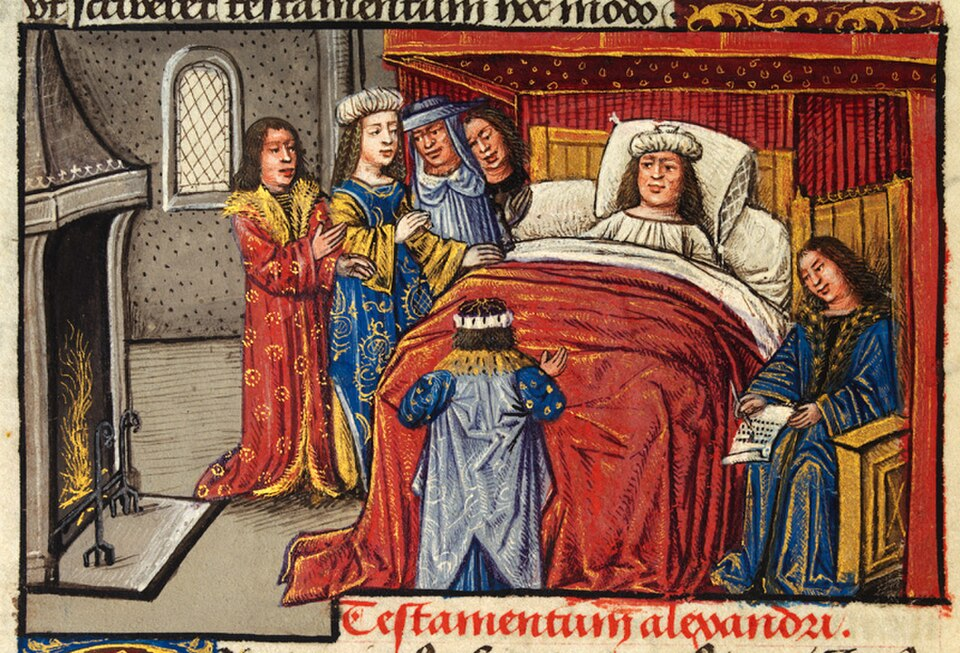
Alexander the Great on his deathbed, depicted in a medieval manuscript illumination. The artwork illustrates traditions surrounding the conqueror's final illness and death in Babylon in 323 BC. (Unknown Flemish Artist/Public Domain)
What Ancient Historians Actually Recorded
Ancient writers such as Plutarch and Diodorus focused on natural illness as the cause of Alexander’s death, while others blamed poisoning or disease from years of campaigning. Their accounts all report that there was stunned silence after his death was announced. Then mourning erupted throughout the palace and army. Immediately, arguments over succession began. Ultimately, the empire fragmented into the kingdoms of the Diadochi - the Successors.
According to a later tradition recorded by Plutarch, the Pythia at Delphi declared Alexander "invincible," though historians cannot verify whether the episode actually occurred. Yet, he met an untimely and mysterious end. His exact cause of death became the subject of historical and medical debate for two thousand years. Several ancient theories explained the death of history’s greatest conqueror.
Plutarch’s account began with signals that modern Historians treat as omens, not proto-science. Ravens fell dead at Alexander’s feet, and a regal lion died beneath the hooves of a mule - both incidents increased the king’s paranoia in the weeks before his death.
Describing Alexander’s initial attack of pain, Plutarch reports increasing illness, fever, and weakness after heavy drinking. Initially, no one thought that Alexander had been poisoned, but suspicion increased after his death.
- Yet Another Researcher Claims to Have Found the Tomb of Alexander the Great
- Tomb of Alexander the Great already found, archaeologist claims, but findings have been blocked by ‘diplomatic intervention’
Arrian wrote about Alexander in the 2nd century AD and used the accounts of Ptolemy and Aristobulus in his work. He did not believe sensational stories. He blamed a regretful illness and rejected any idea of poison. Plutarch also dismissed poisoning rumors. In his Life of Alexander, he notes that many people believed Alexander was poisoned, but he regarded these stories as inventions that emerged later amid political struggles among Alexander's successors.
Omens were also important in Diodorus Siculus’s account, and he pointed out that Alexander himself understood that his life would be cut short. He agreed with Plutarch that the king had been drinking with friends until he experienced sharp pains and increasing fever. Diodorus preserves traditions that attributed Alexander's death to poisoning.
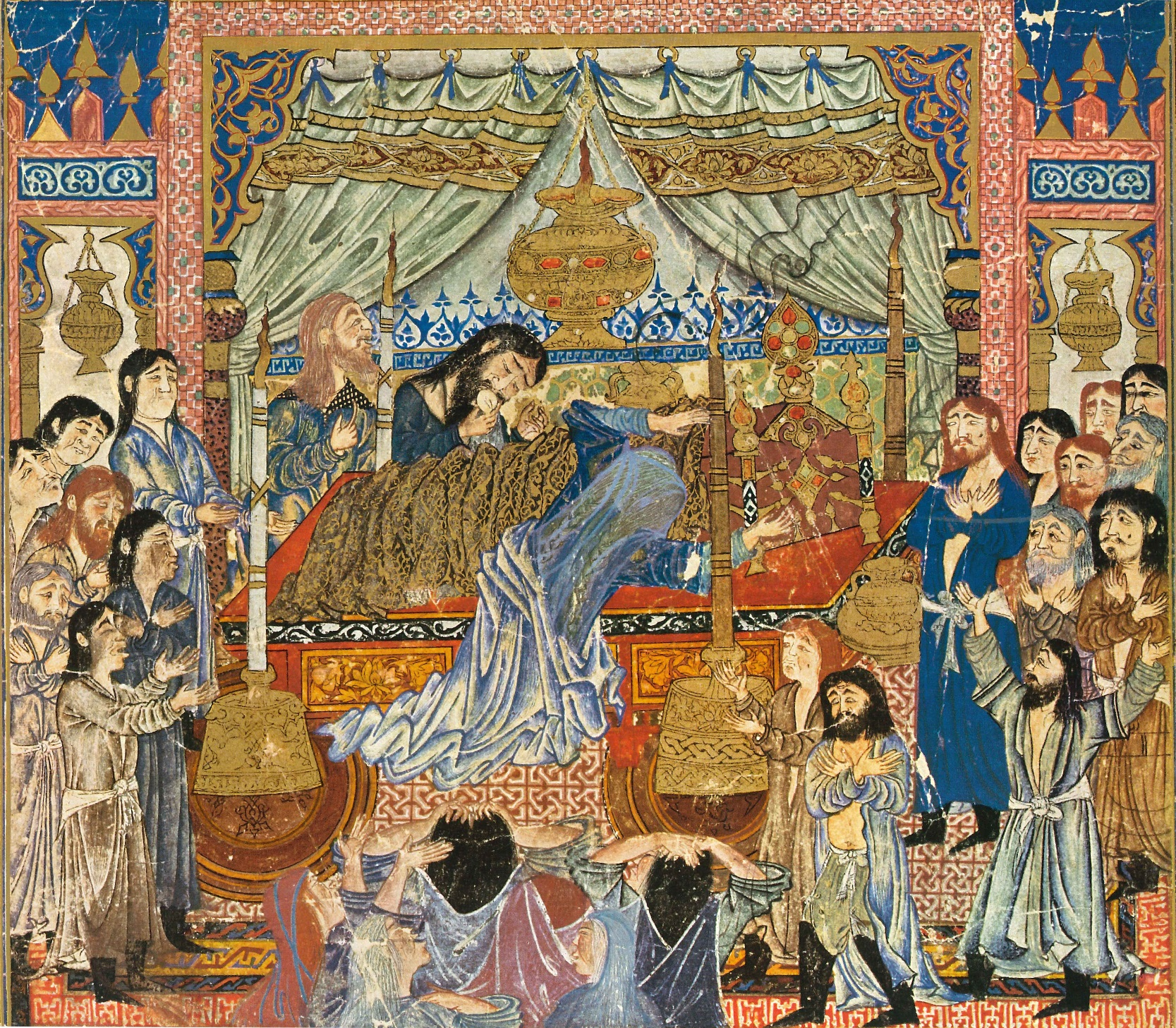
Medieval Islamic manuscript illustration depicting the death of Alexander the Great in Babylon in 323 BC. The artwork reflects later traditions surrounding the conqueror's final illness and the mourning that followed his death. (Anonymous/CC BY-SA 4.0)
The earliest and generally most reliable sources describe Alexander’s developing a fever after a banquet and declining over 10–14 days.
Arrian, writing in the 2nd century AD and relying on earlier sources such as Ptolemy and Aristobulus, rejected sensational stories and presented Alexander's death as the result of illness. Arrian is often regarded as one of the most reliable surviving sources because he relied heavily on earlier accounts written by men who accompanied Alexander. According to the Royal Journals tradition preserved by Arrian, consultations were made regarding the god Serapis as Alexander's condition worsened. He gradually weakened, lost the ability to speak, and eventually died after days of fever.
Plutarch also dismissed poisoning rumors. In his Life of Alexander, he notes that many people believed Alexander was poisoned, but he regarded these stories as inventions that emerged later amid political struggles among Alexander's successors. For both Arrian and Plutarch, natural disease was the most likely explanation.
- After Alexander- The Rise and Fall of the Seleucids (Video)
- What was the REAL relationship Between Alexander the Great and Hephaestion?
The Case for Poison: Who Wanted Alexander Dead?
Diodorus Siculus believed that Alexander was poisoned. According to one version, the plot involved powerful Macedonian nobles who feared Alexander's increasingly autocratic rule.
The chief suspect in later accounts was Antipater, who governed Macedonia while Alexander campaigned in Asia. According to stories, Antipater's son Iollas supposedly administered the poison since he was the king’s cupbearer.
However, these accusations emerged decades after Alexander's death and are generally viewed as politically motivated. Antipater's rivals had strong incentives to blacken his reputation after Alexander died.
Why Most Historians Reject the Poison Theory
Alexander was incapacitated but alive for almost two weeks. Ancient poisons varied greatly, while some toxins could produce prolonged illnesses. Plutarch argued that no believable evidence supported the accusation and that the story appeared only after political conflicts began among Alexander's former generals.
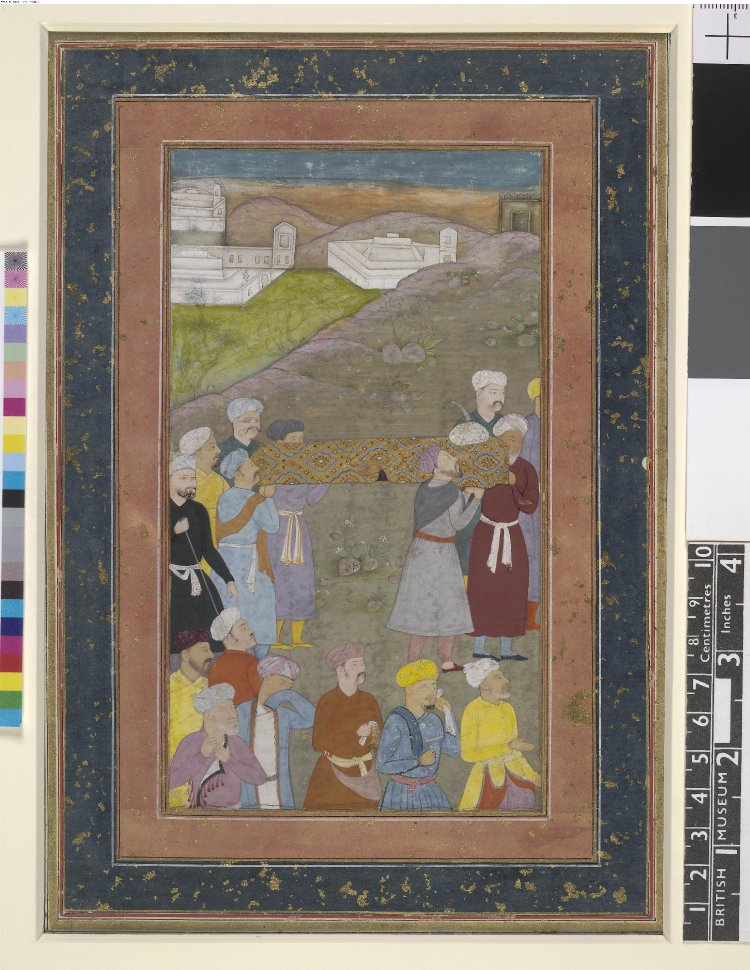
Mughal manuscript illustration depicting the funeral procession of Alexander the Great after his death in Babylon in 323 BC. The artwork reflects later literary traditions surrounding the conqueror's burial and legacy. (Salim Quli/Public Domain)
The Third Theory: Death as Divine Punishment
Writers who focused on morals presented Alexander’s death as the action of the gods. Many people believed Alexander was favored by the gods or partly divine. Alexander increasingly encouraged beliefs that he enjoyed divine favor and was linked to Zeus-Ammon after visiting the oracle at Siwa Oasis. Writers maintained that his death was punishment for hubris. In fact, his death showed that death was an inevitable fate for even the greatest conqueror.
This interpretation became especially popular among moralizing writers who wished to emphasize that no human, however powerful, could escape mortality.
- Does the Greatest Macedonian Rest In the Royal Necropolis at Aigai?
- Was Alexander the Great Entombed In Venice In Disguise As St Mark?
What Modern Medicine Says About Alexander's Symptoms
Alexander's symptoms as recorded by ancient historians — abdominal pain, high fever, progressive paralysis, loss of speech, and a prolonged decline over ten to fourteen days — have attracted serious attention from modern medical researchers. Unlike ancient writers who filtered his death through political or moral frameworks, modern analysts approach the same accounts as clinical data, comparing the recorded symptoms against known diseases and toxicological profiles.
Is There Credible Evidence of Poison?
Modern medical analysts agree that access to a variety of poisons was common in the ancient world. However, Alexander’s symptoms - abdominal pain, high fever, paralysis, coma, and death - do not match the effects of most poisons of the time period. The most credible factor of the poison theory is the number of people with a motivation to kill Alexander. Antipater, the statesman and general who governed Macedonia and Greece during Alexander’s campaigns, was the second most powerful official in the empire. He was in an excellent position to observe Alexander’s elimination of Parmenion, another powerful politician who was a victim of his king’s paranoia. Antipater’s two sons, Cassander and Iollas, also held prominent positions. Diodorus suggested that Antipater ordered Alexander’s assassination to protect himself and his family. After Alexander’s death, Antipater led a rebellion against Perdiccas rather than recognizing him as the designated leader. When Perdiccas died in 321 BC, Antipater became the empire’s leader until his own death. Though rumors flew about the involvement of Antipater and his family, there are many other equally suspicious nobles. Perdiccas, the designated heir, gained influence, but he did not become king, and still, he inherited a political disaster. Though the list of suspects is numerous, credible evidence of their involvement is not.
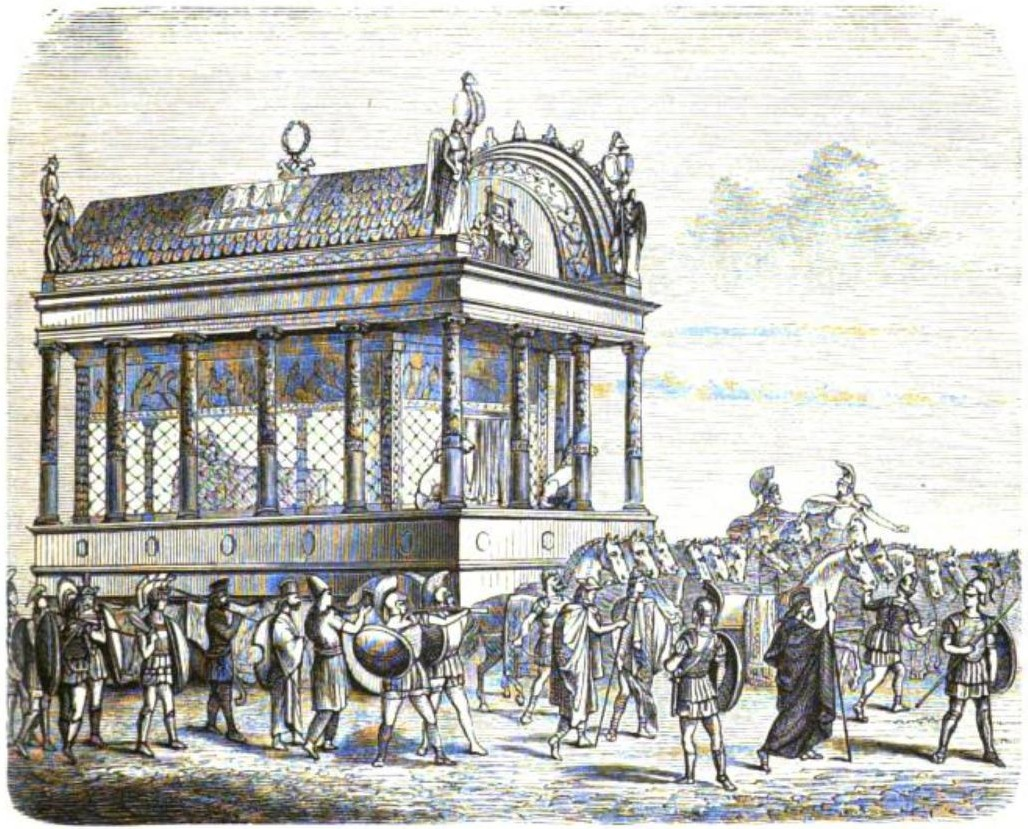
Artistic reconstruction of the funeral carriage commissioned for Alexander the Great following his death in Babylon. The legendary vehicle became one of antiquity's most famous funerary monuments. (Unknown Author/Pujblic Domain)
Did Alexander’s Use of Alcohol Cause His Death?
Alexander’s death occurred after a night of drinking. Could alcohol poisoning or organ failure be the cause of death? Once more, the symptoms do not match. Alexander lingered; alcohol poisoning victims do not. A key symptom of alcohol poisoning is vomiting, but there were no reports that the king suffered in this way. A more reasonable theory is that alcohol consumption caused organ failure, such as necrotising pancreatitis–a disease consistent with all the symptoms. Pancreatitis can cause a septic infection and an increasing fever. As the infection escalates, the brain swells, and the patient loses speech and motor function. The symptoms are consistent with Alexander’s ailments.
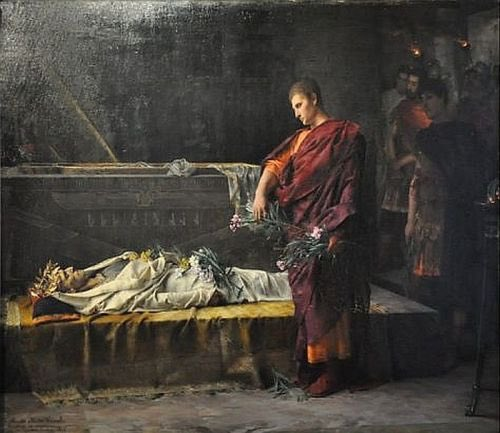
Augustus contemplates the body of Alexander the Great in Lionel Royer's 1891 painting Augustus at the Tomb of Alexander. The work illustrates the famous visit of Rome's first emperor to the conqueror's mausoleum in Alexandria. Public Domain (Gustave-Claude-Etienne Courtois/Public Domain)
The Six-Day Mystery: Was Alexander Buried Alive?
Medical scholars suggest that Alexander’s doctors pronounced his death somewhat prematurely. Dr Katherine Hall, a Senior Lecturer at the Dunedin School of Medicine and practicing clinician, does not believe that Alexander died from infection, alcoholism or murder. She argues that the neurological disorder is Guillain-Barré Syndrome (GBS) was responsible for his death. The immune system of a GBS patient attacks the nervous system, causing severe neurological damage. The patient has difficulty speaking, paralysis, and eventual death. Necrotizing pancreatitis and other infections can cause GBS. While Dr. Hall proposes Guillain-Barré Syndrome as a possible explanation, the theory remains debated.
Conclusion: A Death Still Unexplained
In the ancient world, doctors pronounced a patient dead when he had no discernible breathing. Since GBS causes paralysis, Alexander’s breathing would have lessened dramatically. He may have been alive but unable to move or communicate during his last days. Without food or water, his death would have come more rapidly. Hall also suggested that reports of the body's unusual preservation might be explained if Alexander had been mistakenly declared dead while suffering from severe paralysis.
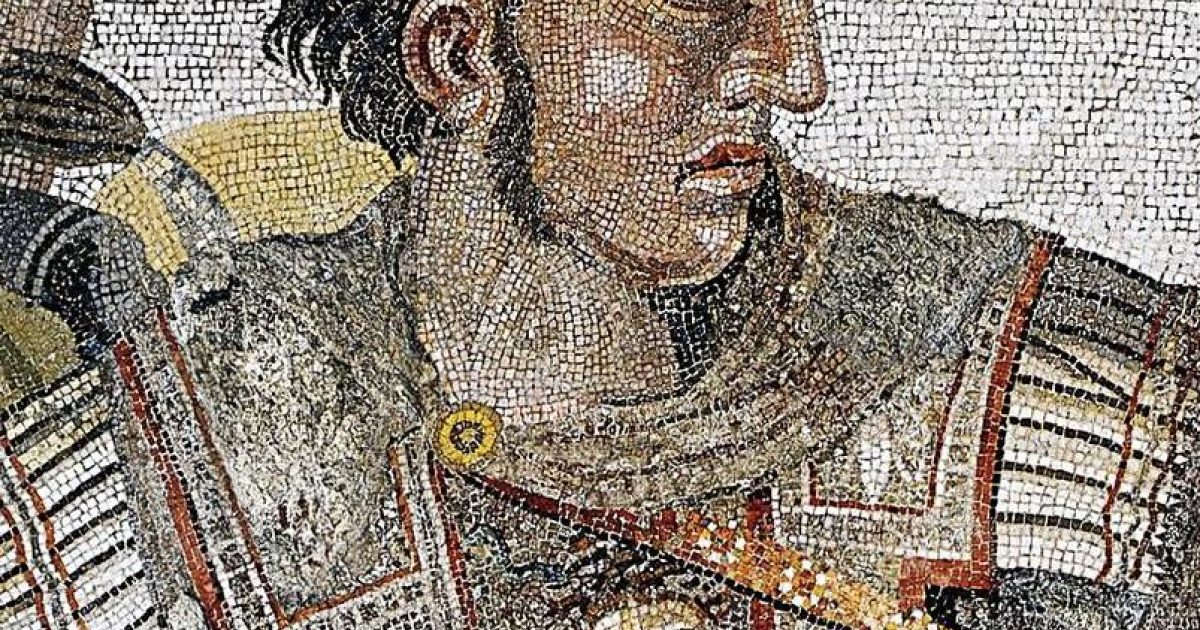
Top Image: A Detail of Alexander the Great from the Alexander Mosaic discovered in Pompeii. The mosaic, created during the Roman Republic, is believed to preserve a lost Hellenistic image of Alexander during his wars against Persia. Public Domain. Source: Unknown Artist/Public Domain)
By Ramsey Hardin
References
Daley, Jason. 2019. “Was Alexander the Great Pronounced Dead Prematurely?” Smithsonian Magazine, no. February (February). https://www.smithsonianmag.com/smart-news/was-alexander-great-pronounced-dead-prematurely-180971419/
Hall, Katherine. 2019. “GBS was the Cause of Alexander the Great's Death,” Lecture. University of Otago. Lecture. https://www.otago.ac.nz/news/newsroom/classics-lecture-leads-to-research-on-alexander-the-greats-death
Hewitt, Nathan. 2026. “How Did Alexander the Great Actually Die?” TheCollector. https://www.thecollector.com/alexander-the-great-cause-of-death/
Ibrahim, Nur. 2022. “Was Alexander the Great Falsely Declared Dead?” Snopes. https://www.snopes.com/articles/389606/alexander-the-great-false-death/.
University of Otago. "New explanation for Alexander the Great's death." ScienceDaily. www.sciencedaily.com/releases/2019/01/190122115006.htm (accessed June 21, 2026).