
Seeds seem insignificant when first held in the hand, but scientists and historians from the Israel Antiquities Authority (IAA) discovered that a few grains of cereal can be powerful indicators of trade relationships among the ancient kingdoms of the Levant, an Eastern Mediterranean coastal region that includes modern-day Israel, Lebanon, Palestine, Jordan, and Syria. The exchange of grains and other plants led to cultural and technological innovation that reshaped communication and record-keeping across the ancient world.
By analyzing charred grape pips, ancient wheat grains, and microscopic pollen trapped in the soil, researchers are unlocking the exact trade routes that connected Biblical kingdoms. Used as a crossroads for empires such as the Assyrians and the Egyptians, the Levant played a crucial role in maritime dominance and overland trade. These tiny botanical artifacts act as biological fingerprints, proving that the true wealth of the ancient Levant moved not just by the sword, but through the silent, sophisticated exchange of crops.
Collaborative Teams Relate Agricultural Practices to Trade Narratives
Seed research requires a collaborative team of scholars. Archaeologists collect seed types found during the excavation of historical sites to identify agricultural practices. Botanists compare the seeds with those fromArabian regions to map trade routes. They study pollen samples to determine crop diversity and trade exchanges. An investigation of genetic markers and carbon dating can reveal origins and movement patterns. Historians create a comprehensive trade narrative as they examine texts alongside technological data for contextual insights.
- Excavating Azekah: Defensive Bastion Of The Kingdom Of Judeah
Mesopotamian Superpowers Laying Waste To The Ancient Near East
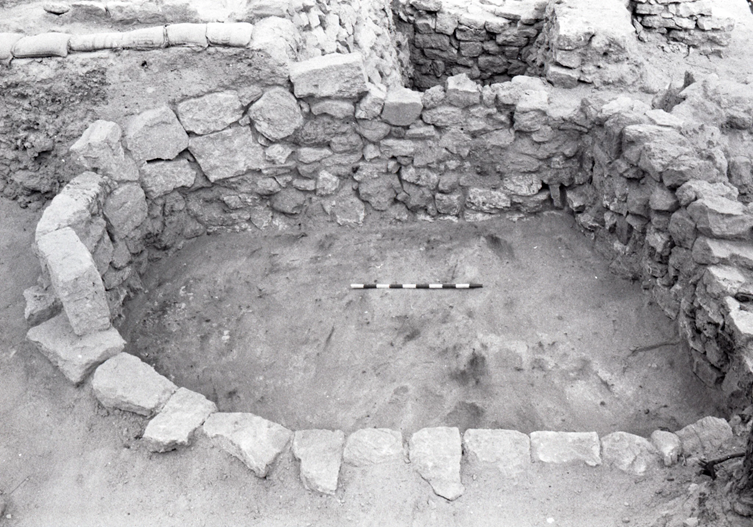
The granary in the fortress of Ein Hatzeva, south of the Dead Sea, in an undated picture. The new study is based on seeds found in the granary. (Mandre Sandhu/Israel Antiquities Authority)
Fort Construction Was Central to Trade Route Control
Dr. Doron Ben-Ami, an IAA researcher, believes that Israel controlled international trade with Arabia in the region. He points out that forts were part of the route between the Levant and Saudi Arabia, built to provide protection and services for merchants. Data gathered from excavations at Ein Hatzeva Fort indicate that the fort established the control of the Kingdom of Judah, Ben-Ami and his team are not sure which of the Judahite kings began the construction. One possibility is King Jehoshaphat (867 – 846 BC), since he wanted to increase his trade with wealthy kingdoms of present-day southern Arabia.
The name, Ein Hatzeva, means “strong spring” in Hebrew. For caravans carrying spices and incense across the Arava desert region, a fresh water spring offered a welcome oasis for rest, conversation, and business connections. Growing kingdoms could assert their power in a critical location.
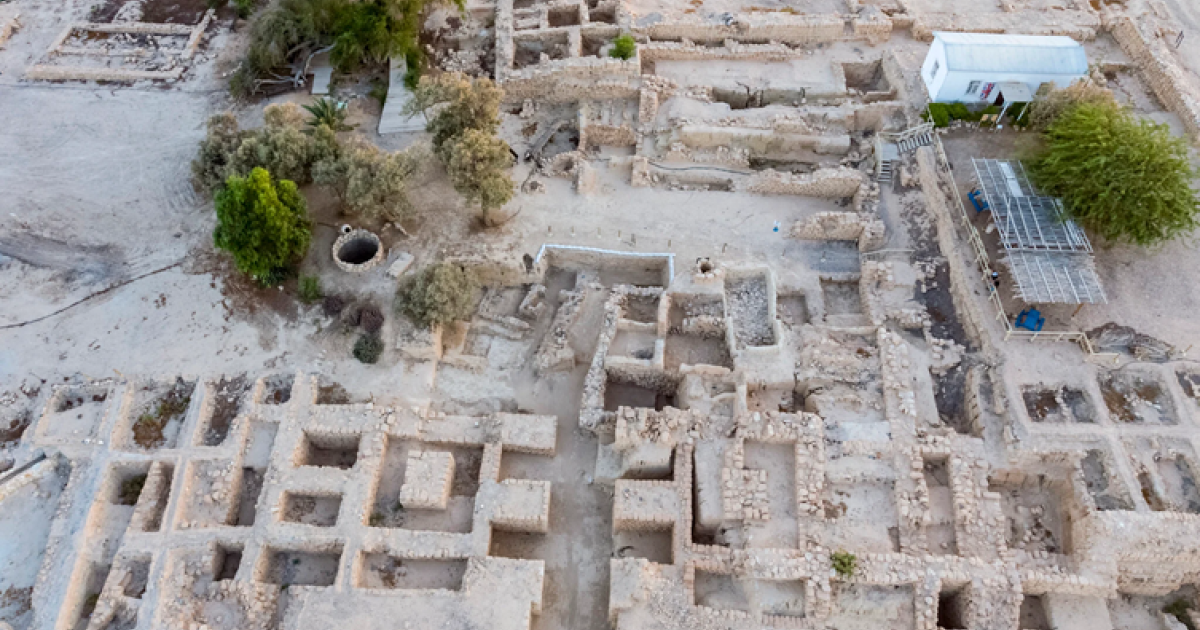
The fort is located at the crossroads of the main Arava Road and the Negev-Edom Road, a good location for observing trade movement and protecting the copper mines at Faynan near Eilat. Excavations of previous forts began in the 1970s, uncovering evidence of eight historic periods, including Early Israelite, Edomite, Nabataean, Roman, and Early Arab. The fort’s square design included areas for housing, administrative tasks, and storage. Corner towers and rooms for guards provided security.
- Scientists Track Silver Trade From Trojan War to Roman Republic
- Israel's Tel Shimron Excavations Reveal Ancient Architectural Marvel Dating to 1,800 BC
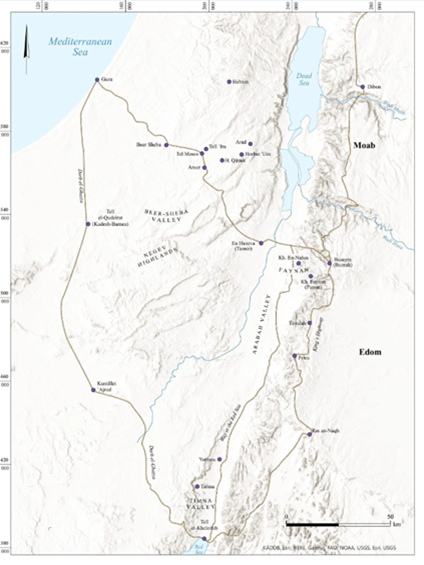
A map of the Arava Valley, showing the location of the Ein Hatzeva and Tell el-Kheleifeh archaeological sites. (E. Delerson/Courtesy of the Israel Antiquities Authority)
Seeds Help Resolve Scholarly Disagreement
Scholars questioned whether the Assyrians or the King of Judah built and controlled the Ein Hatseva fortress. Both the Assyrian Empire and the Kingdom of Judah held control over trade routes in the Levant, but at different scales and in a shifting hierarchy of power. The Assyrians held supreme imperial control over major international routes, while Judah controlled specific regional and lucrative desert routes as an Assyrian vassal.
After reviewing the results of the Hatzeva excavations, Ben-Ami sent seeds from the fortress granary to the D-REAMS Radiocarbon Dating Laboratory at the Weizmann Institute of Science in Rehovot. C14 analysis of grain from Hatzeva dates its construction to 791–772 BC, overturning the Assyrian-era theory. The data suggests that the Kingdom of Judah built the forts approximately 2800 years ago rather than the Assyrian empire. The Assyrians became powerful after conquering and destroying Israel in 732 BC.
The grain analysis and archeological evidence also support the Bibilcal narrative of Israel’s power in the region. According to Ben-Ami, “The Kingdom of Israel dominated the two directions out of the Arava Valley with these two fortresses, Hatzeva in the northern part and Kheleifeh in the southern part.” His research maintains that occupying these strategic locations shows great political influence and wealth from the Arabian trade network. The IAA scholars are still amazed that a handful of grain could settle a scholarly argument.
Top image: An aerial view of the Ein Hatzeva fortresses archaeological site south of the Dead Sea. Radiocarbon dating of the site indicates that it was built 2,800 years ago by the Kingdom of Israel. Source. Asaf Peretz/ Israel Antiquities Authority
References
Ben-Ami, Doron, Ehud Weiss, Tali Erickson-Gini, and Elisabetta Boaretto. 2026. “Fortresses and Frontiers: ‘En Ḥaẓeva and Tell El-Kheleifeh in the Early 8th-Century BCE Arabah Valley.” Levant 58 (1): 25–42. doi:10.1080/00758914.2026.2639908.
Shawn, Aster. “Assyrian ‘Control Points’ in the Domination of the Southern Levant in the Reign of Tiglath-Pileser III.” Barcelona Symposium on Comparable Semitics, December 15, 2021.https://www.ub.edu/ipoa/wp-content/uploads/2021/12/20211AuOrAster.pdf.
Tercatin, Rossella. “How Ancient Seeds Are Rewriting the History of Biblical-Era Trade with Arabia.” The Times of Israel. May 16, 2026.https://www.timesofisrael.com/how-ancient-seeds-are-rewriting-the-history-of-biblical-era-trade-with-arabia