
Beneath the remains of a Roman-era villa in southern Spain, archaeologists have made a discovery that reinterprets the history of libraries on the Iberian Peninsula. For years, a unique room in the villa of Fuente Álamo, in Puente Genil, was interpreted as a possible mithraeum, a sanctuary dedicated to the god Mithras, a Persian-origin deity adopted into the Roman religious framework. Now, in a new study published in the Journal of Mediterranean Archaeology, Professor Antonio Lopez-Garcia from the University of Granada, maintains that the space was a proto-library, a transitional precursor to a formal library, which is the oldest documented in the Iberian Peninsula. His analysis offers a unique view of the spread of literacy, learning, and religious life in Roman Hispania. He also points out that room identification was quite difficult since none of the original furniture survived.
- Mithras, the Persian God Championed by the Roman Army
- Italica, Spain: Rome’s First Settlement In Hispania Became Incredible!
From Healing Spa to Aristocratic Villa
Located near a branch of the Via Augusta, the principal Roman road linking Corduba with Antikaria and Malaca, the complex life of this site began in the first century BC as a public spa for local inhabitants and travelers. This spa used the waters of the nearby Fuente Álamo stream, regarded as possessing health benefits, for large pools designed for bathing and relaxation. The spa was later abandoned and converted into a Roman villa around the 3rd century. This villa incorporated some of the previous materials and partially repurposed the spa installations. The residential complex remained occupied and underwent development until the 6th century AD. The house reached its peak over the following two centuries, before being remodeled again in the sixth century.
- 1,500-year-old Visigoth Sarcophagus Found at Roman Villa Site
- The Restless Peninsula: The Proud and Colorful History of Iberia
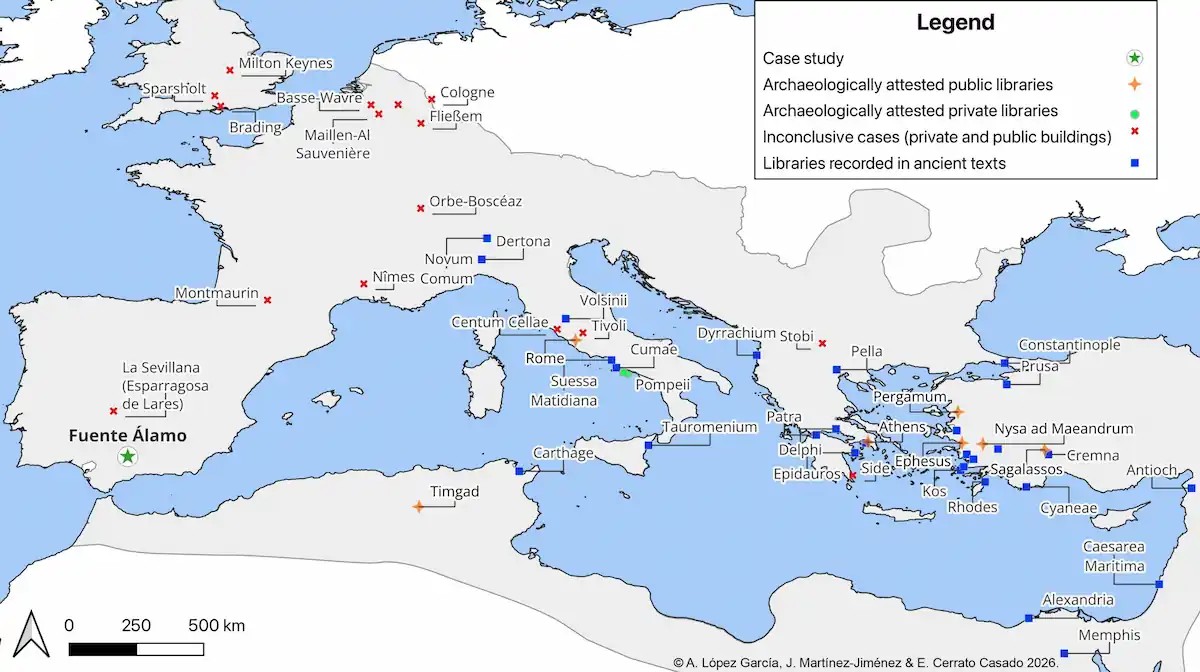
Distribution of archaeologically documented Roman libraries across the Roman Empire. Fuente Álamo (southwestern Hispania) is highlighted as the proposed location of the oldest known library on the Iberian Peninsula. (Figure by Antonio López García, Javier Martínez-Jiménez, and Eduardo Cerrato Casado/Journal of Mediterranean Archaeology)
- The World’s First Collectors, Museums And Libraries Of Antiquity
- Segóbriga: Vestiges of Roman Grandeur in Spain
How Researchers Recognized a Lost Roman Library
As the research team worked to identify the space, the authors noted that mithraea usually feature a longitudinal nave with side benches and a sanctuary at the end, a layout very different from that observed in Fuente Álamo. To confirm their hypothesis, the researchers used a unique method created by Myrsini Mamoli in her Georgia Tech dissertation, “Towards a Theory of Reconstructing Ancient Libraries.” Mamoli notes that “the library was one of the most important institutions in the Hellenistic and Roman city, yet, the library remains one of the least easily identifiable building forms and one of the most difficult to reconstruct, because unlike architectural types such as the temple, stoa, or theater, the library exhibits significant variety in design, scale and monumentality and the use of different component elements.” The research team applied Mamoli’s computational and visual Shape Grammar, which encodes the design principles of ancient libraries in ninety-one rules that are grouped in two major parts: the first generates the main hall of the library and its interior design, and the second generates the complete layout of the library, including additional porticoes, peristyles, exedras, gardens, and propylon.
- Rare Winged Medusa Mosaic Found in Ancient Roman Villa in Spain
- 1,800-Year-Old Sanctuary Dedicated to God Mithras Found in Spain
The Man With the Scroll: A Possible Owner Emerges
According to researchers, the library dates to the 4th century AD, a time when the rural villas of Baetica had designs of monumentality and refinement. The presence of a private library on a farm at that time indicates that the owner enjoyed economic resources, a literary education, and an interest in Greco-Roman culture. To explore the context of the library and nearby structures, the study also incorporated an additional hypothesis linking the library to a sarcophagus discovered in the 19th century at the nearby Villares del Carril site. Known as the Declamatio Sarcophagus, it is now in the Málaga Museum and depicts scenes of reading and teaching. One special figure is of a bearded man with a scroll and a codex who seems to bear many similarities to a character in a mosaic from Fuente Álamo that previous research has linked to the owner of the complex. The researchers emphasize that this identification requires future studies, but they do not rule out that new excavations or material analyses could provide additional evidence.
- The Fake Hercules Sarcophagus of Tarragona Spain - And The Real Ones
- Cartagena Amphitheater Dig Unearths Gladiator Chamber
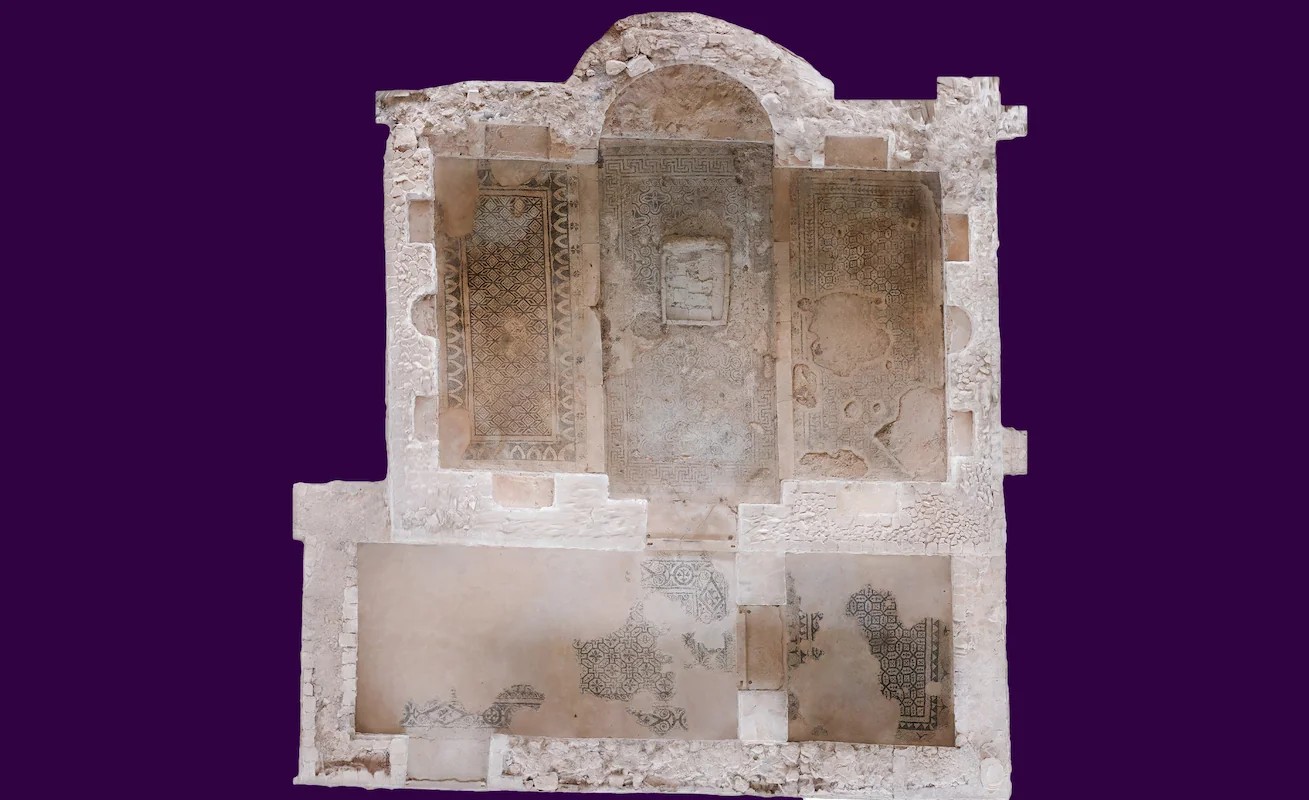
Photogrammetric reconstruction of Room 10 at Fuente Álamo, where researchers identified architectural features consistent with a Late Roman private library. (Antonio López García, Javier Martínez-Jiménez, and Eduardo Cerrato Casado/Journal of Mediterranean Archaeology)
Knowledge Beyond Rome: A Library at the Empire’s Edge
López-García suggests that libraries were not confined to great imperial cities like Rome or Alexandria, but also flourished in provincial communities where knowledge, administration, and sacred traditions intersected in unexpected ways. If his interpretation is confirmed, Fuente Álamo would preserve not only the oldest known library within the Iberian Peninsula, but also the westernmost private library throughout the Roman Empire and one of the best preserved for its architectural structure.
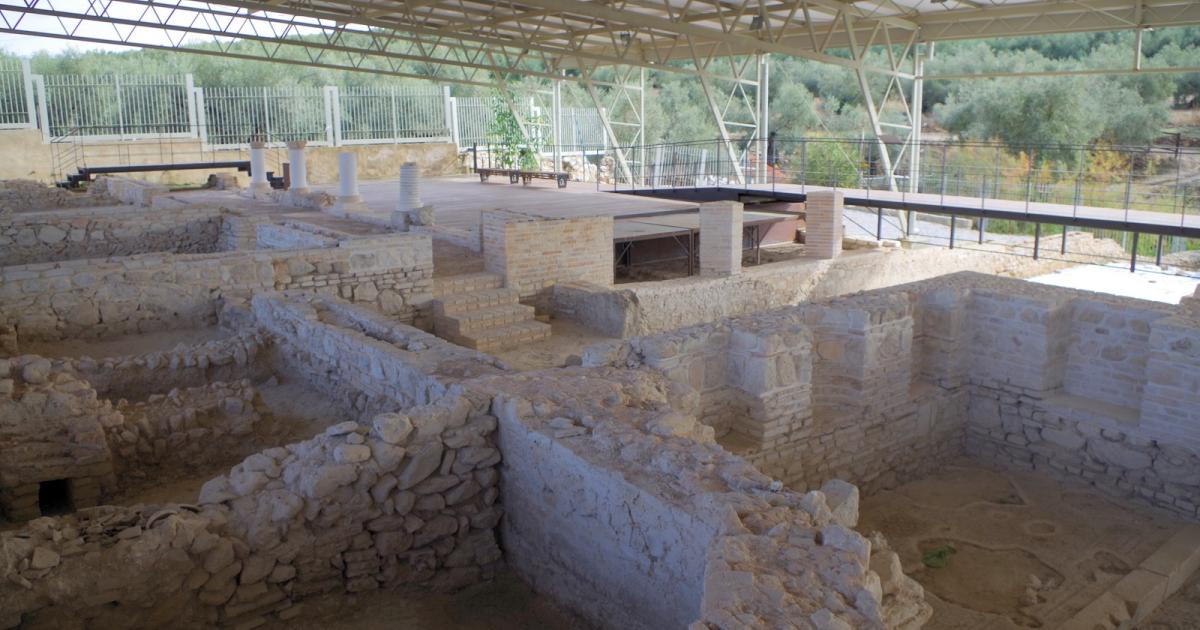
Top Image: The protected ruins of the Roman Villa of Fuente Álamo in Puente Genil, Córdoba, Spain. Archaeologists recently identified a room interpreted as a Mithraeum that may also have housed the oldest known library on the Iberian Peninsula. Source: Rafael Jimenez/CC BY-SA 2.0)
By Ramsey Hardin
References
Altuntaş, Leman. “Oldest Roman Library in the Iberian Peninsula Identified at a Villa in Spain.” Arkeonews, July 30, 2026.https://arkeonews.net/oldest-roman-library-in-the-iberian-peninsula-identified-at-a-villa-in-spain/
Carvajal, Guillermo. “The Oldest Library in the Iberian Peninsula and the Westernmost in the Entire Empire Found in a Roman Villa in Córdoba.” La Brújula Verde, July 30, 2026.https://www.labrujulaverde.com/en/2026/07/the-oldest-library-in-the-iberian-peninsula-and-the-westernmost-in-the-entire-empire-found-in-a-roman-villa-in-cordoba/.
Euronews. “Archaeologists Find Oldest Library in Iberian Peninsula in Puente Genil.” Euronews, July 29, 2026.https://www.euronews.com/culture/2026/07/29/oldest-iberian-peninsula-library-discovered-in-puente-genil.
López García, Antonio, Javier Martínez Jiménez, and Eduardo Cerrato Casado. 2026. “New Approaches to Identifying Roman Libraries: Two Late Antique Examples from Stobi (North Macedonia) and Fuente Álamo (Spain)”. Journal of Mediterranean Archaeology, June. https://doi.org/10.1558/jma.35930.
Mamoli, Myrsini. “Towards a Theory of Reconstructing Ancient Libraries,” 2013.