


January
13
/ 2017
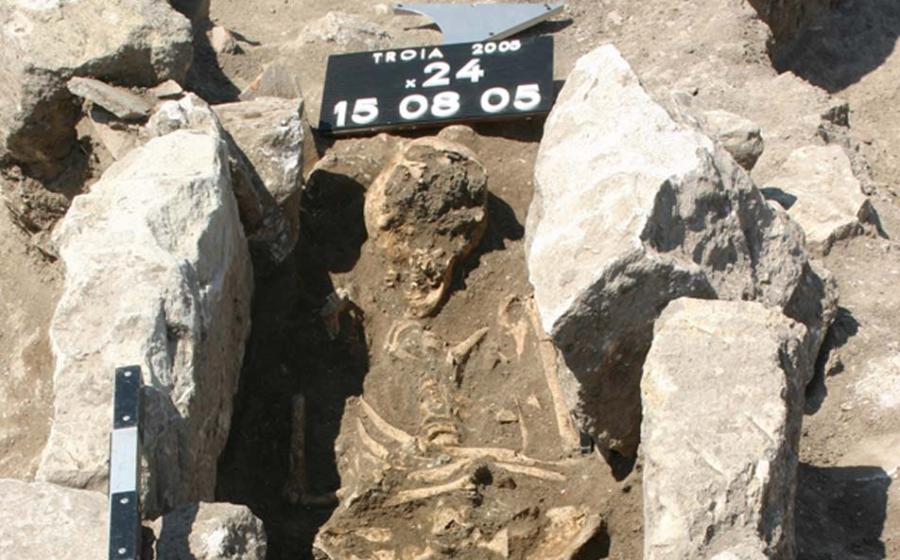
Eight hundred years ago, in a hardscrabble farming community on the outskirts of what was once one of the fabled cities of the ancient world, Troy, a 30-year-old woman was laid to rest in a stone-lined grave. Like others in the Byzantine era graveyard, the woman's bones bore the unmistakable signs of a hard agrarian existence. But something else caught the attention of Henrike Kiesewetter, an archaeologist affiliated with Project Troia at Tüebingen University, as she curated the skeleton: two calcified nodules, each the size of a strawberry, nestled at the base of the chest, just below the ribs. "The preliminary thought was that these were tubercles arising from tuberculosis," says Caitlin Pepperell, a University of Wisconsin-Madison expert on the















