


Estimated reading time: 10 minutes
The word "freedom" today can often have so many definitions that it loses its impact. For example, people talk about "financial freedom," "freedom to move," "freedom from bad jobs," and so on. Are any of these "freedoms" really all that important? Are they all really "free" from danger? After all, the market may change and affect us; the government can create restrictions on us; a medical condition may beat or restrict our physical body; even slaves have often been subjected to terms they did not create for themselves.
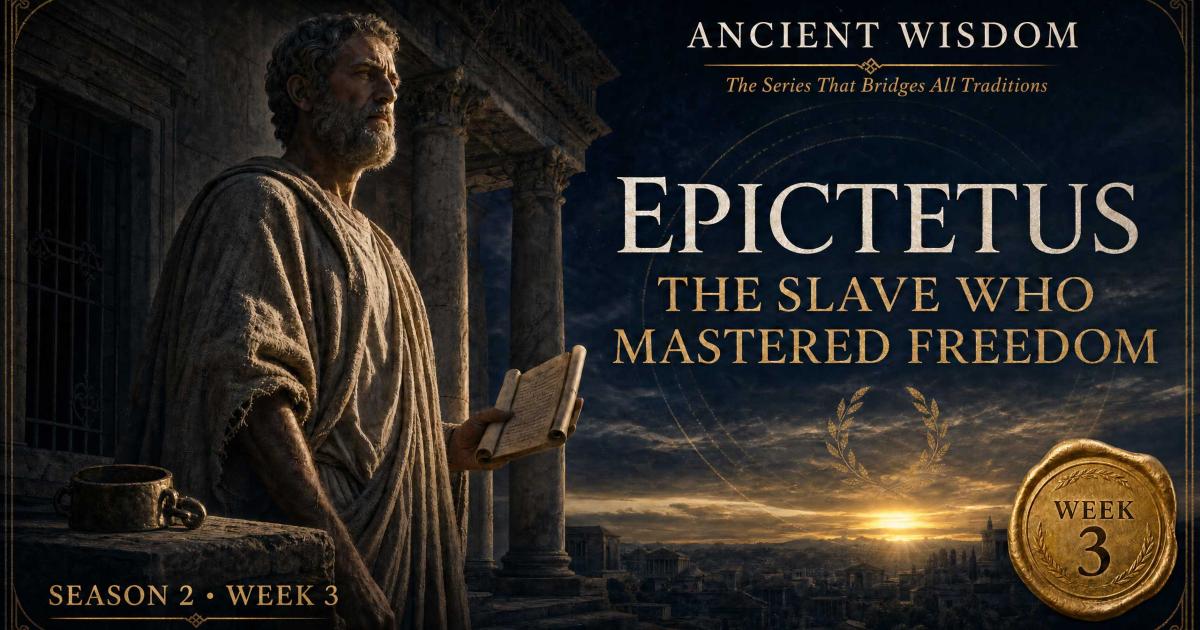
Epictetus, a Stoic philosopher from Greece, began his journey into philosophy in a manner that could be considered being at the bottom of the "vulnerability" ladder. Epictetus was born around 55 CE in Hierapolis (now Izmir), Greece (located in western Turkey today) and was eventually enslaved in Rome to Epaphroditus (the administrator for Emperor Nero). He later gained his freedom, learned the teachings of the Stoic philosopher Musonius Rufus, and opened a school in Nicopolis (now located in northern Greece). All that we know of his teachings today is through the writings of his student Arrian, who published them in two forms: The Discourses and the much shorter Encheiridion (Handbook). It is interesting to note how many Masters from the past were written about by others, usually their students, instead of writing about themselves..
While the above facts are quite tempting to create a comforting fable-like story about a slave who finds out he was already free and that the cruelty of the world around him did not matter, it is simply not true that this is what happened. By suggesting this is how Epictetus found out he was free, we would be betraying both history and philosophy. Enslavement is not a state of mind; it is the result of coercion, violence, sales, separation from family, and the legal dominion of one human being over another. Furthermore, Epictetus's teachings do not negate the significance of these realities, nor do they imply that the oppressed have merely ignored their ability to think freely.
Instead, what Epictetus provides, is something much more difficult to articulate, yet much more exact: whilst everyone ultimately possesses their freedom externally, each individual must address the question, at least once, of:















