

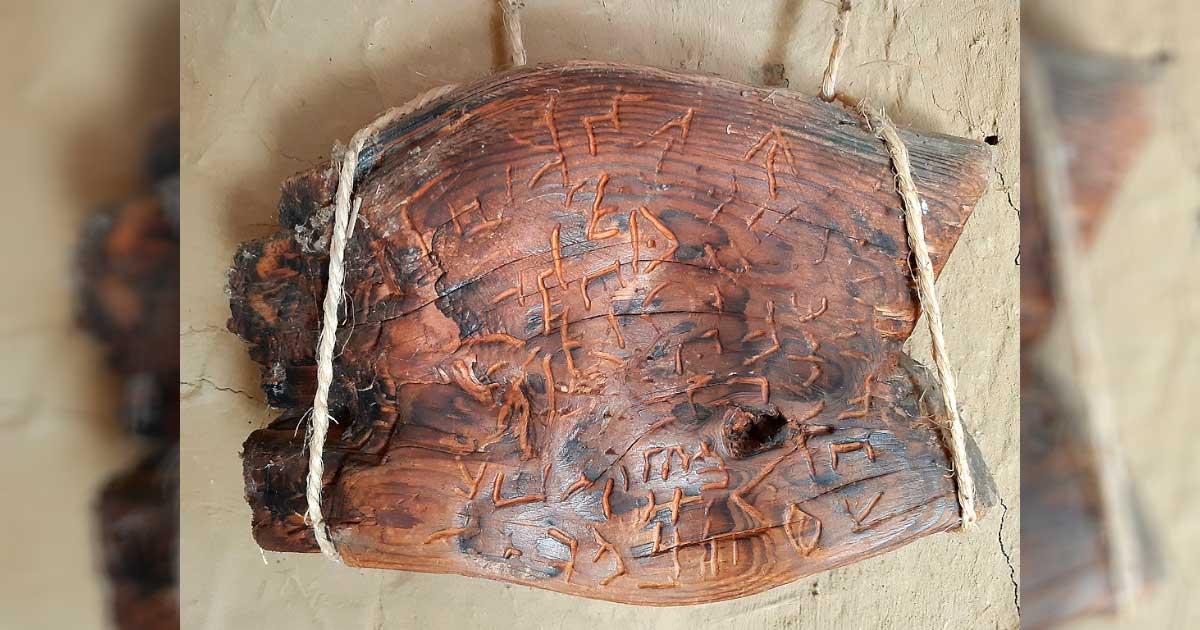

Conventional archaeology claims that writing was not invented until sometime between 3000 and 4000 BC in Sumeria. However, the discovery of a far older artifact in northern Greece appears to contradict this belief. Although the possibility of a previously unknown writing system during the Neolithic is an exciting prospect, why is it that so few people know about this discovery? And what is the fresh evidence that backs the theory that this is truly ancient writing that existed in prehistoric times?
Breathing Life into Dispilio
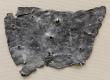
Discovered back in 1993 by George Xourmouziadis, a professor of prehistoric archaeology, the Dispilio tablet was unearthed during excavations of a Neolithic lake settlement near the city of Kastoria in northern Greece. This ancient settlement was actually discovered back in 1932 during a dry winter when the water levels of Lake Kastoria were particularly low.
- An 8,000-year-old Slab Holds the “Oldest Writing” Ever Discovered! Or Does It?
- The A to Z of Alphabet Origins and the Most Ancient Written Languages
The site itself was occupied for many hundreds of years from about 7,000 to 8,000 years ago, currently to 5700 cal BC to around 3300 BC. The excavations unearthed several artifacts including tools, pottery, figurines and other personal ornaments. These have allowed archaeologists to piece together a picture of the economic and agricultural activities of the settlement, as well as proof of animal breeding and their dietary preferences.

Dispilio in Greece is a prehistoric lakeside settlement and the location where the Dispilio tablet was found. The original site houses were built directly on the ground, not on piles as in this photo. (Iraklis Milas / Adobe Stock)
Dating the Dispilio Tablet
The Dispilio tablet was one of many artifacts found in the area. However, the importance of the table lies in the fact that it was engraved with an unknown written text that goes back further than 5,000 BC. Researchers used radiocarbon dating to pinpoint the date of the wooden tablet to about 5,260 BC, which would make it significantly older than the writing system used by the Sumerians. This dating was confirmed by research published in Nature Communications in 2024 which found an absolute calendar date of the Dispilio settlement by using the 5259 BC Miyake cosmic storm/solar ray event.
The text on the tablet includes a type of engraved writing which probably consists of a form of writing that pre-existed Linear B writing used by the Mycenaean Greeks. Currently, mainstream historians classify the script as proto-writing, which uses symbols to convey a limited range of information, not a full language. As well as the tablet, many other ceramic pieces were found that also have the same type of writing on them.
As of the moment, no comprehensive academic study of the tablet has been published, and research claims of it being a full writing system are not yet peer reviewed. As the sample is limited and it is still not understood, this categorization of 'proto writing' will remain until further data or research changes this. A comparable find is the Vinca script from the Danube Valley civilization in eastern Europe.
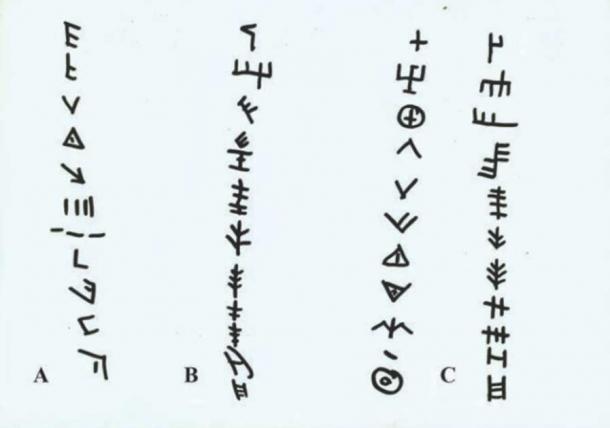
Samples of the carved signs on the wooden Dispilio tablet and other clay finds discovered at the site (a) as compared to Linear A signs (b) and signs found on Paleo European clay tablets (c). (Yorgos Facorellis / CC BY 3.0)
Deciphering the Dispilio Tablet
The fact that this wooden tablet was hidden at the bottom of the lake for so long and remained preserved so many years later is impressive in and of itself. Unfortunately, by the time the tablet had been excavated and removed from its original environment, contact with oxygen started the deterioration process and it is now under preservation.
- Rare Runic Writing Unearthed in Norway
- A Frenchman Solves Linear Elamite Puzzle And Rewrites Writing History
So far, the ancient writing system evidenced by the signs and inscriptions on the Dispilio tablet have not been deciphered, and decoding the writing is going to be difficult if not impossible, unless a suitable ‘Rosetta stone’ is found. Nevertheless, Professor Xourmouziadis suggested that it could represent a form of communication and could mean anything, including some kind of ancient inventory of possessions.

One of the most significant discoveries in history, the Rosetta Stone allowed researchers to decipher ancient Egyptian hieroglyphs. (British Museum / CC BY NC SA 4.0)
Dispilio Tablet and the History of Writing
Sumerian cuneiform has gone down in history as the oldest form of writing. As explained in Greek Reporter, some scholars have questioned the resulting theory which claims that the ancient Greeks learned to write about 800 BC thanks to contact with the Phoenicians. They are unconvinced by the fact that the composition of literary works such as the ancient Homeric poems coincides with their supposed acquisition of writing skills.
“It would be impossible for the ancient Greeks to write these poetic works without having had a history of writing of at least 10,000 years,” claims Greek Reporter. So, what this means is that Sumerian writing is actually the earliest writing system to have been discovered so far and the discovery of the Dispilio tablet, an artifact engraved with what appears to be a pre-Sumerian writing system, will undoubtedly not be the last find of its kind.
Conventional history dictates that these kinds of Neolithic discoveries are merely evidence of proto-writing, a term which refers to a way of communicating limited information, rather than proof of an entire language. But should additional artifacts comparable to the Dispilio tablet emerge, they could completely change the history of writing, and with it the story of humanity.
Top image: Model reproduction of the Dispilio tablet at the prehistoric lakeside settlement of Dispilio in northern Greece. Source: Мико / CC BY-SA 4.0
By John Black
This article was first written in 2014, and has been updated in 2022 and recently with new dating information in Aug 2026.
References
Facorellis, Y. et. al. 2014. "Radiocarbon dating of the Neolithic lakeside settlement of Dispilio, Kastoria, Northern Greece". Radiocarbon. 56 (2): pp. 511–528. Available at: https://doi.org/10.2458/56.17456
No name. 4 March 2008. “The world oldest writing?” in Mathilda’s Anthropology Blog. Available at: https://mathildasanthropologyblog.wordpress.com/2008/03/04/the-worlds-oldest-writing/
Maczkowski, A., Pearson, C., Francuz, J. et al. Absolute dating of the European Neolithic using the 5259 BC rapid 14C excursion. Nat Commun 15, 4263 (2024). Available at: https://doi.org/10.1038/s41467-024-48402-1
Novoscriptorium. “The prehistoric settlement of Dispilio, Kastoria, Greece. Writing in Neolithic Greece?” in Novo Scriptorium. Available at: https://novoscriptorium.com/2019/07/05/the-settlement-of-dispilio-kastoria-greece-writing-in-neolithic-greece/
Rossis, N. C. 10 November 2020. “The Dispilio Tablet – Revising the Origins and Development of Writing” in Nicholas C. Rossis. Available at: https://nicholasrossis.me/2020/11/10/the-dispilio-tablet-revising-the-origins-and-development-of-writing/
Tsolakidou, S. 16 July 2012. “Prehistoric Tablet Calls Into Question History Of Writing” in Greek Reporter Available at: https://greekreporter.com/2012/07/16/7270-year-old-tablet-found-in-kastoria-calls-into-question-history-of-writing/
Zorzos, G. 5 February 2010. Dispilio Tablet: The Most Ancient Linear Tablet. CreateSpace Imprint.






Comments
Discredit
Permalink
Two things.
The writer's final remark discredits him and what he has to say earlier. How can he be sure about this?
Second, I do hope the writers of this ancient script knew when a sentence was over: "The Dispilio tablet was one of many artefacts that were found in the area, however the importance of the table lies in the fact that it has an unknown written text on it that goes back further than 5,000 BC."
Oldest writing is for one thing only:
Permalink
Accounting.
The symbols are for accounting purposes. As soon as people stopped being hunter-getherers settled and started farming they needed logistics managements and some sort of IOU system.
All the other stuff: religion, epic stories came later. That was the oral tradition.
Discard all the moronic comments below the site attracts as many nutters whom do a dis-service to appreciation of real archaeology.
The dating system need further clarification
Permalink
The letters are very much like Phoenicians, they were the first to write as far as we know. I am not sure whether the dating is accurate, the article mention C12 method , not sure what does that mean but carbon dating methods has proven to be far from accurate, it usually indicate the 5000 years margin.
I think the language is NONE
Permalink
I think the language is NONE OTHER THAN OUR "TAMIL". (rather, an early form of Tamil)
gokturk alphabet
Permalink
i would like to informe that ;( gokturk )ancient orhun alpabet letters are very similar this ancient letters you may stuying visually..www..gokturk alphabet com.