
High in the cloud forests of the northeastern Peruvian Andes, where vegetation and altitude combine to conceal secrets, archaeologists have uncovered a breathtaking rediscovery: over 100 previously uncharted structures associated with the Chachapoya—a mysterious culture overshadowed by their Inca successors, known as “the people of the cloud forest”.
Situated deep within the Río Abiseo National Park, Gran Pajatén has traditionally been regarded as a ceremonial outpost. But this has now been totally turned on its head. The site is emerging as a much more complicated, networked, and culturally rich place than anyone could have dreamed.
Through a pioneering effort spearheaded by the World Monuments Fund (WMF) in Peru, marrying old-school archaeology with high-resolution LiDAR (Light Detection and Ranging), photogrammetry, and topographic mapping, scientists have produced the most precise and comprehensive map of Gran Pajatén yet—without even breaking the surface of the forest floor.
Gran Pajatén: From Forgotten Ruin to Central Cultural Node
First discovered in the 1960s, Gran Pajatén was thought to be a secluded ceremonial center hidden deep in the jungle. Until recently, only 26 structures were known to have survived within the site, concentrated along a thin ridge. These consisted of dramatic high-relief friezes, round ceremonial buildings, and mosaics made of stone carved with stylized human figures and geometric shapes—typical of Chachapoya architecture.
- DNA Analysis Reveals Surprising South American Migration Patterns
- Study Tracks Earliest Colombian Hunter-Gatherers - Who Vanished Without a Trace!
But the recent survey, carried out in 2022–2024, has disclosed more than 100 fresh structures, drastically extending the known size of the site. As Juan Pablo de la Puente, the WMF Executive Director in Peru, asserts, "Gran Pajatén was not a peripheral shrine but a highly integrated node in a broader Chachapoya territorial network."

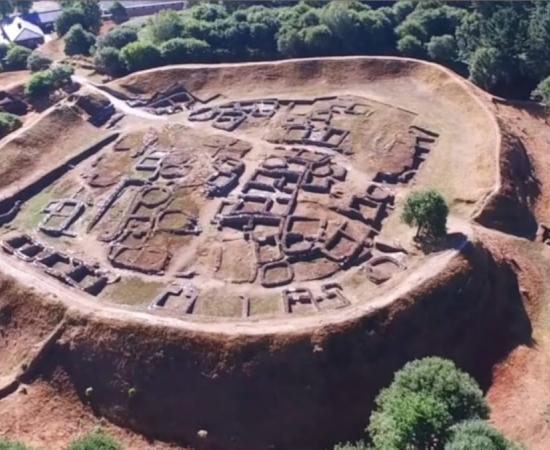
Kuelap archaeological site, where the upper classes amongst the Chachapoyas resided. (Elisolidum/CC BY-SA 4.0)
The pre-Hispanic roadways now proven to link the site with others—such as Cerro Central, La Playa, Papayas, and Los Pinchudos—point to a sophisticated societal structure, where religious, administrative, and social life were centered around strategic highland hubs, reports LBV Magazine.
Most strikingly, the architecture of the site reflects both visual dominance over the Montecristo Valley and ritual symbolism—its raised, fortified position probably had both defensive and cosmological importance. "It was probably a spiritual centre and a cultural waypoint," de la Puente observed, "an expression of how the Chachapoya organised and navigated their environment."
Unveiling the Past, Preserving the Future
WMF's team employed aerial and ground LiDAR, ground laser scanning, and photogrammetry to uncover what centuries of jungle vegetation had concealed. These tools enabled scientists to virtually strip away the canopy of trees and recreate the original floor plan of buildings, stairways, walls, and walkways—all without touching the delicate stonework or disrupting the ecosystem.
Perhaps most remarkably, this is one of the biggest successful applications of non-invasive technology to record a significant South American archaeological site. In an area where both environmental and heritage preservation are so important, this technological innovation serves as a precedent, reports The Art Newspaper.

Chachapoyas motifs recovered from Gran Pajaten in Peru. (Ti galan/CC BY-SA 4.0)
Bénédicte de Montlaur, WMF President and CEO, stressed, "Thanks to sophisticated technology, our crew has been able to create remarkable visual and scientific documentation that brings Gran Pajatén alive—and does so without jeopardizing its setting."
The conservation team has already started stabilizing walls, filling masonry joints, and shoring up weak staircases with specially mixed clay. It is hoped that the work will not only consolidate what's been revealed but also be a prototype for the continuation of conservation work in similar ecological regions.
The Chachapoya: Builders of the Cloud Forest
The Chachapoya developed between the 7th and 16th centuries, sculpting their culture onto the steep eastern Andean slopes between 2,000 and 3,000 meters (6,561-9,842 feet) above sea level. They were called the "people of the cloud forest" and constructed ceremonial platforms, cliffside tombs, and villages in precipitous places wrapped in mist and mystery.
Although the Inca later absorbed them in the late 15th century, the Chachapoya established a visible and deeply entrenched architectural and cultural heritage. The new finds at Gran Pajatén reaffirm their mastery of terrain strategy and capacity to build far-reaching social and spiritual networks across terrain-driven landscapes.
What’s equally remarkable is how little of the site has actually been processed. “So far, we’ve analyzed just 10% of the Lidar data,” said de la Puente. “We’re only beginning to understand the complexity of this network.” Questions abound: How did the Chachapoya support such an extensive infrastructure in such rugged and remote terrain? Where did their resources come from? What spiritual significance did these elevated sanctuaries hold?
A Window into the Past—and a Lesson for the Future
The findings at Gran Pajatén not only increase our knowledge of an advanced pre-Inca culture but also shine a light on the potential of interdisciplinary collaboration. By combining indigenous knowledge, conservation science, and geospatial mapping, the project is redefining not only the site—but the overall story of Andean civilization, reports The Heritage Daily.
- Craniums and Controversies of the Chachapoya Cloud Warriors
- Silver cups from ancient Peruvian civilization change Chachapoya history
To make the discoveries accessible, a free public show is currently ongoing through June 18 at the Museo de Arte de Lima (MALI). It is an immersive, multi-sensory presentation that enables people to see Gran Pajatén without stepping into the delicate cloud forest—showing that preservation and education can, and should, go together.
And what of the future? The mist of the mountain still clings to so many of Gran Pajatén's secrets. But for the first time, the cloud-forest people are speaking out once more—through stone, through memory, and through science.
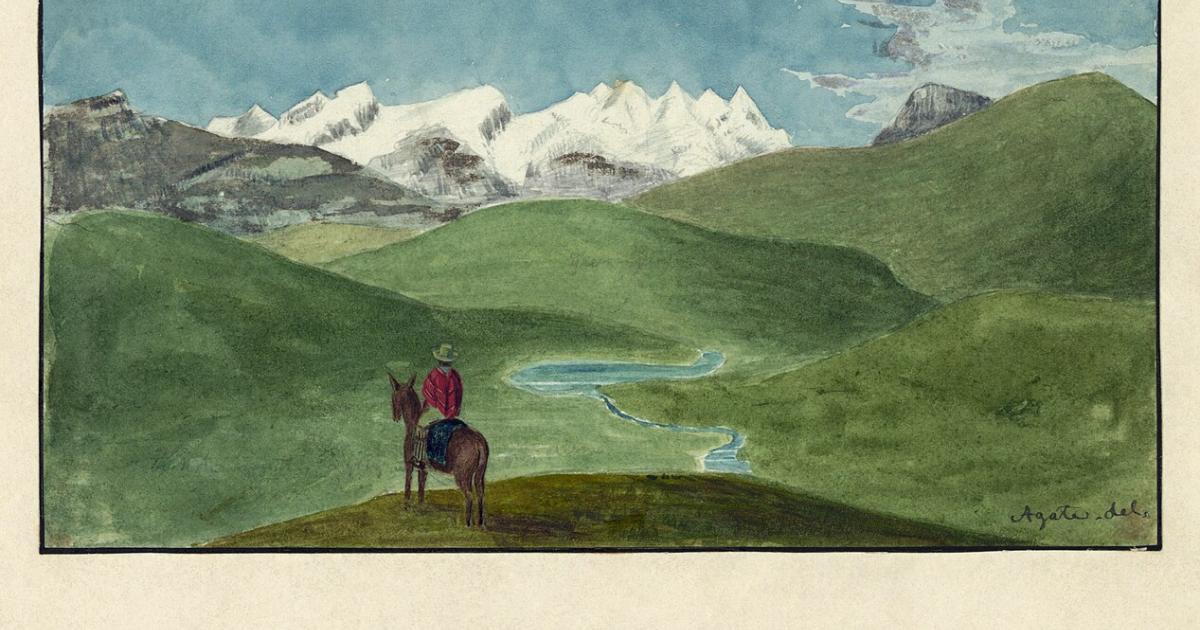
Top image: Drawing of a man on horseback facing the Peruvian Andes. Source: Alfred Thomas Agate/Public domain
By Sahir
References
Carvajal, G. 2025. An Unprecedented Discovery in Peru Reveals Over 100 Archaeological Structures of the Chachapoya Civilization. Available at: https://www.labrujulaverde.com/en/2025/05/an-unprecedented-discovery-in-peru-reveals-over-100-archaeological-structures-of-the-chachapoya-civilization/.
Shaw, G. 2025. More than 100 archaeological structures discovered in the Peruvian Andes. Available at: https://www.theartnewspaper.com/2025/05/27/andes-peru-archaeological-sites-chachapoya-discovered-lidar.