

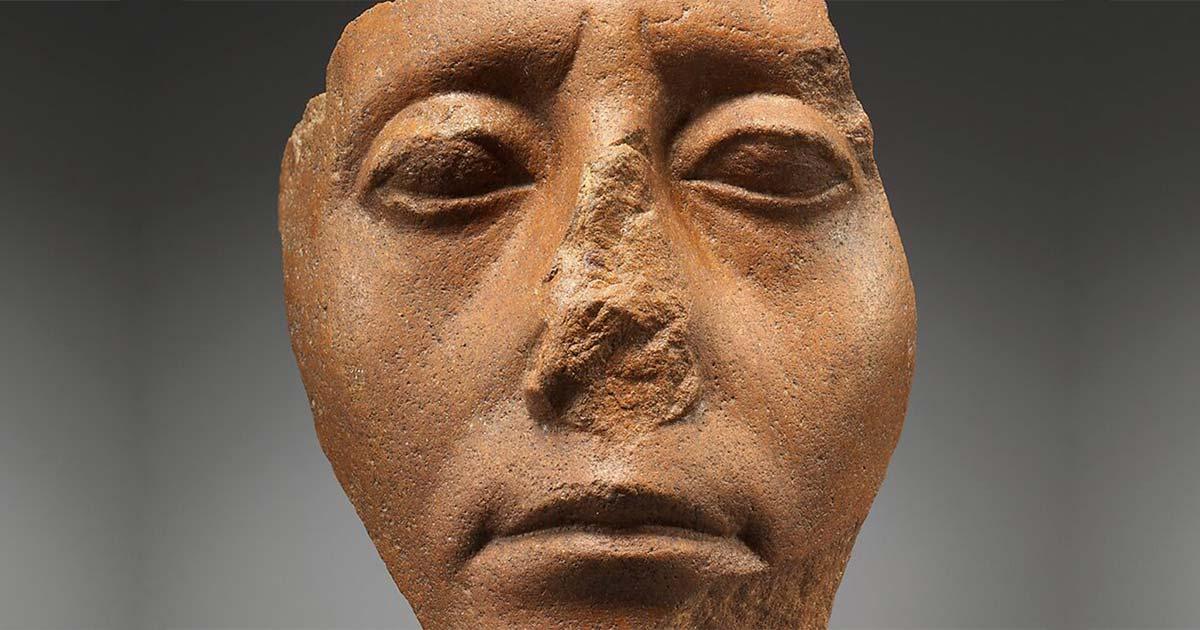

The missing noses on ancient Egyptian statues have been a topic of discussion and curiosity within art history circles for many years. It is a common question that many people ask: why are the noses missing from so many of these ancient artifacts? Some wonder if it is simply a coincidence or if there is a deeper, more sinister reason behind the phenomenon.
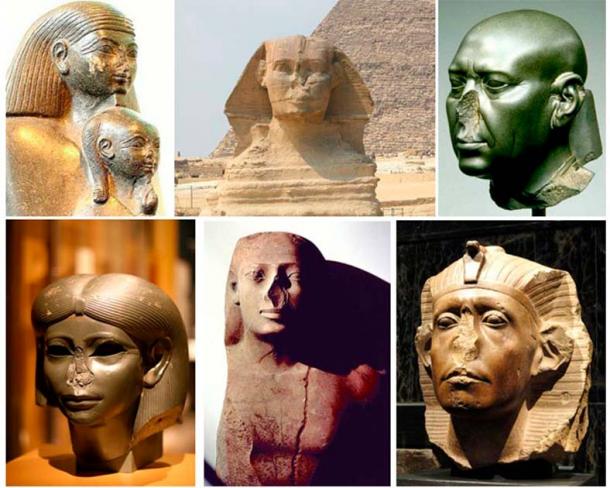
Some of the many Egyptian statues missing their Egyptian noses - Neferure and Senenmut (CC BY SA 3.0), Great Sphinx of Giza (Diego Delso / CC BY SA 3.0), 'Green Head' of a statue of a priest (Society for the Promotion of the Egyptian Museum Berlin), Head from a female sphinx (Brooklyn Museum), statue of a Man (Public domain), and Senusret III (Public domain).
Has Natural Erosion Played a Role in Creating Noseless Statues?
Several archaeologists have suggested erosion could be one of the main reasons for the missing Egyptian noses. Harsh winds, shifting mud and sand dunes, the flowing of water and thousands of years of feet and hands pitter-pattering over relatively delicate materials such as marble and stone will most likely have a pretty damaging effect.
- Why No Nose? The Ancient Breath of Life and Remarkably Powerful ‘Living Statues’
- Saint Aebbe Cut Off Her Nose to Spite Her Face
Many of these ancient Egyptian statues have been exposed to these elements for a very long time, while others have been buried under tons of mud and sand for centuries. In these cases, it's usually the extremities, such as arms, legs and noses that get damaged the most and eventually disappear. But, is this really the reason for why so many ancient Egyptian statues are missing their noses?
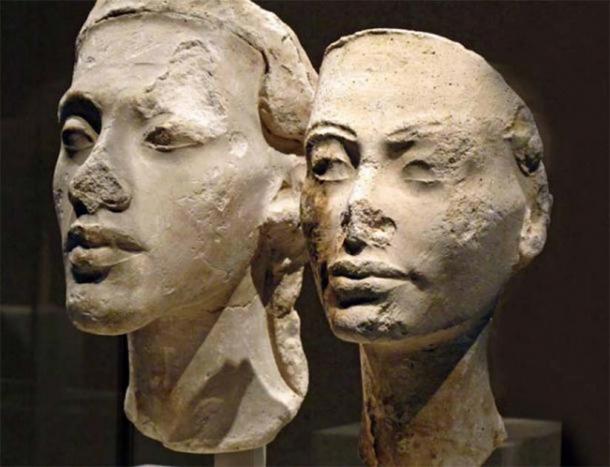
Busts of Akhenaten and Nefertiti, both displaying missing Egyptian noses. (kairoinfo4u / CC BY NC SA 2.0)
Human Intervention as a Major Factor Behind Missing Egyptian Noses
The frequent occurrence of missing noses on ancient Egyptian statues has also been attributed to vandalism. This phenomenon is not unique to Egypt and can be observed in other historical sites. For instance, the statue of the renowned philosopher Aristotle, situated at the entrance of the ancient Assos site in Turkey, was vandalized in 2015.
The statue, erected in 2009 by the Culture Ministry of Turkey, had its right arm removed, and severe distortion was evident on the face. Aristotle, who founded the first philosophy school in history, became a victim of deliberate destruction.
Notably, during the late 19th and early 20th centuries, many archaeologists lacked the advanced tools and techniques available today. These researchers, eager to make groundbreaking discoveries, sometimes caused extensive damage to classical sculptures. In their haste to be the first to uncover the "next big thing," they committed some of the most egregious acts of destruction in the field.
Religion has undoubtedly played a significant role in the de-nosing and dismembering of cultural and historical treasures. This has not just taken place thanks to the activities of extremist Muslims, as many may assume. Over the centuries, individuals of various religious beliefs, including Christians, Jews and others, have been responsible for acts of vandalism. These shameful acts have resulted in the destruction of countless valuable cultural and historical treasures.
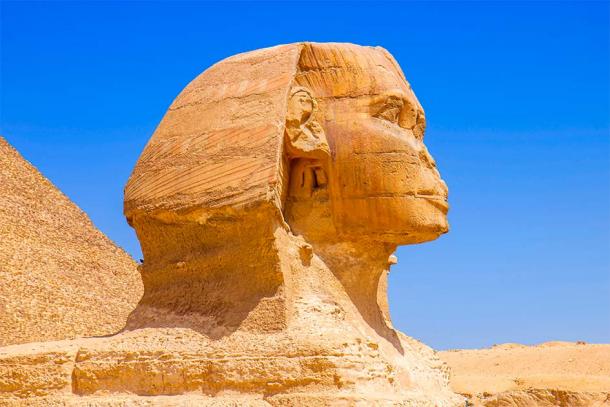
Stories explaining the missing Egyptian nose of the Sphinx of Giza abound. (Vladislav Gajic / Adobe Stock)
Could Noseless Ancient Egyptian Statues Be the Product of Racism?
According to some scholars, there was a deliberate attempt by early Egyptologists to deny and hide that ancient Egypt was an African culture. According to the written account of Vivant Denon, a French artist, writer and archaeologist who etched the image of the Sphinx of Giza around 1798, the facial features of the famous monument appeared to be of African origin;
“…Though its proportions are colossal, the outline is pure and graceful; the expression of the head is mild, gracious, and tranquil; the character is African, but the mouth, and lips of which are thick, has a softness and delicacy of execution truly admirable; it seems real life and flesh. Art must have been at a high pitch when this monument was executed; for, if the head wants what is called style, that is the say, the straight and bold lines which give expression to the figures under which the Greeks have designated their deities, yet sufficient justice has been rendered to the fine simplicity and character of nature which is displayed in this figure.”
However, the theory that vandalism is the sole explanation for the missing noses on ancient Egyptian statues falls short when considering the prevalence of de-nosed and dismembered ancient Greek and Roman statues. The majority of stone sculptures from these civilizations also lack noses. While some may have been accidentally damaged, a significant number of them were undoubtedly targeted intentionally.
It is historically, archaeologically, and scientifically established that the ancient Greeks and Romans were of European (Caucasian) origin. Therefore, racism is an unlikely reason for the intentional de-nosing of those statues. So, what is the reason for the noseless statues left behind by these ancient cultures?
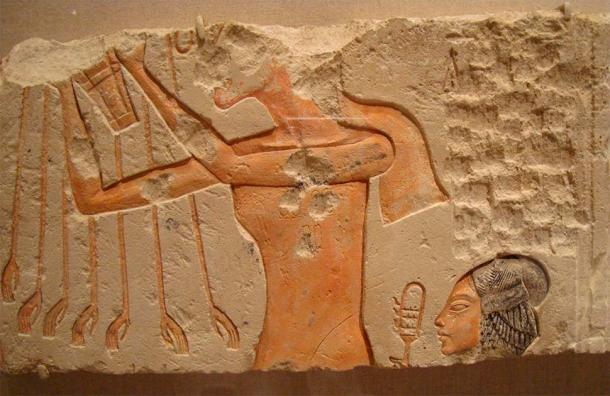
The deliberately destroyed face of Akhenaten from a relief depicting him and his daughter making an offering to Aten. (Neil R / CC BY-NC 2.0)
Deliberate Destruction of Egyptian Noses to Humiliate and Diminish Power
It has been recorded that later Egyptian dynasties would often deface statues of past monarchs in order to erase or diminish their legacy. In these cases, the removal of the nose would be accompanied by other, more extensive facial disfigurements, as well as the destruction of inscriptions and symbols of office.
In 2019, CNN reported on an exhibition, entitled Striking Power: Iconoclasm in Ancient Egypt, which brought together a striking selection of ancient Egyptian masterpieces from the Brooklyn Museum chosen to highlight their deliberate destruction. From missing noses, to damaged heads and vandalized inscriptions, the exhibition was curated by Edward Bleiberg in an attempt to understand patterns within this wanton destruction.
Bleiberg has hypothesized that, in a culture that placed such a huge amount of importance on the creation of these artworks, this deliberate vandalism was a way to “deactivate an image’s strength.” This all makes sense within the ancient Egyptian world view whereby art was used to manifest reality through representation. In other words, images had the ability to contain a human’s or deity’s essence, or to provide protection and assistance in the afterlife.
- Ancient Egyptian Carving of Couple Defaced in Revenge Attack to Deny Them a Happy Afterlife
- Inside Rhinocolura, The City Of Noseless Criminals
According to Bleiberg, new rulers or invading cultures trying to establish themselves wanted to disrupt this power by destroying its conduit: art. Artnet describes examples from the exhibit, including that of Thutmose III and his deliberate destruction of artworks representing his stepmother Hatshepsut.
In later years, Christians began to deface statues of ancient Egyptian deities to prevent them from being worshipped and destroy these remnants of their power. The nose was an obvious target for such campaigns of destruction, providing a clear and visible reflection of the supposed triumph of a new world order.
While legend has it that Napoleon had the Sphinx’s nose blown off with a cannonball, a more likely version of events is that the one-meter-wide nose was deliberately destroyed by a Sufi Muslim enraged by the affection showered on the massive statue in the hope of successful harvests. Originally built by Pharaoh Khafre around 2600 BC, studies conducted by Mark Lehner have concluded that the nose was intentionally eliminated.
Top image: The statue of pharaoh Senwosret III, who ruled from 1878 BC to 1839 BC, is another in a long line of missing Egyptian noses. Source: Public domain





Comments
Knowing nothing about Egypt,
Permalink
Knowing nothing about Egypt, maybe it was a form of rebellion? Maybe a war between the Egyptians led to the nose being amputated as a sign as to what someone thought of the rulers gods? Maybe a ruler had an accident with his nose and people decided to do the same to the statues? The reason could relate to something that has happened in Egypts past. Maybe Egyptians simply had an habit of picking their noses and tried to climb inside some of the bigger statues noses? Then I guess you’d smash the noses off the smaller statues just to show that they’re Egyptian and/or old? Maybe yet explorers still have to find a trench full of amputated noses...
Missing noses
Permalink
I agree that quite a bit of history has been lost. I too have noted the absence of noses but the theory of hiding nationality is a new one to me and bears some thought. I’ve always assumed it represented one section of society (either religious or national) making certain their new subjects understood their place.
Proof?
Permalink
In reply to Vandalism or Hiding Facts by William Bradshaw
It's difficult to take you seriously when you spell your name two different ways in the same article. I won't even comment on the alphabet soup after your name. But, thanks for playing.
I have an additional theory
Permalink
In reply to Hiding history? by ConspiracyCat (not verified)
I have an additional theory as to why so many god/goddess depictions are also missing the nose, eyes or face completely. Most blatantly this can be seen in the temple of Hathor in Dendera. All but 1 untouched face of Hathor out of hundreds can still be found. Erosion, humilation, vandalisme or racial issues can be discarded easily. Erosion does not happen inside a temple to that degree, humiliation does not apply to a goddess, vandalisme does not explain the amount of damage (they had to build scaffolding and have spent years and years to destroy this temples depictions systematically). Racial motives are also highly unlikely the Egyptian gods were to me a bit androgynes but I could not for the life of me pin them to 1 race. However the structural controlled damage inflicted must have been done according to a plan and meticulously carried out over an extended period of time. My opinion is that Kopts and later Islamic people new the pagans worshipped these gods and believed they can be imbued with power. Offerings to statues were a highly sophisticated sytem of training the mind to attune more to a specific emanation of the one god represented by the statue. Perhaps the later religions feared this cult in the same sense medieval clergy feared witches? Or perhaps they did ot want the cult to continue and as log as the gods faces were visible they were considered functional and people would continue to do so? They most likely also did not want to destroy the magnificent building but reuse them to their own purposes (like the Luxor temple for example). To me this is not unlike christians chopping down holy oaks and then building their shrines and churches there. The people will still showe up and now deprived of its former rgalia they could instill new ones and flock the people to their cause.
Hiding history?
Permalink
In reply to Vandalism or Hiding Facts by William Bradshaw
I'm afraid most of your comment is biased and based on an unproven notion that North Africa was occupied by black Africans when Egypt was erected. I know the reasons for their missing nose and it has absolutely zero to do with hiding history from a people of an unknown future who would want to find the ethnic background of a particular people or group. I will leave my comment in saying that the Egyptians did not expect to fall Northern Empire to waste away in the Sands of the desert. So to conclude that somehow archaeologist remove the noses of these statues because they believed they were of one particular ethnic group before ever knowing the translation on the walls before ever knowing how many actual Royal mummies there is still left to be found or whether not any invasions from other civilizations had any impact on their genealogy. With that being said no one here is denying that there were Nubians in Egypt. However the Nubians are very distinct and both morphology and culture from that of the Egyptians. But I am getting off track let's get back to the nose issue. There are a lot of statues missing many different body parts but more often than not it is the nose that ends up missing and there is a perfectly reasonable and cultural explanation for this. If you knew anything of the Egyptian religion and their way of thinking anyone with two brain cells to activate would have come to this conclusion themselves. When Engine Egyptians created effigies of the people or royalty in power they saw that statue as no different than the person it represents. Egyptians also like many proud cultures often did not put on for display their shortcomings especially when it came to their present rulers. They always displayed themselves in a positive light giving no evidence in their carvings, hieroglyphs, etchings, or writings to their mistakes. However this does not mean that everyone else around them forgets those mistakes or shortcomings. It is then in their culture that when that particular person dies and they've made a few blunders that may have caught someone their life, or job, or seat in the Royal House, they retaliate. In the Gyptian religion there is What's called the Ka. And it represents every aspect of a single living being all the way down to even their shadow. This entity passes through the living world into the Afterlife with the person or body it represents. What they represent in particular are the human senses; sight, hearing, feeling, taste, and "smelling". In the afterlife of Egypt before heading to the Stars to join the Pharaohs one has to go through the house of Osiris where Sobek and Yenipu (Anubis) await them before the throne. In order for you to reach the house of Osiris your Ka has to have both all the senses from your former life to have them exist in the afterlife. This is where logic fuses with the reason why most of the time you find either the arms or the nose missing from statues of ancient Egypt; it would be because of how the statues are carved and depending on their base the easiest things to break off would indeed be the arms or the nose. It's really a choice of physics when you want you break something quickly because you can't really bust off the ears of an Egyptian statue you really can't bust off the tongue of an Egyptian statue and it takes an awful amount of time to Chisel out the eyes of an Egyptian statue so that leaves only two other senses which is the sense of smell and the sense of touch. Unless the arms are resting on something like a throne or they are carb in such a manner where they're attached to the person side and a rigid form the easiest thing to break off then would be the only thing with the smallest base protruding from the form which of course is the nose. Unless that particular Egyptian did something really really terrible that whom ever intended to dismember their effigy took the time to remove the harder parts of the statue most of the time you're going to find only the nose or the arms missing. If that persons Ka has not all five senses in the afterlife then you cannot enter the house of Osiris. This is in tandem to the reason why Sobek and Anubis await the arrival of Egyptian royalty with the scales between them and the Throne of Osiris to find for themselves whether or not they had committed any wrongdoing. However if the Egyptians during his living life found it shooting to pass judgment upon his or her preparations to meet Osiris in the afterlife and desecrate their effigy then both the soul of that particular Egyptian and their Ka will remain lost in the Darkness of the Void never reaching the stars of the Kings. So to recap any missing parts from a particular statue that they can prove happened in ancient times and not some accident from moving the statue then it's a sure bet that whomever that statue represents piss someone off and when that person died decided that before they could be put in their sarcophagus they would never rejoin the kings of their past! In order to enter the house of Osiris you must have all five senses all five senses are connected to the heart which is weighed against the feather from the wings of Horus. If you have not all your five senses that means your soul and your heart are not complete and you cannot be incomplete to meet Osiris because all the kings and queens have to be perfect and whole before joining their kin in the Egyptian Heaven.
This is called real studying not racist biased bullshit. I am study Egypt from its ancient culture all the way to the Coptic writing form for the past 12 years. In fact the word Coptic is a derivative of the word Egyptian so in reality your reiterating a class of original Egyptians by saying Coptic Egyptian because you're really saying Egyptian Egyptians. It is the same people that still use the Coptic writing and the ancient translation simultaneously and teach it to their children. Furthermore if a royal statue does not have the double cobra on its crown no matter if it is from lower middle or Upper Egypt it is not a Nubian pharaoh. Only the Nubian pharaohs wore the double cobra on their crowns. The first invasion of Nubians in Egypt brought both the upper and lower kingdoms together which is why they used the two headed cobra. King Piye and his Son; Prince Taqahara (ms) took Egypt for themselves and drained their treasury dry hoarding luxuries from many lands and a narcissistic campaign employed by his son to make statues and busts of he and his kin. There reign only last around 77 years but caused an irreversible Devastation of their riches and resources that apparently they never recovered from leaving the delta in ruins. In fact it is Prince Taqahara's face that adorns the Sphinx which apparently was part of his overwhelming narcissism to change the face of Egypt. This is why the head of the Sphinx is very disproportionate to the rest of the body because at one time it was a lion's head.