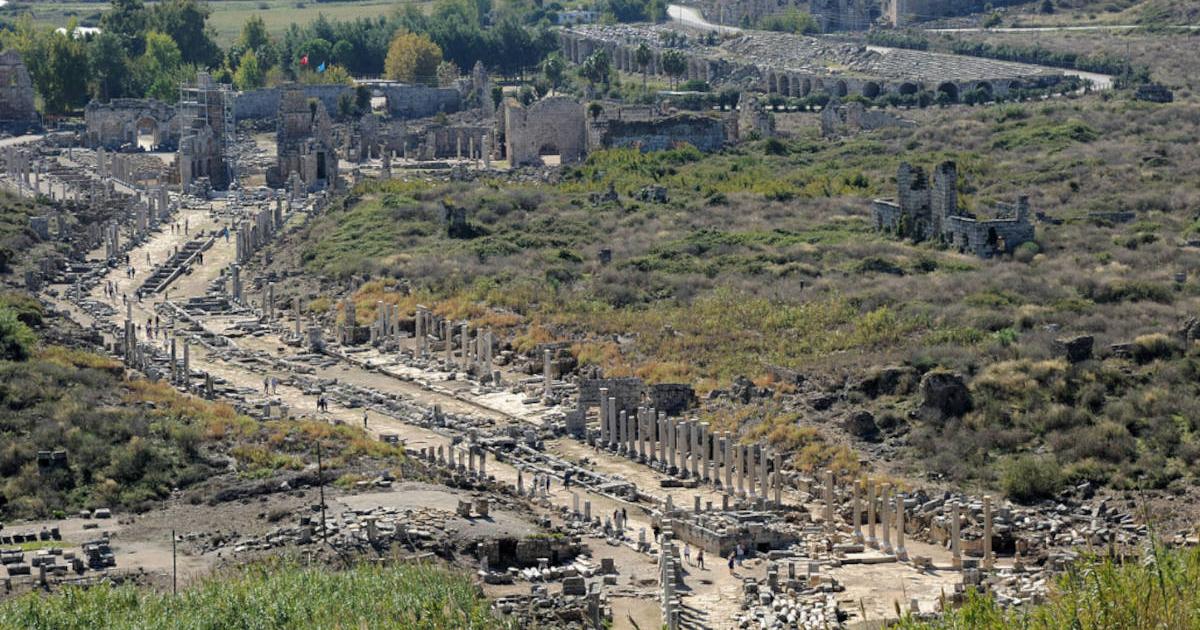

The ancient city of Perge, located in the Antalya province of modern-day Turkey, continues to reveal its historical significance through ongoing archaeological work. During the latest excavation season, archaeologists uncovered five statues from the fertile Roman period, adding to Perge’s already extensive collection of ancient artifacts. These findings not only highlight the city's artistic heritage, but also provide deeper insights into the sculptural traditions and cultural dynamics of that long-lost but monumentally transformative era.
Located approximately nine miles (15 kilometers) east of the city of Antalya, Perge (also known as Perga) was originally founded in Anatolia during the Hellenistic period, in the third century BC. It flourished as a major cultural and commercial center in the region before coming under Roman control in the first century BC, when Rome was still a republic. The city remained an important part of the Roman and later the Byzantine world, with its grandeur preserved in its remarkable ruins. In recognition of its immense historical and artistic value, Perge was added to the UNESCO World Heritage Tentative List in 2009.
Perge was not only a hub for trade and cultural exchange, but also a center for artistic excellence. The city’s grand avenues, temples, and bathhouses showcase the architectural and artistic mastery of the time. Statues and reliefs were crafted with immense skill, depicting mythological figures, rulers, and prominent citizens, all of which emphasize the city's importance within the broader Roman Empire framework.
- A Hellenistic Eden: One Ancient King’s Attempt to Create the Perfect City on Earth
- Durability, Power, and Imposing Public Edifices of Roman Architecture
Recent Excavations Yield Stunning Statues
Among the most striking of the new discoveries is a six-foot- (two-meter-) tall statue of Aphrodite, the Greek goddess of love and beauty, depicted seated on a dolphin with Eros, the god of love, beside her. This statue is believed to be a second-century AD replica, which puts it in the Roman Imperial Period.
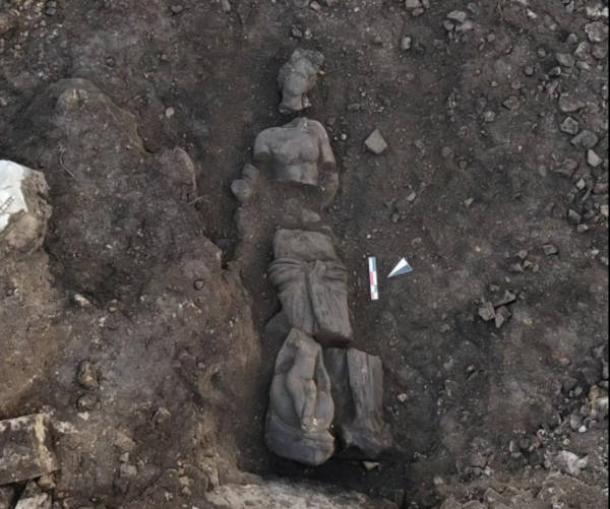
Pieces of the statue of Aphrodite, unearthed at Perge. (General Directorate of Cultural Heritage and Museums/Turkish Ministry of Culture and Tourism).
Interestingly, while Venus was the commonly revered equivalent of Aphrodite in Roman tradition, this sculpture remains true to the city’s Greek origins, reinforcing Perge’s deep connections to both the Greek and Roman worlds.
Adjacent to the Aphrodite statue, archaeologists also uncovered a slightly shorter clothed female statue, which has been linked to the Roman Empire’s Severan Period (193-235 AD). Additionally, another female statue, similar in style, was found displayed in two other sculptures from within the same excavation area. These discoveries suggest a continuity in sculptural styles and iconography throughout Perge’s history under Roman rule.
As remarkable as these discoveries were, there was more to come. Further exploration along Perge’s Eastern Street revealed two more statues—a clothed female and a clothed male—found side by side. The quality of all these sculptures and their preservation state offer a glimpse into the artistic standards and craftsmanship of Perge’s sculptors, who were deservedly renowned across the Empire.
Roman Imperial Art in Perge
Roman Imperial art, which includes works from the first century BC to the fifth century AD, is renowned for its grandeur, realism, and fusion of Greek and Etruscan influences. This era saw the creation of monumental architecture, lifelike sculptures, and intricate frescoes that celebrated the Empire’s power and prestige. Perge, as a major center of artistic production, was particularly known for its exquisite marble statues.
The recent statue discoveries reinforce Perge’s role as an artistic hub. Many of the city’s sculptures depict gods and goddesses while others show scenes from daily life, revealing Roman artistic versatility. The five newly unearthed statues demonstrate the city’s rich sculptural tradition and its lasting contributions to Roman art, but also revealing the Romans’ commitment to preserving Greek artistic traditions along with their own unique cultural contributions.
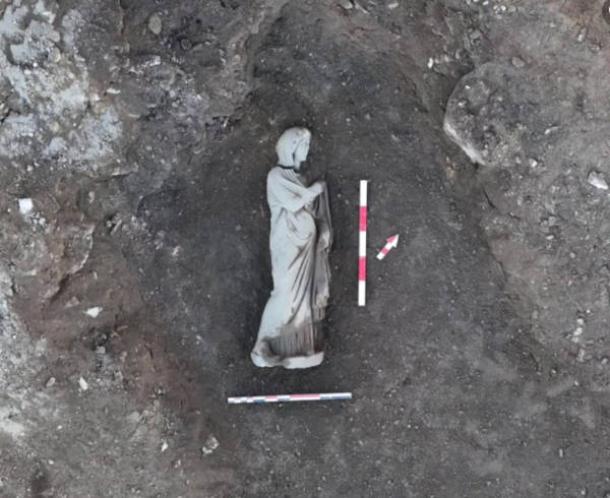
Statue of an unidentified female figure, from Rome’s Severan period, unearthed at Perge. (General Directorate of Cultural Heritage and Museums/Turkish Ministry of Culture and Tourism).
The level of realism found in these statues aligns with the broader artistic trends of the Roman Imperial period, where sculptors emphasized detailed facial expressions, intricate drapery, and lifelike proportions. The city’s workshops likely employed highly skilled artisans, possibly even attracting sculptors from different regions to contribute to its artistic legacy.
- Enormous Burial Mound in Turkey May Contain Long-Lost Graves of Attalid Rulers
- Anatolia: Rising Empires, Shifting Lands
Preserving Perge’s Enduring Legacy
The ongoing excavations in Perge are part of the ‘Heritage to the Future Project,’ a government-sponsored initiative aimed at preserving and promoting the region’s cultural heritage. The project underscores the enduring influence of Rome on Anatolia and the vast amount of history still waiting to be uncovered.
For the archaeological team from Turkey’s Ministry of Culture and Tourism, finding even a single well-preserved Roman statue would have been a remarkable achievement. Discovering five in one season is beyond expectations and fuels anticipation for future excavations. Each new artifact adds another piece to the puzzle of Perge’s past, helping modern scholars better understand the artistic, religious, and social influences that made turned this ancient city into a mecca for the arts.
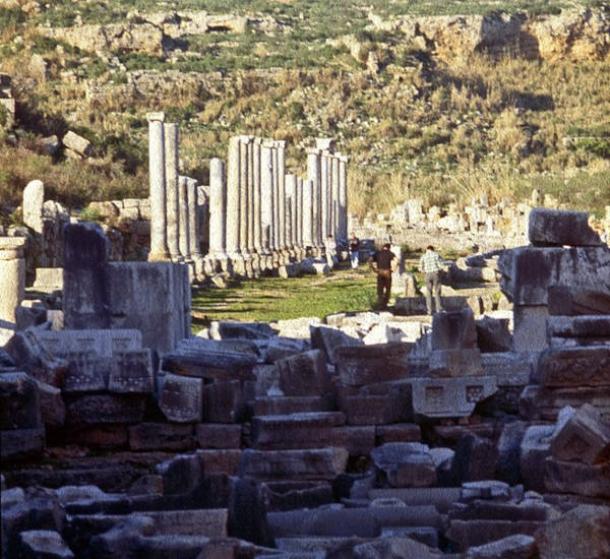
Some of the abundant Roman ruins located at the site of the ancient city of Perge. (Gerd Eichmann/CC BY-SA 4.0).
With each excavation, the significance of Perge as an artistic and cultural powerhouse of the Roman world becomes more evident. The discovery of these statues not only enhances knowledge of Roman-era sculpture, but also provides a tangible link to the beliefs and values of the people who lived in Perge 2,000 years ago.
Top image: Aerial view of the ancient Roman ruins of the Anatolian city of Perge in modern-day Turkey.
Source: Saffron Blaze/CC BY-SA 3.0.
By Nathan Falde