



In secluded fields, on the walls of churches, and beneath construction sites, stones have been found with intricate markings that rise from the lower left up to the center and then down to the lower right. This is the ancient Celtic Tree Alphabet known as Ogham (pronounced owam). Archaeological linguists have managed to translate the symbols, yet no one knows for certain how or why this language came into existence. Efforts are being made to preserve the relics; however, the stones are weathering and crumbling at an alarming rate.
Attempts to Save the Unique Ogham Inscriptions
There are roughly 400 stones known to contain Ogham markings, 360 of which are in Ireland. The rest have been discovered scattered across Wales, Scotland, England, and the Isle of Man. The oldest relic is believed to date back to the 4th century AD, but one must assume that earlier examples existed on perishable mediums, such as wood, possibly as far back as the 1st century AD.

An ancient ogham stone on the top of Dunmore Head on the Dingle Peninsula in County Kerry, Ireland. (Cynthia /Adobe Stock)
For the most part, the messages contain names of people and places, perhaps to demarcate boundaries and property. These old, weathered rocks are covered with lines and slashes, cut directly into the stone. Before the realization that Ogham was a distinct language, many believed the cuts to be merely decorative.
One of the major problems facing archaeologists in their attempts to preserve Ogham stones is the unique physical style of the inscriptions. "Most inscriptions on stone are in the face of the stone," said Nora White, an archaeological linguist studying Ogham. "But with Ogham, it wraps around the angled edge of the stone."

Ogham stone, Kilkalmedar, Ireland. (nyiragongo /Adobe Stock)
This unique reading experience is part of the allure of the Ogham writings; however, it makes it very difficult to capture the inscriptions for posterity - an ordinary photograph or drawing cannot capture an entire passage. Fortunately, recent technological advances have allowed researchers like White to create three-dimensional scans of the stone pillars. 3-D models of the known stones are quickly being captured and preserved as part of the ‘Ogham in 3-D Project,’ an initiative sponsored by the Dublin Institute for Advanced Studies’ School of Celtic Studies.
- Following the Footsteps of the High Kings of Ireland at the Sacred Hill of Tara
- Howling Against the Moon: The Last Wolves of Ireland
- The Day of St Patrick and the myth of snakes being cast out of Ireland
Celtic Respect for Trees
The ancient Celts worshiped trees as spirits or as objects inhabited by spirits. Much of the Celtic mysticism revolves around the magical properties of different trees. For example, the birch tree is often considered the primary tree. A feminine power, the Druids believed that the magical properties of the birch included protection of children, creativity, and purification.
Another important tree was the mighty oak. A masculine power, the magical prosperities of oak were linked to security, strength, and loyalty.

‘The Druid Grove.’ (Public Domain)
The Celtic respect for trees influenced many aspects of their lives and is considered to be fundamental to the Ogham script. The markings center along a long vertical reference line, the ‘stem,’ which is then crossed by characters comprised of lines or slashes known as ‘twigs’. The first letter in this alphabet represents the ‘B’ sound and is made with a single straight line perpendicular to the stem on the right side. The name of this character is Beighe, birch tree.
Legends Behind the Rare Celtic Alphabet
Of the 20 characters that make up the Ogham alphabet, five are made up of straight-line twigs on the right side of the stem. In addition to Beighe, there is Luis (II), Fern (III), Sail (IIII), and Nin (IIIII). These characters represent, respectively, the letters L, W, S, and N; the names of the characters translate to herb, alder, willow, and letters.
- Thoth’s Storm: New Evidence for Ancient Egyptians in Ireland?
- Ben Bulben: An Irish Site that Inspires the Imagination
- Baltinglass Hill: Ireland’s Forgotten Gobekli Tepi?
Although researchers have been able to decode Ogham, there is still a great deal of debate over the reason behind its invention, especially because the Latin script, and to a lesser extent Greek script, were in common usage at this point in time.

The Celtic Alphabet called Ogham. (zgurski1980 /Adobe Stock)
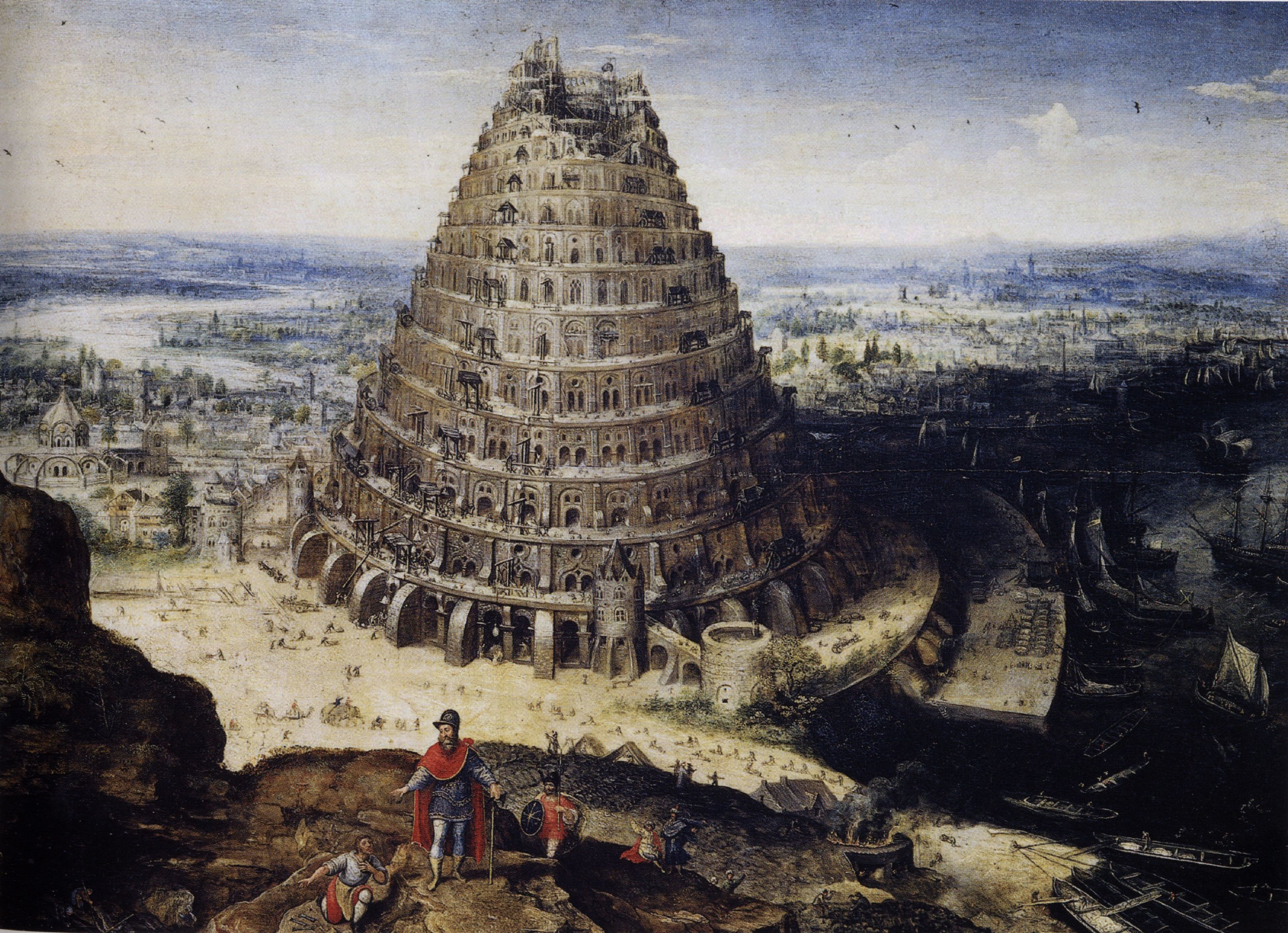
Legend has it that the language was first arranged as a result of the fall of the Tower of Babel. The great Fenius Farsa, King of the Scythians (Scythia is the classical Greek name for the Central Asian dominions) heard the fate of Nimrod’s people and came at once. In the King’s retinue were 72 scholars who hoped to study and make sense of the confused languages.
Unfortunately, by the time they reached the plain of Shinar, the cursed people had all dispersed. King Fenius thus sent his scholars out to the far edges of the known world in order to learn the multitude of languages. The search lasted for 10 years and Fenius remained near the ruins of the Tower the whole time, waiting for his loyal servants to return with their findings.
Once the search was complete, the King created a special language known as Bérla tóbaide. It was made up of the best elements of each of the confused languages. He also devised the Beithe-luis-nuin, a perfect writing system to accompany the new language. This script was commonly referred to as the Ogham.

‘The Tower of Babel’ (1594) by Lucas van Valckenborch. (Public Domain)
This fantastic tale is not the only legend that exists to explain Ogham. Modern researchers also have a plethora of beliefs to explain the language’s purpose, and while they are not as extraordinary as the Legend of Fenuis Farsa, they are equally disputed.
Some scholars argue that Ogham was created so that the Irish could communicate without the British knowing what was being said (the Brits were the Celts’ enemy, even in the first centuries AD). Another hypothesis argues that the alphabet was created by early Christian missionaries in Ireland because they found it difficult to capture the sounds of Gaelic with the Latin alphabet.

Ogham stone in abandoned churchyard, Ireland. (diak /Adobe Stock)
Still another hypothesis posits that Ogham was originally a secret hand signal language of the ancient Druids that ultimately made its way into permanence by being carved into stones. This idea rests on the similarity between the groupings of one to five twigs for a sound and the five fingers of the person passing on messages in a secret sign language. However, few academics believe this last hypothesis to be credible.

Ogham alphabet, Plumbridge. (Kenneth Allen/CC BY SA 2.0)
Archaeologists continue working to find as many Ogham stones as possible and to create digital copies of them. Once the preservation of Ogham is secured, the business of comparing the messages with other ancient texts and symbols will begin in earnest in order to unveil the secrets behind the mysterious Irish tree language.

Ogham stone in Carrickart, Co. Donegal, Ireland. (pmangan /Adobe Stock)
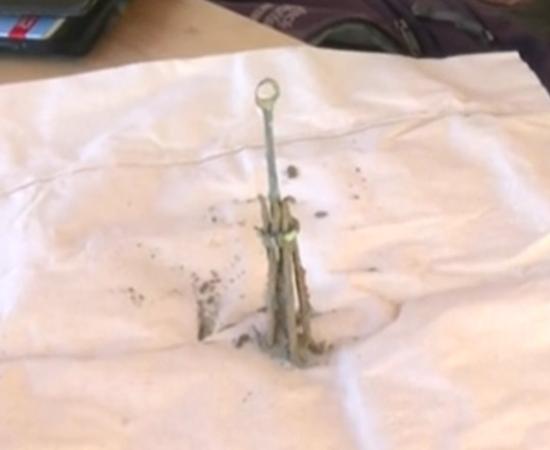
Top Image: Ogham sticks. Ogham is an ancient Celtic language. Source: A Walk Around Britain / Flickr
References:
Ager, Simon. "Ogham" Ogham Alphabet. Omniglot, 2016. Web. 09 July 2016. http://www.omniglot.com/writing/ogham.htm
Giaimo, Cara. "Preserving Ireland's Ancient, Mysterious Tree-Based Alphabet." Atlas Obscura. Atlas Obscura, 19 May 2016. Web. 09 July 2016. http://www.atlasobscura.com/articles/preserving-irelands-ancient-mysterious-treebased-alphabet
Joelle. "Celtic Tree Calendar - Ogham Alphabet." Celtic Paths. Joelle's Sacred Grove, 1998. Web. 09 July 2016. http://www.joellessacredgrove.com/Celtic/tree.html

















Comments
in the Light
Permalink
Thank you Light for the two sites.
Having read their content I have come to the conclusion that the stones are ancient head stones over graves. This conclusion is obvious but nothing I read makes this conclusion.
Ogham
Permalink
I see nothing in tis article that allows me to take the characters shown in the diagram "The Celtic Alphabet called Ogham.' and translate the stone markings into a readable language.
The two are vastly different, unless I am missing something this article is a waste of space as it tells me nothing, other that the stones exist.
Ogham Stones in England
Permalink
Good article but missing some research. Ogham stones are also found in England:
https://en.wikipedia.org/wiki/Silchester_Ogham_stone
http://www.babelstone.co.uk/Blog/2009/11/ogham-stones-of-cornwall-and-devon.html
They are found all over the British Isles and perhaps further afield.
LL
Checked it out yet?
Permalink
In reply to Travelling round the northern by Derek Cunningham
It all is directly related to the perspective I shared my friend. Even the Migratory patterns of the Species predating any of our Imaginations...
This Map is where the World Started many times back and forth over many millennia just like the migration of those species.... Man did the same...
http://www.grida.no/graphicslib/detail/demography-of-indigenous-peoples…
Still on my way to Midnight Science my Friend. Had to go get my DNA sampled first... I am a Quarter NA and wanted to see if I have the MA-1 genome haplotype X .
We need to ditch the Mercator Projection ASAP in this debate of Human Origins...
It's a respect thing...
Permalink
In reply to Travelling round the northern by Derek Cunningham
My Lineage is from Scotland...Clan Craig. They settled in Texas so the Sir thing is a Southern habit of respect Derek. I have to run and take care of some business but will try to get back to explore this some more today. To clarify...I should have titled the last reply as "Pre-Ogham" then?
What I am finding is a connection in Symbolism around that Latitude and really believe the original source to be Scandinavia. One could literally jump on a chunk of Ice, naturally drift Easterly, and easily connect with the shores of every continent but Australia and return to where you started without it melting even in the Summer. I think the Polar Cap was the center of the known world and expansion...Some possibly very very ancient... all spread South from there. "The Ones that were here before".