After two years of extensive excavation and research, the Egyptian Ministry of Tourism and Antiquities, through the Supreme Council of Antiquities, has successfully completed the ambitious Revival of the Ancient Gold City project. This groundbreaking initiative has led to the discovery, documentation, and conservation of a remarkable gold mining camp with a history spanning over three millennia. This extraordinary find sheds new light on Egypt’s mining industry in antiquity, while revealing a wealth of details about the daily lives of the workers who inhabited the region.
The Ministry of Tourism and Antiquities announced this exciting development on Facebook, referring to it as “a significant step in preserving Egypt’s ancient mining heritage while making it accessible to both researchers and the public.”
The Ancient Gold City Resurfaces
The recently uncovered site is located in the Nubian Desert in the Sakari Mountain area, southwest of Marsa Alam near the Red Sea. This groundbreaking restoration project was made possible through the collaborative efforts of Egyptian archaeological authorities and the administration of the modern Sakari gold mine. The partnership was crucial in ensuring that this invaluable historical treasure was protected from the impact of contemporary mining activities that could have otherwise erased centuries of irreplaceable history.
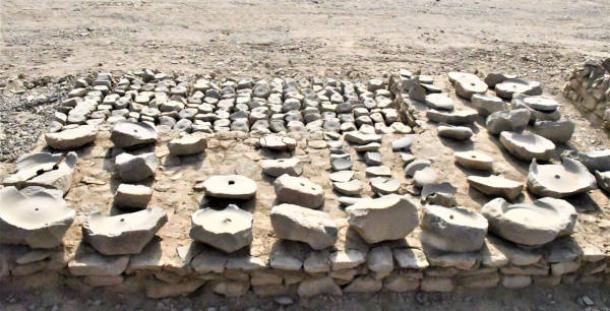
Collection of pottery vessels found during excavations. (Egyptian Ministry of Antiquities).
To safeguard the structures and artifacts found within the excavation zone, the archaeologists involved in the project completed a meticulous process of documentation, restoration, and relocation. Key architectural elements were moved three kilometers north of their original site, placing them safely beyond the reach of modern mining operations. This delicate process required adherence to stringent administrative and legal protocols, including securing approval from the Permanent Committee of Egyptian Antiquities.
- The Shining History of Gold: From Ancient Treasure to Modern Tech
- Jason and his Mythological Quest for the Legendary Golden Fleece
Unearthing Remnants of a Lost Civilization
The project’s significance extends beyond the discovery of a gold mining camp, which in itself was history-making. It has also provided critical insights into the ancient techniques of gold extraction and the sophisticated processes used by Egyptian miners, proving yet again just how ingenuous and industrious the ancient Egyptians really were. According to Dr. Mohamed Ismail Khaled, Secretary-General of the Supreme Council of Antiquities, the excavation revealed a well-structured mining settlement, complete with facilities designed for processing large quantities of gold, which was as coveted in ancient times as it is today.
Among the most striking discoveries were specialized factories equipped to extract gold from quartz veins. These workshops housed evidence of a multi-step refining process, which included crushing and grinding quartz, filtering sediments in specialized basins, and smelting the ore in clay furnaces to produce pure gold. Such advanced mining techniques highlight the creativity of the ancient Egyptians and their ability to exploit natural resources efficiently.
In addition to the industrial aspects, the excavation unearthed compelling glimpses into the daily lives of the miners. Remnants of dwellings, workshops, administrative buildings, and even temples used for religious worship were discovered. The site also contained evidence of Ptolemaic baths, suggesting that hygiene and relaxation were integral aspects of life in the community. Furthermore, architectural elements from later historical periods, including the Roman and Islamic eras, indicate that this mining settlement remained active for centuries, continuing to produce fortunes for Egyptian kingdoms of multiple dynasties.
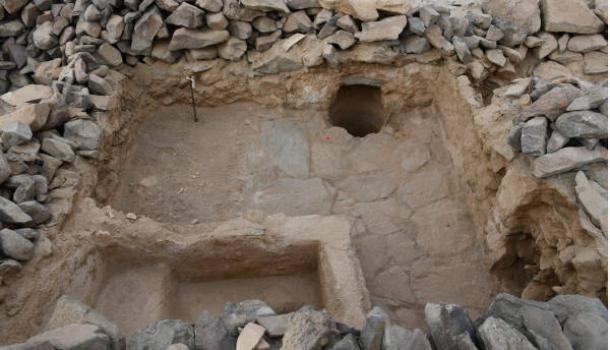
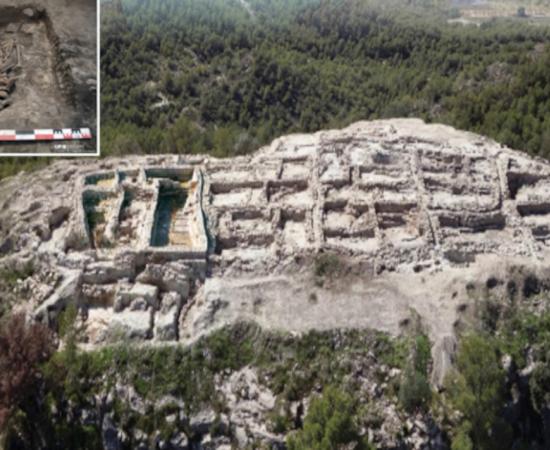
Ancient gold mining workshop. (Egyptian Ministry of Tourism and Antiquities).
Ancient Artifacts Worth their Weight in Gold
One of the most astonishing discoveries from the site is a collection of 628 ostraca, fragments of pottery or stone inscribed with texts in hieroglyphic, demotic, and Greek scripts. These inscriptions provide valuable insights into the multicultural and multilingual nature of the region, reflecting the diversity of those who lived and worked there. The texts are expected to offer new perspectives on trade, administration, and daily life in the Eastern Desert throughout Egypt’s colorful and complex history.
- Spectacular Gold Treasures of Ancient Africa Revealed
- Bronze Age Mining in Europe Dates Back Earlier than Previously Thought
Additional significant finds include bronze coins from the Ptolemaic dynasty, an array of terracotta figurines depicting human and animal figures from the Greco-Roman period, and several small, unfinished stone sculptures representing deities such as Bastet and Harpocrates. These objects suggest that spiritual beliefs played an essential role in the lives of the miners.
The excavation also yielded five offering tables from the Ptolemaic period, as well as a diverse collection of ceramic vessels used for storing daily essentials such as perfumes, medicines, and incense. Personal adornments, including jewelry made from precious stones and seashells, further illustrate the craftsmanship and artistic sensibilities of the settlement’s inhabitants.
A New Era of Preservation and Public Engagement
Recognizing the immense historical value of these findings, Egyptian authorities have taken significant steps to ensure their conservation and accessibility to the public. As part of the project, a replica of the mining camp has been reconstructed on a six-acre site. This re-creation includes reconstructions of the main buildings discovered at the original excavation site, offering visitors a chance to experience firsthand what life was like for ancient Egyptian gold miners as far back as the first millennium BC.
To enhance public engagement, a modern visitor center has been established, featuring high-definition digital displays that showcase the excavation process and highlight key discoveries. Informational panels narrate the history of the site and provide context on the evolution of gold mining in Egypt from the Pharaonic era through later periods.
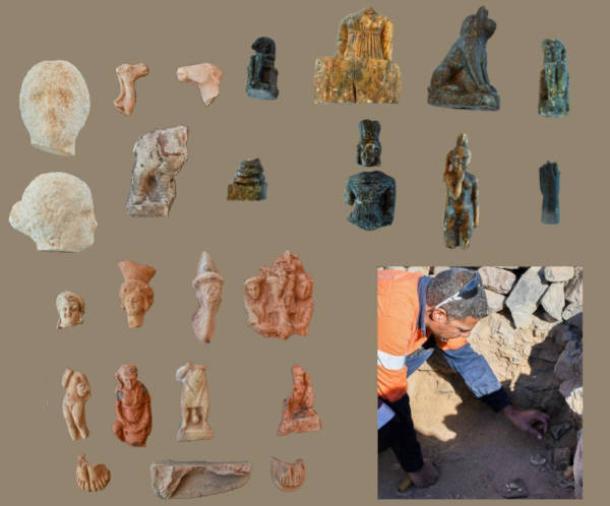
Collection of small stone and clay statues and figurines found during excavations. (Egyptian Ministry of Tourism and Antiquities).
Legacy of the Ancient Gold City
The Revival of the Ancient Gold City project has added to Egypt’s rich archaeological heritage. It has also significantly deepened archaeologists’ understanding of ancient gold production techniques, and the economic, social, and religious dynamics of mining communities. The discovery reaffirms Egypt’s historical significance as a center for gold extraction and trade in the ancient world, emphasizing the country’s enduring influence on the global history of metallurgy.
While the project is now essentially complete, archaeologists will continue to perform exploratory excavations in the surrounding region, which could yield more invaluable information about an activity that filled a vital role in the robust ancient Egyptian economy.
Top image: Overhead view of ancient gold mining facility in Egypt.
Source: Egyptian Ministry of Tourism and Antiquities.
By Nathan Falde