

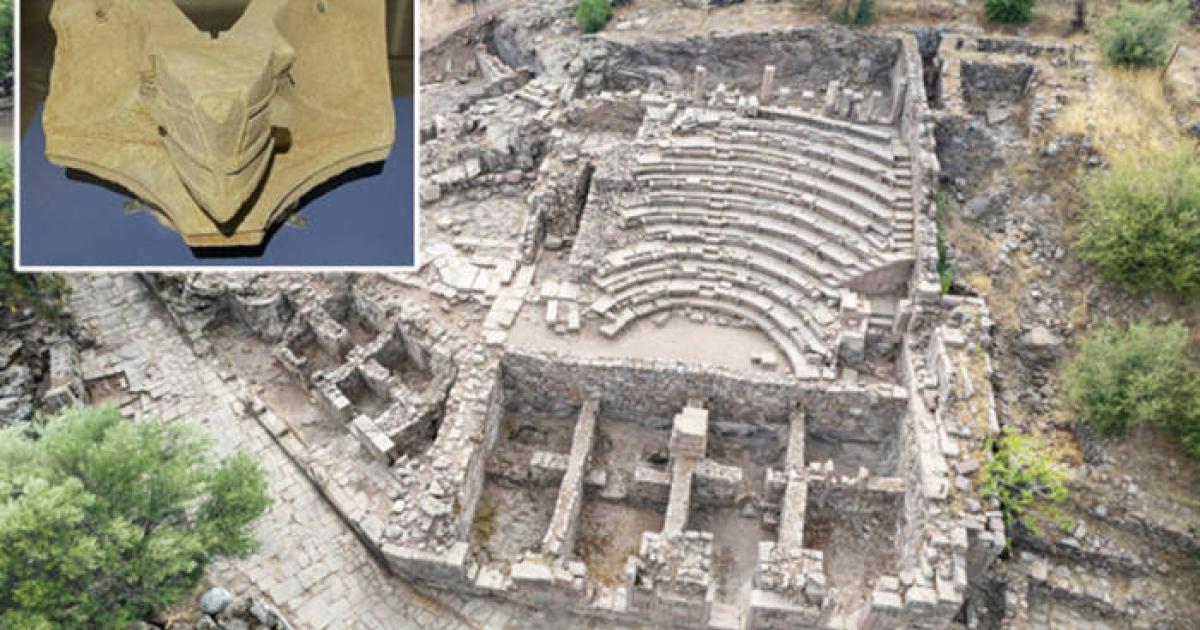

Archaeologists excavating the ancient Greek city of Aigai in western Turkey have unearthed a remarkably preserved 2,200-year-old sundial that offers unprecedented insights into Hellenistic timekeeping and maritime culture. The extraordinary artifact, discovered in the city's Bouleuterion (council hall), represents one of only two known examples of its kind, with its counterpart found on the Greek island of Delos. This rare find illuminates the sophisticated scientific knowledge and artistic craftsmanship that characterized ancient Greek civilization during the Hellenistic period.
Located in the Yunusemre district of Manisa province, Aigai was founded by Aeolian Greeks in the eighth century BC and flourished for nearly 2,700 years, explains the Greek Reporter. The city, one of twelve Aeolian settlements in western Anatolia, rose on the challenging slopes of the Yuntdağ region where harsh geography demanded both ingenuity and divine protection from its inhabitants.
- A History of Timekeeping: Mankind's Obsession With Time
- As Old As Time: Ancient Invention of the Water Clock
- Does the Greatest Macedonian Rest In the Royal Necropolis at Aigai?

The single piece, approximately 2200 years old sundial was found in the Aigai Ancient City in the People's Assembly building (Bouleuterion) in Manisa. (DHA/ArkeolojiHaber)
Masterpiece of Ancient Craftsmanship
The sundial's exceptional preservation as a single stone piece reflects both the skill of ancient artisans and fortunate archaeological circumstances. Professor Yusuf Sezgin, head of excavations at Aigai and chair of the Archaeology Department at Manisa Celal Bayar University, described the artifact as "quite special" in both its aesthetic and functional qualities, writes Haberler.
Positioned atop a Doric-style column capital and elevated from the ground, the sundial's most striking feature is its ship's prow design. The front section carefully mimics a vessel's bow, complete with protective eye motifs on both sides - ancient symbols believed to ward off the evil eye and ensure safe passage. Bronze rods once projected from the dial's face, casting shadows that precisely marked the hours of the day based on the sun's angle.
- 2600-Year-Old Greek Wine Cup May have Oldest Depiction of Constellations
- Sumerians Invented the System of Time 5000 Years Ago

The sundial head on is missing the original brass rods that would have adorned the dial face. (DHA/ArkeolojiHaber)
Scientific Innovation and Maritime Symbolism
Beyond simple timekeeping, the sundial served as a sophisticated astronomical instrument capable of tracking seasonal changes. Its central line enabled observers to monitor crucial astronomical events including summer and winter solstices, demonstrating the advanced mathematical and observational skills of ancient Greek scientists. This functionality would have been essential for agricultural planning and religious ceremonies tied to seasonal cycles.
The maritime imagery carved into the sundial reveals fascinating insights about Aigai's cultural identity and connections. Despite being located in challenging mountainous terrain where farming proved difficult, the city's residents maintained strong symbolic ties to seafaring culture. Professor Sezgin noted that "the depiction of a ship sheds light on Aigai's connections to the sea and its admiration for maritime culture," suggesting that coastal influences penetrated far into Anatolia's interior.

Where is the body of Alexander the Great? Recorded Webinar, from the Ancient Origins Store.
Legacy of Greek Scientific Achievement
The sundial is extremely rare - only one comparable example exists from Delos Island, making this discovery invaluable for understanding ancient Greek technology and craftsmanship. Professor Sezgin emphasized that "we have not encountered another example so intricately crafted," highlighting the exceptional skill required to create such a precise scientific instrument.
Now displayed at the newly opened Manisa Museum, the sundial joins other significant discoveries from two decades of excavation at Aigai. The site has revealed theaters, markets, council halls, and temples dedicated to Athena, Apollo, and Demeter, illustrating the balance between civic governance and religious devotion that characterized ancient Greek urban life.
This remarkable artifact stands as testament to the scientific sophistication achieved by ancient Greek civilization, demonstrating how communities combined practical timekeeping needs with artistic expression and cultural symbolism. The sundial's survival offers modern researchers and visitors alike a tangible connection to the intellectual achievements that helped lay the foundation for Western scientific tradition.
Top image: Aigai Bouleuterion, or council building, where the sundial has been found. Inset, 2,200-year-old sundial discovered in Aigai. Source: Suzi/Adobe Stock. Inset Haberler
By Gary Manners
References
Sezgin, Y. (2025). Sundial Discovery at Aigai Ancient City. Available at: https://en.haberler.com/a-2-200-year-old-sundial-was-found-in-the-ancient-19021378/
Greek Reporter. (2025). 2200-Year-Old Sundial Found in Ancient Greek City of Aigai. Available at: https://greekreporter.com/2025/09/09/sundial-ancient-greek-city-aigai-turkey-matches-delos/






















