
A strange mystery baffled Egyptologists when opening the tombs of kings who had been laid to rest in The Valley of the Kings. In 1816 explorer Giovanni Belzoni had reached the far end of the valley when he came upon and opened a tomb which proved to have been prepared for Prince Tutmose, the eldest son of the King Amenhotep III, now identified as the legendary Solomon. What he found was very unusual. To begin with there was no sign of any remains of the deceased prince and stranger still the tomb had been finished, but the walls of this tomb had not been decorated with the normal funerary illustrations and hieroglyphic spells, necessary for the departed king to find his way through the Duat or netherworld.
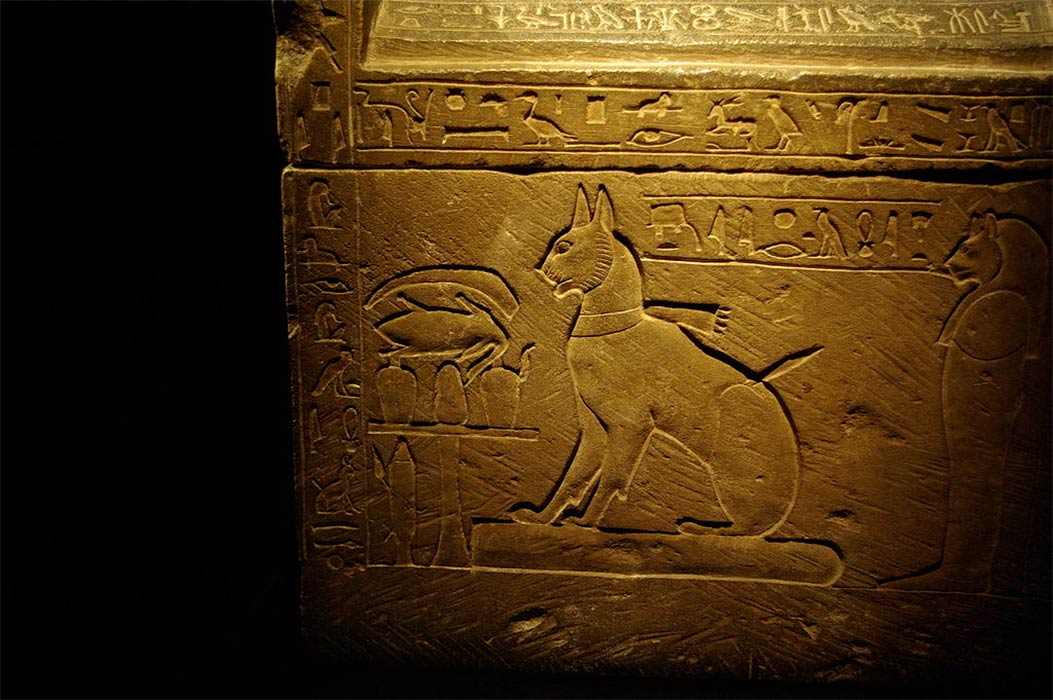
Sarcophagus of Prince Thutmose's cat, Ta-miu (CC BY-SA 2.0)
Prince Twtmose
Some pharaohs have been found in unfinished tombs, but not finished and then undecorated tombs. The Duat became a great feature of Irish folklore following the invasion and conquest of the Green Isle by Bronze Age Egyptians. It is still remembered as the Tuath Dedanaan (Tatanen being the name of an Egyptian God or Goddess), and this too is thought of as another world where the little folk live.
Little has been written about Twtmose (whose name means ‘Born of the God David’), more often just a brief mention of his name. There is however more about him in Act of God and The Moses Legacy by Graham Phillips. Graham Phillips is also one of the few researchers to provide the correct pronunciation of the prince’s name, namely ‘Tutmose’ and not Tuth or Thoth as the deceivers would have one believe in their endeavor to hide the fact that ‘Twt’ became ‘DVD’(David) in Hebrew. Nevertheless, Graham does then revert to the conventional ‘Tuthmose’ when he writes that the prince was the king’s eldest son and heir to the throne. As a young man the prince was a governor of Memphis before becoming commander of the king’s chariot forces in the campaign against the Ethiopians. When he returned, he became a High Priest of Ra in Heliopolis.