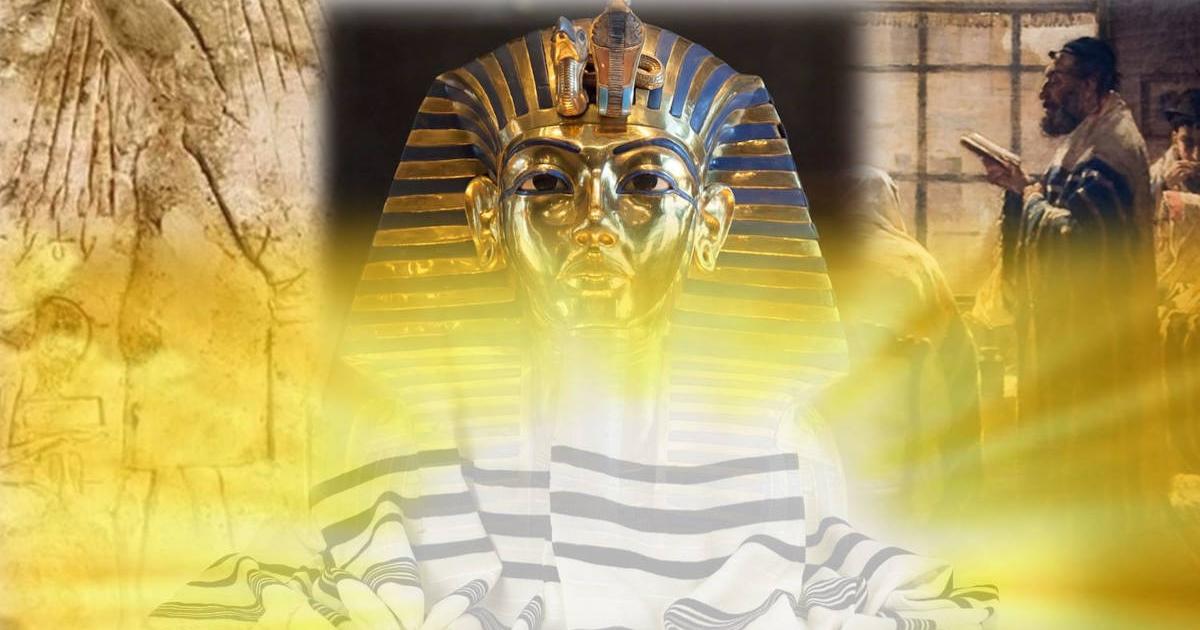

The Jewish prayer shawl, the tallit, is as mysterious as it is iconic. Worn by Jews each morning when they pray to God, it connects them to the divine realm, their history, and their culture. However, its origins are generally unknown. This article will argue that the seeds of the Jewish prayer shawl lie in a royal robe worn by Pharaohs since the beginning of Egyptian civilization, over five millennia ago.
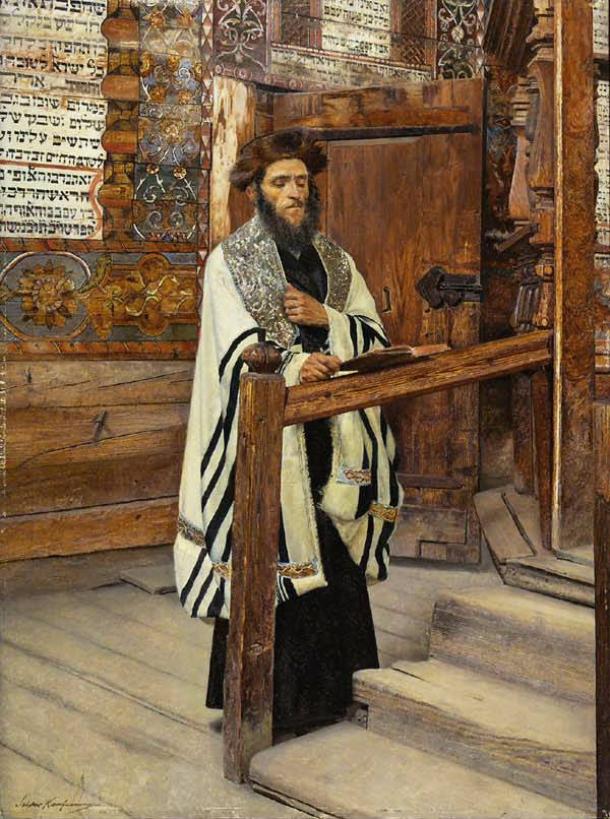
A rabbi reading in the forecourt of the Synagogue. By Isidor Kaufmann (1853-1921). His tallit appears nearly identical to Akhenaten’s jubilee robe. (Auktionshaus Bergmann/Public Domain)
Royal Renewal and Rejuvenation
The Heb-Sed, or Jubilee Festival, was one of Pharaoh’s most important events, held to celebrate thirty successful years on the throne. Eric Uphill and other scholars have, over the years, elucidated the details of this complex festival, and determined that it re-enacted the king’s original coronation. It consisted of weeks of festivities, banqueting, and most importantly, meeting all the gods of Upper and Lower Egypt, who came to pay homage to the king in their shrines, and vice versa.
Pharaoh renewed his divinely-bestowed “ownership” of Egypt by running four times around a large course that represented the country. He assumed his obligation to rule according to Ma’at (justice), and he re-established his role as chief priest and primary intercessor to the gods. He also acted out his ritual death, burial and resurrection. As Greg Reeder states: “through a ritual of magical rebirth, the king could not only renew his life and reign, but would thereby guarantee the fertility of his land and people. Thus, dimly perceived, were the origins of the royal festival of renewal known as the Heb Sed.”