


Generally speaking, when archaeologists find something it's because they are deliberately looking for it. There are exceptions, of course, when someone in the field metaphorically trips over something unexpected in the dark, accidentally discovering a Göbekli Tepe or a Denisovan bone. Then the tendency is to label such a find an anomaly—a one-time accident that doesn't fit within accepted parameters.
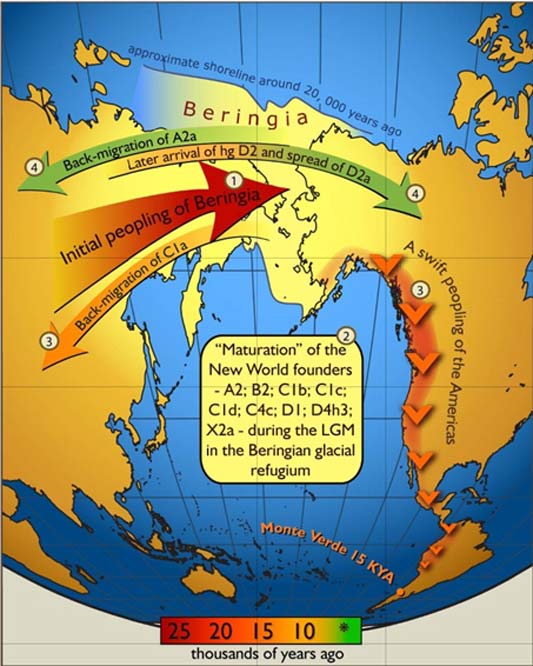
Map of gene flow in and out of Beringia (CC BY-SA 2.5)
When something new turns up that threatens to completely upset the proverbial tried-and-true apple cart, the following argument often ensues: "Where's the evidence? I don't want to see one example. I want many examples!" "Then give me some grant money to go out and find more!" "That would be a waste of money without more evidence!"
The Clovis First Theory
One of the best illustrations for this state of affairs is found in the quest to determine when the first Americans arrived on the continent. Until very recently, ‘Clovis First’ was the accepted dogma. In many classrooms, it is still defended with almost religious zeal.















