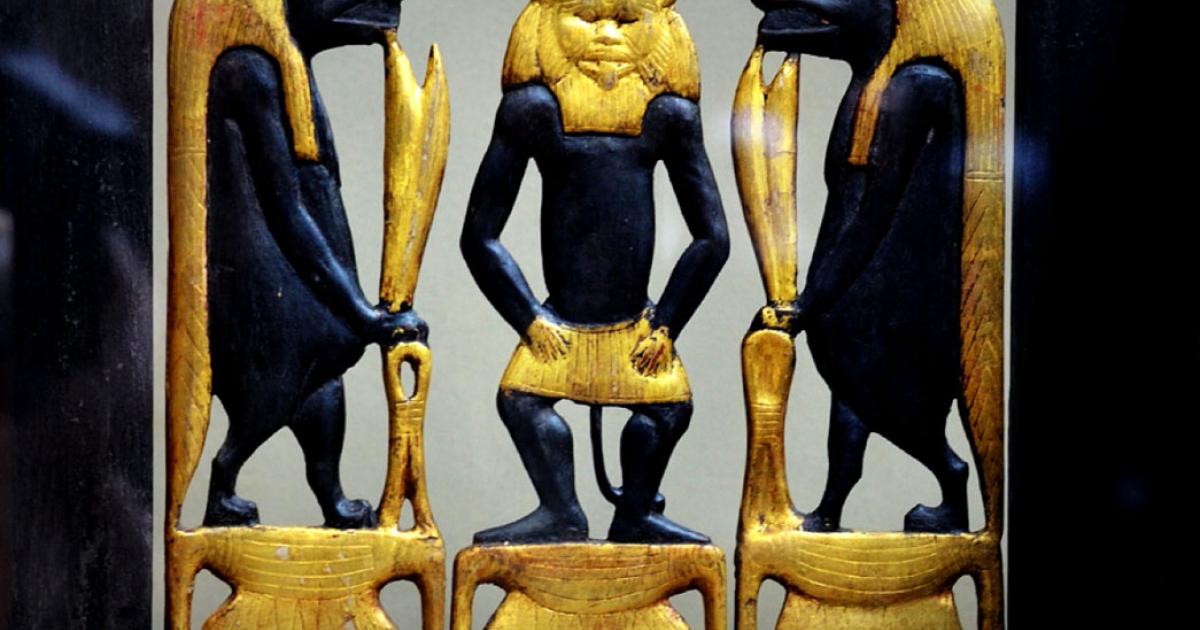
Few ancient cultures rivaled the Egyptian pantheon of gods and goddesses. Virtually every known creature was represented and venerated as they were believed to possess magical qualities of different kinds. Bes was one of the most popular deities among the multitude of supernatural beings. A lion-dwarf, he is usually depicted wearing strange outfits; playing a tambourine, harp or holding the hieroglyphic Sa sign signifying protection. This strange character was a firm favorite among women and children - for he was their protector against all manner of evil.
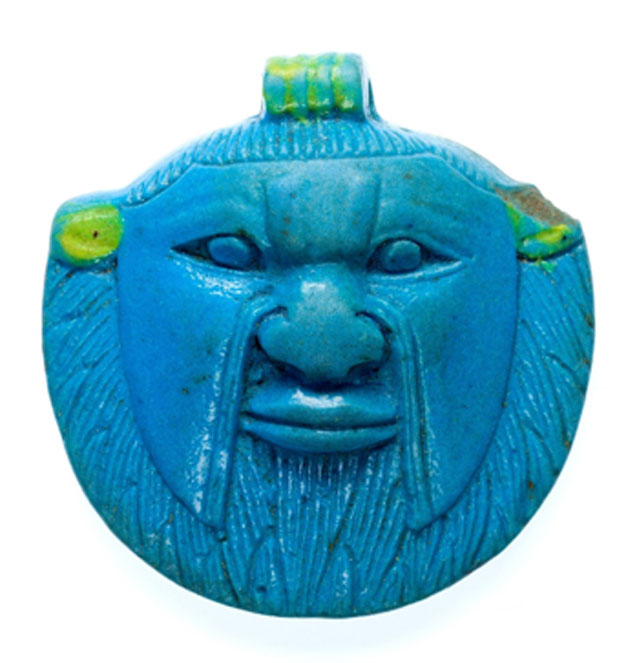
Faience amulet of the head of Bes from the Late Period, 26th to 30th Dynasties. Bes was worshipped and invoked by ordinary Egyptians as a protector. His usual depiction, as a grotesque dwarf with a lion’s ears and mane, was thought to deter the approach of the malevolent forces believed to cause illness. Metropolitan Museum of Art, New York.
Origins of a Playful God
The ancient Egyptians fervently believed that magic was a sustainer of life, in that, it provided an escape route; or better still, a comforting answer when beset by calamity. While a religious approach to a woman who’d lost her child could be ‘no one can fight destiny’ – magic gave answers or the means to understand why a negative situation occurred and how to overcome or make peace with it.
This probably explains the rise of various divinities who were appeased depending on the problem one wished to solve. The qualities attributed to the bearded Bes (also Besa and Bisu – meaning ‘to protect’) were wide-ranging; and it is not possible to compartmentalize this god into a single role. While he was not entertaining mothers and their offspring in his jovial avatar; Bes wielded an array of weapons to either battle or keep evil at bay. All classes of Egyptian society sought his divine favors.