

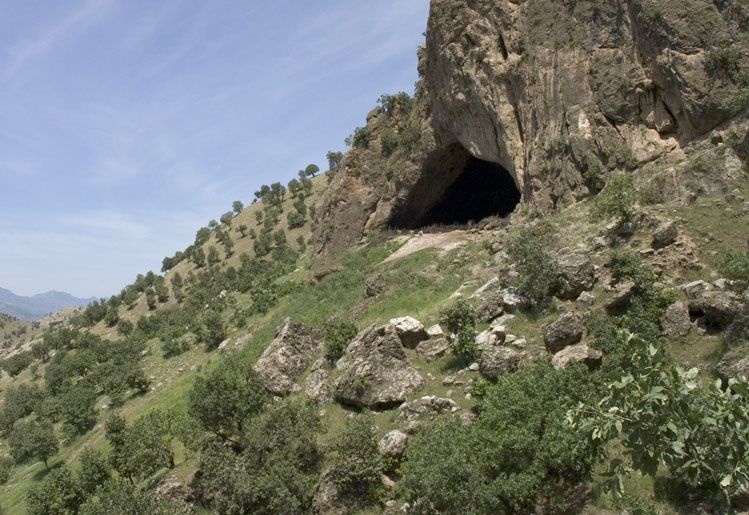
Photo: JosephV at English Wikipedia, CC BY-SA 3.0 via Wikimedia Commons Source
A cave in Kurdistan with Neanderthal burials, including the so-called flower burial.
- Country
- Iraq
- Region
- Asia
- Period
- about 70,000 to 45,000 years ago
- Kind of site
- Cave, archaeological site
- Located in
- Erbil Governorate, Iraq
- Also known as
- Shanadar Cave; Shaneder Cave
- Coordinates
- 36.8316° N, 44.2211° EWikipedia and Wikidata agree within 3.97 km
- Reference
- Wikidata Q909799
- Encyclopedia
- Wikipedia article
About this place
Shanidar Cave is an archaeological site on Bradost Mountain, within the Zagros Mountains in the Erbil Governorate of Kurdistan Region in northern Iraq. Neanderthal remains were discovered here in 1953, including Shanidar 1, who survived several injuries, possibly due to care from others in his group, and Shanidar 4, the famed supposed 'flower burial', where pollen has been suggested to be the remnants of deliberately placed flowers. Until this discovery, Cro-Magnons, the earliest known H. sapiens in Europe, were the only individuals known for purposeful, ritualistic burials. However, this has been questioned, with it being suggested that the pollen over the burial may be the result of natural processes such as bee accumulation.
Adapted from the Wikipedia article Shanidar Cave (this version), lightly edited for style, under the CC BY-SA 4.0 license.
Nearby places
Open in the Atlas →- Zawi Chemi 7.6 km (4.7 mi)
- Harir rock-relief 32 km (20 mi)
- Sidekan 34 km (21 mi)
- Khinnis Reliefs 71 km (44 mi)
- Citadel of Erbil 74 km (46 mi)
- Jerwan 76 km (47 mi)














Recent comments