

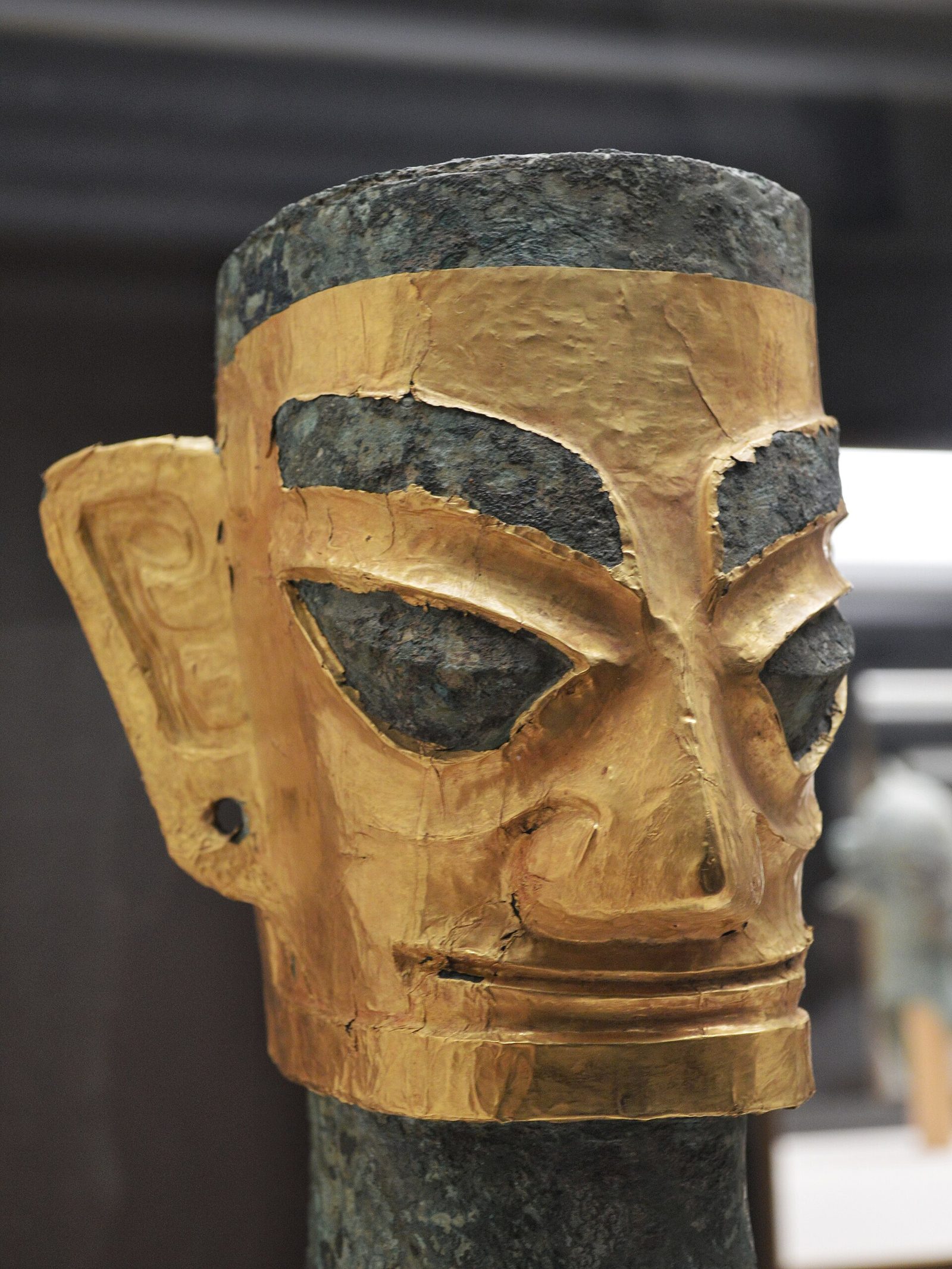
Photo: Cyclohexane233, CC BY-SA 4.0 via Wikimedia Commons Source
A Bronze Age culture in Sichuan known for its strange bronze masks and giant heads. It is associated with the Baodun culture and the Sanxingdui culture. It is protected as a Major Historical and Cultural Site at the National Level.
- Country
- China
- Region
- Asia
- Period
- about 1600 to 1046 BC
- Kind of site
- Tell, cultural heritage of China, archaeological site
- Period or culture
- Bronze Age, Baodun culture, Sanxingdui culture
- Heritage status
- Major Historical and Cultural Site Protected at the National Level
- Located in
- Guanghan, China
- Also known as
- Site of Sanxingdui City; Sanxingdui Sites; Sanxingdui Site
- Coordinates
- 30.9930° N, 104.2000° EWikipedia and Wikidata agree within 0.08 km
- Reference
- Wikidata Q929072
- Encyclopedia
- Wikipedia article
About this place
Sanxingdui (Chinese: 三星堆; pinyin: Sānxīngduī; lit. 'Three Star Mound') is an archaeological site and a major Bronze Age culture in modern Guanghan, Sichuan, China. Largely discovered in 1986, following a preliminary finding in 1927, archaeologists excavated artifacts that radiocarbon dating placed in the 12th-11th centuries BC. The archaeological site is the type site for the Sanxingdui culture that produced these artifacts, archeologists have identified the locale with the ancient kingdom of Shu, which suggests the presence of a unique civilization in this region before the state of Qin conquered the area in 316 BC. The artifacts are displayed in the Sanxingdui Museum located near the city of Guanghan. Sanxingdui is on the UNESCO list of tentative World Heritage Sites, along with the Jinsha site and the tombs of boat-shaped coffins.
Adapted from the Wikipedia article Sanxingdui (this version), lightly edited for style, under the CC BY-SA 4.0 license.
Nearby places
Open in the Atlas →- Donghuamen Site 39 km (24 mi)
- Jinsha site 39 km (24 mi)
- Fugan Temple 39 km (24 mi)
- Shi'erqiao Site 40 km (25 mi)
- Gao Yi Tomb 154 km (96 mi)
- Leshan Giant Buddha 166 km (103 mi)














Recent comments