

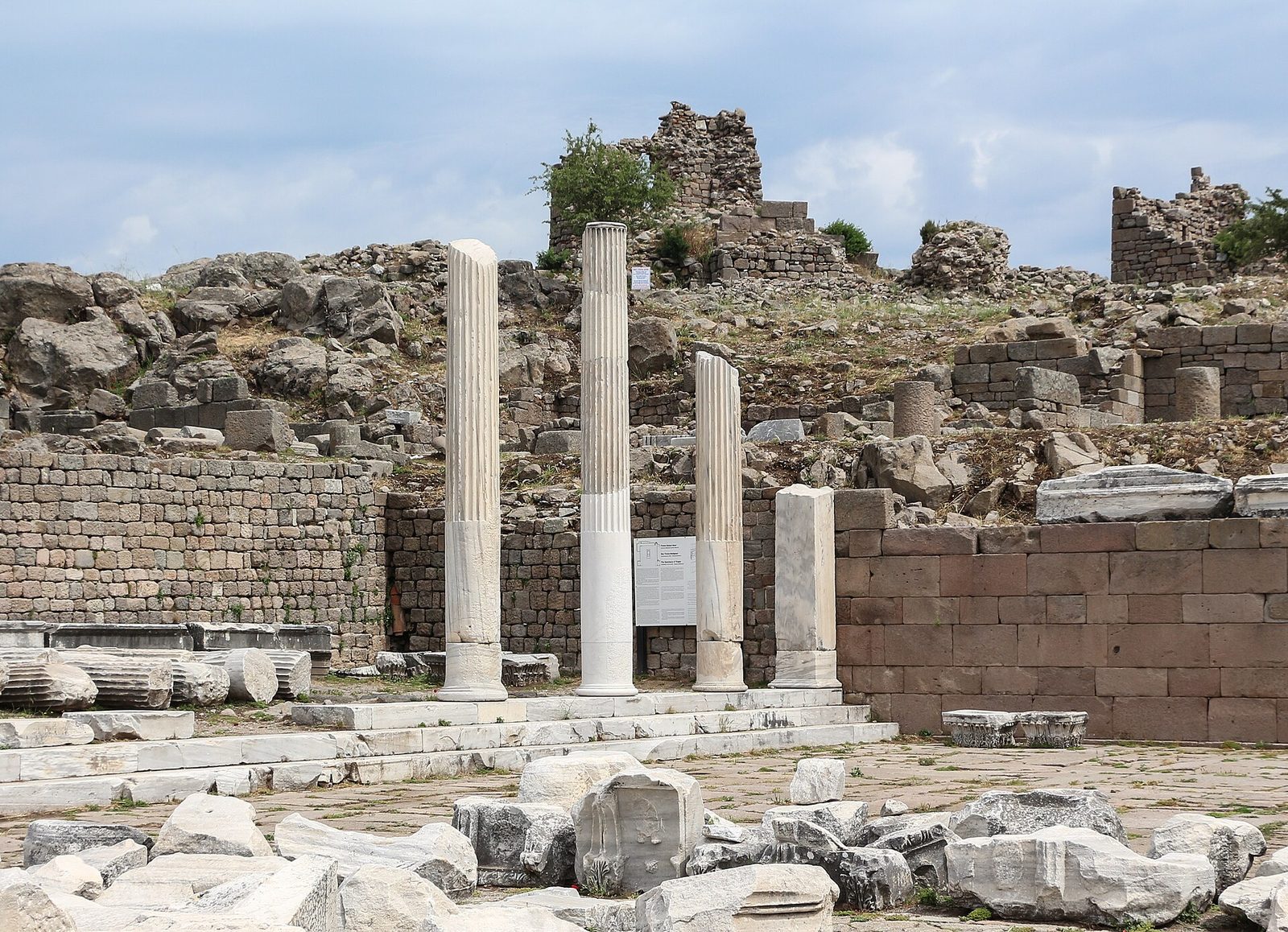
Photo: Bernard Gagnon, CC BY-SA 3.0 via Wikimedia Commons Source
A Hellenistic capital with a steep theater, a famous library and the Great Altar. It dates from the 8th century BC and is associated with Ancient Greece and Ancient Rome. It is part of a UNESCO World Heritage Site.
- Country
- Turkey
- Region
- Asia
- Period
- 3rd to 2nd century BC
- Kind of site
- Ancient city, Ancient Greek archaeological site, polis
- Dates from
- 8th century BC
- Period or culture
- Ancient Greece, Ancient Rome
- Heritage status
- Part of UNESCO World Heritage Site
- Part of
- Pergamon and its Multi-Layered Cultural Landscape
- Located in
- Bergama, Turkey
- Also known as
- Pergamum; Pergamos; Mint of Pergamum
- Coordinates
- 39.1325° N, 27.1842° EWikipedia and Wikidata agree within 0.34 km
- Reference
- Wikidata Q18986
- Encyclopedia
- Wikipedia article
About this place
Pergamon or Pergamum, also referred to by its modern Greek form Pergamos, was a rich and powerful ancient Greek city in Aeolis. It is located 26 kilometers (16 mi) from the modern coastline of the Aegean Sea on a promontory on the north side of the river Caicus (modern-day Bakırçay) and northwest of the modern city of Bergama, Turkey. During the Hellenistic period, it became the capital of the Kingdom of Pergamon in 281 to 133 BC under the Attalid dynasty, who transformed it into one of the major cultural centers of the Greek world. The remains of many of its monuments are still visible today, most notably the masterpiece of the Pergamon Altar. Pergamon was the northernmost of the seven churches of Asia cited in the New Testament Book of Revelation.
Adapted from the Wikipedia article Pergamon (this version), lightly edited for style, under the CC BY-SA 4.0 license.
Nearby places
Open in the Atlas →- Sanctuary of Demeter (Pergamum) 0.6 km (0.4 mi)
- Red Basilica 1.2 km (0.7 mi)
- Asclepieion of Pergamon 2.2 km (1.4 mi)
- Halisarna 11 km (7 mi)
- Gambrion 15 km (9 mi)
- Allianoi 15 km (10 mi)














Recent comments