

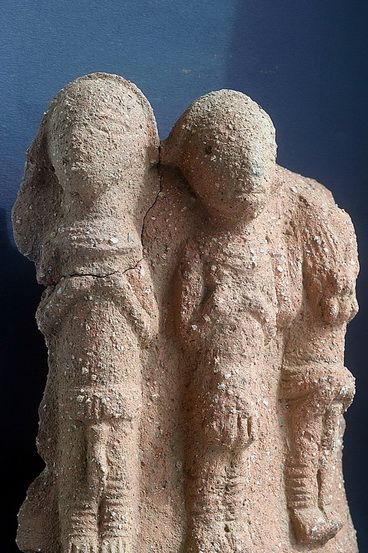
Photo: Nicotta, CC BY-SA 3.0 via Wikimedia Commons Source
An Iron Age culture known for its terracotta sculptures. It dates from the 15th century BC and is associated with the Neolithic.
- Country
- Nigeria
- Region
- Africa
- Period
- about 1500 BC to AD 1
- Kind of site
- Archaeological culture, culture, style
- Dates from
- 15th century BC
- Period or culture
- Iron Age, Neolithic
- Coordinates
- 9.5000° N, 8.0000° EWikipedia and Wikidata agree within 1.79 km
- Reference
- Wikidata Q927291
- Encyclopedia
- Wikipedia article
About this place
The Nok culture is a population whose material remains are named after the Ham village of Nok in southern Kaduna State of Nigeria, where their terracotta sculptures were first discovered in 1928. The Nok people and the Gajiganna people may have migrated from the Central Sahara, along with pearl millet and pottery, and diverged prior to arriving in the northern region of modern-day Nigeria. This may have led to their respective settlements in the regions of Gajiganna and Nok. Nok people may have also migrated from the West African Sahel to the region of Nok. Nok culture may have emerged in 1500 BCE and continued to persist until 1 BCE. Nok people may have developed terracotta sculptures, through large-scale economic production, as part of a complex funerary culture that may have included practices such as feasting.
Adapted from the Wikipedia article Nok culture (this version), lightly edited for style, under the CC BY-SA 4.0 license.
Nearby places
Open in the Atlas →- Samun Dukiya 46 km (29 mi)
- Taruga 92 km (57 mi)
- Rop rock shelter 95 km (59 mi)
- Ikom monoliths 393 km (244 mi)
- Archaeology of Igbo-Ukwu 403 km (250 mi)
- Igbara Oke Petroglyphs 403 km (250 mi)














Recent comments