

Photo: Godot13, CC BY-SA 4.0 via Wikimedia Commons Source
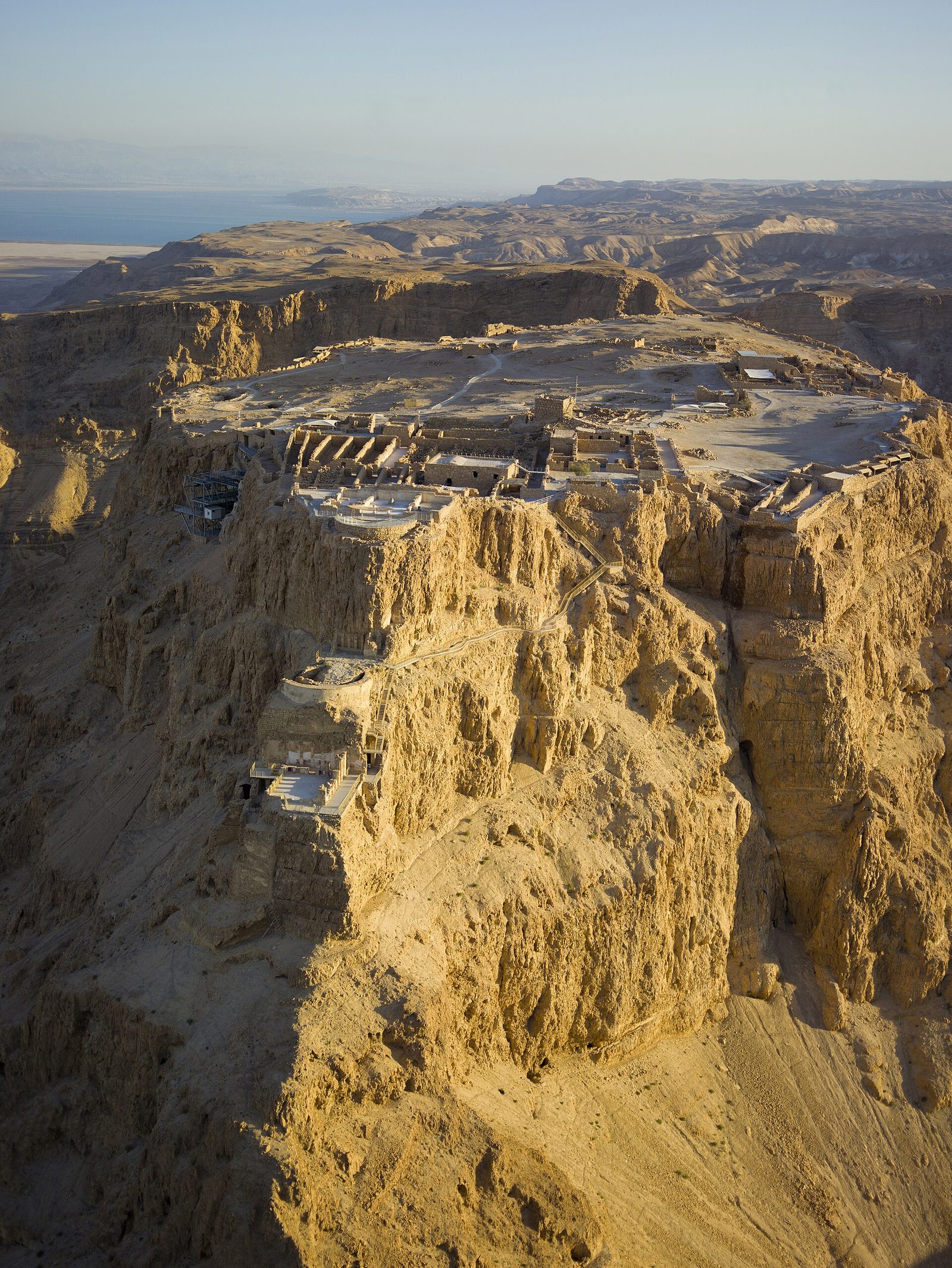
Herod's clifftop fortress above the Dead Sea, scene of the last stand of the Jewish revolt in AD 73 or 74. It is associated with Judaism. It is a UNESCO World Heritage Site.
- Country
- Israel
- Region
- Asia
- Period
- fortified about 30 BC
- Kind of site
- Fortress, World Heritage Site, archaeological site
- Period or culture
- Judaism
- Heritage status
- World Heritage Site
- Located in
- Tamar Regional Council, Israel
- Coordinates
- 31.3156° N, 35.3539° EWikipedia and Wikidata agree within 0.0 km
- UNESCO
- World Heritage site 1040
- Reference
- Wikidata Q186312
- Encyclopedia
- Wikipedia article
About this place
Masada (Hebrew: מְצָדָה məṣādā, 'fortress'; Arabic: جبل مسعدة, romanized: jabal musayda, lit. 'mount museida') is a mountain-top fortress complex in the Judaean Desert, overlooking the western shore of the Dead Sea in southeastern Israel. The fort, built in the first century BC, was constructed atop a natural plateau rising over 400 m (1,300 ft) above the surrounding terrain, 20 km (12 mi) east of modern Arad. The most significant remains at the site date to the reign of Herod the Great, King of Judaea under Roman administration c. 37 to 4 BC, who transformed Masada into a fortified desert refuge early in his rule. He enclosed the summit with a casemate wall and towers, and constructed storerooms, an advanced water system, and bathhouses, along with two elaborate palaces: one on the western side and another built across three terraces on the northern cliff.
Adapted from the Wikipedia article Masada (this version), lightly edited for style, under the CC BY-SA 4.0 license.
Nearby places
Open in the Atlas →- Cave of Horror 13 km (8 mi)
- Cave of Letters 13 km (8 mi)
- Upper Zohar 14 km (9 mi)
- Ein Gedi 17 km (11 mi)
- Temple of Ein Gedi 17 km (11 mi)
- Sodom 19 km (12 mi)














Recent comments