

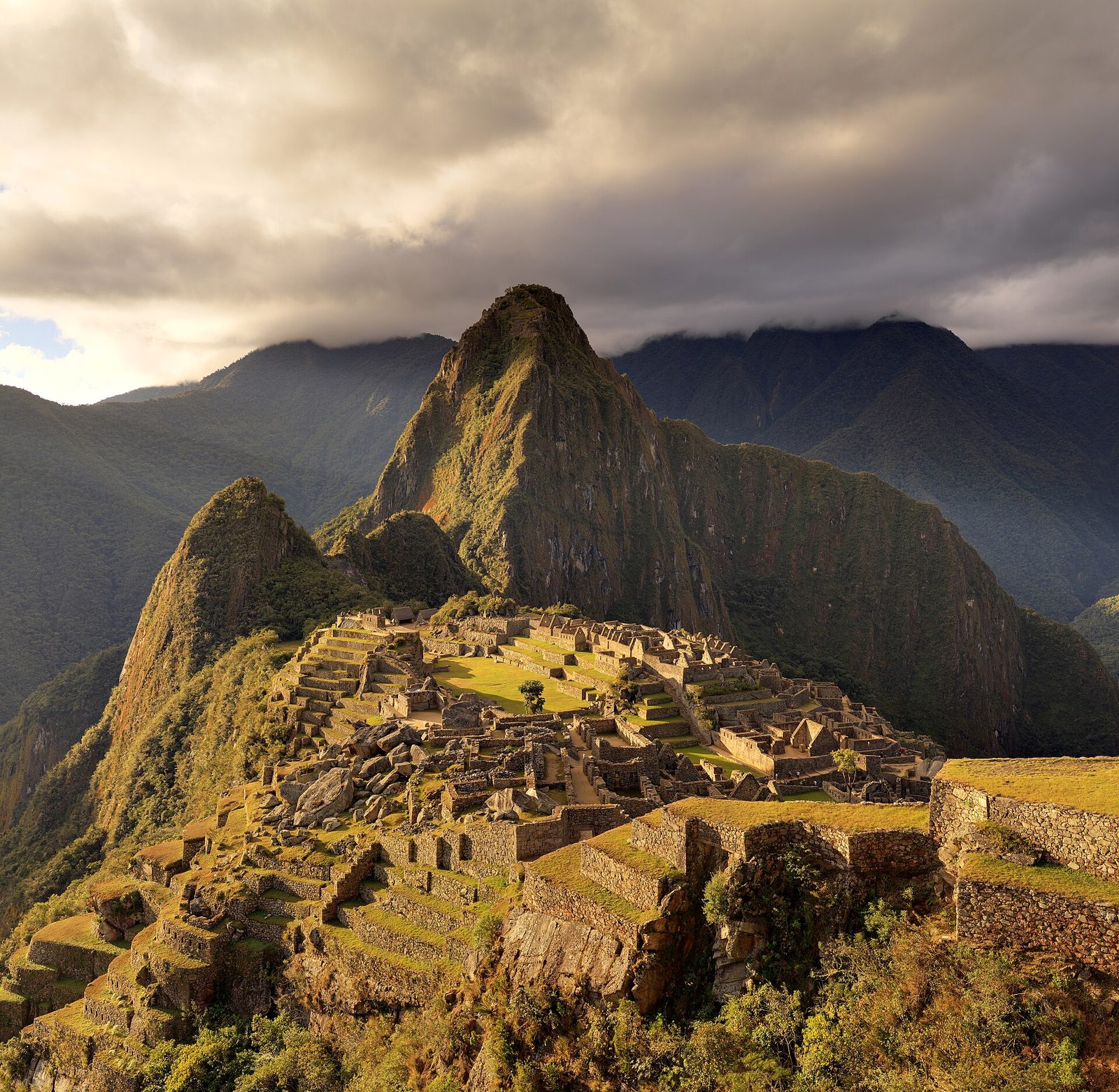
Photo: Martin St-Amant (S23678), CC BY-SA 3.0 via Wikimedia Commons Source
Machu Picchu is an Inca royal estate on a ridge above the Urubamba River in the Andes of southern Peru. It was built around AD 1450, most likely for the emperor Pachacuti, and was abandoned around the time of the Spanish conquest. Its terraces and fitted stone walls make it one of the best preserved Inca sites and a UNESCO World Heritage Site.
An Inca royal estate on a ridge above the Urubamba valley. It dates from 1450 and is associated with the Inca culture. It is protected as a cultural heritage of Peru.
- Country
- Peru
- Region
- Americas
- Period
- about AD 1450
- Kind of site
- Ancient city, World Heritage Site, archaeological site
- Dates from
- 1450
- Period or culture
- Inca culture
- Heritage status
- World Heritage Site; Cultural heritage of Peru; Historic Civil Engineering Landmark
- Located in
- Urubamba Province, Peru
- Also known as
- Huayna Picchu; Wayna Picchu
- Coordinates
- 13.1633° S, 72.5456° WWikipedia and Wikidata agree within 0.0 km
- UNESCO
- World Heritage site 274
- Reference
- Wikidata Q676203
- Encyclopedia
- Wikipedia article
About this place
Machu Picchu is a 15th-century Inca citadel located in the Eastern Cordillera of southern Peru on a mountain ridge at 2,430 meters. It is situated in the Machupicchu District of Urubamba Province about 80 kilometers (50 miles) northwest of Cusco, above the Sacred Valley and along the Urubamba River, which forms a deep canyon with a subtropical mountain climate. Often referred to as the "Lost City of the Incas", Machu Picchu is one of the most iconic symbols of the Inca civilization and a major archaeological site in the Americas. Estimated to be built around 1450, it is believed to have served as an estate for the Inca emperor Pachacuti, though no contemporary written records exist to confirm this. The site was abandoned roughly a century later, likely during the Spanish conquest.
Adapted from the Wikipedia article Machu Picchu (this version), lightly edited for style, under the CC BY-SA 4.0 license.
Nearby places
Open in the Atlas →- Temple of the Moon 1.2 km (0.8 mi)
- Intipunku 1.4 km (0.9 mi)
- Intipata 2.6 km (1.6 mi)
- Wiñay Wayna 3.4 km (2.1 mi)
- Chachabamba 4.6 km (2.8 mi)
- Llaqtapata 4.9 km (3.1 mi)














Recent comments