

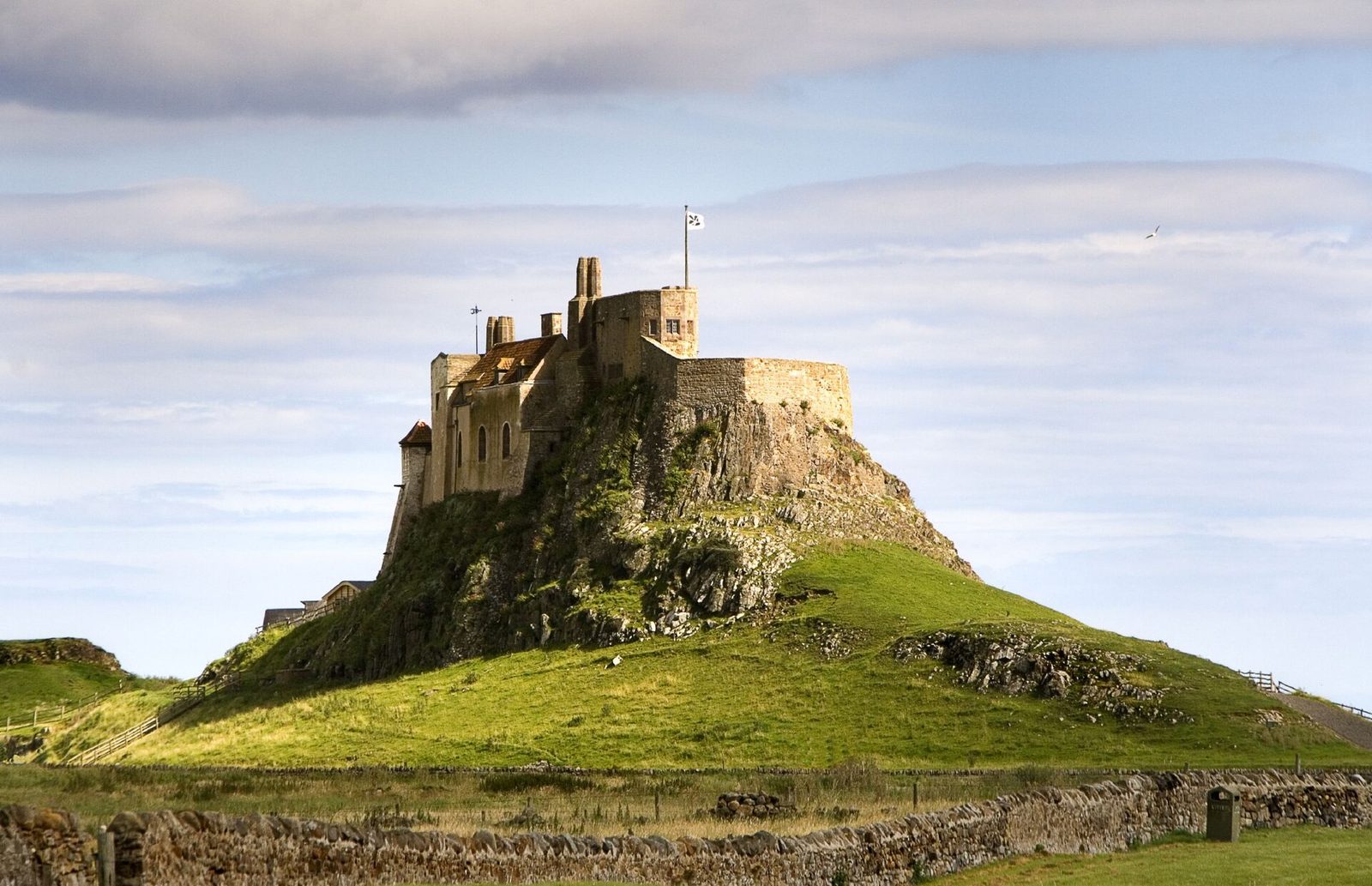
Photo: matthew Hunt, CC BY 2.0 via Wikimedia Commons Source
A tidal island monastery off Northumberland, raided by Vikings in AD 793.
- Country
- United Kingdom
- Region
- Europe
- Period
- founded AD 635
- Kind of site
- Tidal island
- Located in
- Northumberland, United Kingdom
- Also known as
- The Holy Island of Lindisfarne; Lindesfarne; Holy Island
- Coordinates
- 55.6800° N, 1.8025° WWikipedia and Wikidata agree within 0.0 km
- Reference
- Wikidata Q213804
- Encyclopedia
- Wikipedia article
About this place
Lindisfarne, also known as Holy Island, is a tidal island off the northeast coast of England, which constitutes the civil parish of Holy Island in Northumberland. Holy Island has a recorded history from the 6th century AD; it was an important center of Celtic Christianity under Saints Aidan, Cuthbert, Eadfrith, and Eadberht of Lindisfarne. The island was originally home to a monastery, which was destroyed during the Viking invasions but re-established as a priory following the Norman Conquest of England. Other notable sites built on the island are St Mary the Virgin parish church (originally built in AD 635 and restored in 1860), Lindisfarne Castle, several lighthouses and other navigational markers, and a complex network of lime kilns. The island is part of the Northumberland Coast National Landscape and a hotspot for historical tourism and bird watching.
Adapted from the Wikipedia article Lindisfarne (this version), lightly edited for style, under the CC BY-SA 4.0 license.
Nearby places
Open in the Atlas →- Weetwood Moor 18 km (11 mi)
- Duddo Five Stones 19 km (12 mi)
- Prehistoric enclosed settlement, Iron Age hillfort and medieval shielings on Humbleton Hill 22 km (13 mi)
- Chester Hill 24 km (15 mi)
- Stone circle and stone alignment 370m west of Threestoneburn House 27 km (17 mi)
- Hethpool stone circles 28 km (17 mi)














Recent comments