

Photo: Rosino, CC BY-SA 2.0 via Wikimedia Commons Source
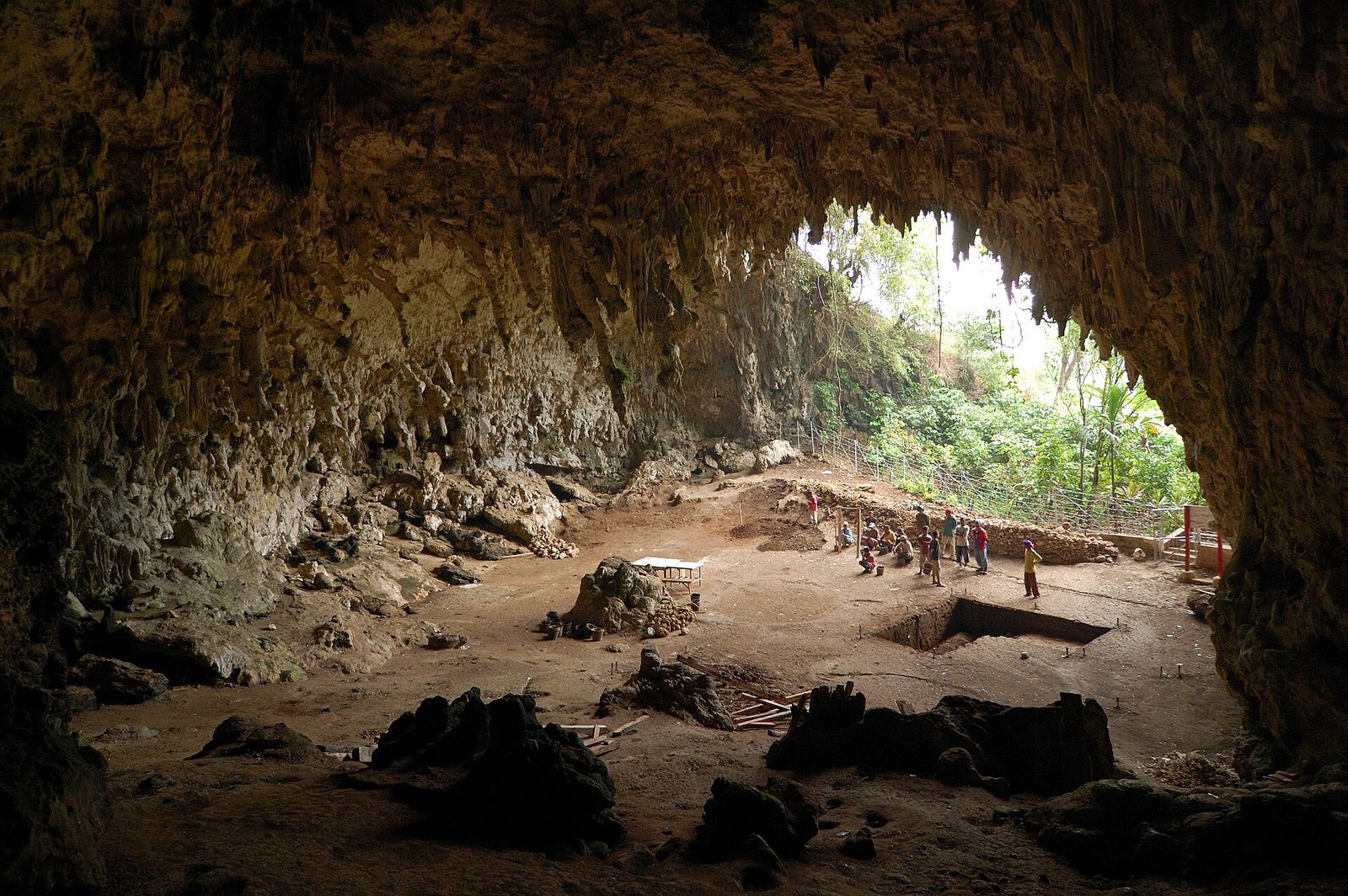
The cave on Flores where the remains of Homo floresiensis were found.
- Country
- Indonesia
- Region
- Asia
- Period
- about 100,000 to 50,000 years ago
- Kind of site
- Cave, archaeological site
- Also known as
- Liang Bua cave
- Coordinates
- 8.5342° S, 120.4600° EWikipedia and Wikidata agree within 0.0 km
- Reference
- Wikidata Q1822737
- Encyclopedia
- Wikipedia article
About this place
Liang Bua is a limestone cave on the island of Flores, Indonesia, slightly north of the town of Ruteng in Manggarai Regency, East Nusa Tenggara. The cave demonstrated archaeological and paleontological potential in the 1950s and 1960s as described by the Dutch missionary and archaeologist Theodor L. Verhoeven. In September 2003, an Indonesian field team and its coordinator of the excavation team, Thomas Sutikna, uncovered the first indications of a skull. Initially, the archeologists only analyzed the top of the cranium and due to the small size believed that the skull belonged to a small child. However, Sutikna and his colleagues soon discovered that its teeth were permanent and mature, revealing that it actually belonged to a fully grown adult.
Adapted from the Wikipedia article Liang Bua (this version), lightly edited for style, under the CC BY-SA 4.0 license.
Nearby places
Open in the Atlas →- Anakalang 153 km (95 mi)
- Pettakere cave 402 km (250 mi)
- Leang Tedongnge 409 km (254 mi)
- Prehistoric Cave Sites in Maros-Pangkep 410 km (255 mi)
- Liang Metanduno 472 km (293 mi)
- Gunung Kawi 566 km (352 mi)














Recent comments