

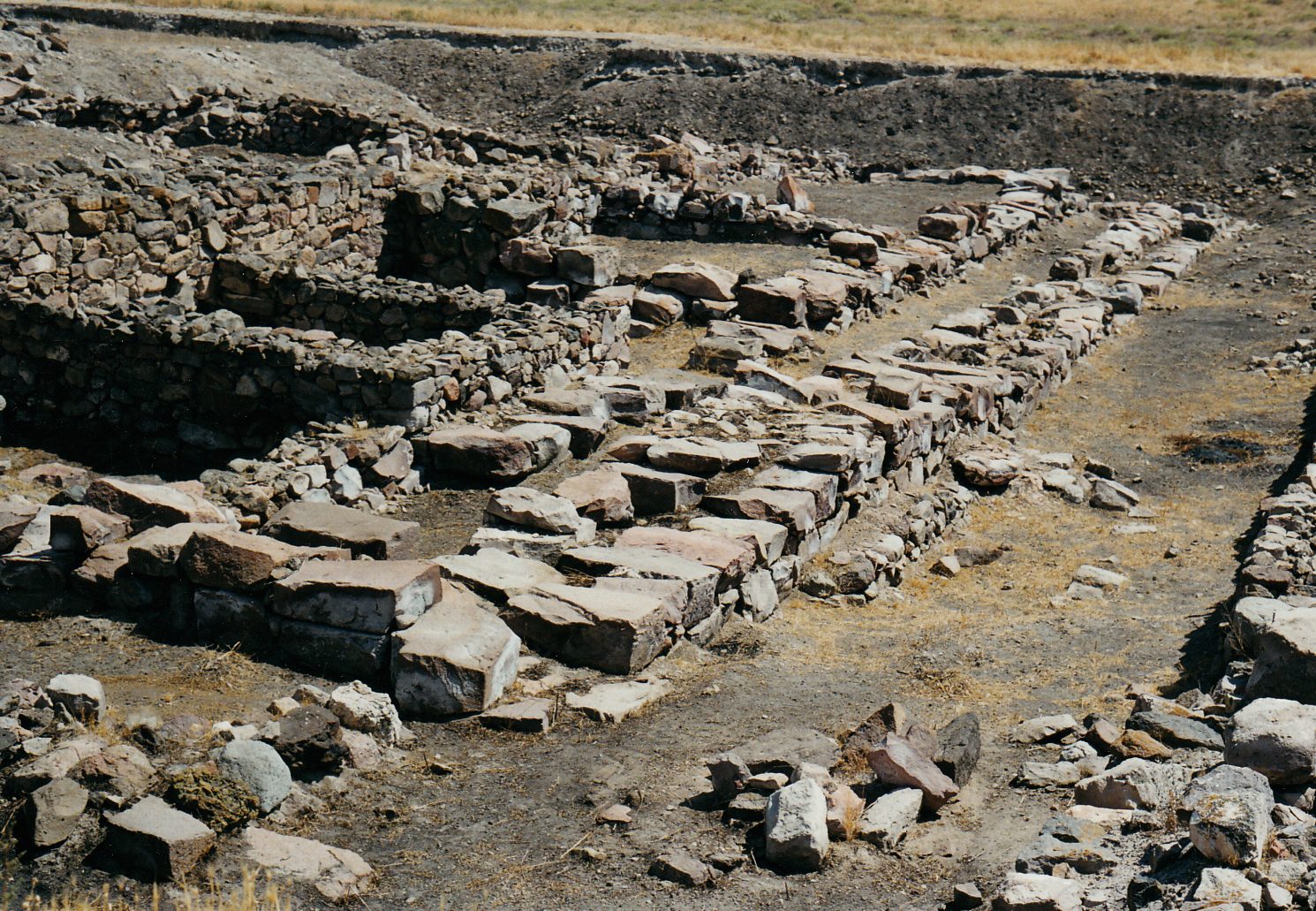
Photo: Klaus-Peter Simon, CC BY-SA 3.0 via Wikimedia Commons Source
Ancient Kanesh, where thousands of Old Assyrian merchant tablets were found. It is associated with the prehistory and the Old Hittite Kingdom. It is on the UNESCO World Heritage Tentative List.
- Country
- Turkey
- Region
- Asia
- Period
- about 2000 to 1700 BC
- Kind of site
- Ancient city, tell, archaeological site
- Period or culture
- prehistory, Old Hittite Kingdom
- Heritage status
- Tentative World Heritage Site
- Located in
- Kayseri Province, Turkey
- Also known as
- Anisa; Kaneš; Aniša; Kaniš; Nēša
- Coordinates
- 38.8500° N, 35.6333° EWikipedia and Wikidata agree within 0.0 km
- Reference
- Wikidata Q538605
- Encyclopedia
- Wikipedia article
About this place
Kültepe (Turkish: lit. 'ash-hill'), ancient name Kaneš (Kanesh, also Kaniš/Kanish) or Neša (Nesha), was a Bronze Age (broadly, 3300 to 1200 BC) settlement and trading center on the Central Anatolian plateau in modern Turkey. It was a major settlement in the early 3rd millennium, and is particularly renowned for its regional importance in the early 2nd millennium. The archaeological site consists of a large mound (also known as höyük, tepe or tell), and a lower city, where a kārum (the Assyrian word for trading district) was established in the beginning of the 2nd millennium BC. The over 23,000 cuneiform tablets recovered from residences at Kültepe constitute the largest collection of texts found in non-administrative locales of the ancient Near East. In 2014, the archaeological site was inscribed in the Tentative list of World Heritage Sites in Turkey.
Adapted from the Wikipedia article Kültepe (this version), lightly edited for style, under the CC BY-SA 4.0 license.
Nearby places
Open in the Atlas →- Caesarea of Cappadocia 19 km (12 mi)
- Skandos 24 km (15 mi)
- Moutalaske 26 km (16 mi)
- Eulepa 29 km (18 mi)
- Archalla 29 km (18 mi)
- Arasaxa 33 km (21 mi)














Recent comments