

Photo: MusikAnimal, CC BY-SA 3.0 via Wikimedia Commons Source
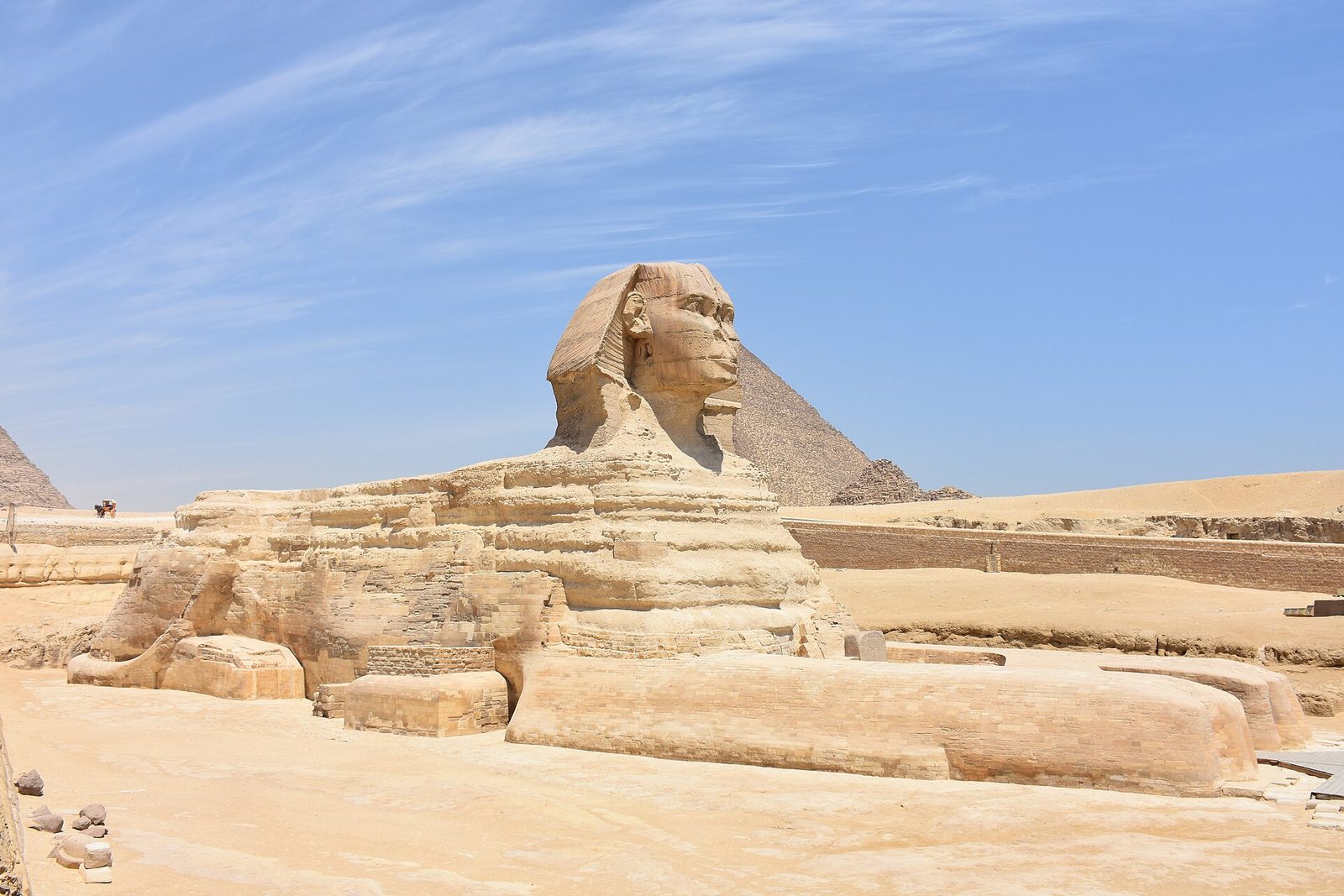
The Great Sphinx is a colossal lion with a human head carved from the bedrock of the Giza plateau in Egypt. It was made in the Old Kingdom around 2500 BC, usually attributed to the pharaoh Khafre, and that date is Established. The claim that it was carved 10,000 years ago is Fringe, as our Fact Check explains.
A colossal limestone figure with a lion's body and a human head, usually attributed to Khafre. It dates from the 26th century BC and is associated with Ancient Egypt and the culture of ancient Egypt.
- Country
- Egypt
- Region
- Africa
- Period
- about 2500 BC
- Kind of site
- Sphinx, archaeological site
- Dates from
- 26th century BC
- Period or culture
- Ancient Egypt, culture of ancient Egypt
- Located in
- Giza, Egypt
- Also known as
- Great Sphinx of Giza; Sphinx
- Coordinates
- 29.9753° N, 31.1376° EWikipedia and Wikidata agree within 0.01 km
- Reference
- Wikidata Q130958
- Encyclopedia
- Wikipedia article
About this place
The Great Sphinx of Giza is a limestone statue of a resting sphinx, a mythical creature with the head of a human and the body of a lion. The monument was sculpted from the limestone bedrock of the Eocene-aged Mokattam Formation and faces east on the Giza Plateau, on the west bank of the Nile in Giza, Egypt. The oldest known monumental sculpture in Egypt, the Sphinx is part of the Memphite Necropolis and is a UNESCO World Heritage Site. Archaeological evidence suggests the Sphinx was created by Egyptians of the Old Kingdom during the reign of Khufu (c. 2590 to 2566 BC) or Khafre (c. 2558 to 2532 BC). Scholars and Egyptologists believe the face of the Sphinx was carved to represent either the pharaoh Khufu or one of his sons, pharaohs Djedefre and Khafre, but a consensus has not been reached and the person(s) in whose likeness the Sphinx was carved remains in dispute.
Adapted from the Wikipedia article Great Sphinx of Giza (this version), lightly edited for style, under the CC BY-SA 4.0 license.
Nearby places
Open in the Atlas →- Pyramid of Khentkaus I 0.3 km (0.2 mi)
- Giza Pyramids 0.5 km (0.3 mi)
- Great Pyramid of Giza 0.5 km (0.3 mi)
- Egyptian pyramids 0.9 km (0.6 mi)
- Pyramid G3-a 1.0 km (0.6 mi)
- Giza Necropolis 1.0 km (0.6 mi)














Recent comments